
Is Your Bike Running Too Hot? 12 Warning Signs of an Overheating Motorcycle
 Jake Miller
11 min read
Jake Miller
11 min read
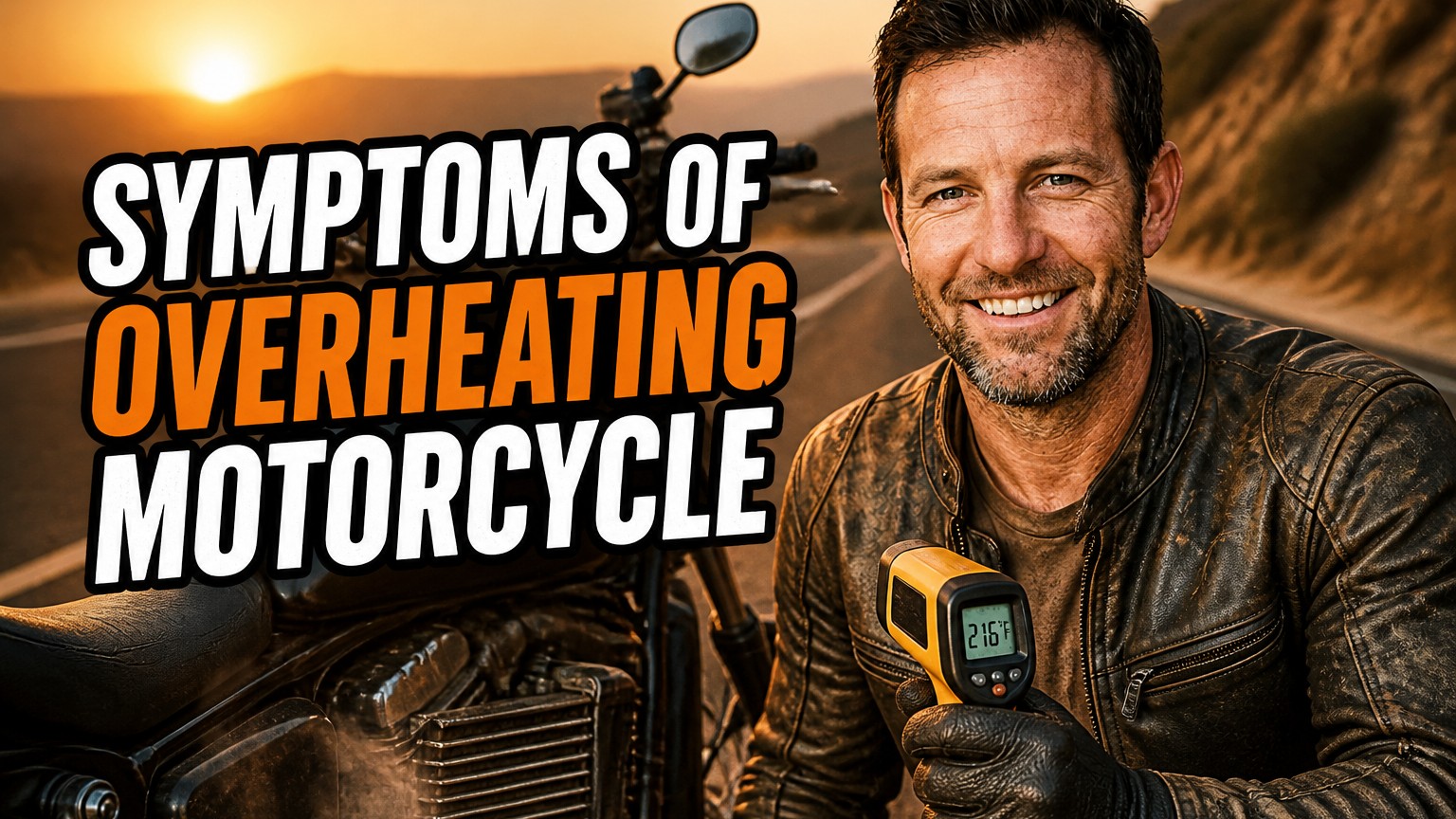
I still remember the first time my bike overheated. I was stuck in summer traffic, the sun was beating down, and I told myself the funny smell was just hot asphalt. It wasn’t.
By the time I pulled over, my engine was pinging, my legs felt like they were pressed against a space heater, and I had a repair bill coming. Since then, I’ve learned to spot the warning signs early.
In this guide, I’ll walk you through everything I look for, from the obvious dashboard clues to the subtle changes in how the bike feels and sounds. I’ll also share what I do when it happens and how I keep it from happening again.
- The earliest warning signs are a climbing temp gauge, extra heat on your legs, and a subtle drop in power.
- Strange noises, burning smells, coolant leaks, and steam mean you should stop riding right away.
- Low, old, or wrong oil and weak coolant are among the most common causes.
- If your bike overheats, pull over, shut it off, and let it cool fully before touching anything.
- Regular maintenance is the cheapest insurance against a ruined engine.
Why Overheating Is Such a Big Deal
An engine is basically a controlled series of explosions. That creates a lot of heat, and your cooling system and oil are responsible for getting rid of it.
When that balance breaks down, metal parts expand beyond their design limits. Pistons can scuff the cylinder walls, head gaskets can fail, and in the worst case, the engine seizes completely.
I’ve seen riders ignore a warning light for “just a few more miles” and turn a $20 fix into a $2,000 rebuild. The sooner you recognize the signs, the cheaper the lesson.
The Most Common Warning Signs I Watch For
Overheating rarely arrives out of nowhere. Your bike usually sends little messages first, and I’ve learned to listen to every one of them.
1. A Climbing Temperature Gauge
This is the most obvious clue on liquid-cooled bikes. Mine normally sits steadily around the middle of the range, so any climb toward the red zone gets my immediate attention.
If the needle creeps up in traffic and drops when I’m moving, I suspect airflow or fan problems. If it keeps rising even at speed, I suspect something more serious, like low coolant or a stuck thermostat.
2. The Temperature Warning Light
Many modern bikes have a dedicated warning light, often a thermometer symbol or a blinking “H” on the display. Never ignore it.
I treat this light as a “stop soon” signal, not a suggestion. By the time it lights up, the engine is already beyond its comfort zone.
3. Excess Heat on Your Legs and Body
Every bike throws off some heat, but you get to know what’s normal for yours. When I suddenly feel intense heat radiating on my thighs or shins, it’s a red flag.
This is especially useful on air-cooled bikes that have no gauge. My body has often been the first “sensor” to tell me something’s wrong.
4. A Noticeable Loss of Power
An overheating engine can’t perform at its best. Hot intake air and thermal stress cause the engine to lose power, and some modern bikes cut output deliberately to protect themselves.
If my bike suddenly feels sluggish or flat on roll-on, and the weather or traffic is hot, I check the temperature right away.
5. Pinging, Knocking, or Ticking Sounds
Excess heat can trigger detonation, which sounds like a metallic pinging when I accelerate. It’s the sound of fuel igniting too early in the combustion chamber.
I also listen for a rapid ticking from the valvetrain. Thin, overheated oil doesn’t lubricate as well, and the noise gets louder as the engine heats up.
6. Rough Idle or Stalling
When the engine gets too hot, it can idle unevenly, surge, or stall at a stoplight. I’ve had this happen, and it’s unnerving in the middle of an intersection.
Restarting a heat-soaked engine can also be hard. If it cranks slowly or fires reluctantly after a hot ride, that’s another hint.
Signs You Can See and Smell
Some symptoms don’t show up on the dash. They show up in front of your eyes or under your nose, and they usually mean the problem is already advanced.
7. Steam or Smoke From the Engine
White steam from the radiator area or overflow tank usually means coolant is boiling. Blue or gray smoke can mean oil is burning off hot surfaces.
If I see steam, I stop immediately. I’ve learned never to open a radiator cap on a hot engine, because pressurized coolant can cause serious burns.
8. A Sweet or Burning Smell
Coolant has a distinctly sweet smell, almost like syrup. If I catch that scent at a stoplight, I assume there’s a leak until proven otherwise.
A sharp burning smell is different. That usually points to oil dripping onto the exhaust or overheated clutch and electrical components.
9. Coolant Leaks or a Boiling Overflow Tank
I always glance under my bike after parking. Green, orange, or pink puddles are a sign of a leaking hose, water pump seal, or radiator.
I also check the overflow reservoir. If the level is low, or if the coolant looks rusty or muddy, my cooling system needs attention.
10. Discolored or Smelly Oil
Heat cooks oil quickly. When I drain oil after a hot summer, it sometimes looks dark and smells burnt, which tells me the engine has been running hotter than it should.
If you’re curious how oil condition connects to engine health, I put together some notes on black engine oil symptoms and what they mean for your bike.
Subtle Signs That Are Easy to Miss
Not every symptom is dramatic. Some of the most important ones are small changes that creep in over weeks, and I’ve missed them before.
11. The Radiator Fan Running Constantly (or Not at All)
On my liquid-cooled bike, the fan kicks in at a set temperature, then shuts off. If it runs nonstop, even on mild days, the engine is struggling to shed heat.
If the fan never turns on, even in heavy traffic with a high gauge reading, that points to a failed fan, relay, or sensor. It’s an easy and inexpensive fix when caught early.
12. Hard, Heat-Soaked Controls
Sometimes a hot engine makes the clutch lever feel different or the throttle response feel inconsistent. These changes are easy to dismiss as quirks.
Don’t confuse them with other mechanical issues, though. A sloppy or inconsistent throttle has its own causes, which I covered in my guide on the 10 symptoms of loose throttle cable in motorcycles.
What Causes a Motorcycle to Overheat?
Knowing the symptoms is only half the battle. I also want to know why it’s happening, because fixing the cause is what keeps me out of trouble.
Low or Degraded Coolant
Coolant doesn’t last forever. Over time, it loses its anti-corrosion properties and its ability to transfer heat, and leaks can drain the system outright.
I replace mine according to the service manual, and I top it off with the correct mixture, never plain tap water for long periods.
Oil Problems
Oil is a major part of engine cooling, especially on air-cooled bikes. Low oil level, worn-out oil, or the wrong viscosity can all push temperatures up quickly.
I’ve noticed my bike runs noticeably cooler on fresh, quality oil. If you’re shopping around, my breakdown of the best motor oil for 4 stroke motorcycle engines is a good place to start.
You can also compare options in my list of the top engine oil for 4 stroke motorcycle picks for different riding styles and climates.
What About Overheating Right After an Oil Change?
This one surprises people. A fresh oil change should help, but an overfilled crankcase, an underfilled one, or the wrong grade can all cause heat problems.
If that’s your situation, read this breakdown of bike engine overheating after oil change causes solutions. It walks through the most common mistakes and how to fix them.
Cooling System Failures
A stuck thermostat, a failing water pump, a clogged radiator, or a dead fan can all cause overheating. These parts work together, so one weak link affects everything else.
Bent radiator fins and bug-packed cores also block airflow. I’ve pulled a surprising amount of debris out of mine after a long summer tour.
Lean Fuel Mixture
A bike running lean burns hotter. This can come from a vacuum leak, clogged jets, or an aftermarket exhaust and intake without proper tuning.
If I’ve modified anything on my bike, overheating is one of the first things I watch for afterward.
Heat, Traffic, and Riding Habits
Sometimes the cause is simply the environment. Idling in 95-degree stop-and-go traffic gives the engine very little airflow to work with.
Heavy loads, steep climbs, and hard riding at high RPM also add to the heat. Even a healthy bike has its limits.
What I Do When My Bike Starts Overheating
Panic is the enemy here. I follow the same steps every time, and they’ve saved me more than once.
Step 1: Get Out of Traffic and Shut It Down
I find a safe spot, pull over, and switch off the engine. Idling while stopped doesn’t cool the bike, especially if the fan isn’t working.
Step 2: Let It Cool Completely
I wait at least 30 minutes, sometimes longer. I never open the radiator cap while the engine is hot, because scalding coolant can spray out under pressure.
Step 3: Check the Obvious
Once things are cool, I check coolant level, look for leaks, inspect hoses, and check the oil level on the dipstick or sight glass. I also see whether the fan spins when the engine warms up again.
Step 4: Decide Whether to Ride or Call a Tow
If I find a simple cause, like low coolant, and I have the correct fluid, I top it off and ride cautiously. If I see signs of a major failure, I call for a tow.
A tow truck is always cheaper than a new engine. I’ve learned to swallow my pride on that one.
How I Prevent Overheating in the First Place
Prevention is simple and inexpensive compared with repairs. These are the habits I stick to throughout the riding season.
- Replace coolant on schedule and use the type recommended by the manufacturer.
- Check oil level often and change it at the recommended intervals.
- Keep the radiator clean by gently rinsing bugs and dirt from the fins.
- Inspect hoses and clamps for cracks, bulges, or seepage.
- Test the fan before summer by letting the bike idle until it kicks on.
- Avoid long idling in hot traffic and shut off the engine if you’ll be stopped a while.
I also do a quick pre-ride check before any long trip. A two-minute walk-around has caught more problems than I can count.
Air-Cooled vs. Liquid-Cooled: Different Bikes, Different Clues
The warning signs I mentioned apply broadly, but each type of engine shows stress differently. Knowing which one you ride helps you read the signals.
Air-Cooled Bikes
These often have no temperature gauge, so I rely on feel and sound. Excess heat on my legs, a ticking engine, and sluggish performance are my main clues.
Oil quality matters even more here, since oil does a lot of the cooling work. I never stretch oil change intervals on an air-cooled engine.
Liquid-Cooled Bikes
With a gauge, fan, and coolant system, there are more clues to monitor. I watch the gauge, listen for the fan, and check coolant levels regularly.
These bikes handle heat better overall, but they also have more parts that can fail. A small leak can turn into a big problem quickly.
Final Thoughts From the Saddle
Overheating doesn’t have to ruin your ride or your engine. If you learn the signs, from gauge spikes and leg heat to odd smells and noises, you can react before real damage happens.
My advice is simple: trust your senses, don’t push a hot engine, and keep up with basic maintenance. Your bike will usually tell you what it needs if you’re willing to listen.
Ride safe, stay cool, and check that coolant before your next long trip.
Frequently Asked Questions
What are the first symptoms of an overheating motorcycle?
The earliest signs are a temperature gauge climbing past its normal range, a rising engine temperature warning light, and a noticeable increase in heat on your legs. You may also notice a slight loss of power, a ticking engine noise, or a burning smell. Act on these early signs immediately to avoid engine damage.
Can I keep riding if my motorcycle is overheating?
No. Pull over safely, switch off the engine, and let it cool for at least 30 minutes. Riding on a hot engine can warp cylinder heads, blow head gaskets, and seize pistons. A tow is far cheaper than an engine rebuild.
Can low or old engine oil cause a motorcycle to overheat?
Yes. Oil carries heat away from the engine and reduces friction. Low, degraded, or incorrect oil makes the engine run hotter, and this applies to air-cooled and liquid-cooled bikes alike.
How do I prevent my motorcycle from overheating?
Keep coolant topped up and fresh, change your oil on schedule with the correct grade, keep the radiator and fins clean, check the fan and thermostat, and avoid long idling in hot traffic. Regular maintenance is the best prevention.

Related Articles
7 Best Batteries for Motorcycles I’ve Tested and Trust in 2026
I've tested dozens of motorcycle batteries to find the best performers. From AGM to lithium, here are my top picks…
Jake Miller
15 min read

The Perfect Battery for Your Harley Davidson Softail: A Rider’s Complete Guide
Discover the perfect battery for your Harley Davidson Softail. I've tested multiple options and share real-world performance data, maintenance tips,…
Jake Miller
14 min read

The Best Battery for Your Harley Davidson: My Complete Guide After Years of Testing
Discover which battery truly performs best for Harley Davidson motorcycles. Real rider experience with AGM, lithium, and OEM options to…
Jake Miller
12 min read