
8 Best Touring Motorcycles You Can Buy for Under $4,000 (Used Picks I Trust)
 Jake Miller
10 min read
Jake Miller
10 min read
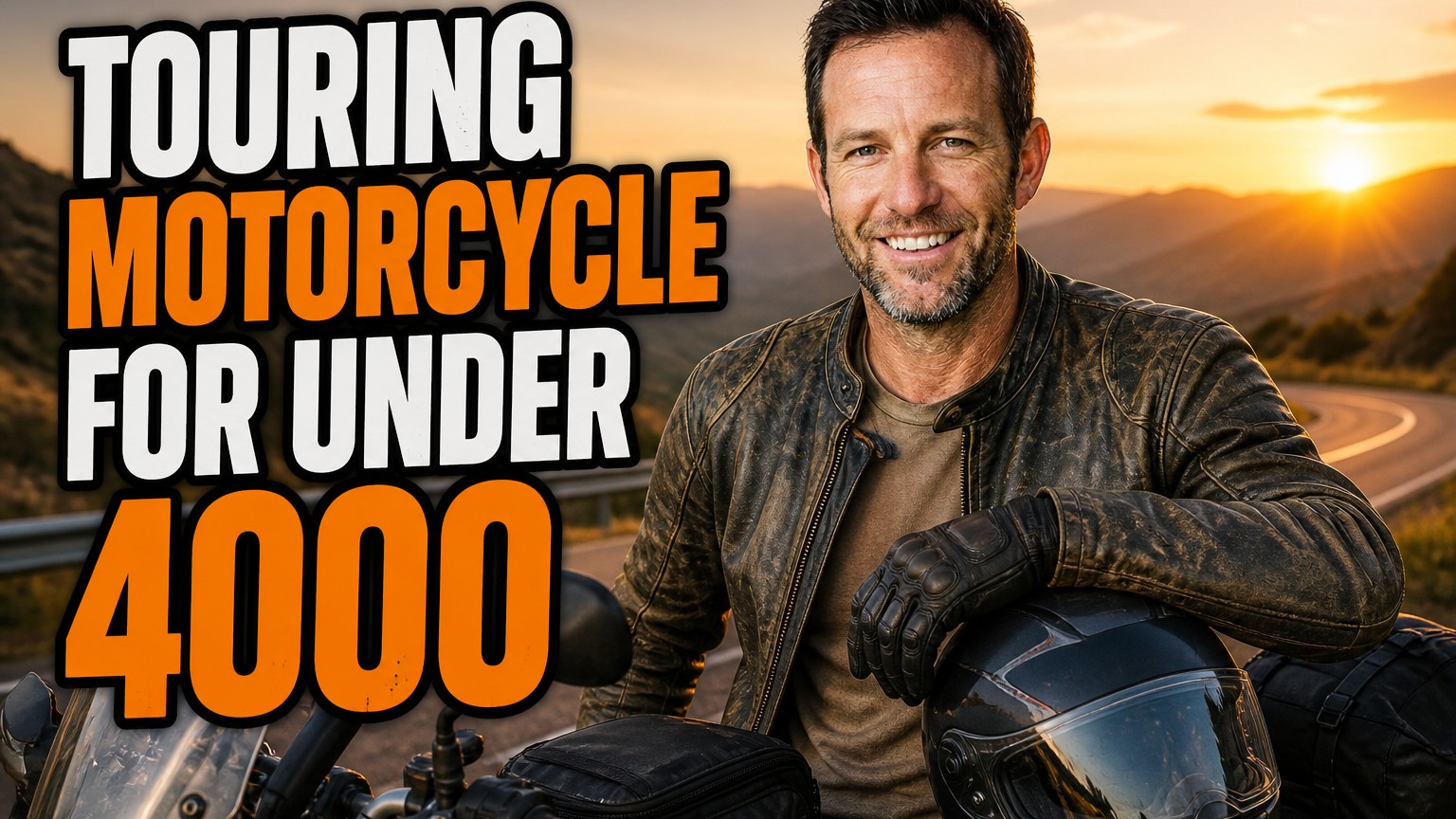
I’ve put thousands of miles on bikes that cost less than a used sedan, and I can tell you this: you don’t need a $20,000 flagship to see the country. Some of my best rides happened on old, slightly scruffy machines that I bought for a few grand and maintained myself.
The catch is that under $4,000 means used. That’s not a bad thing. Depreciation has already done the heavy lifting, and the right model will give you comfort, range, and reliability for pennies on the dollar.
Below are the eight bikes I’d actually spend my own money on. Prices are typical used-market ranges in the US and will vary by year, mileage, and region.
- My top overall pick is the Suzuki V-Strom 650: cheap, reliable, comfortable, and endlessly farkle-able.
- For long-haul comfort and power, an early Yamaha FJR1300 is the sport-touring bargain of the decade.
- For rough roads and remote trips, the Kawasaki KLR650 is hard to beat.
- Budget $500 to $1,000 on top of the purchase for tires, fluids, and a baseline service.
How I Chose These Touring Bikes
I didn’t pick these on spec sheets alone. Every bike here had to pass four tests: it needs to be comfortable for 300-mile days, have a decent fuel range, have strong parts availability, and be easy to find under $4,000.
What Matters Most on a Budget
Ergonomics beat horsepower. I’d rather ride an upright, relaxed 65-hp bike for ten hours than a 150-hp sportbike for two. Wind protection, seat shape, and a neutral riding position matter more than a quick 0-60.
Maintenance history matters even more. A neglected bike at $2,500 is more expensive than a well-kept one at $3,800.
If you want more ideas at the thriftiest end of the market, I’ve also written about the best cheap motorcycle for touring.
1. Suzuki V-Strom 650 (2004–2011) — Best Overall Under $4,000
If you only read one entry, make it this one. The Suzuki V-Strom 650 is the bike I recommend to almost everyone who asks me where to start with touring.
Why I Love It
The 645cc fuel-injected V-twin makes roughly 65 hp and has a wonderfully smooth, torquey character. The tank holds about 5.8 gallons, and I routinely see 45 to 50 mpg, so 250-mile fuel stops are easy.
The riding position is tall and relaxed, with a roomy seat and a windscreen that’s easy to upgrade. Even with stock parts, the V-Strom 650 feels like a real touring machine.
What to Watch For
Early models can have a slightly buzzy feel at highway speeds, and the stock seat gets tiring after a few hundred miles. Both are easy fixes. Look for bikes that already have crash bars, hard luggage, or a taller screen, since those add real value.
Typical price: $3,000 to $4,000.
2. Kawasaki KLR650 (2008–2018) — Best for Rugged, Remote Routes
The Kawasaki KLR650 is the old workhorse of the dual-sport world. It isn’t fast or fancy, but it will keep going long after flashier bikes have given up.
Specs That Matter
The 651cc single makes around 40 hp, but the real headline is the 6.1-gallon tank. That gives it a range well beyond 250 miles, which is gold when gas stations get sparse. It’s carbureted, simple, and cheap to fix.
The seat is plush, the suspension soaks up broken pavement, and the bike has decades of aftermarket support behind it.
Where It Falls Short
It’s heavy at roughly 430 pounds, and it’s not a happy camper above 75 mph. Do the well-known “doohickey” balancer chain upgrade early. I did it on mine, and it’s cheap insurance.
If gravel and dirt sound like your style, my guide to the best motorcycle for adventure touring goes deeper on that kind of riding.
Typical price: $2,800 to $3,900.
3. Kawasaki Versys 650 (2008–2014) — Best for Twisty Roads and Daily Use
The Kawasaki Versys 650 is the bike I recommend when someone says, “I want to tour, but I also want to have fun on backroads.”
My Experience
The 649cc parallel twin makes about 65 hp and revs happily. It feels livelier than the V-Strom 650 and has a lighter, more flickable chassis. The upright position is comfortable, and the tank gives you about 200 to 230 miles.
Mine felt like a naked bike with a touring attitude. It’s great on mountain passes and perfectly fine on the interstate once you add a taller windscreen.
Things I’d Fix
The stock seat is firm, and the wind protection is minimal. A touring screen and a gel seat pad turn it into a much better long-distance tool. Soft luggage works well on this bike.
Typical price: $3,200 to $4,000.
4. Honda NC700X (2012–2015) — Best for Fuel Economy and Practicality
The Honda NC700X is the sensible one, and I mean that as a compliment. It’s the bike I’d pick if I wanted to ride cross-country on the smallest possible fuel budget.
Why It Works
The 670cc parallel twin makes about 48 hp, but it’s tuned for torque and efficiency. Real-world mileage is often 60 to 70 mpg. The bike has a lockable storage compartment where a fuel tank would normally sit, and it can swallow a full-face helmet or a pile of gear.
The low seat height and mild manners make it easy to ride. Some models also came with Honda’s dual-clutch transmission, which is surprisingly good for long days in traffic.
The Trade-Offs
Power is modest, the redline arrives early, and the styling is, well, practical. Still, for relaxed, low-stress trips, it’s an excellent pick. It also suits riders planning a best motorcycle for solo touring style of trip, where reliability and carrying capacity matter most.
Typical price: $3,200 to $4,000.
5. Yamaha FJR1300 (2003–2005) — Best Big Sport-Tourer for the Money
Here’s the bike that makes people raise an eyebrow. A Yamaha FJR1300 under $4,000 is a legitimately big, fast, grown-up touring machine for the price of a used scooter.
What You Get
The 1,298cc inline-four makes roughly 145 hp, and it’s wonderfully smooth. You also get shaft drive, a large fairing, a 6.6-gallon tank, and an adjustable windscreen. Many examples come with hard saddlebags.
On the highway, it feels like it was built for 500-mile days. I’ve ridden one for ten hours straight and stepped off barely tired.
The Caveats
It’s heavy at around 640 pounds wet, and low-speed handling takes practice. Early models can have charging system quirks, so check the stator and regulator. Parts are available, but not as cheap as on a V-Strom.
Riders planning long trips abroad should also look at my notes on the best motorcycle for european touring, since the FJR is a very common sight on those roads.
Typical price: $3,500 to $4,500, so shop patiently for the lower end.
6. Suzuki V-Strom 1000 (2002–2007) — Best for Two-Up and Highway Power
The original Suzuki V-Strom 1000 (DL1000) is a bit of a cult classic. It has big-bike power and long-legged comfort at a very small price.
Why I’d Buy One
The 996cc V-twin makes about 100 hp with a deep, muscular surge from low rpm. It carries a passenger easily, and the fairing offers good protection. The tank holds around 5.8 gallons.
The ride is stable and planted, making it a great choice for riders who regularly carry luggage and a passenger.
What to Know
It’s heavy at around 500 pounds, and the fuel economy is a bit worse than the 650. Early bikes also have dated brakes and suspension. A fork refresh and fresh tires make a big difference.
For travelers dreaming about the far north, this is one of the bikes I’d seriously consider for the best motorcycle for touring alaska kind of trip, thanks to its stability on long, rough highways.
Typical price: $3,000 to $4,000.
7. BMW F650GS Single (2001–2007) — Best Budget Euro Adventure Bike
I have a soft spot for the BMW F650GS single. It’s a light, friendly, and surprisingly capable machine with a BMW badge you can actually afford.
The Appeal
The 652cc Rotax-built single makes about 50 hp and is fuel injected. It weighs only around 410 pounds wet, with a low seat that suits shorter riders. Fuel mileage is excellent, often around 55 to 60 mpg.
It’s comfortable, easy to handle, and very forgiving. I found it a great bike for learning how to travel light.
Cautions
Parts and service cost more than on Japanese bikes, and the single-cylinder engine will vibrate on long highway stretches. Get a pre-purchase inspection from a mechanic who knows BMWs. Check for a well-documented service history.
Typical price: $2,800 to $3,900.
8. Honda CB500X (2013–2015) — Best Beginner-Friendly Tourer
The Honda CB500X sits right at the top of the budget, so you’ll need to shop carefully. Higher-mileage early models can dip just under $4,000, and they’re worth the hunt.
Why It Earns a Spot
The 471cc parallel twin is smooth, reliable, and returns around 70 mpg. Weight is about 430 pounds, and the seat height is friendly. It’s easy to ride in town and perfectly comfortable on a long day.
Honda’s reputation for reliability is on full display here. I’ve seen these bikes run past 60,000 miles with little more than oil changes.
Limitations
The 4.6-gallon tank is smaller than rivals, and the stock windscreen is short. Power is modest for two-up riding. Still, if you want a confidence-inspiring first tourer, this one is hard to fault.
Typical price: $3,800 to $4,500.
What to Check Before You Buy a Used Touring Bike
The biggest risk on a budget isn’t the model. It’s the specific bike. I’ve walked away from plenty of tempting deals, and I’ve never regretted it.
My Pre-Purchase Checklist
- Service records: Regular oil changes and valve checks matter more than low mileage.
- Tires: Check the date code. Tires older than six years need replacing, no matter the tread.
- Drivetrain: Look for chain wear, or leaks around the shaft drive on bikes like the FJR.
- Suspension: Oily fork legs mean leaking seals.
- Crash damage: Look for bent levers, scraped bar ends, and mismatched plastics.
A Quick Note on Budget
I always keep $500 to $1,000 in reserve after purchase. That covers fresh tires, a battery, fluids, and any surprises. It’s the difference between a fun first trip and a roadside headache.
Gear and Upgrades Worth Your Money
You don’t need to spend big, but a few upgrades make a huge difference on long rides. I always start with comfort.
My Top Three Upgrades
- A better seat or gel pad: This is the single best comfort upgrade I’ve made.
- A taller windscreen: Less wind buffeting means less fatigue.
- Luggage: Soft panniers and a tail bag are cheap, light, and flexible.
Add a phone mount, a USB charger, and good rain gear, and you’re ready for a serious trip.
My Final Thoughts
If I had to choose one bike from this list with a gun to my head, I’d take the Suzuki V-Strom 650. It’s the best balance of price, comfort, reliability, and support.
If you want big-mile luxury, go for the Yamaha FJR1300. If dirt roads are in your future, the Kawasaki KLR650 is hard to beat.
Whichever you choose, buy the best-maintained example you can find, budget for a fresh set of tires, and get out there. The best touring bike is the one that gets you on the road.
Frequently Asked Questions
Can you buy a new touring motorcycle for under $4,000?
Realistically, no. Most new touring-capable bikes start well above that price. The used market is where the value is, and a well-maintained Suzuki V-Strom 650 or Kawasaki KLR650 can carry you across the country for far less.
What is the most reliable used touring bike under $4,000?
In my experience, the Suzuki V-Strom 650 is the safest bet. Its V-twin engine is tough, parts are cheap, and owners regularly report 100,000+ miles with basic maintenance.
What should I inspect before buying a used touring motorcycle?
Check the service records, chain and sprockets (or shaft drive for leaks), tire age, fork seals, coolant condition, and signs of crash damage. Always do a cold start and a test ride if you can.
How much should I budget beyond the purchase price?
I recommend setting aside $500 to $1,000 for tires, fluids, a battery, and a baseline service, plus extra for luggage and a windscreen if the bike doesn’t have them.

Related Articles
7 Best Batteries for Motorcycles I’ve Tested and Trust in 2026
I've tested dozens of motorcycle batteries to find the best performers. From AGM to lithium, here are my top picks…
Jake Miller
15 min read

The Perfect Battery for Your Harley Davidson Softail: A Rider’s Complete Guide
Discover the perfect battery for your Harley Davidson Softail. I've tested multiple options and share real-world performance data, maintenance tips,…
Jake Miller
14 min read

The Best Battery for Your Harley Davidson: My Complete Guide After Years of Testing
Discover which battery truly performs best for Harley Davidson motorcycles. Real rider experience with AGM, lithium, and OEM options to…
Jake Miller
12 min read