
7 Best Vintage Motorcycles for Beginners: Classic Bikes That Are Easy to Ride and Own
 Jake Miller
9 min read
Jake Miller
9 min read
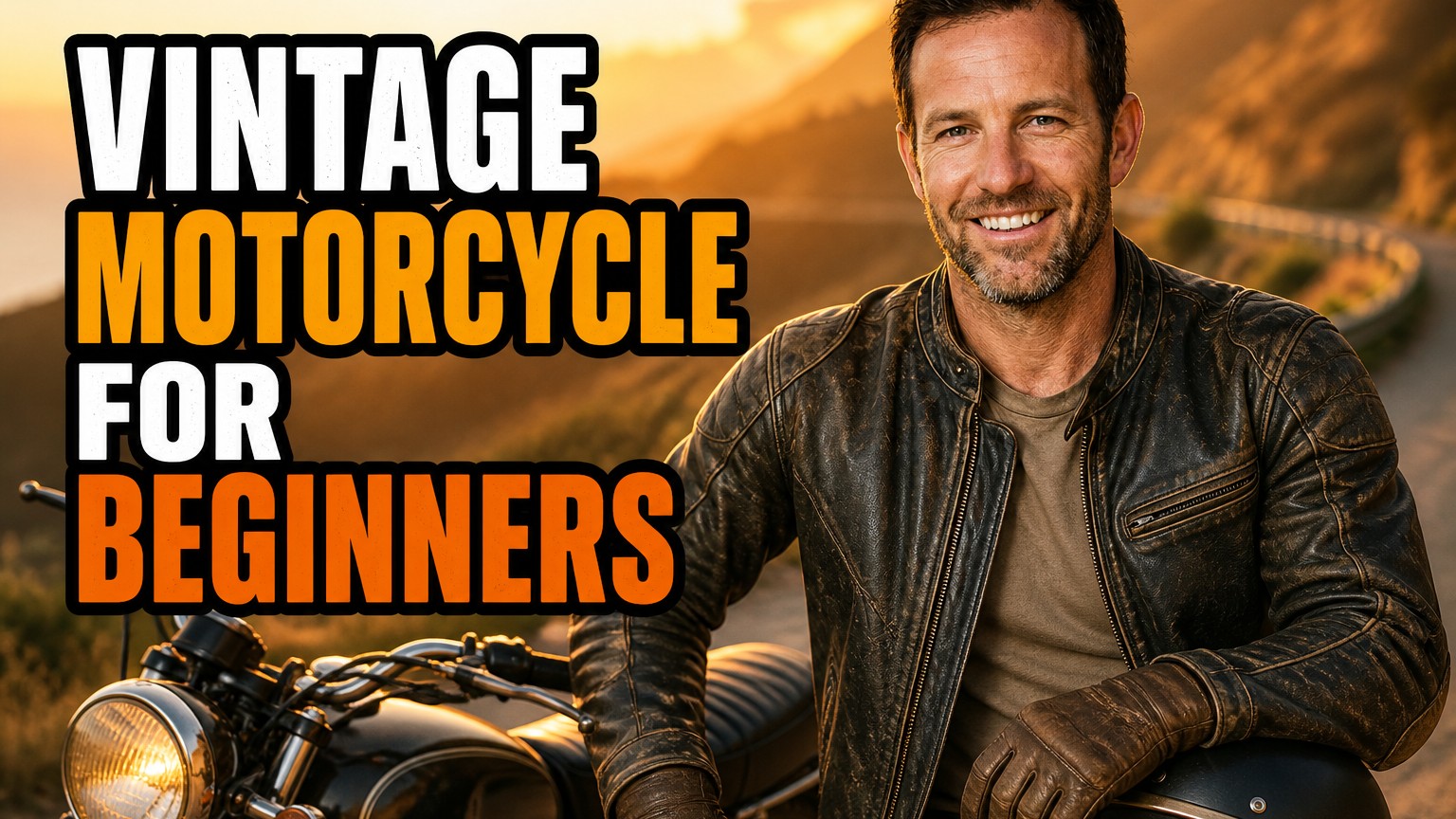
I still remember the first time I fired up an old air-cooled single in my garage. The smell of fuel, the lumpy idle and the mechanical honesty of it hooked me for good. But I also remember how many classic bikes I looked at that would have been a terrible first ride.
Vintage doesn’t have to mean intimidating. Some of the best bikes for learning are old ones, because they’re simple, light and satisfying to ride at sane speeds. Here are the seven I’d happily recommend to a friend, based on my own time riding, wrenching and shopping for classics.
- My top overall pick is the Honda CB350: light, friendly, and parts are easy to find.
- For the lowest cost and easiest handling, look at the Suzuki GN250, Honda Rebel 250 or Honda Super Cub C90.
- The Yamaha XS650 and Kawasaki W650 are great, but better suited to riders ready for a heavier 650cc twin.
- Budget 20 to 30 percent of the purchase price for baseline maintenance and safety upgrades.
What I Look for in a Beginner-Friendly Classic
Before the list, here’s the checklist I use. A good first vintage bike should be light, have manageable power and offer a reasonable seat height. It should also have good parts support, because you will be fixing things at some point.
I also lean toward air-cooled engines with simple carburetors. They’re easier to learn on, and a basic set of metric sockets will get you surprisingly far.
A Quick Word on Safety
Old bikes brake and handle like old bikes. Drum brakes, skinny tires and modest suspension all demand more planning than a modern machine. Take a rider-safety course first, wear proper gear and leave extra space everywhere. It’s part of the charm, but it’s also the reason I treat gear as non-negotiable.
1. Honda CB350 — Best Overall Vintage Bike for Beginners
If I had to hand one bike to a first-time classic rider, it would be the Honda CB350. Built from 1968 into the early 1970s, it uses a 325cc air-cooled parallel twin making roughly 33 to 36 horsepower, depending on the year.
That’s enough to keep up with traffic but never enough to scare you. The five-speed gearbox is smooth, and electric start was a real luxury for the era.
Why I Like It
The CB350 weighs about 340 to 370 pounds ready to ride, so it’s easy to push around the garage and easy to pick up your confidence on. The seat is comfortable and the controls feel intuitive.
Parts support is superb. Reproduction gaskets, cables and electrical components are widely available, and the aftermarket community is huge. If you’re browsing the best 300cc motorcycle for beginners, this is the vintage equivalent.
What to Watch For
Check for worn cam chain tensioners, tired charging systems and neglected carburetors. Expect to pay about $2,500 to $6,000 for a decent runner, with restored examples going higher. Don’t expect strong braking by modern standards, even on later models with a front disc.
2. Yamaha SR400 — Best for Simplicity and Style
The Yamaha SR400 is the purest “learn how motorcycles work” machine on this list. It’s a 399cc air-cooled single with roughly 27 horsepower, and early models were kick-start only. Yamaha’s basic recipe stayed remarkably similar for decades.
Weight is around 385 pounds wet, and the upright seating and narrow frame make it very approachable. It feels like a bicycle that learned to growl.
My Experience With It
The kick start is the learning curve. There’s a decompression lever and a little window on the engine to find top dead center, and once you learn the ritual it becomes a charming part of riding. Stall it at a light, though, and you’ll get a few looks.
Power is gentle and torquey, which suits a new rider well. If you’re comparing the best 400cc motorcycle for beginners, the SR400 is the cool classic option.
Price and Buying Notes
Expect about $4,000 to $7,000, since SR400s hold their value. Look for clean carburetors, a healthy kick-start mechanism and no signs of oil leaks at the base gasket. The single-cylinder vibration is part of the deal.
3. Suzuki GN250 — Best Budget Pick
The Suzuki GN250 is the bike I recommend when someone says, “I want something cheap and cheerful.” Its 249cc air-cooled single makes around 22 horsepower and pairs with a five-speed gearbox.
It’s nothing flashy, and that’s exactly the point. It’s light at roughly 300 pounds, with a seat height around 30 inches and very forgiving handling.
Why It Works for New Riders
The GN250 was built as a commuter and all-rounder, so it’s tough and straightforward. The engine is happy to be revved, the controls are light and there’s very little to be intimidated by. It’s also frugal on fuel.
If you want to compare modern alternatives, the best 250cc motorcycle for beginners is a useful companion read.
Cost and Condition
Prices typically run $1,500 to $3,000. Because they’ve often been neglected, I always check for gummed-up carburetors, rusty tanks and tired chains and sprockets. A good example is a joy; a bad one is a project.
4. Honda Rebel CMX250C — Best Low-Seat Cruiser Classic
The Honda Rebel CMX250C ran from 1985 into the 2010s, so it’s “vintage” in the sense that many examples are now decades old. It’s powered by a 234cc air-cooled parallel twin with roughly 16 horsepower.
Seat height is around 27 inches, which makes it one of the most welcoming bikes for shorter riders. At about 320 pounds wet, it’s easy to balance and to manage in parking lots.
What I Appreciate
I’ve seen more nervous new riders relax on a Rebel than on almost anything else. The power is mellow, the riding position is natural and the reliability is excellent. Many riding schools use them for a reason.
The downside is highway work. At 70 mph the little twin is working hard, and you’ll feel it. For city streets and back roads, it’s wonderful.
Expected Price
Plan on $1,500 to $3,500. Many have been ridden gently, but check for dropped-bike damage, rusty exhausts and worn tires. Parts are widely available and inexpensive.
5. Yamaha XS650 — Best Step-Up Classic Twin
The Yamaha XS650 is a legend, and one I’d put on the list with an asterisk. Its 653cc air-cooled parallel twin makes about 50 horsepower and loads of low-end torque. It was built from 1970 to 1983 and remains a favorite for customizers.
It weighs around 430 pounds dry, and that’s noticeable. I wouldn’t hand it to a total novice, but it’s very doable for someone with a little experience or a solid learning plan.
Why It Made My List Anyway
The XS650 is easy to work on, and the community knowledge is enormous. It’s also forgiving: the power is smooth and predictable rather than peaky. Many riders (myself included) find that the character makes up for the extra weight.
If you’re curious about modern bikes in this size class, see the best 650cc motorcycle for beginners.
Buying Tips
Budget $3,000 to $7,000. Common weak points include old points ignition, worn charging systems and oil leaks. Many bikes have been modified, so I always ask what’s original and what’s been changed.
6. Kawasaki W650 — Best Retro Look With Fewer Headaches
The Kawasaki W650 is a late-’90s throwback that looks like a 1960s British twin but behaves far better. It uses a 675cc air-cooled vertical twin with a bevel-gear-driven camshaft, making about 50 horsepower.
It has electric start (plus a kick lever), fuel-injection-free simplicity and a velvety power delivery. It’s heavy at roughly 425 pounds dry, but the weight sits low.
How It Feels on the Road
I find the W650 relaxed and predictable. There’s no aggressive power, and the upright seating gives great visibility. It feels like a true classic without the unreliability.
For a newer rider, the key is respecting the weight in low-speed maneuvers. Practice slow-speed turns in a parking lot before heading out in traffic.
Price and What to Check
Expect $4,000 to $7,000, as collectors have noticed these. Check for corrosion on the chrome and exhaust, and look for a documented service history. Good ones are well worth it.
7. Honda Super Cub C90 — Best Ultra-Easy Starter Classic
The Honda Super Cub C90 might seem like an odd entry, but hear me out. It’s a 89cc four-stroke single with a semi-automatic three-speed gearbox and no clutch lever, and it weighs under 200 pounds.
That makes it the gentlest introduction to shifting you’ll find. You learn throttle control, braking and road awareness without wrestling a clutch.
My Take
I’ve ridden Cubs in cities all over, and they’re simply fun. They’re slow, but they’re also nearly indestructible and deeply charming. You’ll smile at every stoplight.
The obvious limitation is speed. This is a city and back-road bike, not a highway bike. If that suits your life, it’s a brilliant, inexpensive way to start.
Cost and Condition
Plan for $1,500 to $3,500, depending on year and originality. Check for electrical gremlins on 6-volt models and make sure the centrifugal clutch engages smoothly.
How to Choose the Right One for You
Start with honesty about your size, confidence and riding environment. If you’re short or nervous, the Rebel or Super Cub makes sense. If you want a more traditional classic feel, the CB350 or SR400 are my picks.
If highway riding matters, consider the heavier 650cc twins, but only after you’ve built experience. And when you’re ready to graduate, the best 600cc motorcycle for beginners guide is a sensible next stop.
Before You Hand Over Cash
- Get a compression check or at least a cold-start test.
- Inspect the tires’ date codes. Old rubber is dangerous.
- Verify the title and VIN match the bike.
- Bring a knowledgeable friend if you can.
Budget for the Extras
I always tell new classic owners to set aside 20 to 30 percent of the purchase price for immediate needs. Fresh tires, brake fluid, a carburetor clean and a new battery are common first expenses.
It’s money well spent. A properly sorted old bike is far more enjoyable than a cheap one that never quite runs right.
Final Thoughts
Vintage riding is some of the most rewarding motorcycling I’ve done. The Honda CB350 remains my top recommendation, while the Suzuki GN250 and Honda Rebel are great for tighter budgets and smaller frames.
Pick the bike that fits you, buy the best example you can afford, and take your time learning. Do that, and an old bike will teach you more about riding than almost any new one could.
Frequently Asked Questions
What makes a vintage motorcycle good for a beginner?
Look for light weight, modest power, a low seat, simple air-cooled mechanicals and strong parts availability. Bikes like the Honda CB350 and Suzuki GN250 tick all of those boxes.
How much should I budget for a first vintage motorcycle?
Most of the bikes in this list sell for roughly $1,500 to $7,000 depending on condition. I also suggest setting aside 20 to 30 percent of the purchase price for tires, brakes, fluids and carburetor work.
Are vintage motorcycles reliable enough to ride regularly?
Yes, if they have been maintained. Simple air-cooled engines are easy to work on, but expect to service the carburetors, ignition and brakes before relying on a bike you just bought.
Is a 250cc to 400cc classic better than a bigger vintage bike for a new rider?
In my experience, yes. Smaller classics are lighter, more forgiving and cheaper to fix. You can always step up to a 650cc twin like the Yamaha XS650 once your skills and confidence have grown.

Related Articles
7 Best Batteries for Motorcycles I’ve Tested and Trust in 2026
I've tested dozens of motorcycle batteries to find the best performers. From AGM to lithium, here are my top picks…
Jake Miller
15 min read

The Perfect Battery for Your Harley Davidson Softail: A Rider’s Complete Guide
Discover the perfect battery for your Harley Davidson Softail. I've tested multiple options and share real-world performance data, maintenance tips,…
Jake Miller
14 min read

The Best Battery for Your Harley Davidson: My Complete Guide After Years of Testing
Discover which battery truly performs best for Harley Davidson motorcycles. Real rider experience with AGM, lithium, and OEM options to…
Jake Miller
12 min read