
8 Best Touring Motorcycles Under $5K That Actually Go the Distance
 Jake Miller
8 min read
Jake Miller
8 min read
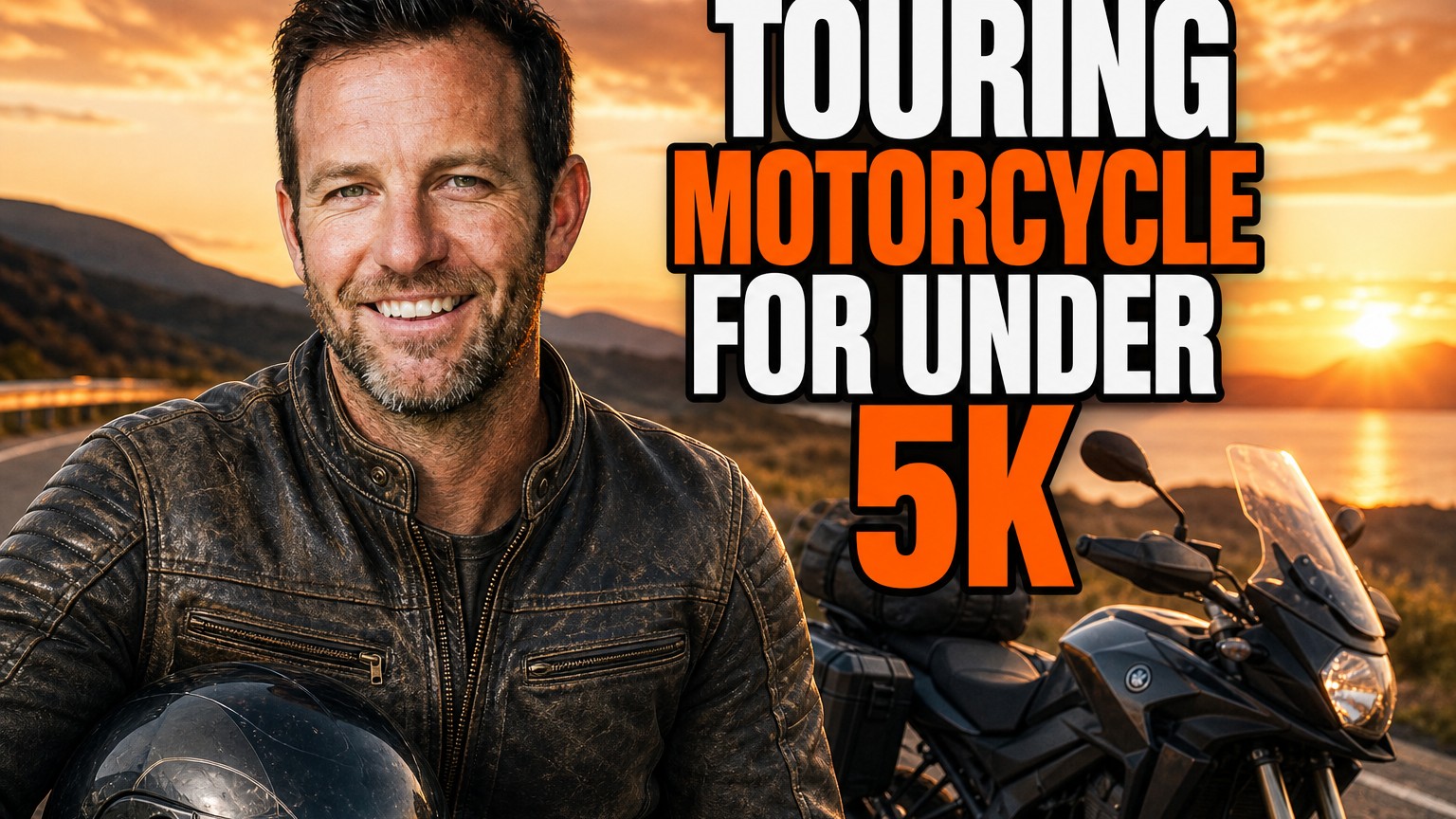
I’ll be honest: when I first set a $5,000 budget for a touring bike, I figured I’d be stuck with something tired and uncomfortable. I was wrong. The used market is full of motorcycles that were built for hours in the saddle and are now cheap enough to buy without a loan.
Over the years I’ve ridden, borrowed, or wrenched on every bike in this list. Below is my take on the best touring motorcycle for under 5k, with real specs, honest pricing, and the quirks nobody mentions in the classifieds. If you’re after even more budget ideas, my guide to the best cheap motorcycle for touring is a good companion read.
- My top all-around pick is the Suzuki V-Strom 650: comfortable, reliable, and easy to find under $5K.
- The Honda NC700X is the fuel-sipping bargain, and the KLR650 is the go-anywhere workhorse.
- If you want big-bike comfort, the FJR1300 and Gold Wing GL1800 are surprisingly attainable used.
- Budget an extra $500 to $1,000 for tires, fluids, and a few comfort upgrades.
How I Picked These Bikes
Every motorcycle here had to clear three bars. It needed to be comfortable for 300-plus-mile days, have a realistic path to carrying luggage, and be easy to find for under $5,000 in running, rideable condition.
Prices are used-market ranges I’ve seen in recent years. They’ll vary by region, mileage, and model year, so treat them as a guide, not a promise.
1. Suzuki V-Strom 650 (2004–2011) — Best Overall Touring Value
If you made me pick just one bike from this list, it would be the Suzuki V-Strom 650. It has a smooth 645cc V-twin making roughly 65 horsepower, a tall windscreen, and an upright seating position that suits long days. Fuel economy sits around 45 to 50 mpg, and the 5.8-gallon tank gives you a real 250-mile range.
Used examples typically run $3,500 to $5,000. That often includes bonus gear like hard luggage or a rack.
Why I Love It
The V-Strom’s engine is nearly bulletproof, and I’ve seen examples with well over 80,000 miles still running strong. Parts are cheap, and the aftermarket for it is huge.
What to Watch For
The stock seat gets tiresome after a few hours. A Corbin or Sargent seat fixes that. Also check that the previous owner has kept up with valve adjustments.
2. Kawasaki Versys 650 (2008–2014) — Best for Twisty Back Roads
The Kawasaki Versys 650 is the V-Strom’s livelier cousin. Its 649cc parallel twin makes about 64 horsepower and loves to rev, and the chassis feels nimble. The Versys weighs roughly 450 pounds wet and carries about 5 gallons of fuel.
Expect to pay $3,500 to $5,000 for a clean one. Many come with the optional Kawasaki hard bags.
My Experience on the Road
I took a Versys through the Alps on a rental-style trip, and it handled hairpins like a sport bike. If your dream trip involves winding mountain passes, check out my thoughts on the best motorcycle for european touring.
The wind protection is average, so I’d add a taller touring screen right away. The seat is firm but livable.
3. Honda NC700X (2012–2015) — Best for Fuel Economy and Practicality
The Honda NC700X isn’t flashy, and that’s exactly why I like it. Its 670cc parallel twin makes about 51 horsepower but delivers torque low in the rev range, and real-world mileage often lands in the 60s. Honda put a 21-liter storage compartment where a fuel tank would normally sit, and it swallows a full-face helmet.
Used prices run $3,800 to $5,000, with the optional DCT automatic version at the upper end.
A Great Choice for Going It Alone
The low seat height of about 32.7 inches and the low center of gravity make this bike confidence-inspiring. It’s one of my favorite picks if you’re researching the best motorcycle for solo touring, because it’s easy to pick up, easy to park, and cheap to fuel.
The downside is a small 3.7-gallon tank under the seat and a mellow redline. It’s a relaxed bike, not a thriller.
4. Kawasaki KLR650 (2008–2018) — Best for Rough Roads and Remote Miles
The Kawasaki KLR650 has been the dual-sport touring answer for decades. A simple 652cc single, a 6.1-gallon tank, and a long-travel suspension make it ideal when the pavement ends. It’s carbureted and basic, which means you can fix most problems with a basic toolkit.
Used bikes usually cost $3,000 to $4,500, which leaves room in the budget for luggage and farkles.
Where It Shines
If you’re planning dirt-road detours, this is a strong candidate for the best motorcycle for adventure touring on a budget. It’s also a classic choice for long, remote routes. For a northern trek, take a look at my pick for the best motorcycle for touring alaska, because the KLR has carried countless riders up the Dalton Highway.
Expect vibration at highway speeds and a tall seat of about 35 inches. Short riders should test-sit before buying.
5. Yamaha FJR1300 (2003–2008) — Best Sport-Touring Muscle
The Yamaha FJR1300 is the bike that made me realize big sport-tourers could be cheap. Its 1,298cc inline-four makes about 145 horsepower, it has shaft drive, and an adjustable windscreen keeps the wind off you. Early US models came with hard saddlebags, and fuel capacity is about 6.6 gallons.
Prices for early models range from $4,000 to $5,000, depending on mileage and condition.
The Trade-Offs
It weighs around 640 pounds wet, so slow-speed parking-lot moves take practice. Also, ask about the maintenance history, since valve checks and fork service matter on an older FJR.
Once it’s rolling, though, the FJR feels magical. It’s smooth, fast, and absurdly comfortable for two-up riding.
6. Honda Gold Wing GL1800 (2001–2005) — Best for Full-Dress Comfort
I never thought I’d see a Honda Gold Wing GL1800 for under five grand, but high-mileage examples now sit right at the limit of this budget. Its 1,832cc flat-six makes around 100 horsepower and an enormous amount of smooth torque. The bike comes with a trunk, saddlebags, cruise control, and a built-in reverse gear.
Expect $4,500 to $5,000 for a higher-mileage one that’s been maintained. These engines regularly pass 100,000 miles.
Know What You’re Buying
It weighs over 800 pounds wet, which is a lot to wrestle at a gas station. Service costs, especially for the valves and the timing belt, can also be higher than on a V-Strom.
Still, no other bike here matches the Gold Wing for pure comfort. It’s a living room on two wheels.
7. Honda CB500X (2013–2015) — Best Beginner-Friendly Tourer
The Honda CB500X is one of the easiest bikes in this list to ride. Its 471cc parallel twin makes about 47 horsepower, and the 4.4-gallon tank can deliver 60-plus mpg. The seat height is a friendly 31.7 inches, and the bike weighs around 430 pounds wet.
Used prices tend to be $4,200 to $5,000. Honda’s reliability reputation keeps resale values firm, so I’d shop patiently.
My Take
I’ve recommended the CB500X to friends who were new to touring. It’s forgiving, efficient, and simple to maintain.
It does lack highway passing power compared with the 650s. Add a taller screen and a rack and you’ve got a very capable, low-stress traveler.
8. Kawasaki Vulcan 900 Classic LT (2007–2012) — Best Cruiser for Touring
Not every touring rider wants an upright adventure bike. The Kawasaki Vulcan 900 Classic LT gives you a cruiser’s low seat, about 27 inches, plus leather-style saddlebags and a windshield right from the factory. Its 903cc V-twin makes about 50 horsepower, and the belt final drive means low maintenance.
Used examples go for $4,000 to $5,000, often with extras like a backrest or highway pegs.
Strengths and Limits
The riding position is relaxed and the ride is smooth. It weighs around 600 pounds, though, so it isn’t the nimblest option.
The saddlebags are soft-sided and not very large. I’d add a sissy bar bag if you plan multi-day trips.
My Used Touring Bike Buying Checklist
I’ve bought enough used bikes to know the pitfalls. Before handing over cash, I run through the same checks every time.
What I Inspect First
- Tires: Check the date code. Anything over six years old needs replacing, regardless of tread.
- Service history: Look for valve adjustments, coolant changes, and chain or shaft service.
- Fork seals and steering head: Look for oil leaks and notchy steering.
- Crash signs: Check for scraped bar ends, bent levers, and mismatched fairing bolts.
Where I Spend the Leftover Budget
Even a bike priced under $5,000 will need some love. I always set aside money for fresh tires, an oil change, and brake fluid.
After that, I’d prioritize a better seat, a taller windscreen, and a good set of luggage. Those three upgrades make a bigger difference than any engine mod.
Final Thoughts From My Garage
You don’t need a huge budget to see the country on two wheels. The V-Strom 650 is my top recommendation for most riders, but the right choice depends on your trips. The NC700X wins on thrift, the KLR650 on grit, and the Gold Wing on comfort.
Whichever you choose, buy the best-maintained example you can find, not just the cheapest. Then pack light, plan a route, and go ride. That’s where the real value of a touring bike shows up.
Frequently Asked Questions
Can you really tour on a motorcycle that costs under $5,000?
Yes. A well-maintained used bike like the Suzuki V-Strom 650 or Kawasaki Versys 650 will cover cross-country trips reliably. Set aside an extra $500 to $1,000 for tires, fluids, and a few comfort upgrades.
What is the most reliable touring motorcycle under $5K?
In my experience, the Suzuki V-Strom 650 and Honda NC700X are the hardest to kill. Both have simple, proven engines and low running costs, and they tolerate high mileage well.
Should I buy a new or used touring bike on a $5K budget?
Buy used. Very few new touring-capable bikes cost less than $5,000, while used models from the mid-2000s to mid-2010s offer far more comfort, power, and luggage capacity for the money.
What should I inspect before buying a used touring motorcycle?
Check the service records, tire age and wear, chain or shaft drive condition, fork seals, coolant condition, and signs of crash damage. A pre-purchase inspection from a trusted mechanic is cheap insurance.

Related Articles
7 Best Batteries for Motorcycles I’ve Tested and Trust in 2026
I've tested dozens of motorcycle batteries to find the best performers. From AGM to lithium, here are my top picks…
Jake Miller
15 min read

The Perfect Battery for Your Harley Davidson Softail: A Rider’s Complete Guide
Discover the perfect battery for your Harley Davidson Softail. I've tested multiple options and share real-world performance data, maintenance tips,…
Jake Miller
14 min read

The Best Battery for Your Harley Davidson: My Complete Guide After Years of Testing
Discover which battery truly performs best for Harley Davidson motorcycles. Real rider experience with AGM, lithium, and OEM options to…
Jake Miller
12 min read