
8 Best Beginner Scooters I’d Recommend to New Riders in 2025
 Jake Miller
9 min read
Jake Miller
9 min read
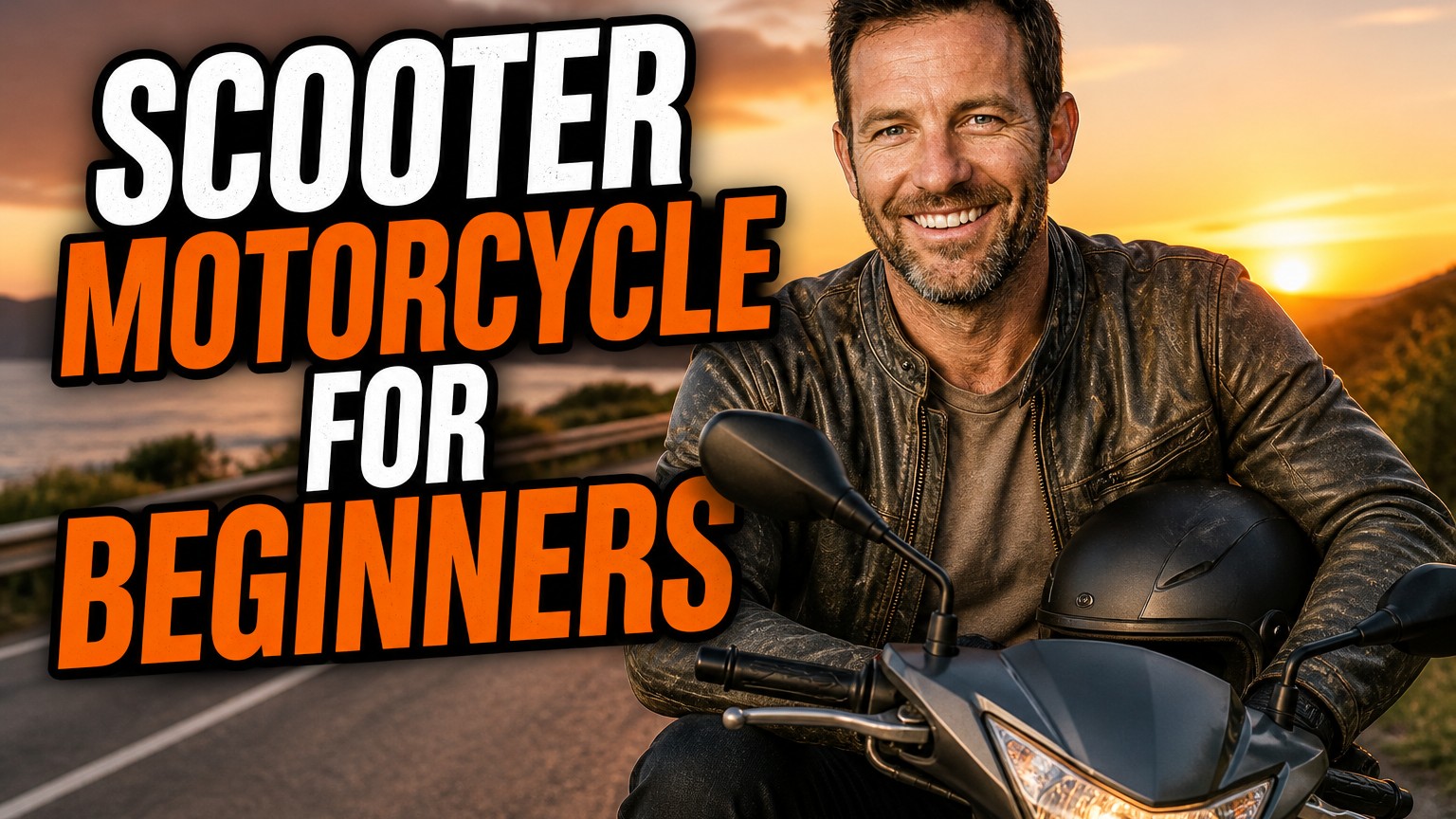
I still remember the first time I twisted the throttle on a scooter. There was no clutch, no shifting, and no stalling in front of a crowd of people at a red light. I just rolled on and went.
That ease is exactly why I think scooters are the smartest way to start riding. But the market is crowded, and the wrong scooter can feel too heavy, too slow, or too expensive for what you need.
I’ve ridden, borrowed, or spent serious time around every model on this list. Below are my picks for the best scooter motorcycle for beginners, with real specs, rough prices, and the things I wish someone had told me earlier.
- My top all-round pick for new riders is the Honda PCX, with the Yamaha Zuma 125 close behind.
- If you’re on a tight budget, the Honda Ruckus and Honda Navi are the easiest and cheapest ways in.
- Choose a 125cc to 160cc model if you’ll see roads faster than 40 mph.
- Check your local license rules, and budget for gear, insurance, and regular oil changes.
1. Honda PCX — Best Overall Scooter for Beginners
If a friend asked me to name one scooter and nothing else, I’d say the Honda PCX. It’s the one I recommend most often, because it does almost everything well and nothing badly.
The current PCX uses a 157cc liquid-cooled single with fuel injection. It makes enough power to cruise comfortably at 50 to 55 mph, but the throttle is smooth enough that you won’t get caught out in your first week.
Why I Like It
The PCX has a smart key, ABS, and an underseat compartment that swallows a helmet. Honda’s claimed fuel economy is well north of 100 mpg, and in my experience, 90 or more is realistic.
At roughly $3,800, it isn’t the cheapest option. But the build quality is typical Honda, and resale value stays strong.
Things to Consider
The seat height sits at around 31 inches, so shorter riders should sit on one first. It also weighs close to 290 lb, which is manageable but not feather-light when you’re pushing it in a garage.
2. Yamaha Zuma 125 — Best for City Fun and Confidence
The Yamaha Zuma 125 is my pick for riders who want a scooter with a little attitude. It looks rugged, with chunky tires and a short wheelbase, and it feels playful from the first block.
Its 125cc fuel-injected engine is happy in town and handles the occasional 50 mph road. The wide tires give a lot of grip and stability over rough pavement, which matters when you’re still learning to read the road.
Real-World Impressions
I find the Zuma 125 very flickable in traffic. The brakes are strong, and the upright seating position helps you look over cars.
Expect to pay around $3,800. Storage is modest, so I’d add a rear rack or top case if you plan to commute.
3. Honda Ruckus — Best Budget-Friendly Starter
The Honda Ruckus is a cult classic for a reason. With its exposed-frame, minimalist styling, it looks like nothing else on the road, and it’s one of the simplest scooters you can learn on.
It runs a 49cc fuel-injected engine, so it’s best for low-speed city streets, campuses, and neighborhoods. Don’t expect highway speeds, and that’s fine if you know it going in.
Why It Works for New Riders
The Ruckus is light and low, with a seat height around 26 inches. That makes it incredibly confidence-inspiring if you’re short or nervous about tip-overs.
The price usually sits around $3,500 to $4,000. The parts are plentiful, and the aftermarket is huge. I’ve seen owners turn them into everything from commuters to custom show pieces.
4. Honda Navi — Best Ultra-Cheap, Ultra-Simple Option
The Honda Navi sits somewhere between a scooter and a mini-moto, and I mean that as a compliment. It’s about the lowest-pressure way to start riding that I know of.
It has a 109cc air-cooled engine and an automatic transmission. The seat is low at just over 30 inches, the bike is compact, and the price is typically around $1,800 to $2,000.
My Take
I’d call the Navi a learning tool with a license plate. It’s brilliant for short commutes, errands, and building basic skills.
Its tiny fuel tank and modest power mean it isn’t for long highway rides. But for a first ride at an unbeatable price, it’s hard to argue with.
5. Kymco Like 150i — Best Value for Retro Style
The Kymco Like 150i is my favorite surprise on this list. It has a retro-modern design, a comfortable seat, and a price that usually lands around $2,800 to $3,200.
The 150cc fuel-injected engine gives you real-road capability. It also comes with ABS on current models and a user-friendly riding position.
Why It’s Worth a Look
I’ve found the Like 150i to be an easy, stable ride. It’s roomier than some competitors, so taller riders and passengers will appreciate it.
The main caveat is dealer support. Kymco’s network is smaller than Honda’s or Yamaha’s, so check for a nearby shop before you buy.
6. Vespa Primavera 150 — Best Premium Style Pick
Yes, you can start on a Vespa. The Vespa Primavera 150 is one of the prettiest scooters you can buy. It’s also genuinely beginner-friendly, thanks to its light controls and easy power delivery.
Its steel monocoque body feels more solid than the plastic bodywork on many rivals. The 155cc i-get engine is smooth and efficient, and you get ABS and traction control as well.
The Trade-Offs
Expect to pay around $5,000 to $5,500, which is a lot for a first scooter. Underseat storage is limited, and the seat is a little higher than some beginners will like.
Still, if style matters to you and you want a bike you’ll be proud to park outside a café, the Primavera is a joy.
7. Honda ADV160 — Best Adventure-Style Scooter
The Honda ADV160 is for the beginner who wants a scooter that looks a little tougher. It borrows styling from Honda’s adventure bikes, with a taller windscreen and more rugged looks.
It shares the 157cc engine with the PCX, so you get smooth, easy power and great fuel economy. The larger wheels and longer-travel suspension soak up bad roads better than most scooters in this class.
Is It Too Much for a Beginner?
I don’t think so, but it’s a bit taller and heavier at around 300 lb, with a seat just over 30 inches. Pricing is typically around $4,000 to $4,300.
If your commute includes potholes and rough patches, I’d pick this over the PCX. Just sit on it first to check the fit.
8. Yamaha XMAX 300 — Best “Grow Into It” Scooter
The Yamaha XMAX 300 is a larger maxi-scooter, and I only recommend it to beginners who are confident, a bit taller, and planning to ride highways. Its 292cc engine easily holds 65 to 70 mph.
You get ABS, traction control, a nice windscreen, and storage that fits a full-face helmet. It also has the stability that smaller scooters lack at higher speeds.
What to Know Before You Buy
At roughly $6,000 and over 400 lb, it’s the biggest and most expensive pick here. That weight takes some getting used to when you’re parking or moving it by hand.
If you think you’ll outgrow a 150cc quickly, this is a great one to grow into. Riders who want to step up in size can also check out my guide to the best 300cc motorcycle for beginners.
How I Choose a First Scooter
After helping friends and family pick their first rides, I’ve landed on a short checklist. It saves a lot of regret.
Engine Size and Road Speed
A 50cc scooter is great for neighborhood streets, but it’s slow and can feel nerve-racking on faster roads. A 125cc to 160cc model is the sweet spot for most new riders.
If you ride mostly on highways, you’ll want a 300cc or larger. Once you’re comfortable on two wheels, you may also look at the best 250cc motorcycle for beginners or the best 400cc motorcycle for beginners. Those are great stepping stones if you want to move off scooters.
Seat Height and Weight
This matters more than horsepower. If you can’t comfortably put both feet down, you’ll feel nervous at every stop.
I always tell people to sit on a scooter and rock it off its stand before they buy. If it feels heavy in the showroom, it will feel heavier on a bad day.
Brakes and Safety Features
I strongly prefer scooters with ABS, especially for riders still building braking instincts. Models like the PCX, ADV160, XMAX 300, and Primavera 150 all offer it.
Whatever you buy, budget for a quality helmet, gloves, armored jacket, and sturdy shoes. Gear costs less than a hospital bill.
Storage and Practicality
Underseat storage is one of the best things about scooters. I use mine for groceries, a rain jacket, and a lock.
Check that a helmet fits underneath if that matters to you. If it doesn’t, a small top case solves the problem.
Keeping Your Scooter Healthy
Scooters are famously low-maintenance, but they’re not no-maintenance. Regular oil changes, CVT belt checks, and tire pressure checks make a huge difference to reliability.
I always follow the owner’s manual for oil intervals and viscosity. If you want help choosing a lubricant, I put together a guide to the best oil for motorcycle scooter engines that covers the basics.
Keep your air filter clean as well, and don’t ignore strange noises from the variator. Small issues become big bills when ignored.
When to Move Beyond a Scooter
Some riders fall in love with scooters and never leave. Others catch the bug and want a bigger bike with gears and more power.
If that sounds like you, take your time. Build skills for at least a season, then explore middleweights, and eventually read up on the best 600cc motorcycle for beginners if you want a full sportbike or naked experience.
Final Thoughts From My Own Rides
If I had to start over today, I’d probably buy a Honda PCX or Yamaha Zuma 125. They’re easy, reliable, and fun enough that you’ll look for excuses to ride.
On a tighter budget, the Honda Ruckus and Honda Navi are fantastic ways to learn. And if you want something a little different, the Kymco Like 150i and Vespa Primavera 150 bring style and personality.
Whichever one you choose, take a rider safety course, wear proper gear, and enjoy the ride. Your first scooter should be the start of a long, happy riding life.
Frequently Asked Questions
What is the best scooter motorcycle for a complete beginner?
For most new riders I recommend the Honda PCX or the Yamaha Zuma 125. Both are light, automatic and easy to control, and they have enough power for real city traffic. If your budget is tight, the Honda Ruckus or Honda Navi are cheaper and simpler.
Do I need a motorcycle license to ride a scooter?
It depends on engine size and where you live. Many places let you ride a 50cc scooter on a standard driver’s license or a moped permit. Scooters of 125cc and up usually need a full motorcycle endorsement or license, so check your local DMV or transport authority first.
Is a 125cc or 150cc scooter better for beginners?
A 125cc to 160cc scooter is the sweet spot for most beginners. It can keep up with 45 to 55 mph traffic and still be gentle enough to learn on. A 50cc scooter is cheaper but can feel underpowered on busier roads.
How often should I change the oil in my scooter?
Most small scooters need an oil change roughly every 2,000 to 4,000 miles, but always follow your owner’s manual. Use an oil rated for wet-clutch or scooter use, and change the CVT belt and rollers on schedule as well.

Related Articles
7 Best Batteries for Motorcycles I’ve Tested and Trust in 2026
I've tested dozens of motorcycle batteries to find the best performers. From AGM to lithium, here are my top picks…
Jake Miller
15 min read

The Perfect Battery for Your Harley Davidson Softail: A Rider’s Complete Guide
Discover the perfect battery for your Harley Davidson Softail. I've tested multiple options and share real-world performance data, maintenance tips,…
Jake Miller
14 min read

The Best Battery for Your Harley Davidson: My Complete Guide After Years of Testing
Discover which battery truly performs best for Harley Davidson motorcycles. Real rider experience with AGM, lithium, and OEM options to…
Jake Miller
12 min read