
Motorcycle Throttle Sticking? 9 Common Causes and How I Fix Them
 Jake Miller
9 min read
Jake Miller
9 min read
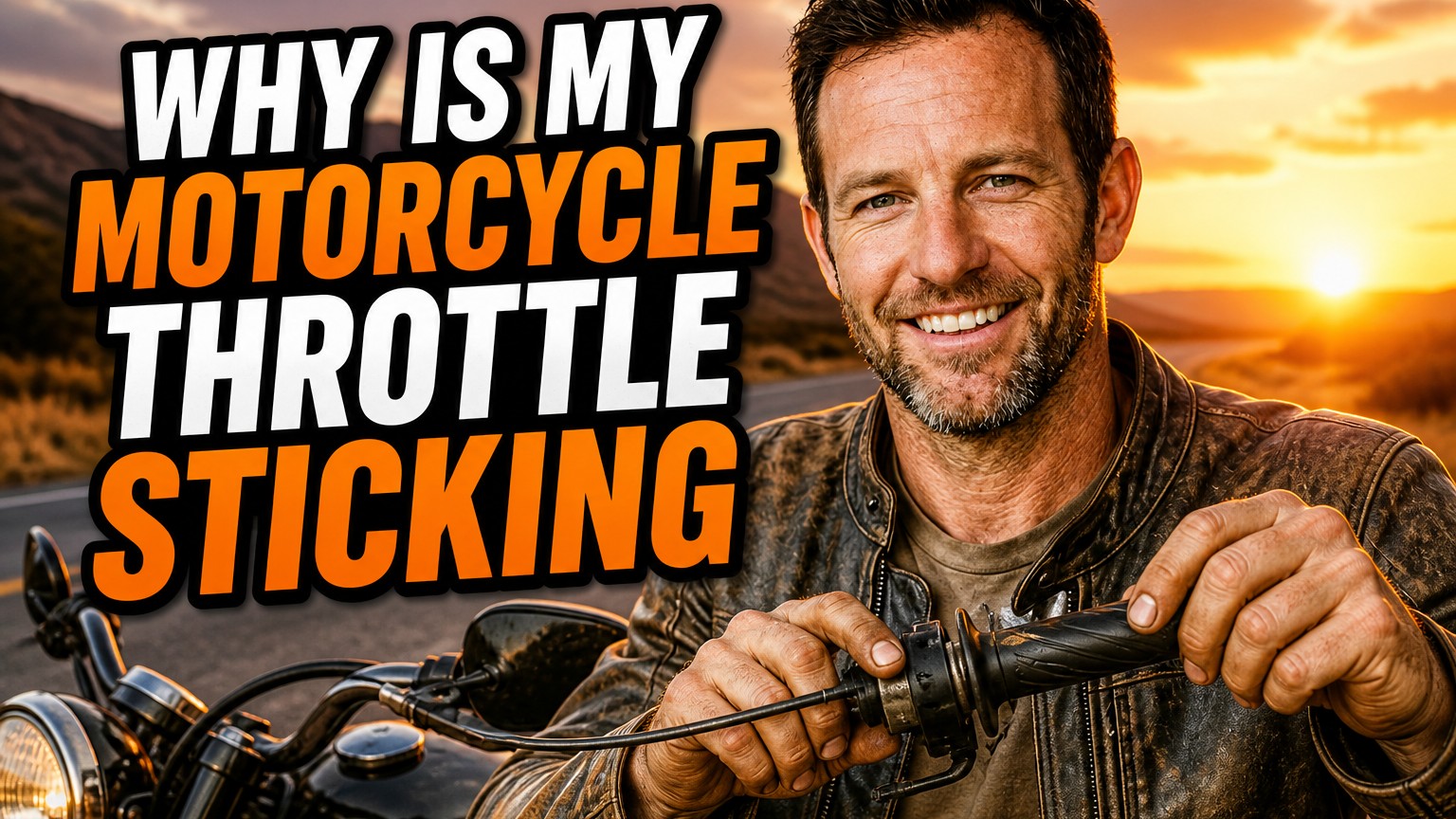
There’s a particular kind of cold sweat that only happens when you roll off the throttle and the engine keeps pulling. I’ve felt it once, rolling up to a stop sign, and I never want to feel it again. If you’re asking yourself why your throttle is sticking, take a breath and know that you’re not alone.
The good news is that most sticking throttles come from simple, fixable problems. The bad news is that this is one issue you should never ignore. In this guide, I’ll walk you through what I’ve learned from my own bikes, the common causes, and the exact steps I take to diagnose and fix it.
- The usual culprits are a dry or dirty throttle cable, a binding throttle tube, or bad cable routing.
- Less common causes include sticky carbs or throttle bodies, a weak return spring, and handlebar interference.
- Most fixes take under an hour with basic tools and a can of cable lube.
- Never ride with a throttle that doesn’t snap shut. Know your kill switch and clutch response.
First Things First: Safety Comes Before Diagnosis
Before I touch a wrench, I treat a sticking throttle as an emergency-level symptom. A throttle that hangs open can turn a routine stop into a crash. If your bike isn’t returning to idle on its own, don’t ride it until it’s sorted.
Here’s my emergency habit, and I suggest you build it too. If the throttle ever sticks while riding, I do these things in order:
- Pull the clutch in to disconnect the engine from the rear wheel.
- Hit the kill switch to shut the engine off.
- Brake smoothly and pull over to a safe spot.
Practice finding that kill switch without looking. I’ve made it muscle memory, and it’s the one thing that makes a stuck throttle a scare instead of a disaster.
The Most Common Culprit: A Dry or Dirty Throttle Cable
In my experience, around 70% of sticking throttles trace back to the cable. Over time, the inner wire loses lubrication, collects grit, and drags against the housing. Eventually, the return spring can’t overcome that friction.
How to Tell If It’s the Cable
Disconnect the cable from the carbs or throttle bodies if you can, and slide the inner wire back and forth. It should glide like butter. If it feels gritty, notchy, or stiff, you’ve found your problem.
Also watch for fraying near the ends. Any visible broken strands mean it’s replacement time, not lube time.
How I Lube a Throttle Cable
I use a cable luber tool and a dedicated cable lubricant. Avoid heavy grease, which can gum up and make things worse in cold weather. Here’s my process:
- Disconnect the cable at both ends.
- Clamp the luber on the cable end and spray until lube emerges from the other end.
- Let it sit for a few minutes, then work the inner wire back and forth.
- Reconnect and check the free play.
If you don’t have a luber, a makeshift funnel made from tape or a rubber glove finger works in a pinch. I’ve done it on the side of a trail more than once.
Cable Routing and Free Play Problems
A healthy cable can still stick if it’s routed badly. Sharp bends, pinched sections, or a cable that’s too short or too long will create drag. I always check this after any handlebar swap or fork work.
Check Your Routing
Turn the bars lock to lock and watch the throttle. If the idle changes or the throttle feels heavier at full lock, the cable is binding or being stretched. Re-route it along the factory path, avoiding tight loops and sharp kinks.
Free Play Matters
Most bikes want around 2 to 3 mm of free play at the throttle grip. Too little and the throttle can’t fully close. Too much and you’ll get delayed response. If you’re curious how looseness shows up on the road, I covered the 10 symptoms of loose throttle cable in motorcycles and it’s worth a read.
Adjusters sit at either the lever end or the carb end. Loosen the locknut, turn the adjuster, then tighten the locknut again and recheck.
A Binding Throttle Tube or Grip
Sometimes the cable is fine and the trouble is at your hand. The throttle tube slides over the end of the handlebar, and if it’s dirty or dry, it can stick. Aftermarket grips are a big offender here.
Grips Rubbing the Bar-End or Switch Housing
If the rubber grip is pressed against the switch housing or bar-end weight, it creates friction. I’ve had this happen after installing new grips that sat a few millimeters too far inboard. Leave a small gap so the tube spins freely.
Cleaning and Lubricating the Tube
Slide the grip off, clean the bar and tube with brake cleaner, then apply a light smear of silicone or lithium grease on the bar. Don’t overdo it. A thin coat is enough.
If the tube itself is cracked or worn, replacement is the answer. Many riders ask are motorcycle throttle tubes universal, and the short answer is no. Always match the tube to your make, model, and cable setup.
Weak Return Springs and Worn Components
Inside the carbs or throttle bodies, return springs pull the throttle plates closed. On older bikes, those springs can weaken, and the cable can’t be blamed for it. If the throttle sticks only when warm, I suspect this or a related wear issue.
What I Look For
- Throttle slowly returning instead of snapping back
- Idle hanging high after a rev
- Stiffness that increases as the engine heats up
In these cases, I pull the airbox and watch the linkage while a friend works the throttle. Any lazy movement or visible corrosion is a red flag.
Carburetor and Throttle Body Issues
Carburetors can stick for a few reasons. Varnish from old fuel, a gummed-up slide, or a bent needle can all keep the slide from dropping smoothly. Fuel-injected bikes can get carbon buildup around the throttle plates.
Cleaning Is Often the Fix
I remove the carbs, clean the slides and bores, and replace any worn O-rings. For fuel-injected bikes, a careful throttle body clean with the right spray usually does the trick. Be gentle, and follow your service manual because some electronic throttle bodies shouldn’t be sprayed wildly.
Related symptoms can overlap too. If your bike hesitates or dies when you twist the grip, check out my notes on a motorcycle stalls when giving throttle for a different set of causes.
Wrong Cable or Poor-Quality Replacement Parts
I’ve learned the hard way that not every cable fits every bike. A cable that’s slightly too long, too short, or the wrong sheath thickness can create binding or poor return. Cheap replacements are another trap.
People often ask are all motorcycle throttle cables the same, and my answer is a firm no. Length, end fittings, and routing differ widely. Stick with OEM or reputable aftermarket cables designed for your exact model.
Cold Weather, Water, and Corrosion
If your throttle only sticks on cold mornings or after a rainy ride, moisture is likely the cause. Water gets into the cable housing, then freezes or corrodes the inner wire. I notice this most in winter commutes.
A fresh lube job with a water-displacing cable lubricant usually helps. If the cable has rusted inside, I replace it rather than hope it holds up.
Accessories That Can Cause Trouble
Aftermarket add-ons can interfere with a smooth throttle. Heated grips, bar-end weights, and cruise-control gadgets all sit right where the throttle tube operates. If sticking started after an install, that’s my first suspect.
Throttle lockers and cruise assists are another point of concern. I’m cautious with them, and I wrote about are motorcycle throttle locks dangerous if you want a deeper look at the risks. Anything that holds the throttle open should be used with real care.
My Step-by-Step Diagnostic Routine
When a bike comes to me with a sticky throttle, I follow the same order every time. It keeps me from chasing the wrong problem and saves a lot of wasted effort.
- Engine off, test the grip. Does it snap back on its own?
- Turn the bars lock to lock. Watch for changes in resistance.
- Remove the grip and inspect the tube. Clean and lube it.
- Disconnect the cable at the carbs or throttle body. Check the slide of the inner wire.
- Check the return action at the throttle body. If it sticks there, the cable isn’t the cause.
- Inspect routing and free play. Adjust as needed.
This sequence isolates whether the problem is at the handlebar, in the cable, or at the engine end. Most of the time, I find the answer by step three or four.
When to Replace Instead of Repair
Lubing a cable is a quick fix, but there are times I skip straight to replacement. Frayed strands, kinks, rust, or a cable that’s stretched and won’t hold adjustment all call for a new one. A cable costs far less than a crash.
I also replace the cable if I’ve lubed it twice in a short time and the problem keeps returning. That’s usually a sign of internal damage you can’t see.
Preventing a Sticky Throttle in the Future
A little routine care keeps this issue from coming back. Here’s what I do on all my bikes:
- Lube cables every 6 months or at each major service
- Check free play regularly, especially after adjusting the bars
- Clean the throttle tube whenever I change grips
- Wash the bike gently, avoiding high-pressure water on cable ends
- Replace cables at the first sign of fraying
These small habits take minutes, and they’ve saved me from several roadside headaches.
Final Thoughts From My Garage
A sticking throttle can be frightening, but it’s usually a simple mechanical issue rather than something catastrophic. Start with the cable, then work through the grip, the routing, and the engine end. Take it seriously, and don’t ride until the throttle snaps closed every single time.
If you’ve worked through everything here and the problem persists, take the bike to a trusted mechanic. Your safety is worth far more than the cost of a shop visit. Stay safe out there, and keep the rubber side down.
Frequently Asked Questions
Is it safe to ride a motorcycle with a sticking throttle?
No. A sticking throttle is a serious safety risk because the bike may not slow down when you expect it to. Stop riding until you find and fix the cause, and remember you can always pull the clutch and hit the kill switch in an emergency.
What is the most common cause of a sticking motorcycle throttle?
The most common cause is a dry, dirty, or frayed throttle cable. Lack of lubrication and grit inside the housing create friction that prevents the throttle from snapping back cleanly.
Can I fix a sticking throttle myself?
Often yes. Lubricating the cable, cleaning the throttle tube, and adjusting free play are simple jobs for most riders. If the cable is frayed or the carbs or throttle bodies are binding, replace parts or see a mechanic.
How often should I lubricate my throttle cable?
I recommend checking and lubing the cable every 6 months or at every major service, and more often if you ride in rain, dust, or salty conditions.

Related Articles
7 Best Batteries for Motorcycles I’ve Tested and Trust in 2026
I've tested dozens of motorcycle batteries to find the best performers. From AGM to lithium, here are my top picks…
Jake Miller
15 min read

The Perfect Battery for Your Harley Davidson Softail: A Rider’s Complete Guide
Discover the perfect battery for your Harley Davidson Softail. I've tested multiple options and share real-world performance data, maintenance tips,…
Jake Miller
14 min read

The Best Battery for Your Harley Davidson: My Complete Guide After Years of Testing
Discover which battery truly performs best for Harley Davidson motorcycles. Real rider experience with AGM, lithium, and OEM options to…
Jake Miller
12 min read