
Are Motorcycle Throttle Locks Dangerous? What I’ve Learned Riding With Them
 Jake Miller
8 min read
Jake Miller
8 min read
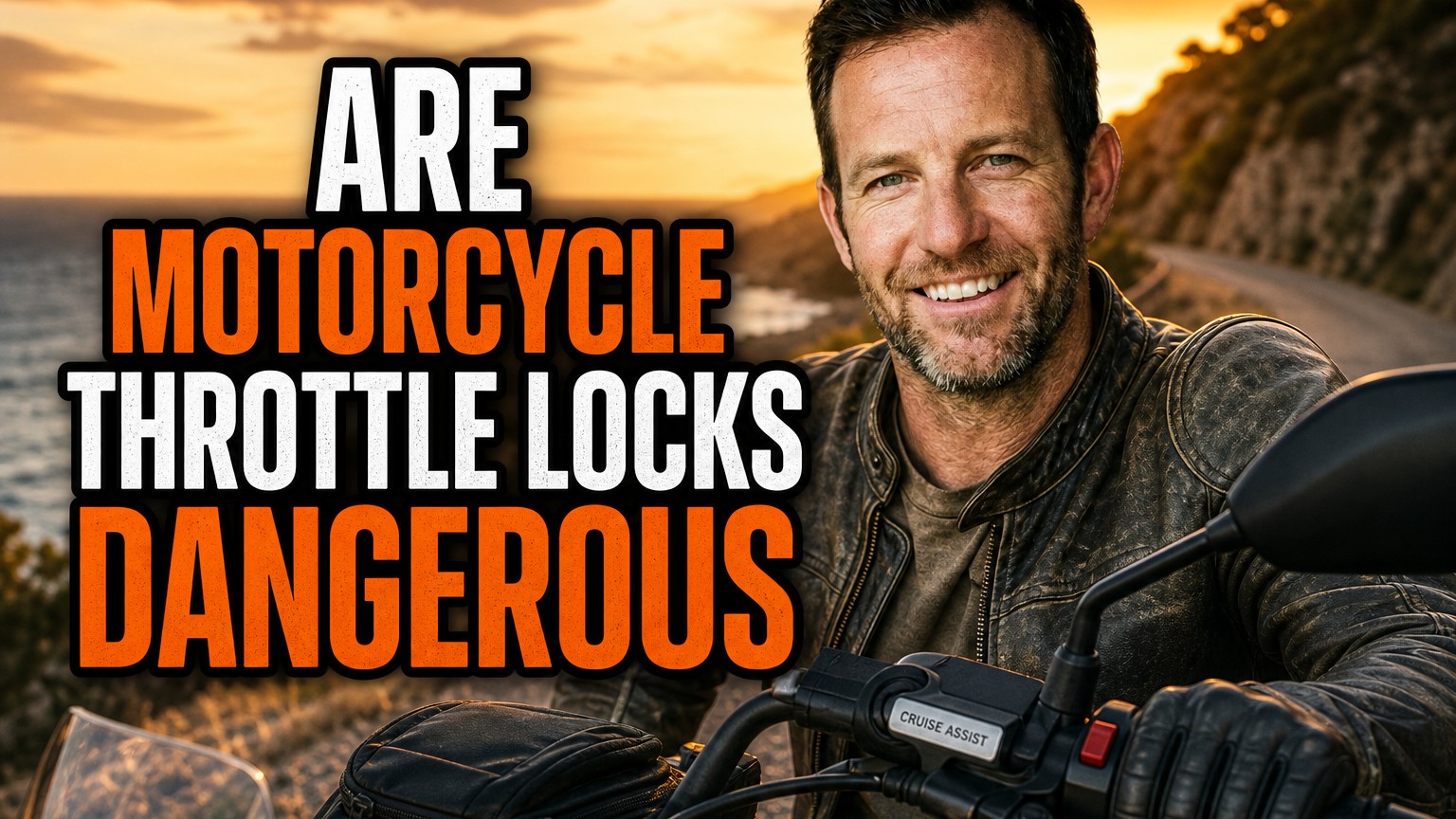
I’ll be honest: the first time I clamped a throttle lock onto my handlebar, I felt a little nervous. Anyone who has done a long highway slog knows the right-hand cramp that sets in after a couple of hours. A throttle lock sounds like a dream, but it also sounds like something that could go wrong fast.
So, are they actually risky? I’ve used several types over thousands of miles, and I’ve formed some strong opinions. Here’s what I’ve learned about when they help, when they hurt, and how I keep myself out of trouble.
- Throttle locks are not inherently dangerous, but they become risky when misused in traffic or on twisty roads.
- The biggest hazard is a locked throttle when you need to react instantly.
- Quality, quick-release designs and good habits cut the risk dramatically.
- Cruise control or a throttle rocker can be a safer alternative for many riders.
What Exactly Is a Throttle Lock?
A throttle lock is a small device that holds your throttle at a steady position without you gripping it. Think of it as a poor man’s cruise control. It lets you relax your wrist and keep a consistent speed.
There are a few common types, and the differences matter a lot for safety.
Friction-Style Throttle Locks
These use a tightening knob or a clamp that adds drag to the throttle tube. You twist the throttle to your desired speed, then tighten the friction until it stays put. They’re cheap and widely available.
In my experience, they’re also the most variable in quality. A good one is smooth and predictable. A bad one slips, sticks, or needs constant readjusting.
Throttle Rockers and Wrist Rests
A throttle rocker is a paddle you rest your palm against. It doesn’t lock anything. Instead, it lets you hold the throttle with the heel of your hand rather than your fingers and grip.
I consider this the safest option on the list, because the moment you lift your hand, the throttle snaps closed.
Electronic Cruise Control
Many modern bikes come with cruise control, and aftermarket kits exist for older ones. These systems cancel when you touch the brake, pull the clutch, or roll the throttle closed. That built-in cutoff is a big safety win.
So, Are Throttle Locks Actually Dangerous?
The short answer: they can be, but the danger comes from how they’re used, not from the idea itself. A throttle lock is a tool. A hammer is great until you swing it carelessly.
Let me walk through the real risks I’ve personally thought about and, in a couple of cases, experienced.
The Delayed Reaction Problem
This is the big one. When your hand is relaxed and the throttle is locked, your brain has one extra step to complete before you can slow down. You have to release the lock, then roll off, then brake.
In an emergency, even a half-second delay is enormous. At 70 mph you’re covering roughly 100 feet per second.
A Throttle That Won’t Release
The scariest scenario is a lock that jams. If the friction mechanism seizes or the clamp shifts, you could be stuck at speed with a throttle that won’t close.
I’ve tested a cheap lock that did exactly this once, while I was parked and revving gently. It was a harmless scare in a driveway, but it would have been terrifying on a highway. I tossed it immediately.
Reduced Grip and Control
When you let your fingers loosen, you’re also reducing your command over the handlebar. A pothole, a crosswind gust, or a rut in the road can yank the bars if your grip is lazy.
A relaxed hand is not the same as a disengaged hand. I always keep my fingers wrapped around the grip even with a lock engaged.
False Confidence and Fatigue
Locks can make you feel like the ride is on autopilot. It isn’t. I’ve caught myself zoning out on long straight stretches, and that’s when the danger creeps in.
The lock solves hand fatigue, but it can’t solve attention fatigue. That part is still on you.
When I Think Throttle Locks Are Perfectly Fine
I’m not here to scare anyone off. Used in the right setting, a throttle lock is genuinely helpful. Here’s where I feel comfortable using mine.
Long, Empty Highways
Wide open interstates with light traffic and good visibility are the sweet spot. Think desert crossings or long flat stretches of rural highway. Speeds are steady and surprises are rare.
Light Traffic With Plenty of Following Distance
If I have lots of space around me and no merging lanes or tight exits, I’ll use it. But I’m constantly scanning mirrors and the road ahead.
Riders With Hand or Wrist Issues
For riders with arthritis, old injuries, or tendon pain, a throttle assist can make riding possible and comfortable. In those cases, I think the benefit clearly justifies careful use.
When I Never Use a Throttle Lock
There are situations where I keep my hand fully on the throttle and the lock disengaged. No exceptions.
- Heavy or unpredictable traffic: Sudden stops are common, and you need instant control.
- Twisty roads: Corners require constant throttle modulation.
- Wet, icy, or gravel-covered roads: Traction can vanish quickly, and abrupt throttle changes are crucial.
- Urban riding: Intersections, pedestrians, and turning cars make locks a bad idea.
- Strong crosswinds: You’ll need to make steady, small adjustments.
How I Use a Throttle Lock Safely
Over the years I’ve built a short routine. It takes seconds and has kept me out of trouble.
Test It Before Every Ride
Before rolling out, I check that the lock engages smoothly and disengages with a quick twist. I also confirm the throttle snaps fully closed when released. If anything feels gritty, I fix it before riding.
Choose Quality Over Price
A throttle lock sits between you and the engine’s power. This is not the place to save five dollars. I look for solid construction, positive release, and good reviews from riders on bikes similar to mine.
It’s the same mindset I bring to maintenance. Just as I’d research the best engine oil for motorcycle use rather than grabbing whatever is cheapest, I treat control accessories with the same care.
Keep Your Fingers Close to the Controls
Even with the lock on, I keep two fingers covering the front brake lever and my other fingers lightly on the grip. That way I’m ready to react without fumbling.
Practice Releasing It Instinctively
I practiced disengaging the lock in an empty parking lot until it was muscle memory. Your body should release it before your brain finishes the thought.
Set a Reminder to Disengage Early
When I see an exit, a town, or slowing traffic ahead, I turn the lock off well in advance. It’s much easier to leave it off than to wrestle with it in a panic.
Mechanical Health Matters Too
A smooth, predictable throttle starts with a healthy bike. Sticky cables, dirty throttle bodies, or an engine that surges can make any lock feel worse than it is.
I keep my cables lubricated and use quality oil to keep the engine running consistently. If you’re shopping, check out guides on the best motor oil for 4 stroke motorcycle engines, or compare the top engine oil for 4 stroke motorcycle options for your riding style.
Riders in warmer climates might find the best engine oil for 4 stroke motorcycle in india especially useful, and if you’re still undecided, read up on what is the best engine oil for 4 stroke motorcycle models like yours need. A bike that runs smoothly gives you a more predictable throttle, and that’s a safety feature in itself.
Safer Alternatives to Consider
If the risks still make you uneasy, you have options. I’ve tried most of them and each has its place.
Throttle Rockers
They’re inexpensive, simple, and have no locking mechanism. You get hand relief while keeping the throttle fail-safe. For most riders on moderate trips, this is my first recommendation.
True Cruise Control
An electronic system that cancels when you brake or pull the clutch is a major step up. If you do a lot of touring, it’s worth the investment. It holds speed more precisely than a friction lock ever could.
Better Ergonomics
Sometimes the fatigue problem isn’t the throttle at all. Adjusting your bar position, adding grip cushioning, or taking more frequent breaks can fix a lot. I’ve found a relaxed posture reduces hand strain more than I expected.
A Note on Legality and Responsibility
Rules vary depending on where you ride. Some regions have no specific laws about throttle locks, while others have general rules about maintaining control of your vehicle. It’s worth a quick check of your local regulations.
Whatever the law says, you are always responsible for your bike’s behavior. If a lock contributes to a crash, “the device did it” won’t hold up with an insurer or a judge.
My Honest Verdict
So, are throttle locks dangerous? In my experience, only when they’re poorly made, poorly maintained, or used in the wrong setting. On an open highway with a quality unit and good habits, I consider them a helpful comfort tool.
But I never treat them as a set-and-forget feature. I stay alert, keep my fingers ready, and disengage early. If you can’t commit to that discipline, a throttle rocker or true cruise control is a smarter choice.
Ride smart, take care of your hands, and keep that throttle under your command. Your wrists, and your safety, will thank you.
Frequently Asked Questions
Are motorcycle throttle locks dangerous?
They can be if used carelessly. A throttle lock removes your need to hold the grip, so a sudden hazard can catch you with a locked throttle. Used on straight, empty, open roads and with quick-release design, they are generally safe.
Can a throttle lock stick open?
Cheap or poorly installed units can jam or fail to release. Choose a quality lock, check it before every ride, and always make sure that twisting the throttle forward or backward releases it instantly.
Are throttle locks legal?
Laws vary by region, and some places have no specific rules. Check your local traffic laws and remember that you are still fully responsible for controlling the bike at all times.
What is a safer alternative to a throttle lock?
A cruise control system or a simple throttle rocker are safer options. Cruise control disengages automatically when you touch the brake or clutch, which a basic friction lock usually does not do.

Related Articles
7 Best Batteries for Motorcycles I’ve Tested and Trust in 2026
I've tested dozens of motorcycle batteries to find the best performers. From AGM to lithium, here are my top picks…
Jake Miller
15 min read

The Perfect Battery for Your Harley Davidson Softail: A Rider’s Complete Guide
Discover the perfect battery for your Harley Davidson Softail. I've tested multiple options and share real-world performance data, maintenance tips,…
Jake Miller
14 min read

The Best Battery for Your Harley Davidson: My Complete Guide After Years of Testing
Discover which battery truly performs best for Harley Davidson motorcycles. Real rider experience with AGM, lithium, and OEM options to…
Jake Miller
12 min read