
Rust in Your Fuel Tank: 7 Symptoms I Ignored Until My Bike Died
 Jake Miller
10 min read
Jake Miller
10 min read
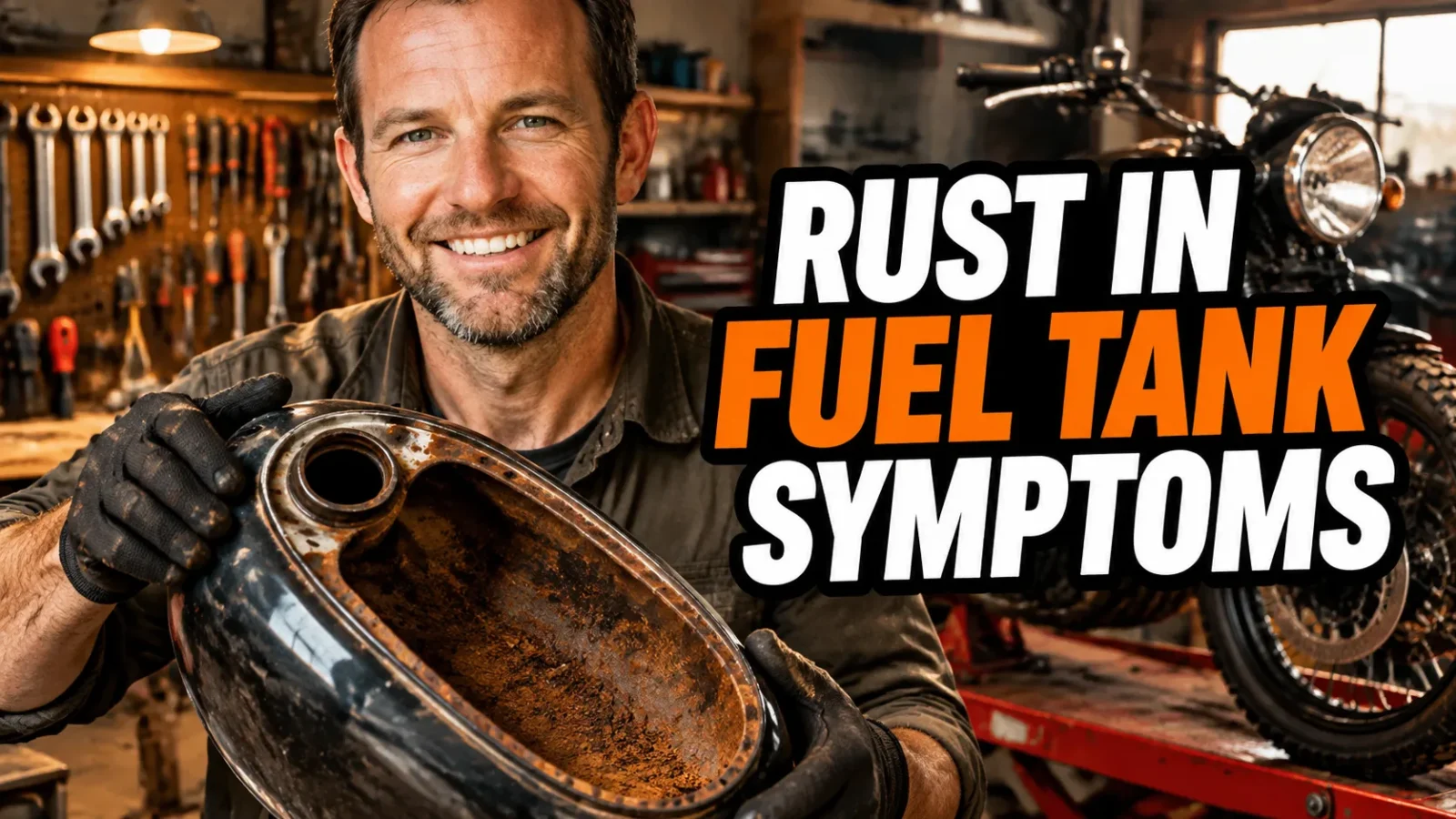
I still remember the afternoon my bike coughed, sputtered, and died three miles from home. I blamed the carburetor, then the spark plugs, then the battery. I replaced all three. The real culprit was quietly rotting away underneath me the whole time, inside my fuel tank.
Rust in a fuel tank rarely announces itself. It builds up over months, sheds tiny flakes of iron oxide into your fuel, and slowly strangles your fuel system from the inside out. By the time most riders notice, they’re already chasing a string of mystery breakdowns.
I’ve been through this twice now. Once on an old carbureted project bike, and once on a fuel-injected daily rider that I trusted way too much. Here’s what I learned about spotting the symptoms early, confirming the diagnosis, and fixing it without replacing half the motorcycle.
- Discolored fuel, a filter that keeps clogging, and a rough idle are the three earliest and most reliable symptoms.
- Rust is magnetic, so a coffee filter and a magnet will confirm a diagnosis in about ten minutes.
- Fuel-injected bikes usually show a whining pump before anything else; carb bikes clog their pilot jet first.
- Cleaning and sealing works sometimes, but replacing the tank is the fix I’d choose again.
- Keeping the tank full and riding regularly is the cheapest rust prevention there is.
Why Your Tank Is Basically a Condensation Chamber
The short version is simple: water plus bare steel plus time equals rust. The longer version is that your fuel tank is one of the best condensation traps on the whole machine.
Temperature Swings Pull Water Out of the Air
Every time the temperature changes, the air inside your tank expands and contracts. Warm air holds moisture. Cold tank walls make that moisture condense into droplets.
Those droplets slide down the sides and pool at the bottom, which is exactly where your fuel pickup or pump strainer sits. On a bike parked outside, this cycle repeats hundreds of times a year.
Ethanol Fuel Makes Everything Worse
Most pump gas contains ethanol, which is hygroscopic, meaning it actively attracts and holds water. That’s not automatically a disaster, but fuel that sits for weeks can phase separate and drop water out of suspension.
Once that water is loose in the bottom of the tank, it goes straight to work on bare metal. I’ve opened tanks that looked spotless until I shined a light into the lowest corner and saw the orange bloom starting.
Storage Is Where the Real Damage Happens
Almost every rusty tank I’ve pulled has a story attached to it. A bike that sat for two winters. A tank removed and left empty in a humid garage. An empty tank is the worst case, because there’s nothing to displace the moist air inside it.
If you take one thing from this article, make it this: store your bike with a full tank, not an empty one. It feels counterintuitive, but it genuinely matters.
The Symptoms I Noticed First and Wrote Off
The early warning signs are subtle enough that most of us dismiss them as “just an old bike thing.” I did exactly that for months. Here’s what I should have paid attention to.
1. Fuel That Looks Like Weak Tea
Pull a sample from your petcock or drain a little into a clear glass jar. Healthy gasoline is translucent and consistent. Rust-contaminated fuel looks like weak tea, dirty apple juice, or coffee with too much cream in it.
Let the jar sit for a few minutes and check the bottom. If you see flecks settling out, your tank is shedding its lining one particle at a time.
2. A Fuel Filter That Keeps Clogging
This was my first genuine clue. I replaced my inline filter, and two weeks later the bike was starving for fuel again. So I replaced it again, and then a third time.
A filter that repeatedly loads up with reddish-brown sludge is essentially a rust delivery system. If yours looks like it’s been packed with cocoa powder, stop buying filters and start looking upstream.
3. Rough Idle, Misfires, and a Dead Spot
Rust particles are abrasive, and they love small passageways. On a carbureted bike they wedge into the pilot jet. On a fuel-injected bike they get caught in the injector screens and eventually the injectors themselves.
The result feels exactly like a tuning problem. A lopey idle. A stumble when you crack the throttle. An occasional pop through the intake. I chased jet sizes and air screws for a week before it occurred to me to look in the tank.
4. Power Loss Under Load
Early on, the bike may feel perfectly fine around town and only act up when you demand real fuel flow. Climbing a hill or merging onto a highway is when a partially blocked pickup screen simply can’t keep up.
It’s an intermittent, maddening symptom. It works, then it doesn’t, then it works again, usually right after you’ve convinced yourself you imagined the whole thing.
5. Hard Starting After Sitting Overnight
If the bike fires up fine after a long sit and then dies a minute later, that’s often water and rust sludge being pulled into the fuel stream. Let it sit and the junk settles. Run it and everything gets stirred up again.
I used to think this was a choke issue. It wasn’t. It was sediment.
6. A Fuel Pump That Groans
On a fuel-injected bike, the in-tank pump has to push fuel through a very fine strainer. When that strainer is packed with rust, the pump works harder, runs hotter, and gets noticeably louder.
That high-pitched whine is a warning, not a personality trait. Keep ignoring it and you’ll be buying a pump. I know, because I did.
7. Sediment in the Float Bowl or Injector Screens
Drop a carburetor float bowl and you’ll find out fast. A thin layer of fine rust dust at the bottom is a dead giveaway, especially if it’s reddish or dark brown and stains your fingers.
On EFI bikes, pull the injectors and check the little inlet screens. They’re a fantastic rust detector, and they’re cheap to inspect compared to what they protect.
Bonus: That Metallic, Stale Smell
Old rusty fuel has a distinctive odor. It’s sharper and more sour than fresh gasoline, a bit like varnish mixed with wet pennies. If you catch that smell when you open the cap, grab a flashlight and look inside.
Symptoms That Hide Depending on Your Fuel System
Carbureted Bikes Fail at the Pilot Jet First
On a carb bike, rust usually announces itself as a clogged pilot jet and a rough idle. The main jet is bigger, so it takes longer to plug up. That’s why so many riders end up rebuilding a carb when the actual problem is behind them.
Fuel-Injected Bikes Whine Before They Stumble
On an EFI bike, the strainer and pump absorb the damage first. You’ll typically hear a louder pump and feel a loss of top-end power before you ever notice a rough idle. Different failure order, identical root cause.
The “Fine at Low RPM” Trap
A lightly rusted tank can run beautifully for months, because the flakes only become a problem once they break loose and get pulled toward the pickup. Gentle around-town riding hides the issue. Hard riding exposes it.
That gap between “runs fine” and “stranded on the shoulder” is exactly why I now check the tank on any bike I buy.
How I Confirm It’s Actually Rust
I don’t trust guesswork anymore, and this diagnostic takes about ten minutes.
Step one: drain a pint of fuel through a paper coffee filter and let the filter dry completely. Look for reddish-brown residue.
Step two: pour that dried residue into a zip bag and run a strong magnet along the outside. Rust is magnetic. Dirt, varnish, and tank liner debris mostly aren’t.
Step three: push a cheap USB endoscope or a flexible phone camera into the filler neck. Look at the lowest corner and along the seams, which is where rust always starts.
Step four: inspect the filler cap gasket and the vent. A dried, cracked gasket lets rainwater straight into a tank that would otherwise be fine.
What I Did About It and What I’d Do Differently
Cleaning and Sealing: The Cheap Route
You can remove rust with an acid or electrolytic process and then coat the interior with an epoxy or phenolic liner. It genuinely works, but only if the metal underneath is still structurally sound and you prep it obsessively.
I’ve had a liner peel on me. Bits of cured epoxy went through the entire fuel system, and it was far more miserable to deal with than the original rust. If you go this route, follow the prep instructions exactly and never skip the drying stage.
Replacing the Tank: The Route I’d Take Again
On a bike I plan to keep, a new or clean used tank is worth every penny. It’s the difference between actually fixing the problem and spending years managing it.
Used tanks are everywhere for popular models, and a seller who lets you scope the inside is worth paying a premium for. Bring a flashlight. Bring a magnet.
Treating Everything Downstream
Whatever you decide about the tank itself, you also have to deal with everything after it. New fuel filter. Cleaned or replaced injectors, or a full carb rebuild. Flushed lines. A fresh pump strainer on EFI bikes.
Rust particles travel. Replacing a tank and reusing a contaminated filter is how people end up right back where they started a month later.
How I Keep Rust From Coming Back
Prevention is genuinely boring and genuinely effective. Here’s my routine.
Keep the tank full. Less air means less condensation. This single habit prevents more rust than anything else on this list.
Use a fuel stabilizer for storage. On ethanol blends it’s cheap insurance, especially for anything sitting more than a month.
Ride the bike. Fresh fuel cycling through the system is the best rust inhibitor there is. Bikes that sit are bikes that rot.
Drain the carburetor bowls if you’re storing a carb bike for more than a few weeks. Leaving ethanol fuel sitting in a bowl is asking for varnish on top of rust.
Check the cap seal and vent tube. A blocked drain tube around the filler neck lets water pool right at the opening, and it will find its way in.
When to Hand It to a Professional
If you’re looking at pinholes, seam rot, or a tank that flexes under your hand, stop. That’s structural failure, not surface rust, and it needs welding or replacement.
Welding a fuel tank is genuinely dangerous because of residual fumes. Even a tank that’s been “empty” for weeks can hold enough vapor to cause an explosion. I don’t do it, and I’d strongly suggest you don’t either.
My Honest Takeaway
Rust in a fuel tank is one of those problems that punishes you for ignoring small clues. A slightly off idle, a filter that clogs too often, a pump that’s a little louder than it used to be. None of those feel urgent in the moment.
Together, they’re a countdown timer. The earlier you catch it, the cheaper and less painful the fix, and the more riding season you actually get to enjoy.
If anything in this article sounds familiar, do yourself a favor this weekend. Drain a little fuel into a glass jar, let it settle, and look at it under good light. Ten minutes now can save you a fuel pump, a set of injectors, and a very long walk home.
Frequently Asked Questions
What are the first signs of rust in a fuel tank?
The earliest signs are usually discolored fuel that looks like weak tea, a fuel filter that keeps clogging with reddish brown sludge, and a rough idle or stumble that feels like a tuning problem. A sharp, varnish like smell when you open the cap is another giveaway.
Can rust in a fuel tank fix itself?
No. Rust only spreads once moisture reaches bare steel. You can slow it down by keeping the tank full and using a stabilizer, but the only real fixes are cleaning and sealing the tank or replacing it outright.
How do I test whether my tank is actually rusty?
Drain a small amount of fuel through a coffee filter and let it dry. Run a strong magnet through the residue in a zip bag. Rust is magnetic, so if the dark particles stick, you have iron oxide in your fuel. A cheap USB endoscope also lets you look inside the tank directly.
Does rust in the tank damage a fuel pump?
Yes, and it is often the first major casualty on fuel injected bikes. The in tank pump has to push fuel through a fine strainer, so rust particles make it work harder and run hotter. A high pitched whine is an early warning that the strainer is loading up.

Related Articles

Harley Fuel Pump Problems: What I’ve Learned Fixing My Own Bikes
From dead primes to hot-start stumbles, here's how I diagnose and fix Harley fuel pump problems, what repairs cost, and…
Jake Miller
8 min read

Does a Bigger Carburetor Really Mean More Power? What I Learned Losing (and Gaining) Horsepower
I've bolted on oversized carbs and lost horsepower. Here's the honest truth about carb sizing, airflow velocity, jetting, and when…
Jake Miller
9 min read

How to Clean a Dirt Bike Carburetor the Right Way: A Rider’s Step-by-Step Garage Guide
A rider's step-by-step guide to cleaning a dirt bike carburetor: tools, jet cleaning, float checks, and the mistakes that cost…
Jake Miller
11 min read