
Motorcycle Headlight Not Working? 9 Fixes I Use to Get Back on the Road
 Jake Miller
9 min read
Jake Miller
9 min read
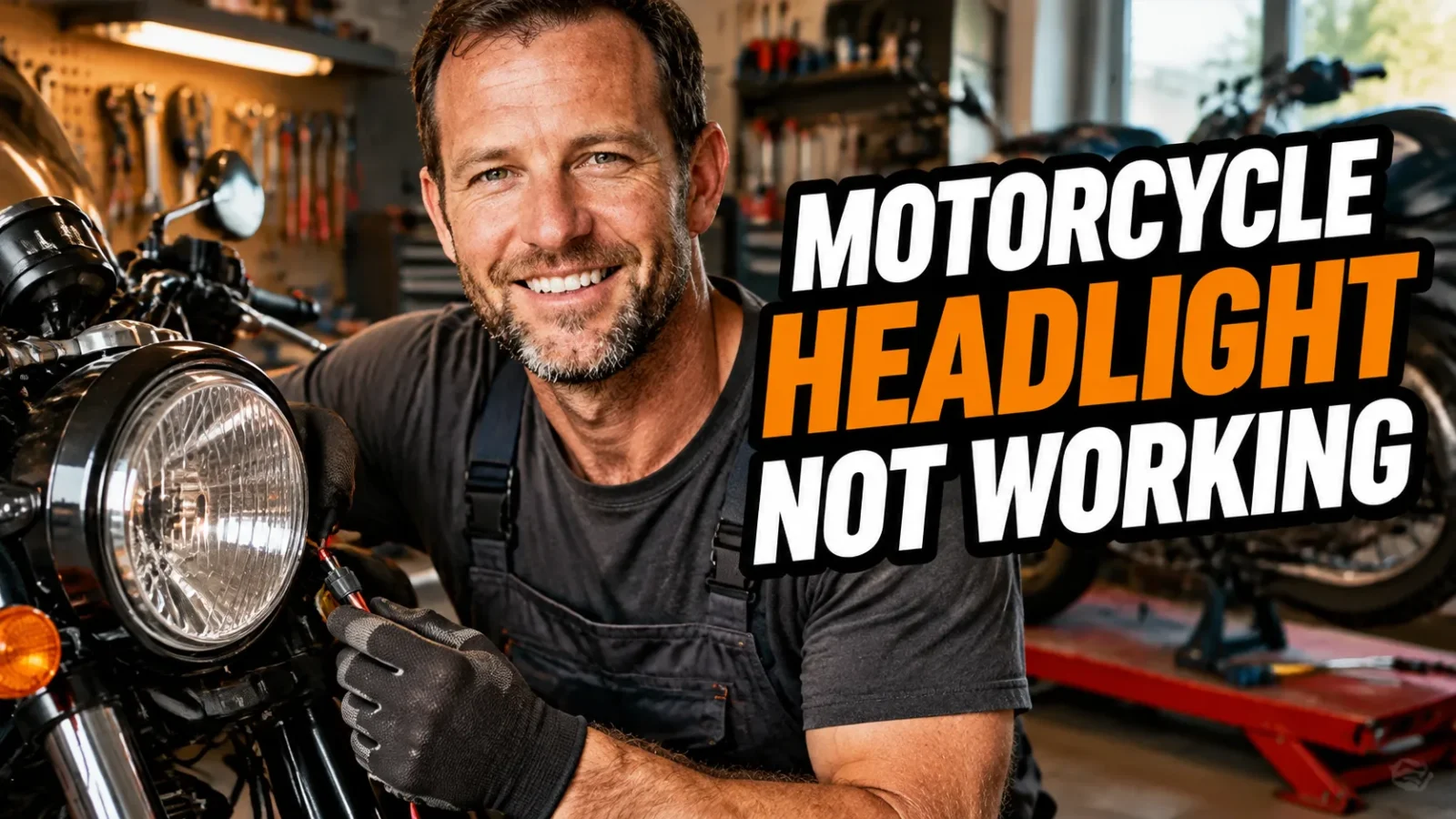
There is a special kind of dread that hits when you flip the switch, twist the key, and the front of your bike stays dark. I have been there more than once, usually at dusk, usually miles from home. The good news is that a motorcycle headlight not working problem is rarely a disaster.
Most of the time the culprit is simple: a bulb, a fuse, or a loose plug. Sometimes it points to something deeper in the electrical system, and that is where knowing your power source matters. If you want a refresher on what feeds your lights, I recommend reading what are the different types of motorcycle batteries ultimate guide before you start swapping parts.
In this guide I walk you through the exact order I troubleshoot a dead headlight. I start with the cheap, fast checks and work toward the harder ones, so you do not waste time or money.
- Check the bulb and the fuse first, because they cause most dead headlights.
- Inspect connectors, grounds, and the relay before blaming expensive parts.
- A weak battery or failing stator can mimic a bad headlight, so test voltage.
- If you upgrade, match the bulb type and confirm your bike can handle the load.
Start With Safety Before You Touch Anything
Before I open a single panel, I park the bike on level ground, turn the ignition off, and let everything cool. Headlight bulbs, especially halogens, get extremely hot. I have burned a fingertip more than once by being impatient.
I also keep a few basic tools nearby: a multimeter, a set of spare fuses, a screwdriver set, and a small tube of dielectric grease. That kit has solved nearly every lighting issue I have faced.
Know Your Symptoms
The way the light fails tells you a lot. Does it go out suddenly, flicker, or dim gradually? Does the high beam work while the low beam does not? These clues narrow the search before you pick up a tool.
- Sudden total failure: usually a bulb or fuse.
- Flickering: often a loose connector or a bad ground.
- Dimming at idle: commonly a weak battery or charging problem.
- One beam works, the other does not: typically a dual-filament bulb, a switch, or a relay.
Step One: Check the Bulb
In my experience, the bulb is the culprit about half the time. Filaments wear out, and vibration shortens their life even further. It is the first thing I check, and it takes five minutes.
How I Inspect It
I remove the dust cover, unplug the connector, and take the bulb out. A burned filament often looks broken or has a dark, smoky patch on the glass. If the glass looks fine, I hold the bulb up and look closely at the filament for a gap.
One tip: never touch the glass of a halogen bulb with bare fingers. Skin oils create hot spots that cause the bulb to fail early. I use a clean cloth or gloves every time.
Choosing a Replacement
If the bulb is dead, this is a good moment to think about quality. I have had cheap bulbs die in a month and good ones last for years. My own shortlist of the best headlight bulb for motorcycle options is a handy starting point if you are not sure what to buy.
Always confirm the fitment first. Many bikes use an H4 dual-filament bulb, while others use an H7 or H11. Buying the wrong base is a frustrating and avoidable mistake.
Step Two: Look at the Fuse
If the new bulb stays dark, I move to the fuse box. Your owner’s manual shows which fuse protects the headlight circuit. Pull it and hold it to the light; a blown fuse has a broken metal strip inside.
Replace it with the exact same amperage. Never install a bigger fuse to “fix” a repeat failure. A fuse that keeps blowing is warning you about a short, and a larger one can turn that short into a fire.
When a Fuse Keeps Blowing
If a fresh fuse pops right away, I stop and look for a wire rubbing against the frame or a pinched harness near the steering head. The headlight wiring flexes every time you turn the bars, so this is a common spot for damage.
Step Three: Inspect Connectors and Grounds
This is where many “mystery” problems hide. Connectors corrode, pins loosen, and grounds get dirty. I unplug the headlight connector and look for green or white crust, melted plastic, or burned terminals.
A little contact cleaner and a light scrub usually restore a good connection. Afterward, I add a dab of dielectric grease to keep moisture out. It costs very little and has saved me from repeat repairs.
Don’t Forget the Ground
A poor ground causes dim, flickering, or dead lights, and it is easy to overlook. I find the ground wire that bolts to the frame, remove it, clean the contact surface to bare metal, and tighten it back down securely.
Step Four: Test the Switch and Relay
Handlebar switches take a beating from weather and dirty hands. If your high beam works but the low beam does not, the switch is a prime suspect. A quick spray of electrical contact cleaner into the switch housing sometimes revives it.
Many modern bikes also use a headlight relay. I swap it with an identical relay from another circuit, such as the horn, if the manual allows it. If the light comes back, I know the relay was the problem.
Using a Multimeter
With the connector unplugged and the ignition on, I test for voltage at the plug. Around 12 volts means power is arriving and the bulb or its ground is at fault. No voltage means the issue is upstream, in the fuse, relay, switch, or wiring.
Step Five: Rule Out the Battery and Charging System
Sometimes the headlight is innocent. A weak battery or a failing stator or regulator can starve the light of power. I test the battery at rest, which should read about 12.6 volts when healthy.
Then I start the bike and check voltage at idle and at 3,000 RPM. A reading between roughly 13.5 and 14.5 volts suggests the charging system is working. Anything much lower deserves a closer look before you replace any bulbs.
This is also why I keep a battery tender around. Battery health affects nearly every electrical component, and a neglected battery can cause confusing symptoms that waste hours of diagnosis.
Common Causes at a Glance
Here is how I rank the usual suspects, from most likely to least likely, based on my own garage experience:
- Burned-out bulb: the cheapest and most common fix.
- Blown fuse: quick to check and replace.
- Corroded or loose connector: clean and secure it.
- Bad ground: clean the contact point.
- Faulty relay or switch: swap or clean it.
- Weak battery or charging fault: test the voltage.
- Damaged wiring harness: trace the break or short.
When It Is Time to Upgrade
Once your light is working again, you might wonder whether to upgrade. I did, after one too many dim night rides. A modern LED bulb is brighter, runs cooler, and lasts far longer than a stock halogen.
But upgrading is not just plug and play. Heat management, beam pattern, and electrical compatibility all matter. A poorly designed LED can scatter light and blind oncoming drivers, which is both unsafe and rude.
Picking the Right LED
If your bike uses an H4 base, I suggest starting with my roundup of the best h4 led headlight bulb for motorcycle choices. They are designed to mimic the filament position of the original bulb, which keeps the beam pattern clean.
For bikes with an H7 socket, the best h7 led headlight bulb for motorcycle list is the place I would look. The fitment is different, so do not assume an H4 bulb will work.
Going for a Full Kit
Some riders prefer a complete package with drivers and cooling included. If that sounds like you, take a look at the best led headlight kit for motorcycle options. A kit can simplify installation and reduce guesswork.
Whichever route you choose, check that your bike’s charging system has enough headroom. LEDs usually draw less power than halogens, but some need a decoder or resistor to avoid error flashes on certain models.
A Note for Harley-Davidson Riders
Harley owners face a few unique quirks. Many models use sealed or specialty headlight assemblies, and the electrical layout differs from most Japanese bikes. Some also have daytime running or auxiliary lights that complicate troubleshooting.
If you ride a Harley and need a replacement unit, I would start with the best front light headlight motorcycle for harley davidson guide. It covers options that fit properly and deliver real improvements in night visibility.
Preventing Future Headlight Failures
After fixing a dead headlight, I like to prevent the next one. A few simple habits go a long way, and none of them take much time.
- Apply dielectric grease to connectors during every bulb change.
- Check your battery and charging output a couple of times a year.
- Inspect the wiring near the steering head for chafing.
- Keep a spare bulb and fuse in your tool kit.
- Choose quality bulbs rather than the cheapest option.
That spare bulb has rescued me on a long trip more than once. It weighs almost nothing, and it can be the difference between finishing a ride and waiting on the roadside.
When to Call a Professional
I am a big believer in doing your own basic repairs, but I also know my limits. If you find melted wiring, repeated fuse failures, or a charging system that refuses to behave, a qualified technician is worth the money.
Electrical faults can hide in places that are difficult to reach, and a mistake can damage expensive components. There is no shame in handing the tough ones to someone with the right equipment.
Final Thoughts
A dead headlight feels like a big problem, yet it is usually a small one. Work through the steps in order: bulb, fuse, connectors, grounds, switch and relay, then battery and charging. That sequence has fixed nearly every case I have encountered.
Take your time, stay safe, and do not skip the multimeter. Once the light is shining again, consider whether an upgrade makes sense for your riding. Better visibility is one of the best investments you can make for your safety on the road.
Ride safe, keep your lights bright, and I will see you out there.
Frequently Asked Questions
Why did my motorcycle headlight suddenly stop working?
The most common causes are a burned-out bulb, a blown fuse, a corroded connector, or a failed relay. Start with the bulb and fuse, since they are the cheapest and quickest to check.
Can a weak battery cause my headlight to go out?
Yes. A weak battery or failing charging system can leave the headlight dim, flickering, or dead, especially at idle. Test battery voltage and the stator output before replacing parts.
Is it safe to ride with a dead headlight?
No. Riding without a working headlight reduces your visibility to other drivers and is illegal in most places, even during the day on many bikes. Fix it before you ride.
Should I switch to an LED headlight bulb?
LEDs are brighter and last longer, but you must match the bulb type (H4, H7, and so on) and check that your charging system and wiring can handle them. A quality bulb with proper heat management matters most.

Related Articles

Harley Davidson Headlight Problems: What I Learned Fixing Mine in the Dark
Chasing a dead, dim, or flickering Harley headlight? I walk through the real causes, my own diagnostic steps, and the…
Jake Miller
9 min read

Red Oil Light on Your Bike: How Many Seconds Do You Actually Have?
Is it too late when the oil light comes on? After nearly losing an engine to a 30-second delay, here's…
Jake Miller
10 min read

Best HID Kits for Motorcycles: How I Choose the Right One for Night Riding
Wondering which HID kit suits your bike? I break down wattage, color temperature, ballasts, legality, and wiring so you can…
Jake Miller
9 min read