
7 Best Michelin Sport Tires for Motorcycles: My Real-World Picks for Street and Track
 Jake Miller
9 min read
Jake Miller
9 min read
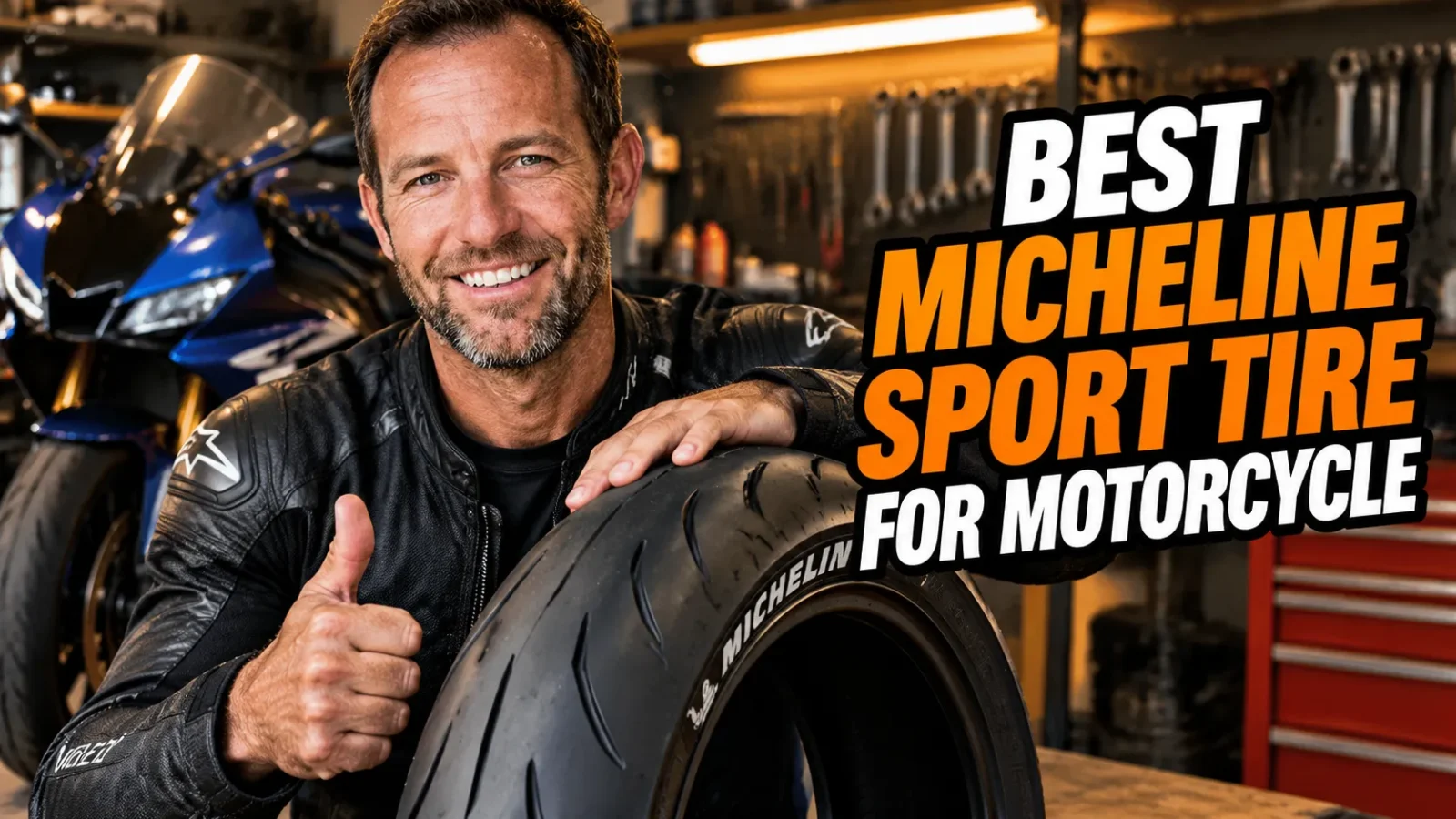
I’ve spent a lot of seasons bouncing between canyon roads, commuter traffic, and the occasional track day. Over that time, tires have changed how a bike feels more than any suspension tweak or exhaust I’ve bolted on. Michelin has been at the top of my shortlist for years, and its sport lineup is broad enough that picking the right one takes some thought.
In this guide I’m sharing the seven Michelin sport tires I’d actually recommend, and who each one suits best. Some are all-rounders, some are for touring, and one is for track use only. I’ll be upfront about trade-offs, because no single tire is perfect for every rider.
- The Michelin Power 6 is my pick for most sportbike riders who want grip, wet confidence, and decent mileage.
- The Michelin Road 6 and Road 6 GT are the best choices if you rack up miles or carry luggage and a passenger.
- The Michelin Power Cup 2 is street legal but track-focused, and the Power GP2 is for the circuit only.
- The Michelin Pilot Street 2 is a smart, affordable fit for smaller-displacement sport bikes.
How I Chose These Michelin Sport Tires
I weighed four things: dry grip at lean, wet-road behavior, wear life, and how well a tire suits a specific kind of rider. I also considered how quickly each tire comes up to temperature, since that matters on cold mornings.
Prices vary by size, retailer, and season, so I give rough ranges only. Always check current pricing and confirm your exact front and rear sizes before ordering.
1. Michelin Power 6 — Best Overall Sport Tire
If I could only recommend one tire from this list, it would be the Michelin Power 6. It’s the successor to the Power 5, and Michelin built it for riders who want sharp road performance without giving up everyday usability.
What I Like
The Power 6 feels planted and predictable as I roll into a corner. The dual-compound rear gives a firmer center for mileage and a softer shoulder for lean-angle grip. Michelin also claims improved wet grip and longer life than the Power 5, and my experience on mixed-weather rides backs that up.
Turn-in is quick without being nervous. The feedback through the bars lets me know where the limit is long before I reach it.
Who It’s For
This is the tire for supersport and naked riders who do mostly road riding with an occasional spirited day. Expect to pay roughly in the mid-to-upper range for a premium sport pair. It’s worth every dollar if you ride hard but still want your tires to last a season.
Downsides
It’s not a dedicated track tire. If you’re chasing lap times, the Power 6 will give up some ultimate grip to the Power Cup 2.
2. Michelin Road 6 — Best for Sport-Touring
The Michelin Road 6 is where I go when the ride involves hundreds of miles and unpredictable weather. It replaced the Road 5 and improved on its wet performance and mileage.
Real-World Performance
The Road 6 uses a dual-compound rear that stays stable in a straight line and still grips when I lean into a corner. In the rain, the sipe pattern clears water well and gives me confidence on slick pavement.
I’ve found it holds its profile longer than most sport tires. That means the bike still turns in naturally even at the end of its life.
Who It’s For
It fits sport-touring bikes, adventure-sport machines, and sporty standards. If you’re building a touring setup, my notes on first class motorcycle tires for sport touring cover more options worth comparing.
3. Michelin Power 5 — Best Proven Value
The Michelin Power 5 remains a smart buy even with the Power 6 out. Because it’s been around longer, you’ll often find it at lower prices, and it’s still a very capable tire.
Why I Still Recommend It
It offers strong dry grip and good wet behavior, with that familiar Michelin predictability. The dual-compound construction gives sporty handling without making the center wear out too fast.
For riders on a budget who still want a real sport tire, the Power 5 is a great deal. I’d take a fresh Power 5 over an aging tire of any brand.
Things to Consider
The Power 6 does beat it in wet grip and longevity claims. If the price gap is small, I’d go with the newer tire. If the Power 5 is on clearance, it’s an easy call.
4. Michelin Power Cup 2 — Best Street-Legal Track Day Tire
The Michelin Power Cup 2 is the tire I choose when the weekend plan includes a track. It’s DOT-approved, so you can ride it to the circuit, but its personality is all about performance.
The Track Advantage
The grip at full lean is exceptional, and the tire gives clear feedback as it approaches its limit. It rewards smooth inputs and a rider who knows how to load the front.
On a warm day with good pace, the Power Cup 2 is one of the most confidence-inspiring tires I’ve used. It lets me push harder, and that’s what a track day tire is for.
Trade-Offs
It wears faster than the Power 6 and needs temperature to work well. I wouldn’t use it as a daily commuter tire or on cold, damp mornings.
Tip: if you’re trailering to the track, carry a compact pump. My guide to the best tire hand pump for motorcycle covers options that fit in a pit bag.
5. Michelin Power GP2 — Best Dedicated Track Tire
The Michelin Power GP2 is a track-only tire, and I want to be clear about that. It isn’t intended for public roads, so it only makes sense if you trailer your bike or run a dedicated track machine.
What Sets It Apart
It’s designed for sustained high-speed riding, with grip and consistency lap after lap. It’s the one I’d consider if I were serious about club racing or frequent trackdays on a dedicated bike.
The feel is crisp and the tire holds up well as the session heats up. That consistency is what makes it so valuable.
Who Should Skip It
If your bike is also your daily rider, this isn’t the tire for you. Choose the Power Cup 2 or Power 6 instead.
6. Michelin Pilot Street 2 — Best for Small-Displacement Sport Bikes
Not every sport rider is on a liter bike, and the Michelin Pilot Street 2 is built with that in mind. It’s made for smaller machines, including the popular 300 to 400cc class.
Why It Works
Lighter bikes generate less heat and load, so they need a tire that grips well without a lot of effort. The Pilot Street 2 delivers solid wet and dry traction at a friendlier price than the premium sport lineup.
It’s also a good option for newer riders learning to trust their lean angle. The behavior is calm and progressive.
Limitations
It isn’t aimed at aggressive track riding. For hard canyon work or lapping days, a Power-series tire is a better match.
7. Michelin Road 6 GT — Best for Heavy Sport-Touring Bikes
The Michelin Road 6 GT is a version of the Road 6 designed for heavier, more powerful touring machines. If your bike carries bags and a passenger, this is the one to look at.
Built for the Load
The construction is designed to handle higher weight and long distances while keeping the stability and wet-weather capability the Road 6 is known for. On a loaded touring bike, that matters a lot.
It tracks straight on highways and still turns in neatly on twisty sections. For riders who cover big mileage in a season, it’s a smart long-term investment.
Think About Pressure
A heavier setup makes correct inflation even more important. Follow your manual, and if you also own a cruiser, see my notes on cruiser motorcycle tire pressure for a different approach to pressures.
How to Choose the Right Michelin for Your Riding
Start by being honest about how you ride. If most of your miles are commuting and weekend fun, the Power 6 or Road 6 will serve you better than a race-oriented tire.
If you only do a few track days a year, the Power Cup 2 can be worth it, but you’ll swap it more often. For serious circuit use on a dedicated bike, step up to the Power GP2.
Matching Front and Rear
I always run a matched front and rear set from the same model family. Riders often ask me, can i use a front motorcycle tire on the rear, and the short answer is no. The profiles and constructions are different and aren’t interchangeable.
Check Age and Condition
Even the best tire degrades with time. I check the DOT date code and replace any tire that shows cracking, flat spots, or hardening, regardless of tread depth.
Tire Care Tips That Save Money
Check your pressures when the tires are cold, and do it often. Under-inflation overheats the carcass and wears the shoulder, while over-inflation shrinks your contact patch and hurts grip.
Carry basic repair gear too. A puncture on a long ride is a hassle without it, so see my picks for the best tire plug kit for motorcycle. A plug is for getting you home, and I’d still have the tire inspected or replaced afterward.
Break Them In Properly
New tires have a slick mold-release coating, so ride gently for the first 50 miles or so. Gradually increase lean angle and braking force as the surface scuffs in.
My Final Thoughts
Michelin’s sport range covers nearly every kind of rider, and that’s what makes it so appealing. For most people I’d start with the Michelin Power 6, and move to the Road 6 or Road 6 GT if touring is the priority.
If you’re chasing speed, the Power Cup 2 and Power GP2 are in a different league. Pick the one that matches how you ride, keep the pressures right, and your bike will reward you every mile.
Frequently Asked Questions
What is the best Michelin sport tire for a motorcycle overall?
For most riders on the street, the Michelin Power 6 is the best all-rounder. It balances dry grip, wet confidence, and mileage better than any other Michelin sport tire I’ve ridden. If you tour a lot, the Michelin Road 6 is the better pick.
Is the Michelin Power Cup 2 street legal?
Yes, the Michelin Power Cup 2 is DOT-approved, so it can be used on the road. It is built for track days and fast riding, though. It wears quickly and needs heat to perform, so it is a poor choice for cold commutes.
How long do Michelin sport motorcycle tires last?
It depends on the model, your bike, and your riding style. Sport-touring tires like the Road 6 often reach several thousand miles more than track-biased options such as the Power Cup 2. Hard acceleration and heavy bikes shorten life on any tire.
Can I mix different Michelin tire models front and rear?
It is generally best to run a matched pair from the same model family, because the front and rear are designed to work together. Check your bike manufacturer’s recommendations before mixing, and never run a tire that isn’t rated for your bike’s load and speed.

Related Articles

8 Best Cruiser Motorcycle Tires for Street Riding: My Real-World Picks
I rank the 8 best cruiser motorcycle tires for street riding, from Michelin to Pirelli, with real notes on grip,…
Jake Miller
9 min read

8 Best Michelin Motorcycle Tires for Every Riding Style (Tested Picks)
Looking for the best Michelin motorcycle tires? I break down my 8 favorite models for sport, touring, adventure, cruiser, and…
Jake Miller
9 min read

Yamaha Tire Pressure Guide: The Right PSI for Safer, Smoother Rides
Learn the right tire pressure for your Yamaha, from sportbikes to cruisers and dirt bikes. Check, adjust and maintain PSI…
Jake Miller
9 min read