
Why Your Motorcycle’s Front Wheel Is Often Bigger (and When It Isn’t)
 Jake Miller
9 min read
Jake Miller
9 min read
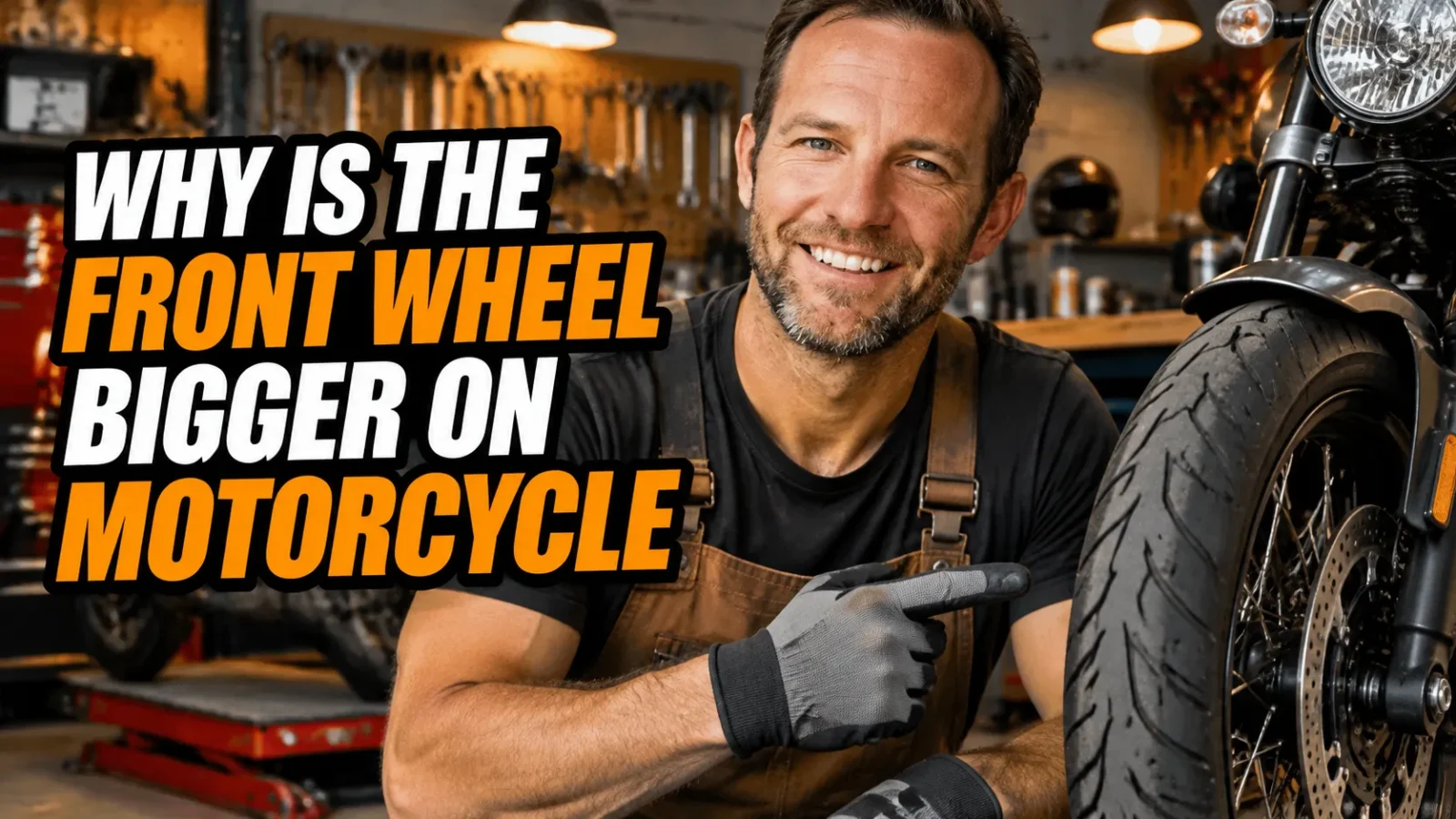
I get this question a lot at group rides, usually while someone is staring at the tires on a cruiser or a dual-sport. They notice the front wheel looks taller than the rear and wonder what the designers were thinking. It’s a fair thing to notice, and the answer says a lot about how motorcycles actually work.
Here’s the quick version. On many bikes the front wheel really is bigger in diameter, and there are solid engineering reasons for it. On others, like most sport bikes, the wheels are the same diameter and only the rear looks bigger because it’s wider. Let me walk through what I’ve learned from riding and wrenching on both.
- Many cruisers, dirt bikes, and adventure bikes use a larger-diameter front wheel for stability and better obstacle handling.
- Most sport and standard bikes use the same diameter front and rear; the rear just has a wider tire.
- A bigger front wheel adds gyroscopic stability and rolls over bumps, potholes, and ruts more smoothly.
- The rear wheel is smaller or wider because it handles power delivery and traction, not steering.
- Wheel size ties into geometry, so don’t swap sizes casually.
First, a Quick Reality Check
Before I dive in, I want to correct a common assumption. Not every motorcycle has a larger front wheel. If you look at a typical supersport, both wheels are 17 inches. The rear tire is much fatter, which tricks the eye into thinking the rear is the “bigger” wheel.
So when people ask me about this, I ask them what bike they’re looking at. The answer changes quite a bit depending on the category.
Where the Front Wheel Really Is Larger
These are the bikes where I see a true diameter difference:
- Cruisers: Often a 19-inch or 21-inch front with a 16-inch or 17-inch rear.
- Dirt bikes and motocross: Classic 21-inch front and 18-inch or 19-inch rear.
- Adventure bikes: Commonly a 19-inch or 21-inch front and 17-inch or 18-inch rear.
- Vintage and scrambler styles: Frequently a taller front wheel for both looks and function.
Where the Wheels Match
On sport bikes, naked bikes, and many standard roadsters, front and rear wheels are typically both 17 inches. Designers choose this because it gives riders the widest selection of high-performance tires. It also keeps handling neutral and predictable at lean angles.
The Real Engineering Reasons Behind a Larger Front Wheel
When a bike does have a bigger front wheel, it isn’t for looks alone. Several physical principles are at work, and I’ve felt each of them on the road and trail.
Gyroscopic Stability
A spinning wheel resists changes to its orientation. This is gyroscopic effect, and it’s a big part of why a bike stays upright and tracks straight at speed. A larger-diameter wheel carries more rotating mass farther from the axle, so it generates a stronger effect.
In my experience, a big front wheel gives a calm, planted feeling on the highway. The bike wants to go straight, and it takes a deliberate input to make it change its mind. On a long touring day, that’s a real comfort.
Better Obstacle Handling
Think of a wheel hitting a pothole or a rock. A larger wheel has a gentler approach angle, so it rolls over the obstacle instead of dropping into it or slamming against its edge. A small wheel falls deeper into the gap and gets jolted harder.
This is the main reason dirt bikes run a 21-inch front. When I ride loose trails, that tall wheel glides over roots and ruts that would grab a smaller wheel and try to throw me off line.
Steering Feel and Front-End Grip
The front tire does most of the braking work and all of the steering. A larger wheel has a longer contact patch footprint in some configurations and can carry a taller, more compliant sidewall. That helps it absorb shocks and keep the tire in contact with the road surface.
I notice this most on rough pavement. A bigger front wheel feels like it irons out the small stuff, which lets me focus on the line instead of fighting the handlebars.
Why the Rear Wheel Is Smaller or Wider
The rear wheel has a totally different job. It drives the bike forward, so it needs traction and a healthy contact patch rather than steering finesse. That’s where width comes in.
Power Delivery and Traction
A wide rear tire spreads engine torque across more rubber. On a powerful bike, that’s the difference between a smooth launch and a spinning rear wheel. It also helps with cornering grip when I’m leaned over and rolling on the throttle.
On cruisers, a smaller-diameter rear wheel with a fat tire gives that low, muscular look. It also keeps the seat height low, which I appreciate when I’m stopping at lights with a heavy bike underneath me.
Packaging and Styling
Smaller rear wheels fit neatly under fenders, belt drives, and swingarms. Designers also use the size contrast to create a particular stance, such as the long, raked-out look of a chopper or bobber. Function and fashion overlap here more than people admit.
How Wheel Size Connects to Geometry
Wheel diameter isn’t a standalone choice. It interacts with rake, trail, wheelbase, and ride height. Change one, and the others respond.
Rake and Trail
Rake is the angle of the steering head, and trail is the distance between where the steering axis hits the ground and where the tire touches. A larger front wheel changes trail, which affects how stable or twitchy the steering feels. Cruisers pair big front wheels with long rake and trail for rock-solid straight-line manners.
Why I’d Hesitate to Swap Sizes
I’ve seen riders try to fit a different front wheel to “fix” handling, and it often backfires. Speedometer error, brake clearance, fender gaps, and altered geometry can all show up. If you want to change wheel sizes, I’d consult someone who knows your specific model first.
Spokes, Bearings, and Everything Else That Keeps Wheels Honest
Wheel size is only one part of the picture. Construction matters just as much, especially on bikes with a big front wheel that sees lots of abuse. If you’re curious about how many spokes on a motorcycle wheel is normal, you’ll find it varies by wheel size, load, and intended use.
Larger wheels generally need to be strong enough to handle impacts without flexing. Spoked wheels let designers tune that strength and absorb off-road hits. Cast wheels are stiffer and easier to maintain on pavement.
Don’t Neglect the Bearings
Big or small, a wheel is only as good as the bearings inside it. A rough or notchy bearing can create wobble, noise, and unpredictable handling. I always check them when I change tires, and I’d encourage you to read up on when to replace motorcycle wheel bearings so you know the warning signs.
Service life depends on riding style, water exposure, and maintenance. If you’re wondering how long do wheel bearings last on a motorcycle, the honest answer is that it varies a lot. A bike that sees mud and pressure washers wears them out faster than one that lives on dry pavement.
Alignment Matters Just as Much as Size
A properly sized wheel still won’t help if it’s out of line. The rear wheel in particular needs to track exactly behind the front. Misalignment makes a bike pull to one side, wears tires unevenly, and can make the steering feel off.
When I adjust my chain, I always double-check alignment afterward. If you want a step-by-step walkthrough, this guide on how to adjust rear wheel alignment on a motorcycle covers the process well. It’s worth learning because it affects safety and tire life.
There’s also a related technique worth knowing. Understanding how to align rear motorcycle wheel side to side helps you get the rear wheel square in the swingarm. Little errors here add up, especially on a bike with a long wheelbase.
Which Setup Is Best for You?
There isn’t a single winner. Each wheel layout reflects what the bike is built to do, and I’ve enjoyed riding all of them for different reasons.
My Picks by Riding Style
- Long-distance cruising: A large front wheel gives me stability and comfort over miles of highway.
- Off-road and trail riding: A 21-inch front is my choice every time for rolling over obstacles.
- Canyon carving and track days: Matched 17-inch wheels give me sharp, predictable turn-in and the best tire selection.
- Mixed adventure riding: A 19-inch front is a good compromise between pavement manners and dirt capability.
Common Myths I Hear About Wheel Size
Over the years I’ve heard plenty of misconceptions. Let me clear up a few of them.
“Bigger Is Always Better”
Not true. A bigger front wheel adds stability but can slow steering response. For tight, twisty roads, many riders prefer a smaller, lighter front wheel that turns in quickly.
“The Rear Wheel Is Smaller by Mistake”
This one makes me smile. Rear wheel size is deliberate. It supports traction, styling, packaging, and ride height, all at once.
“Tire Width and Wheel Diameter Are the Same Thing”
They aren’t. Diameter is how tall the wheel is, while width is how much rubber touches the road. Mixing these two up is the reason many people think sport bikes have a bigger rear wheel.
Final Thoughts From My Garage
So, why does the front wheel often look bigger? On cruisers, dirt bikes, and adventure bikes, it genuinely is, and the reasons come down to stability, obstacle handling, and steering feel. On sport bikes, the wheels match in diameter and the rear just wears a wider tire.
The next time you walk around a parked motorcycle, look at the wheels and ask what the bike is meant to do. The design usually tells you. And whatever you ride, keep your bearings healthy and your alignment true, because even the perfect wheel size can’t make up for neglect.
Ride safe, and keep those tires rolling straight.
Frequently Asked Questions
Is the front wheel always bigger than the rear on a motorcycle?
No. On many cruisers, dirt bikes, and adventure bikes the front wheel has a larger diameter. On most sport bikes and standard bikes, both wheels are the same diameter, and the rear tire is simply wider.
Why do dirt bikes have a 21-inch front wheel?
A 21-inch front wheel rolls over roots, rocks, and ruts more easily than a small one. It also gives more gyroscopic stability on loose surfaces, which helps the bike track straight and recover from deflections.
Does a bigger front wheel make a motorcycle harder to turn?
Slightly. A larger front wheel has more rotating mass and gyroscopic effect, so it can feel a bit slower to turn in. Geometry, rake, and trail usually matter more than wheel size alone.
Can I swap my front wheel for a different size?
It is possible, but it changes geometry, ride height, speedometer accuracy, and brake clearance. Always check fitment and consult a qualified mechanic before changing wheel sizes.

Related Articles

8 Best Cruiser Motorcycle Tires for Street Riding: My Real-World Picks
I rank the 8 best cruiser motorcycle tires for street riding, from Michelin to Pirelli, with real notes on grip,…
Jake Miller
9 min read

8 Best Michelin Motorcycle Tires for Every Riding Style (Tested Picks)
Looking for the best Michelin motorcycle tires? I break down my 8 favorite models for sport, touring, adventure, cruiser, and…
Jake Miller
9 min read

Yamaha Tire Pressure Guide: The Right PSI for Safer, Smoother Rides
Learn the right tire pressure for your Yamaha, from sportbikes to cruisers and dirt bikes. Check, adjust and maintain PSI…
Jake Miller
9 min read