
8 Best Motorcycle Tires for Loose Rocks and Mud: Tested Picks for Dirt and Adventure Riding
 Jake Miller
9 min read
Jake Miller
9 min read
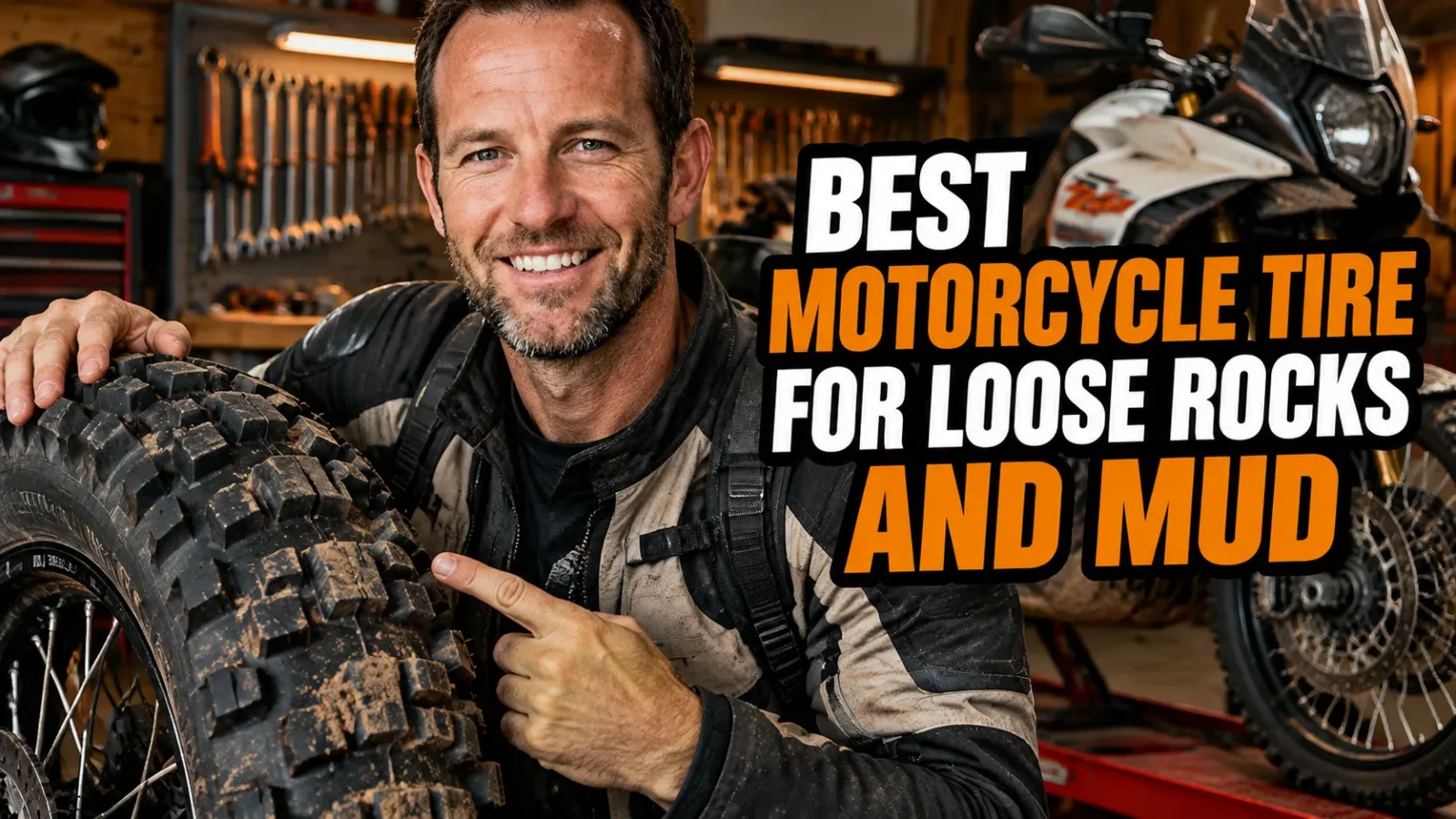
I’ve spent more weekends than I’d like to admit sliding sideways down rocky fire roads and wallowing through ruts that swallowed my boots. If there’s one thing those rides taught me, it’s that tires make or break your day off-road. The right set turns a terrifying scramble into a confident climb.
Loose rocks and mud are a brutal combination. Rocks demand sidewall strength and puncture resistance, while mud demands open tread that sheds clay instead of packing it. Few tires do both perfectly, so I’ve sorted my favorites by the conditions where they shine.
Below are eight tires I trust, with honest notes on what they do well and where they fall short. Prices are approximate and vary by size and retailer.
- For the widest range of loose-rock and muddy conditions, my top pick is the Michelin Enduro Medium (formerly Enduro MEDIUM) for dual-purpose trail work.
- For deep, sticky mud, the Dunlop Geomax MX34 and Maxxis Maxxcross MX-ST excel at digging and shedding.
- For adventure bikes, the Mitas E-07 and Continental TKC 80 offer the best blend of rock grip and street manners.
- Run lower pressure and carry a repair kit and pump, because rocks bite.
How I Chose These Tires
I weighed each tire on four things: how it grips on loose, rolling rock, how it clears mud, how it handles sharp-edged impacts, and how long it lasts. I also considered bike type, since a 250 lb dirt bike and a 550 lb adventure bike need different things.
What Matters Most in Loose Rock
Loose rock rewards a firm, supportive sidewall and a tread block that bites without folding over. Soft, tall knobs can squirm on hard ledges and feel vague. I look for blocks that are well supported at the base.
What Matters Most in Mud
Mud rewards tall, widely spaced knobs and a self-cleaning pattern. If the gaps between knobs are too tight, clay packs in and you end up riding a slick. Wider spacing also means less grip on hardpack, which is the tradeoff you accept.
1. Michelin Enduro Medium: Best Overall for Mixed Rock and Mud
The Michelin Enduro Medium is the tire I recommend first to riders who see both rocky trails and wet days. Its compound is firm enough to resist tearing on sharp stone, yet it still deforms enough to grab on slick roots and mud. It comes in common sizes like 90/100-21 front and 140/80-18 rear, with prices typically in the $90 to $140 range.
What I like most about the Enduro Medium is its predictability. When it lets go, it does so gradually, which gives me time to react. Its reinforced casing also tolerates lower pressures better than many competitors.
Where It Falls Short
In truly deep, sticky mud, the Enduro Medium isn’t a digger. Its tread pattern is a compromise, and it can pack up when the clay turns gummy. If your trails stay wet for weeks, look further down this list.
If you’re curious how Michelin approaches road-focused rubber, I also covered the best micheline sport tire for motorcycle, which is a very different philosophy from the Enduro line.
2. Dunlop Geomax MX34: Best for Soft-to-Intermediate Mud
The Dunlop Geomax MX34 is a motocross-derived tire that I reach for when conditions turn soft and sloppy. Its tread blocks are widely spaced and tall, so mud clears quickly as the wheel spins. Typical rear sizes like 110/90-19 and 100/90-19 usually cost around $80 to $120.
On loose, rolling rock, the MX34 gives decent bite, though it prefers dirt over hard, abrasive surfaces. I find it excellent on loamy trails that get chewed up by rain.
Durability Notes
This is a performance tire, not a mileage tire. The soft-to-intermediate compound wears quickly on rocky, abrasive terrain, so I treat it as a seasonal consumable. If you ride mostly sharp rock, a harder compound will last longer.
3. Maxxis Maxxcross MX-ST: Best Value Mud Digger
The Maxxis Maxxcross MX-ST is a favorite among riders who want serious mud performance without a premium price. Its aggressive, widely spaced knobs dig and clear well, and the tire often sells for roughly $60 to $100 depending on size. That makes it one of the most budget-friendly ways to get real traction.
In my experience, the MX-ST has a surprisingly stable feel on loose, sandy rock and decomposed granite. It isn’t the most refined tire, but it gets the job done and keeps wallets happy.
Who Should Skip It
If you ride hard-packed, rocky singletrack, the MX-ST’s softer blocks can feel squirmy and wear fast. It is a soft-terrain specialist, and I’d pair it with the right conditions rather than expecting all-day versatility.
4. Pirelli Scorpion MX32 Mid Soft: Best for Loose, Rolling Terrain
The Pirelli Scorpion MX32 Mid Soft is a tire I enjoy on loose, rolling terrain where rocks sit on top of a softer base. Its tread design offers strong forward drive and good cornering bite, and sizes like 100/90-19 and 110/90-19 usually fall around $80 to $120.
The MX32 gives me confidence when the trail goes from dry dust to damp loam. It clears mud reasonably well and feels planted when leaned over, which is rare in a dedicated off-road tire.
Tradeoffs to Know
On sharp, hard rock, the MX32 can wear quickly, and its sidewalls are not as burly as an enduro-specific tire. I’d choose it for motocross-style or fast trail riding more than slow, technical rock crawling.
5. Mitas E-07: Best Adventure Bike Tire for Rocks and Light Mud
The Mitas E-07 is my go-to recommendation for adventure riders who split time between pavement and rough tracks. It uses a dual-sport design with chunky center blocks and open shoulders, and sizes like 90/90-21 front and 150/70-17 rear are common. Pricing is generally in the $100 to $170 range per tire.
On loose gravel and rocky fire roads, the E-07 provides confident traction and respectable longevity. It’s a tire I can ride to the trailhead without feeling like I’m on a tractor.
Limits in Deep Mud
The E-07 is not a mud tire. In deep, sticky clay it packs up and loses bite, so I treat it as a light-mud, loose-rock, and gravel tool. For heavier mud, you need a more open pattern.
6. Continental TKC 80: Best Aggressive Adventure Tire
The Continental TKC 80 is the tire that made adventure riders believe their big bikes could handle real dirt. Its massive, widely spaced knobs dig through mud and clamber over loose rock in a way few street-legal tires can match. Typical sizes include 90/90-21 and 150/70-17, usually priced around $130 to $200.
I’ve ridden the TKC 80 through rutted clay and loose scree, and the traction is impressive. It also comes with an E-marking, so it is road legal in many regions.
The Pavement Penalty
On asphalt, the TKC 80 is noisy, wears quickly, and can feel vague at lean. Wet pavement demands extra caution, so if you ride a lot of rainy roads, take a look at my guide to the best motorcycle tire for wet roads before you commit.
7. Dunlop D606: Best Dual-Sport Tire for Rocky Trails and Occasional Mud
The Dunlop D606 is a long-standing dual-sport staple with a rugged, knobby pattern designed for trail riding. It is DOT-approved, available in sizes like 90/90-21 and 130/80-18, and usually sits around $90 to $140. I like it for riders who want a legitimate off-road tire that remains street legal.
On rocky trails, the D606 offers firm sidewalls and dependable grip. It handles light to moderate mud acceptably, although it will clog in deeper, stickier conditions.
Why I Still Recommend It
Plenty of newer tires have arrived, but the D606 remains a proven design. It’s tough, reasonably priced, and predictable, which is a combination I value when I’m miles from the nearest road.
8. Kenda Equilibrium K786: Best Budget Option for Rocky, Muddy Trails
The Kenda Equilibrium K786 is a budget-friendly trail tire that I’d suggest to newer riders. Its tread offers solid grip across mixed terrain, and prices often land around $60 to $90 depending on size. For riders on a tight budget, it keeps costs under control without being dangerous.
The K786 won’t match premium tires in extreme mud or on sharp, abrasive rock. Still, it delivers honest, workable traction for casual trail riding.
Setting Expectations
I treat the K786 as a practical choice rather than a high-performance one. If you’re racing or riding aggressive terrain, step up. If you’re exploring local trails, it can be a smart pick.
Tire Pressure and Setup Tips for Rocks and Mud
Tire choice matters, but setup matters nearly as much. Dropping pressure to roughly 12 to 15 PSI on a dirt bike widens the contact patch and helps the tire conform to rocks. Go too low, though, and you risk pinch flats and rim damage.
Consider Heavy-Duty Tubes or Inserts
Sharp rocks and low pressure are a recipe for pinch flats. I recommend heavy-duty tubes at minimum, and mousse-style inserts for riders who push hard in rocky terrain. Each has tradeoffs in weight and feel, so choose based on your riding.
Carry Your Flat Fix Kit
No matter the tire, rocks can win. I never ride remote trails without the best tire repair kit for motorcycle riders can fit in a pack. Paired with a compact option from my list of the best tire hand pump for motorcycle choices, it can turn a ruined day into a minor delay.
Mud Versus Rock: Choosing Your Priority
If most of your riding is muddy, I’d lean toward a dedicated soft-terrain tire like the Maxxis Maxxcross MX-ST or Dunlop Geomax MX34. If rock dominates, a firmer option like the Michelin Enduro Medium or Dunlop D606 is the smarter bet.
Riders who race in open, fast terrain may also find useful ideas in my write-up on the best motorcycle tire for desert racing, since rocks and loose surfaces overlap with desert conditions.
Match the Tire to the Bike
Heavier adventure bikes need stronger casings and load ratings, so the Mitas E-07 and Continental TKC 80 make more sense than motocross-derived options. Lightweight dirt bikes can use softer, more aggressive designs without issue.
Final Thoughts
There is no single perfect tire for every combination of rocks and mud. My honest advice is to match the tire to your most common terrain, then adjust pressure and carry the right tools for the rest. A well-chosen tire, run at sensible pressure, beats a pricey tire that’s wrong for the trail.
If I had to pick one for most riders, I’d go with the Michelin Enduro Medium for its balance. For those who ride big bikes on mixed terrain, the Continental TKC 80 remains a legendary choice. Whatever you pick, ride safe and enjoy the dirt.
Frequently Asked Questions
What tire pressure should I run in loose rocks and mud?
For most dirt bikes, I run 12 to 15 PSI in mud and loose rock, and slightly higher on heavier adventure bikes. Lower pressure widens the contact patch and helps the tire conform to rocks, but going too low risks pinch flats and rim damage.
Are dual-sport tires good enough for mud?
Dual-sport tires like the Dunlop D606 handle light mud and gravel well, but they clog and slip in deep, sticky mud. For serious mud, a dedicated intermediate or soft-terrain knobby is the better choice.
How long do knobby tires last?
It depends on the compound and the riding. Hard-terrain and trail-focused knobbies often last 1,500 to 3,000 miles on mixed use, while soft-terrain mud tires wear much faster, especially on pavement.
Should I use a tube or tubeless setup off-road?
Most off-road riders use tubes with heavy-duty options for pinch-flat protection, or mousse inserts for extreme conditions. Tubeless works on compatible rims, but you should always carry a repair kit and a compact pump.

Related Articles

8 Best Cruiser Motorcycle Tires for Street Riding: My Real-World Picks
I rank the 8 best cruiser motorcycle tires for street riding, from Michelin to Pirelli, with real notes on grip,…
Jake Miller
9 min read

8 Best Michelin Motorcycle Tires for Every Riding Style (Tested Picks)
Looking for the best Michelin motorcycle tires? I break down my 8 favorite models for sport, touring, adventure, cruiser, and…
Jake Miller
9 min read

Yamaha Tire Pressure Guide: The Right PSI for Safer, Smoother Rides
Learn the right tire pressure for your Yamaha, from sportbikes to cruisers and dirt bikes. Check, adjust and maintain PSI…
Jake Miller
9 min read