
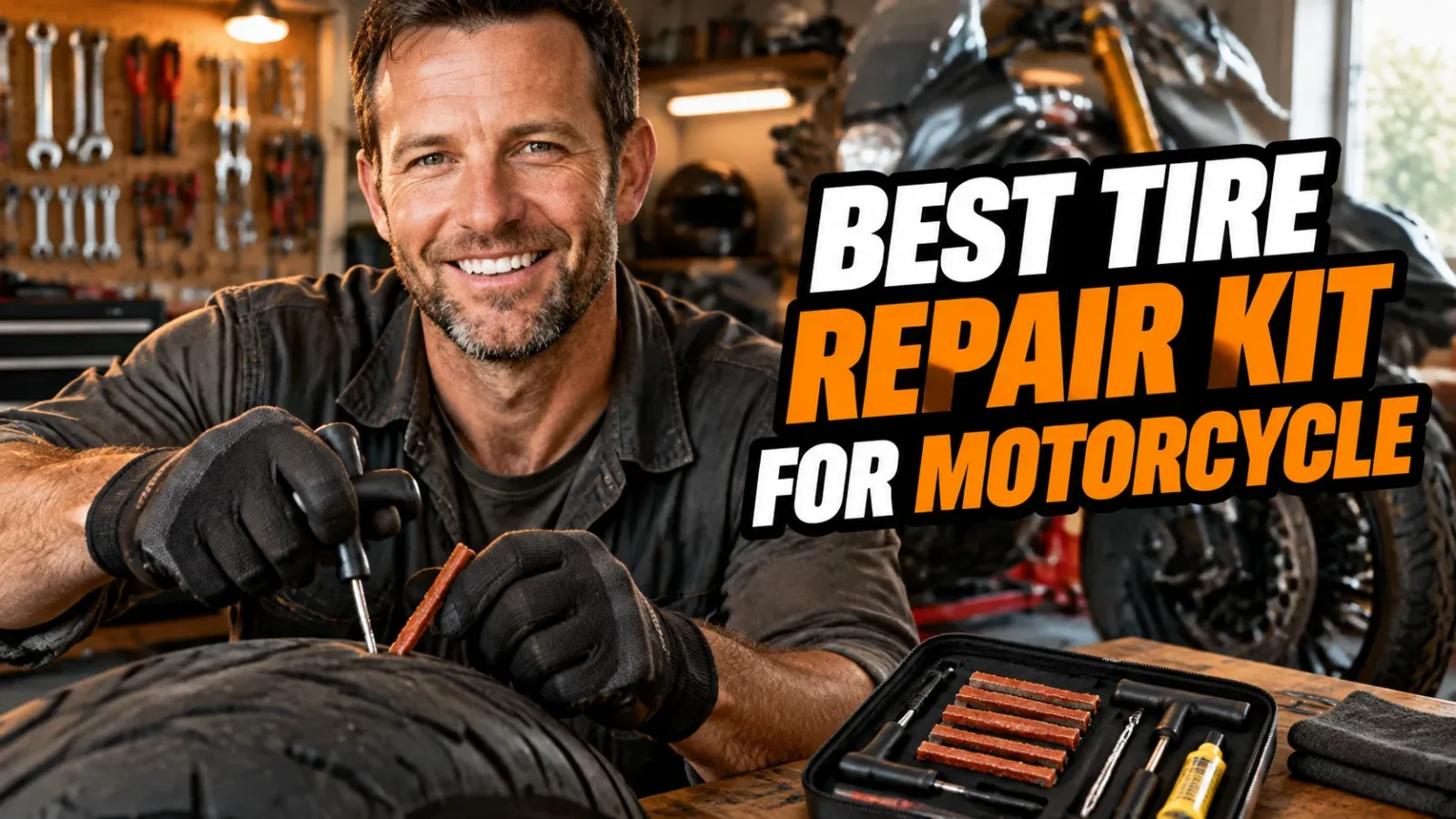
I’ve been stranded on the side of the road with a flat exactly once, and that was enough to change how I pack for every ride. A nail in the rear tire on a hot afternoon, forty miles from the nearest shop, taught me that a decent repair kit weighs next to nothing and is worth a lot.
Since then I’ve tested, carried, and used plenty of kits on my own bikes. This list covers the options I trust most, from compact plug tools to sealants and inflators. I’ve been honest about what each one does well and where it falls short.
- My top overall pick is the Dynaplug Megapill, thanks to its fast, mess-free plugs and tough build.
- The Stop & Go Pocket Tire Plugger is my favorite budget-friendly option that actually works.
- A plug kit only helps if you can reinflate the tire, so pair it with CO2 or a compact compressor like the Viair 88P.
- Plugs are temporary fixes. Replace the tire if the damage is near the sidewall.
Before You Buy: What I Look for in a Roadside Repair Kit
Not every kit suits every bike. Before I get to my picks, here is how I judge them, so you can match one to your own riding.
Tubeless or Tube-Type?
This is the first question to answer. Most modern street bikes run tubeless tires, and plug kits are built for those. If you ride a spoked-wheel adventure bike with tubes, you need tire levers, patches, and a spare tube instead.
Speed and Simplicity
Roadside repairs happen in bad conditions: rain, traffic noise, a hot shoulder. I favor kits with few steps and few loose parts. Anything that needs glue, a tricky reamer, or perfect conditions stays at home.
Inflation Is Half the Job
A plug without a way to add air is just a souvenir. I always pair a plug kit with CO2 cartridges or a compact compressor. If you want a manual backup, I’ve also covered the best tire hand pump for motorcycle riders who like to travel light.
1. Dynaplug Megapill — Best Overall Tire Repair Kit
The Dynaplug Megapill is the kit I reach for first on long trips. It’s an American-made tool with a rugged aluminum body, and it uses pre-loaded, tip-style plugs instead of the sticky string plugs most kits rely on.
Why I Rate It So Highly
With the Megapill, you pull the offending nail, push the loaded tool into the hole, and twist out. The plug seals the puncture with no glue and no separate insertion tool. In my experience, it takes a couple of minutes.
The Megapill is built for larger holes than its smaller sibling, which makes it a good fit for heavier touring and adventure tires. Expect to pay roughly $50 to $70 depending on the bundle. That’s more than a bargain kit, but I’ve never regretted the money.
The Downsides
The Megapill is bulkier than the Micro Pro, and you’ll need to restock the pills after use. Still, if you want one kit that handles most punctures, this is it. It also ranks among the options in my guide to the best tire plug kit for motorcycle owners.
2. Stop & Go Pocket Tire Plugger — Best Budget Pick
The Stop & Go Pocket Tire Plugger has been around for years, and it has earned its reputation. It uses mushroom-style rubber plugs that seal from the inside of the tire, which is why many riders trust it for repairs that need to last.
What Makes It Work
The compact tool stores plugs inside the handle, and you don’t need glue or a reamer for most punctures. It typically sells for around $25 to $35, which makes it a bargain compared to the premium options.
I like that the Pocket Tire Plugger fits in a tool roll or under-seat storage without any fuss. If you’re building a first kit on a budget, I’d start here, then add a few CO2 cartridges.
Where It Falls Short
The Stop & Go is a little slower than the Dynaplug to use, and the mushroom plug can be fiddly the first time. Practice once in your garage with a spare tire. You’ll thank yourself later.
3. Dynaplug Micro Pro — Best Ultra-Compact Kit
If space is tight, the Dynaplug Micro Pro is my go-to. It’s a slim, pocket-sized tool that fits easily in a jacket pocket, tank bag, or the dead space under a sport bike seat.
Built for Small Spaces
The Micro Pro uses the same tip-loaded plug concept as the Megapill, just in a smaller package. It’s well suited to street and sport bikes with smaller punctures. It generally costs about $40 to $50, depending on the kit.
On a sport bike, where storage is almost nonexistent, I’ve found the Micro Pro to be the only kit that doesn’t force a compromise. If you ride performance rubber, my take on the best micheline sport tire for motorcycle riders is worth a read too.
Limitations
It handles smaller holes, so I wouldn’t count on it for a large gash. For most nail and screw punctures, though, it does the job nicely.
4. Safety Seal Tire Repair Kit — Best Traditional Kit for Home and Garage
The Safety Seal Tire Repair Kit is the old-school option. It includes a T-handle reamer, an insertion needle tool, rubber cement, and sticky string plugs. That’s the full traditional setup used in shops and garages for years.
Why I Keep One Around
The Safety Seal is inexpensive, usually around $15 to $25, and it includes enough plugs to handle several repairs. I keep one in my garage toolbox rather than on the bike.
The T-handle tools give you leverage, so reaming and inserting are easier than with tiny pocket tools. If you repair tires at home or help friends on group rides, I think this kit is a bargain.
The Trade-Offs
It’s bulky for a motorcycle, and the process takes longer than the tip-style kits. I wouldn’t make it my only roadside option, but it’s a strong second kit.
5. Viair 88P Portable Compressor — Best Inflator to Pair With Your Kit
I know a compressor isn’t technically a repair kit, but a plug is useless without air. The Viair 88P is a 12V portable compressor rated for up to 120 psi, and it has been a reliable companion on my longer trips.
Why It’s Worth the Space
CO2 cartridges are compact, but they run out fast, and a single cartridge often can’t bring a motorcycle tire back to full pressure. The Viair 88P connects to a battery or a 12V outlet and keeps running until the tire is ready.
Expect to spend around $50 to $70. It takes more room than a pocket pump, but on a tourer or adventure bike with luggage, the space is easy to find.
Setting the Right Pressure
After a repair, I always check pressure against the bike’s spec. Riders on heavy bikes might want my notes on cruiser motorcycle tire pressure to make sure they’re riding at the right numbers.
6. Ride-On Tire Sealant — Best Preventive Option
Ride-On Tire Sealant works differently from a plug. You add it to the tire before you have a problem, and it works to seal small punctures as they happen, often before you even notice them.
How I Use It
Ride-On is popular with adventure and off-road riders, and it also helps balance the tire. It comes in bottles sized by tire type, with dosage based on the size of your tire. Pricing is typically in the range of $20 to $40 per bottle.
I like it as an extra layer of protection on long rides, especially in areas with lots of thorns and debris. It isn’t a substitute for a plug kit, though, because large holes need a physical repair.
Worth Knowing
Let your tire shop know if there’s sealant inside. It can make a mess during tire changes, and it’s good manners to give them a heads-up.
7. Slime Tire Sealant — Best Easy-to-Find Backup
Slime Tire Sealant is widely available, and that’s its biggest advantage. You can find it in most auto stores, and it’s a simple way to add some puncture protection to tubeless tires.
My Take
I see Slime as a convenient backup for riders who want something simple. It tends to be priced at the lower end of sealants, and it works best for small punctures. Check that the specific product is rated for motorcycle use before adding it to your tires.
For serious touring or adventure riding, I’d still carry a plug kit like the Dynaplug Megapill. Sealant helps, but it doesn’t replace a proper repair tool.
How I Actually Use a Plug Kit on the Roadside
Knowing the steps before you need them makes a big difference. Here’s the process I follow every time.
- Move to a safe spot and put the bike on the center stand or side stand on solid ground.
- Locate the puncture and leave the object in place until you’re ready, so you don’t lose track of the hole.
- Remove the object, then insert the plug using your tool’s instructions.
- Trim any excess plug and reinflate the tire to the correct pressure.
- Check for leaks with a little soapy water or spit, then ride gently to the nearest shop.
I recommend practicing this once at home. Doing it for the first time in the rain on a busy highway is a tough way to learn.
When a Plug Won’t Cut It
Plugs are for punctures in the main tread area. If the damage is on the sidewall, in the shoulder, or if the hole is large, don’t ride on it. Call for a tow and replace the tire.
Also remember that a plug is temporary. I replace plugged tires as soon as I can. And if you’re replacing a rear tire in a pinch, you might wonder can i use a front motorcycle tire on the rear. The short answer is that it’s generally a bad idea, and I explain why in that guide.
My Final Recommendations
If I had to pick one kit, it would be the Dynaplug Megapill. It’s fast, tough, and easy to use when conditions are bad. For tight budgets, the Stop & Go Pocket Tire Plugger is a great value that I’d happily carry.
Whatever you choose, build a complete setup: a plug tool, a way to inflate, and a little practice. A $50 kit and ten minutes in the garage can save a ruined ride and a long wait for a tow. I never leave home without mine, and I hope you won’t either.
Frequently Asked Questions
Is it safe to ride on a plugged motorcycle tire?
A plug is a temporary repair. Many riders ride plugged tires for hundreds of miles at moderate speeds, but most tire makers recommend replacing the tire. Treat a plug as a way to get home, then inspect the tire and replace it if the damage is in the sidewall or shoulder.
Do I need a different repair kit for tubeless and tube-type tires?
Yes. Plug kits like the Dynaplug and Stop & Go only work on tubeless tires. Tube-type tires (common on spoked wheels) need a patch kit, tire levers, and a spare tube.
How many CO2 cartridges should I carry?
I carry at least two or three 16g cartridges, or a compact 12V compressor. One cartridge rarely brings a motorcycle tire back to full pressure, especially on a larger cruiser or touring tire.
Can I use tire sealant and a plug kit together?
Yes, many riders do. A sealant like Ride-On handles slow leaks and tiny punctures, while a plug kit covers bigger holes up to the tread area. Tell your tire shop if sealant is inside the tire.

Related Articles

8 Best Cruiser Motorcycle Tires for Street Riding: My Real-World Picks
I rank the 8 best cruiser motorcycle tires for street riding, from Michelin to Pirelli, with real notes on grip,…
 Jake Miller
9 min read
Jake Miller
9 min read

8 Best Michelin Motorcycle Tires for Every Riding Style (Tested Picks)
Looking for the best Michelin motorcycle tires? I break down my 8 favorite models for sport, touring, adventure, cruiser, and…
Jake Miller
9 min read

Yamaha Tire Pressure Guide: The Right PSI for Safer, Smoother Rides
Learn the right tire pressure for your Yamaha, from sportbikes to cruisers and dirt bikes. Check, adjust and maintain PSI…
Jake Miller
9 min read