
8 Best Rear Tires for Cruiser Motorcycles: Tested Picks for Mileage and Grip
 Jake Miller
9 min read
Jake Miller
9 min read
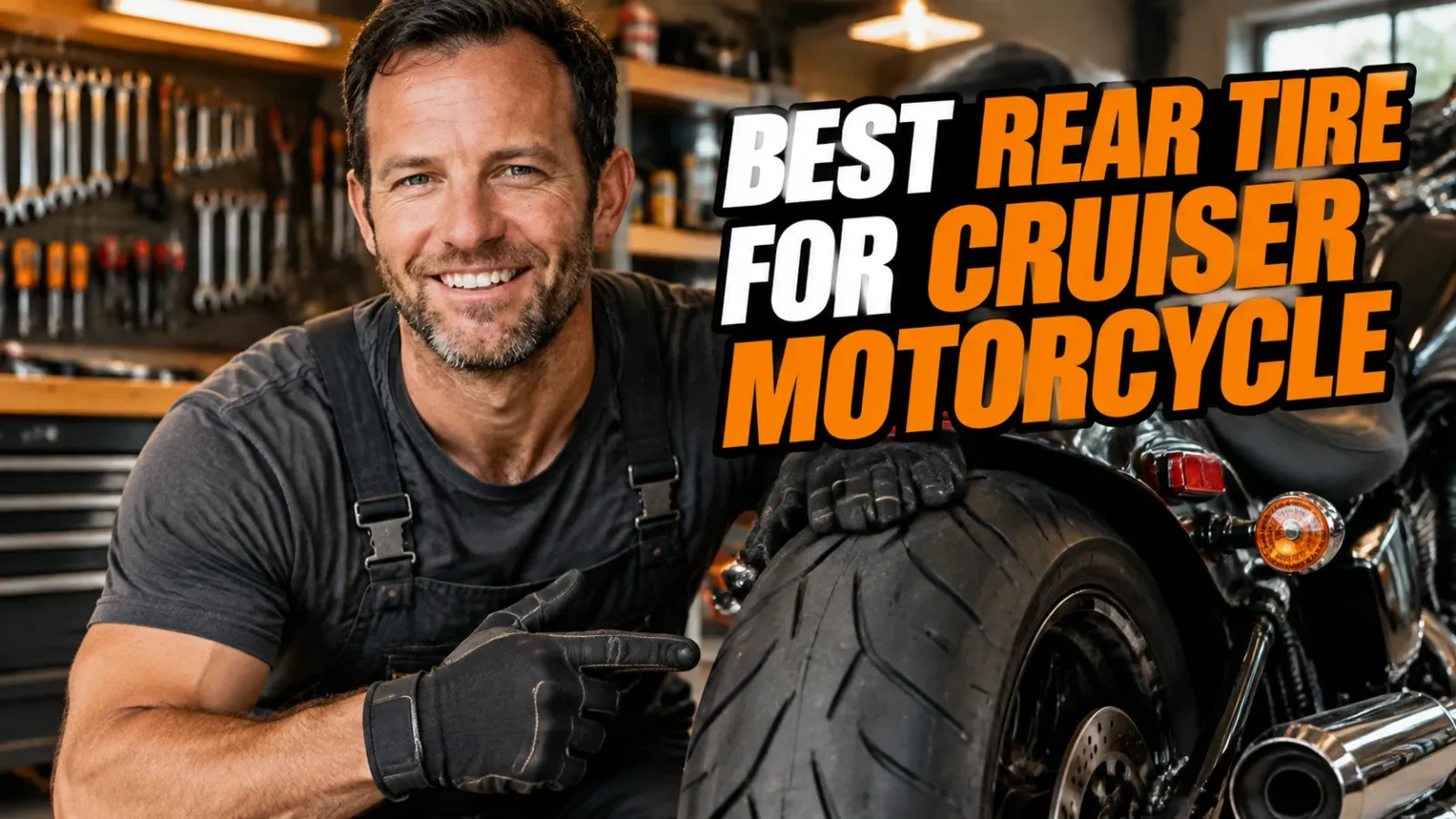
I’ve spent a lot of seat time on heavy, low-slung cruisers, and if there’s one upgrade that changes how a bike feels, it’s the rear tire. It carries most of the weight, puts the power down, and takes the abuse of every highway mile. A tired or mismatched rear tire makes even a great bike feel vague and nervous.
In this guide I’m sharing the eight rear tires I’d genuinely consider for a cruiser, from long-wearing touring rubber to budget-friendly workhorses. I’ll cover what each one does well, where it falls short, and who I think it suits. If you want a broader overview afterward, my companion guide to the best tires for motorcycle cruiser riders is a good next stop.
- My overall pick is the Michelin Commander III Cruiser for its balance of grip, mileage and stability.
- The Dunlop American Elite and Metzeler ME 888 Marathon Ultra are my top choices for high-mileage touring.
- The Shinko 777 H.D. is the value play, and the Pirelli Night Dragon is my wet-weather favorite.
- Always match size, load index and speed rating to your bike, and check pressure often.
1. Michelin Commander III Cruiser — Best Overall Rear Tire
The Michelin Commander III Cruiser is the tire I recommend first to most cruiser riders. It uses a dual-compound design that puts a harder center for mileage and a softer shoulder for cornering grip, so it doesn’t feel one-dimensional.
Why I Like It
On my own rides, the Commander III Cruiser feels planted and predictable at highway speed, and it turns in more naturally than older, flatter-profile tires. It’s available in a wide range of sizes, including common rear fitments like 150/80B16 and 180/65B16, so it covers a lot of Harley-Davidson, Indian and metric cruisers.
Michelin also makes a Touring variant that leans further toward load capacity and longevity. Pricing generally lands in the roughly $190 to $300 range depending on size and retailer.
Things to Watch
It’s not the cheapest option, and the whitewall and specialty fitments cost more. But I consider the money well spent given how consistent it feels from new to worn.
2. Dunlop American Elite — Best for Harley-Davidson Touring
The Dunlop American Elite was developed with big American V-twins in mind, and it shows. I find it stable under heavy load, especially on bikes carrying a passenger and luggage.
It’s offered in sizes such as 180/65B16 and 150/80B16 (and MT90B16 fitments), so it fits many Harley touring and cruiser models. The tread pattern is built for long wear while still offering reassuring grip in sweepers.
Where It Shines
If you ride mostly highway miles on a dresser-style bike, the American Elite is hard to beat for mileage and stability. Expect to pay somewhere in the $170 to $280 range for the rear.
I’d call it slightly less nimble in tight, low-speed turns than the Michelin. That’s a minor tradeoff for a tire that just keeps going.
3. Metzeler ME 888 Marathon Ultra — Best for High-Mileage Riders
The Metzeler ME 888 Marathon Ultra is built around one promise: distance. It’s a favorite among riders who rack up serious miles and want to postpone tire shopping as long as possible.
Metzeler designed it with a compound and carcass meant to resist wear under heavy loads. It’s commonly found in sizes like 180/60R17 and 200/50R18 style fitments for modern cruisers and power cruisers, so check availability for your specific wheel.
My Take
I like how neutral the ME 888 feels. It doesn’t fall into corners, and it stays composed when the bike is heavily loaded. Pricing usually sits in the mid-to-upper range, often around $200 to $320.
The tradeoff is that ultimate grip in aggressive riding isn’t its focus. For relaxed touring, though, it’s a great match.
4. Avon Cobra Chrome AV92 — Best for Confident Cornering and Wet Grip
The Avon Cobra Chrome AV92 has long been one of my go-to recommendations for riders who like to push a cruiser a bit harder through the bends. It uses a profile and compound designed to give good feedback at lean.
It’s offered in popular cruiser sizes including 180/70B16 and 150/80B16 among others. In my experience, riders who switch to it often comment on how much more connected the bike feels.
Real-World Notes
The Cobra Chrome also has a solid reputation in damp conditions. Expect pricing in the neighborhood of $180 to $290 depending on the size you need.
Mileage is good but not class-leading. I’d choose it when handling matters more to me than squeezing out the last thousand miles.
5. Shinko 777 H.D. — Best Budget Rear Tire
Not everyone wants to spend premium money, and the Shinko 777 H.D. is the tire I point budget-minded riders toward. It’s widely available in Harley-style sizes and typically costs around $100 to $160, which is much less than the big-name options.
The 777 H.D. is designed with a heavy-duty construction intended for big V-twins. I’ve found it perfectly serviceable for commuting and weekend rides.
The Honest Tradeoffs
Compared with the Michelin or Dunlop, I expect less wet-weather confidence and often a shorter lifespan. If you’re a casual rider who wants safe, affordable rubber, though, the Shinko makes a lot of sense.
Just be realistic about conditions. I’d step up to a premium tire if you regularly ride in the rain or at sustained high speeds.
6. Bridgestone Battlecruise H50 — Best for Sport-Leaning Cruisers
The Bridgestone Battlecruise H50 is aimed squarely at power cruisers and bikes with wider, lower-profile rear wheels. Think of machines like the Yamaha V-Max or Kawasaki Vulcan S-class bikes that deserve something sportier.
It comes in sizes such as 180/55ZR18 and 200/50ZR18, depending on fitment. The tread is designed to give sticky grip while still offering respectable wear for a performance-flavored tire.
Who It Suits
If your cruiser has a big engine and you like spirited riding, the H50 feels right at home. If you’re curious how sportier rubber compares across brands, my breakdown of the best micheline sport tire for motorcycle riders is worth a look.
Pricing generally runs about $190 to $330. Keep in mind it’s not a fit for every classic-style cruiser wheel size.
7. Dunlop D404 — Best Classic-Look Rear Tire
The Dunlop D404 has been around for decades, and its traditional, narrow-groove tread pattern remains a favorite for riders who want a vintage look. It’s a staple on many classic cruisers and retro-styled bikes.
It’s offered in numerous sizes, including common cruiser rear fitments like 150/80-16, and often in budget-friendly pricing around $110 to $190. I like it for how authentic it looks on a period-correct build.
Performance Expectations
Grip and wet traction are adequate rather than outstanding by modern standards. It’s a style-first pick that still does the job on regular rides.
A side note: some riders ask whether they can run a front-pattern tire in back to save money or get a certain look. I cover that in detail in my guide on whether you can i use a front motorcycle tire on the rear, and my short answer is that it’s rarely a good idea.
8. Pirelli Night Dragon — Best for Rainy-Day Confidence
The Pirelli Night Dragon is the tire I reach for when I know the forecast is questionable. Pirelli designed it with a multi-compound approach and a tread pattern intended to clear water effectively.
Sizes such as 180/70R16 and 150/80R16 are commonly offered, covering plenty of cruisers. In wet conditions, I find it gives me a noticeable margin of confidence, and it still behaves nicely on dry roads.
What To Know
Pricing is typically around $190 to $300. It’s a modern, sporty-feeling tire that suits riders who care about wet grip as much as style.
If rain riding is a regular part of your life, see my deeper dive on the best cruiser motorcycle tires for rain for more options.
How I Choose a Rear Tire for a Cruiser
Picking the right tire isn’t just about brand loyalty. I look at a handful of factors that make the biggest difference in real riding.
Match the Size and Ratings
Start with your bike’s factory tire size, load index and speed rating. These numbers are printed on the sidewall and in your owner’s manual. Never go below the specified load rating, especially if you ride two-up or carry luggage.
Think About Your Riding Style
If you mostly cruise highways, prioritize mileage and stability. If you carve backroads, look at grippier shoulders and a more rounded profile. For commuters in wet climates, wet-weather compounds should move to the top of your list.
Consider Weight and Load
Heavy touring bikes with passengers and bags are tough on rear tires. A reinforced carcass, like those found on touring-oriented tires, can make a big difference in stability and wear.
Keeping Your New Rear Tire Healthy
Even the best tire won’t deliver if you neglect it. I check pressure at least every couple of weeks, and always before a long trip. Underinflation causes heat, squirm and uneven wear, while overinflation shrinks your contact patch.
Follow your manufacturer’s recommendations, and read up on cruiser motorcycle tire pressure if you want a clearer picture of how load and temperature change the numbers.
Break-In Matters
New tires have a slick mold-release coating, so I take the first 100 miles or so gently. Avoid hard braking and aggressive lean angles until the surface has scrubbed in. It’s a small habit that prevents nasty surprises.
Inspect Regularly
Look for cracks, embedded objects, uneven wear and bulges. Tires also age, so I’d replace any tire that’s roughly six years old regardless of tread depth. Check the four-digit DOT date code to know exactly how old yours is.
Final Thoughts on Choosing My Favorite
If I had to pick just one tire for most riders, I’d go with the Michelin Commander III Cruiser for its all-round excellence. For maximum mileage, I’d lean toward the Dunlop American Elite or the Metzeler ME 888 Marathon Ultra.
On a tighter budget, the Shinko 777 H.D. gets the job done, and for rainy climates the Pirelli Night Dragon is my pick. Whatever you choose, make sure it matches your bike’s specs and your riding reality, and you’ll feel the difference the first time you roll out.
Ride safe, keep an eye on your rubber, and enjoy every mile.
Frequently Asked Questions
How often should I replace the rear tire on a cruiser motorcycle?
Most cruiser rear tires last roughly 5,000 to 12,000 miles depending on the compound, your bike’s weight and how you ride. Replace it when you reach the wear bars, see cracking or flat-spotting, or when the tire is about 6 years old, whichever comes first.
Can I put a touring tire on my cruiser’s rear wheel?
Yes, as long as the size, load rating and speed rating match your bike’s specifications. Touring-focused tires like the Michelin Commander III Touring are designed for heavier bikes and loaded riding, and they typically deliver longer life.
What tire pressure should I run on my cruiser’s rear tire?
Always follow the pressure listed on your bike’s swingarm or in the owner’s manual, since it varies by model, load and tire. Check it cold, and re-check often, because even small drops affect handling and wear.
Are budget cruiser tires safe?
A budget tire like the Shinko 777 H.D. can be perfectly safe when it is the correct size and rating and is mounted properly. The tradeoffs are usually shorter life and less wet-weather grip than premium options, so be realistic about how and where you ride.

Related Articles

8 Best Cruiser Motorcycle Tires for Street Riding: My Real-World Picks
I rank the 8 best cruiser motorcycle tires for street riding, from Michelin to Pirelli, with real notes on grip,…
Jake Miller
9 min read

8 Best Michelin Motorcycle Tires for Every Riding Style (Tested Picks)
Looking for the best Michelin motorcycle tires? I break down my 8 favorite models for sport, touring, adventure, cruiser, and…
Jake Miller
9 min read

Yamaha Tire Pressure Guide: The Right PSI for Safer, Smoother Rides
Learn the right tire pressure for your Yamaha, from sportbikes to cruisers and dirt bikes. Check, adjust and maintain PSI…
Jake Miller
9 min read