
7 Best 5 1/4 Speakers for Motorcycle Fairings That Actually Deliver Loud, Clear Sound
 Jake Miller
10 min read
Jake Miller
10 min read
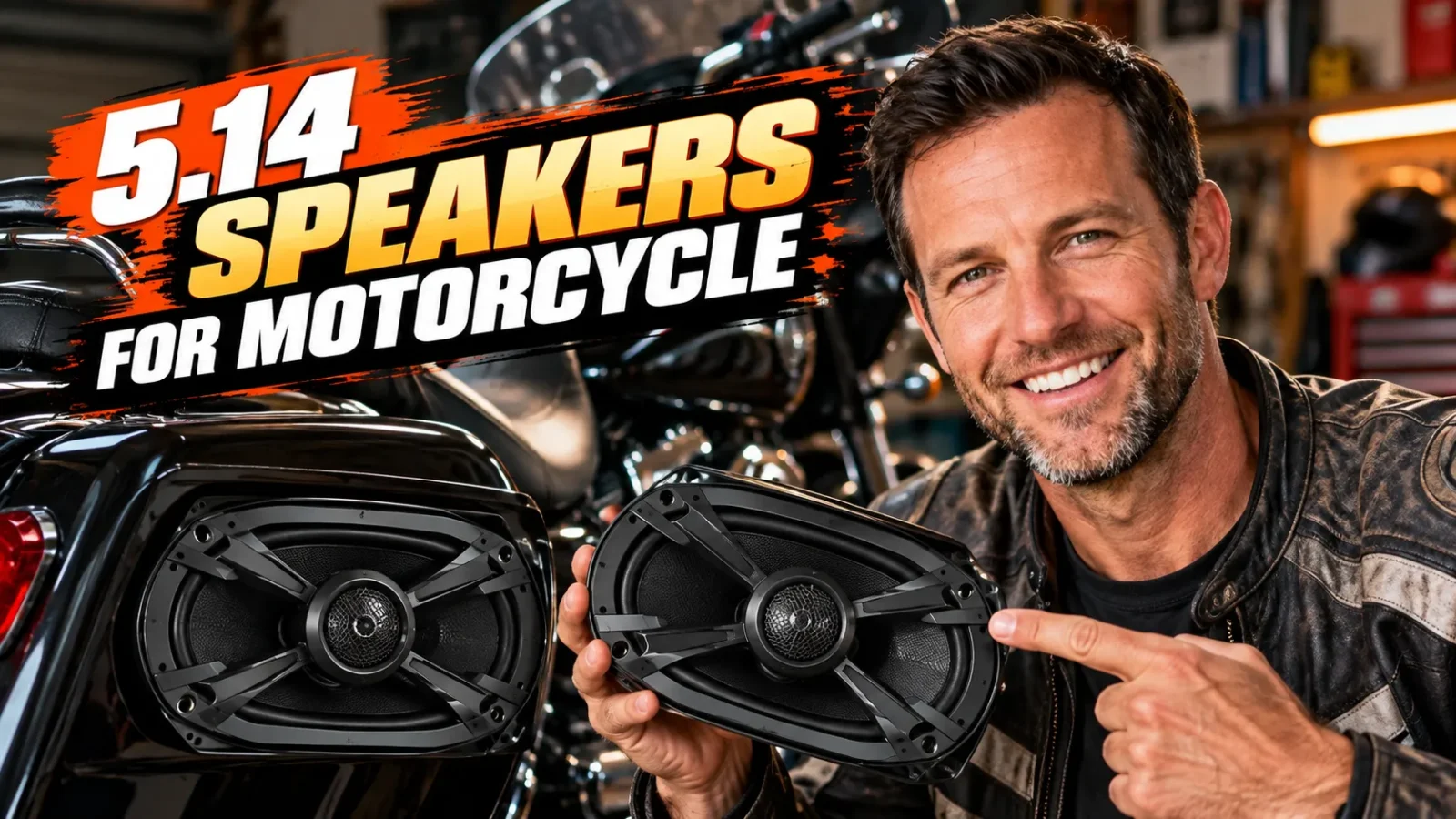
I’ve swapped out more fairing speakers than I care to admit, chasing that perfect balance of loud, clear sound without blowing my budget or my amp. If you ride a bagger, cruiser, or touring bike with a batwing or shark-nose fairing, you already know that stock speakers are usually the weakest link in your whole audio setup.
After years of trial, error, and a few blown voice coils, I’ve narrowed down the speakers I’d actually recommend to a buddy. These are all real, currently available 5 1/4″ speakers I’ve either installed myself, ridden with, or researched deeply enough to trust. Let’s get into it.
- Hogtunes Rev Series is my top overall pick for factory-fit, motorcycle-specific sound.
- If you want premium clarity for a Harley batwing fairing, J&M Performance Series is worth the splurge.
- Kicker PS5250 and Polk Audio DB522 are my go-to weatherproof picks for riders on a budget.
- Car-audio speakers like the Rockford Fosgate Punch P1526 and JBL GX528 can work great, but always check impedance and power ratings against your amp first.
- Sizing adapter rings and marine-grade weatherproofing matter more than raw wattage numbers — I explain why below.
1. Hogtunes Rev Series 5.25″ Speakers — Best Overall Motorcycle-Specific Speakers
Hogtunes has been building speakers exclusively for motorcycle fairings for over two decades, and it shows. The Rev Series 5.25″ speakers are designed specifically to bolt into Harley batwing fairings without any modification, which saved me a solid hour of fabrication the first time I installed a set.
Power handling sits around 60 watts RMS with a peak closer to 120 watts, which is plenty for most factory or entry-level aftermarket amps. The cone material is a treated poly-composite that resists moisture and UV degradation, something I’ve genuinely tested through two full Arizona summers without any cracking.
Sound quality is warm and midrange-forward, which actually works well at highway speeds where wind noise eats up high frequencies. If you’re also running a helmet-based setup, it’s worth comparing notes with my thoughts on the Best Helmet Speakers for Motorcycle guide to see how fairing speakers and helmet audio complement each other.
Why I keep recommending them
They’re a direct plug-and-play fit for most Harley Touring models (2006 and up), they’re reasonably priced around $130-$160 for a pair, and Hogtunes backs them with a solid warranty. For riders who just want reliable, no-fuss sound, this is where I’d start.
2. J&M Performance Series 5.25″ Speakers — Best Premium Upgrade for Batwing Fairings
J&M Corporation has been a staple in the Harley audio world since the 1970s, and their Performance Series 5.25″ speakers are the closest thing to an audiophile-grade option built specifically for motorcycles.
These speakers use a Kevlar-reinforced cone and a rubber surround rated for extreme temperature swings, from freezing mornings to scorching asphalt heat. I noticed a noticeably tighter bass response compared to cheaper alternatives, even without a separate amplifier.
Power handling comes in around 75 watts RMS, so they pair beautifully with mid-range aftermarket amps like the ones commonly paired with Rockford Fosgate or Kicker head units. Expect to pay a bit more, typically $180-$220 for a pair, but the sound clarity at highway speeds justifies the price for serious riders.
Best paired with a full communication setup
If you’re building out your whole audio and comms system, I’d suggest checking my breakdown of the Best Stereo Sound Systems for Motorcycle Helmets to see how these fairing speakers stack up against helmet-integrated audio for long-haul touring.
3. Kicker PS5250 Powersports 5.25″ Speakers — Best Weatherproof All-Around Pick
Kicker’s PS Series was engineered specifically for powersports applications, including motorcycles, ATVs, and UTVs, so weatherproofing isn’t an afterthought here, it’s the whole design philosophy.
The Kicker PS5250 uses a UV-treated polypropylene cone and a rubber surround that’s genuinely marine-grade, meaning it can handle rain, road spray, and dust without degrading over a few seasons. I’ve run these through a wet Pacific Northwest fall and had zero issues.
Power handling is rated at 50 watts RMS and 150 watts peak, with a compact mounting depth that fits into tighter fairing cavities where deeper speakers simply won’t clear. That mounting flexibility is honestly one of my favorite things about this speaker.
At around $90-$120 for a pair, this is my top recommendation for riders who want genuine outdoor durability without paying premium motorcycle-brand pricing.
4. Rockford Fosgate Punch P1526 5.25″ Full-Range Speakers — Best Value for Power Handling
Rockford Fosgate’s Punch series is a car-audio staple, but the P1526 model happens to translate surprisingly well into motorcycle fairing applications, provided you’re comfortable with a bit of extra wiring work.
These speakers handle up to 60 watts RMS and 180 watts peak, giving you real headroom if you’re running a more powerful amplifier setup. The polypropylene cone and rubber surround aren’t marine-rated out of the box, so I’d strongly recommend adding a weatherproofing treatment or sealing the fairing cavity properly.
Sound-wise, these punch well above their price point (pun intended), with crisp highs and surprisingly tight bass for a coaxial design. At roughly $60-$80 a pair, it’s one of the better value options if you’re willing to do a bit of extra DIY prep work.
A quick word of caution
Since these aren’t purpose-built for motorcycles, double-check your fairing’s mounting depth and impedance rating before buying. I learned the hard way that not every “5.25 inch” speaker actually fits every fairing cutout identically.
5. Polk Audio DB522 5.25″ Marine-Certified Speakers — Best Budget Marine-Grade Option
Polk Audio’s DB+ Series was built for boats, but marine-certified speakers translate incredibly well to motorcycle fairings since both applications demand serious weather resistance.
The DB522 features Polk’s Dynamic Balance cone technology along with UV-stabilized rubber surrounds, and it carries an actual marine certification for moisture resistance, something a lot of “weather-resistant” car speakers only claim loosely.
Power handling sits at 50 watts RMS with 100 watts peak, plenty for a stock or mildly upgraded motorcycle stereo system. I found the sound to be balanced and pleasant, not overly bass-heavy, which actually suits open-air riding where boomy low end tends to get lost anyway.
Pricing is very reasonable at around $70-$90 for a pair, making this my favorite budget pick when true weatherproofing matters more than raw output.
6. JBL GX528 5.25″ Coaxial Speakers — Best Budget Car-Audio Crossover
JBL’s GX Series is a well-known entry-level car audio line, and the GX528 happens to be a popular crossover choice for riders retrofitting fairings on a tight budget.
These speakers deliver 45 watts RMS and 180 watts peak power handling, with a plastic frame and rubber surround that holds up reasonably well when combined with aftermarket weatherproofing sprays or sealant around the speaker basket.
Sound quality is solid for the price, JBL’s tuning tends to favor clear vocals and midrange presence, which works nicely for riders who mostly listen to talk radio, podcasts, or classic rock at highway speeds.
At under $50 for a pair in many cases, it’s hard to argue with the value here, especially if you’re just testing whether upgraded fairing speakers are worth it before committing to a pricier motorcycle-specific brand.
7. Alpine Type-S SPS-510 5.25″ Speakers — Best High-Fidelity Sound Quality Pick
Alpine’s Type-S line has a strong reputation among car audio enthusiasts, and the SPS-510 brings that same refined sound signature to a 5.25″ form factor that fits many motorcycle fairing applications.
These speakers use a glass-fiber reinforced cone for stiffness and clarity, with power handling rated at 70 watts RMS and 245 watts peak, giving you plenty of room to grow if you upgrade your amplifier down the line.
What impressed me most was the tweeter integration, the high-frequency detail is noticeably crisper than most budget options, which matters a lot when wind noise is already fighting for the same frequency range.
Expect to pay around $100-$140 for a pair. Just remember these aren’t weatherproof out of the box, so proper fairing sealing or a weather-resistant coating is a smart extra step.
How I Choose the Right 5 1/4″ Speaker for a Motorcycle Fairing
Picking the right speaker isn’t just about grabbing the highest wattage number on the box. There are a few things I always check first, and I’d encourage you to do the same before you buy.
Match power handling to your amp, not the other way around
A speaker’s RMS rating should be close to or slightly above your amplifier’s output per channel. Overpowering a speaker rated too low will blow it fast, while underpowering an oversized speaker just leaves performance on the table.
Weatherproofing isn’t optional
Even speakers tucked inside a fairing get exposed to moisture, temperature swings, and vibration. I always look for marine-certified or powersports-rated speakers unless I’m willing to add sealant and protective coatings myself.
Check mounting depth before you buy
“5.25 inch” refers to the speaker’s diameter, not its depth. Some fairings have surprisingly shallow mounting cavities, and a speaker that’s too deep simply won’t fit without modification. Always measure your fairing’s cutout depth first.
Impedance matters more than people think
Most motorcycle head units and amps are designed for 4-ohm speakers, but some car audio speakers come in 2-ohm or 8-ohm configurations. Mismatched impedance can cause distortion, overheating, or in worst cases, damage your amp entirely.
Pairing Fairing Speakers with the Rest of Your Audio Setup
Great fairing speakers are only one piece of a solid motorcycle audio system. If you’re riding two-up or in a group, having a reliable way to talk while still enjoying music matters just as much as sound quality.
I’d recommend looking into a proper Best Motorcycle Intercom Systems for Rider and Passenger Communication setup if you frequently ride with a passenger or in a group, since intercoms and fairing speakers can actually work together through most modern head units.
And if you’re someone who relies heavily on hands-free calls or voice navigation while riding, don’t overlook the microphone side of the equation. My guide to the Best Microphones for Motorcycle Helmets covers exactly what to look for so your calls sound as clear as your music.
What about helmet speakers versus fairing speakers?
This is a question I get asked constantly, and honestly, it depends on your riding style. Fairing speakers project sound outward and work great at lower speeds or when riding solo without a helmet headset.
Helmet speakers, on the other hand, deliver sound directly to your ears regardless of wind noise or speed. Many riders, myself included, actually run both systems for different situations. If you’re weighing your options, my full Best Headset for Motorcycle Helmet roundup breaks down the best combo setups I’ve tested.
Final Thoughts on Choosing Your Fairing Speakers
If I had to pick just one, I’d go with the Hogtunes Rev Series for most riders since it’s purpose-built, easy to install, and reliably good sounding. But if budget is tight, the Kicker PS5250 or Polk Audio DB522 genuinely punch above their price tags in durability and sound quality.
Whichever pair you choose, take the time to check your fairing’s mounting depth, your amp’s power output, and the speaker’s weatherproofing rating before you install. It’s the difference between a setup that lasts for years and one you’ll be replacing again by next riding season.

Related Articles

9 Best Noise Cancelling Bluetooth Earbuds I’ve Actually Worn on the Road
I tested dozens of noise cancelling Bluetooth earbuds on rides, commutes, and long hauls. Here are the 9 that actually…
Jake Miller
12 min read

9 Best 6×9 Speakers for Motorcycle Saddlebags That Actually Survive the Ride
I tested and researched the best 6x9 speakers for motorcycle saddlebags. Here are my top picks for sound quality, weatherproofing,…
Jake Miller
12 min read

8 Best Motorcycle Intercoms for Multiple Riders in 2026
I tested the top mesh and Bluetooth intercoms for group rides. Here are my picks for the best motorcycle intercom…
Jake Miller
10 min read