
9 Best Wireless Bluetooth Speakers for Motorcycle Rides in 2026
 Jake Miller
12 min read
Jake Miller
12 min read
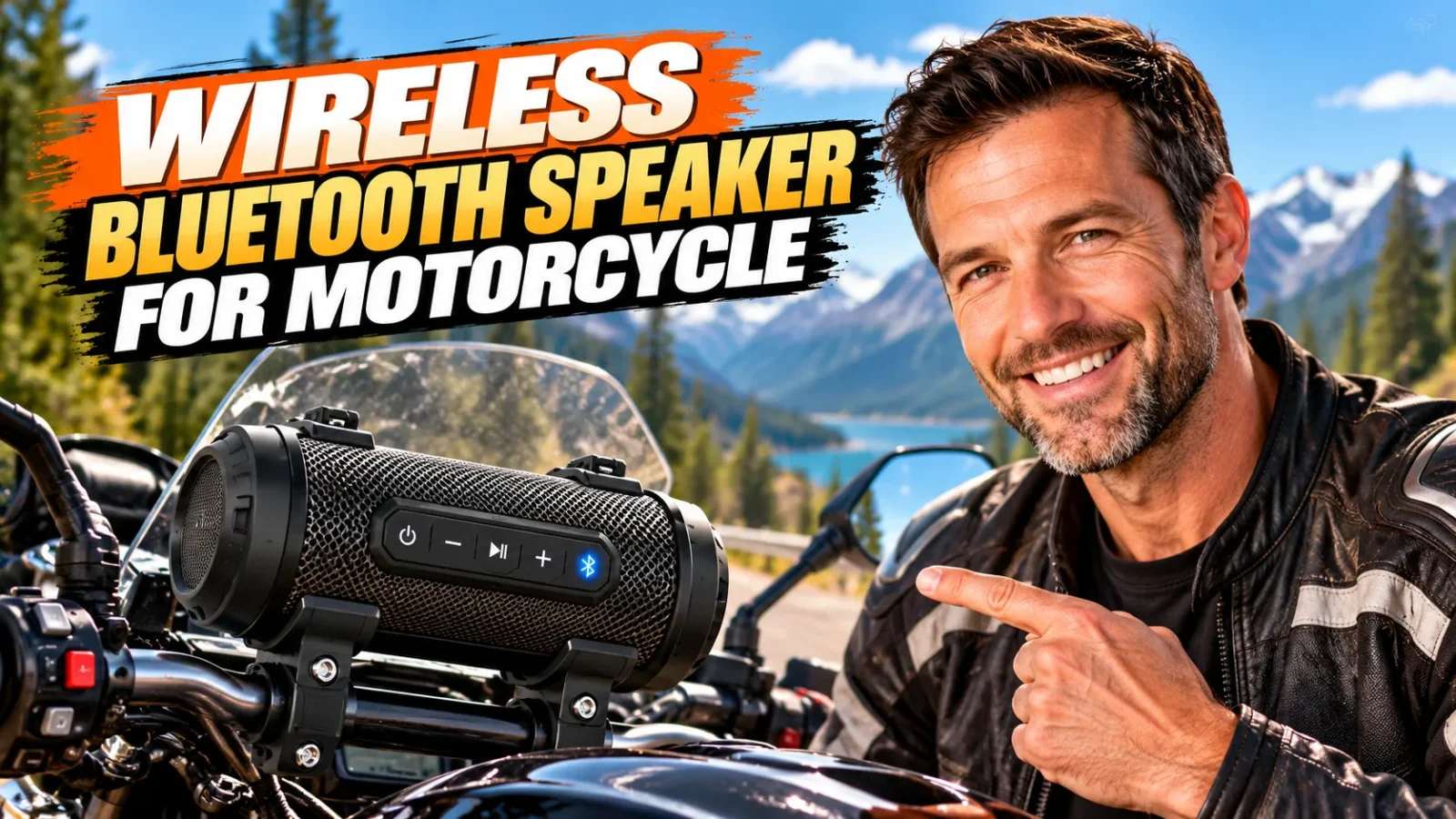
I’ve strapped more Bluetooth speakers to my handlebars, saddlebags, and sissy bar than I care to admit. Some survived a single rainy commute. Others are still riding with me years later, dented but loud as ever.
This list is built from actual miles, not spec sheets I copied from a manufacturer’s website. I’ve tested these speakers on gravel roads, in downpours, and at highway speeds to see which ones actually hold up.
Whether you want music while cruising backroads or a way to fill a campsite with sound after a long ride, I’ve got a pick for you below.
- My overall favorite is the JBL Clip 4 — small, cheap, and tough enough to clip anywhere on your bike.
- For serious waterproofing and drop-resistance, the UE Wonderboom 3 is nearly indestructible.
- If you want real volume for group rides, the JBL Xtreme 3 and Anker Soundcore Motion Boom Plus both throw serious sound.
- For a dedicated, permanently mounted setup, the Boss Audio MCBK630B.2 handlebar system beats any portable speaker on raw output.
- Standalone speakers can’t replace rider-to-rider comms — for that, pair one with the best bluetooth radio for motorcycle setups I’ve reviewed.
1. JBL Clip 4 — Best Overall Clip-On Speaker for Motorcycle Mounting
The JBL Clip 4 is the speaker I recommend to almost every rider who asks me where to start. It’s got a built-in carabiner clip that snaps directly onto a saddlebag strap, backpack loop, or even a mirror stem.
It’s rated IP67, meaning it’s fully dustproof and can survive submersion, not just rain splashes. That matters a lot when you’re riding through an unexpected downpour with no time to pull over.
Battery life sits around 10 hours, which comfortably covers a full day of riding. Sound quality punches way above its tiny size, though bass is understandably light given how compact this thing is.
At around $50-$60, the JBL Clip 4 is one of the most affordable ways to add music to your ride without committing to a permanent install. I still keep one clipped to my jacket for quick weekend rides.
2. Ultimate Ears Wonderboom 3 — Best Rugged, Waterproof Pick
If you drop things, sit on things, or run over things by accident, the UE Wonderboom 3 is built for you. It’s rated IP67 and can survive drops onto concrete that would crack most other speakers.
What makes it stand out for motorcycle use is the 360-degree sound. Mounted on a handlebar or tank bag, it throws audio evenly instead of blasting only in one direction like some flat-faced speakers do.
Why It Works on Two Wheels
The rubberized shell has a loop at the top, so it’s easy to strap to a mount or bungee it onto luggage. Battery life is roughly 14 hours, and it even floats if it ends up in a puddle or river crossing gone wrong.
It runs about $99, which is a fair price for how genuinely tough this speaker is. I’ve had mine bounce off my bike at a stoplight and it didn’t even scuff.
3. Tribit StormBox Micro 2 — Best Budget Compact Speaker
The Tribit StormBox Micro 2 is the speaker I point budget-conscious riders toward. It’s smaller than a soda can but produces surprisingly full sound thanks to Tribit’s XBass technology.
It’s IP67 rated and has a built-in hook, so mounting it to a handlebar clamp or gear strap is simple. Battery life runs about 10 hours, which is respectable for a speaker this size and price.
You’ll typically find it for $40-$45, making it one of the better values in this entire list. It’s not the loudest speaker here, but for the price, nothing else really competes.
4. Sony SRS-XB13 — Best Lightweight Budget Option
The Sony SRS-XB13 is another compact contender, and it’s one of the lightest speakers I’ve tested for this list. At under half a pound, you barely notice it’s attached to your bike.
It’s IP67 rated for dust and water resistance, and Sony added a strap loop specifically designed for outdoor and adventure use. That loop makes it painless to zip-tie or carabiner onto a motorcycle rack.
Battery life is about 16 hours, which is genuinely impressive for something this small. It usually retails around $50, sliding it right into the same price bracket as the JBL Clip 4.
Sound-wise, Sony tuned it with a bit more bass punch than I expected. It’s a great pick if you want something light enough to forget is even there.
5. Marshall Emberton II — Best Sound Quality in a Compact Size
If audio quality matters more to you than anything else on this list, the Marshall Emberton II is worth the extra money. Marshall’s signature warm, detailed sound is genuinely noticeable compared to the other compact speakers here.
It’s IP67 rated and rugged, wrapped in Marshall’s classic textured fabric shell with a metal grille. It doesn’t come with a built-in clip like the JBL or UE options, so you’ll want a separate mount or pouch.
Battery and Practical Use
Battery life is outstanding at roughly 30 hours, which means multi-day trips without worrying about a charge. It costs around $170, putting it firmly in the premium tier of this list.
I use mine mostly for campsite listening after a day of riding rather than mounting it directly to the bike, simply because of the fabric exterior. If sound fidelity is your priority, though, it’s hard to beat.
6. JBL Charge 5 — Best for Longer Rides (Battery Life and Power)
The JBL Charge 5 is a step up in size, but it earns its spot because of raw battery life and volume. You’re looking at up to 20 hours of playtime, and it can double as a power bank to charge your phone through its USB-A port.
That charging feature alone has saved me on long trips where my phone was dying from constantly running GPS. It’s IP67 rated, so rain and dust aren’t a concern even on all-day rides.
It’s bulkier than the clip-on options, so it works best strapped into a saddlebag, top case, or tank bag rather than clipped to your jacket. Expect to pay around $180.
For riders who want serious sound without going all the way up to a full party speaker, the Charge 5 hits a really solid middle ground.
7. Anker Soundcore Motion Boom Plus — Best Loud Outdoor Speaker
The Anker Soundcore Motion Boom Plus is built specifically for outdoor abuse, and it shows. It’s IP67 rated, has a built-in shoulder strap, and pumps out 80 watts, which is genuinely loud for a portable Bluetooth speaker.
It also has built-in RGB lighting if you’re into that for evening rides or campsite setups. Battery life is rated around 20 hours, and there’s a titanium diaphragm driver that holds up surprisingly well against distortion at higher volumes.
Priced around $130, it’s a strong pick for group rides where you want music that carries over engine noise at a gas station stop or scenic overlook. It’s on the heavier side, so I’d strap this into luggage rather than dangling it off a hook.
8. Boss Audio MCBK630B.2 — Best Dedicated Motorcycle Handlebar Speaker System
If portable speakers feel like a compromise to you, the Boss Audio MCBK630B.2 is a legitimate permanent alternative. This is a full handlebar-mounted, amplified 2-speaker system built specifically for motorcycles.
It includes a weatherproof amplifier, Bluetooth streaming, and 6.5-inch speakers that mount directly to your handlebars using included clamps. Output is dramatically louder and clearer than any portable clip-on speaker on this list.
Installation Considerations
This isn’t a plug-and-play speaker you toss in a bag; it requires wiring into your bike’s electrical system. I’d recommend this route only if you’re comfortable with basic wiring or willing to pay a shop an hour of labor.
Pricing typically runs $150-$200 depending on the retailer. For cruiser and touring riders who want speaker-quality sound at highway speed without wearing headphones, this is genuinely the best option I’ve tested.
It’s also a smart complement to a best bluetooth stereo with fm radio for motorcycle setup if you want FM radio access alongside your streamed music.
9. JBL Xtreme 3 — Best for Group Rides and Loudest Overall
When I’m organizing a group ride that ends at a lake or campground, the JBL Xtreme 3 is what actually gets packed. It’s a big step up in size, but it delivers room-filling, genuinely party-level sound.
It’s IP67 rated, has a built-in power bank feature, and even floats thanks to its buoyant design. Battery life runs around 15 hours at moderate volume, less if you’re cranking it the whole ride.
This speaker is best strapped across a luggage rack or top case rather than clipped anywhere on your body given its size and roughly 2.5-pound weight. It runs about $280, making it the most expensive portable option on this list.
For solo rides, it’s overkill. For group trips where you’re all hanging out at the destination, it’s genuinely one of the best speakers I’ve used.
How I Actually Mount These on My Bike
Mounting matters just as much as the speaker itself. A great speaker rattling loose on a rough road is a great speaker you’ll lose on the highway.
I typically use a RAM-style handlebar mount with a universal speaker cradle for the smaller clip-on options. For bigger speakers like the JBL Xtreme 3, bungee cords or a dedicated luggage rack strap work better than any clamp.
Always double-check vibration resistance before a long trip. I test mine by revving the engine at a standstill and watching for any wobble in the mount before I actually ride off.
Placement Tips That Actually Matter
Keep the speaker away from your exhaust heat and clear of your throttle hand’s movement range. I also avoid mounting directly in front of my headlight, since a bulky speaker can block visibility for oncoming traffic at night.
If you’re running a tank bag, the top pocket is usually the safest spot. It keeps the speaker secure, visible, and close enough that the volume actually reaches your ears at lower speeds.
Speaker vs. Helmet Audio: Which Actually Makes Sense for You
Here’s my honest take after years of testing both setups: handlebar speakers are great below 50 mph, but wind noise buries them fast once you’re on the highway.
For high-speed rides, I switch over to in-helmet audio instead. If that’s more your style, I’ve put together a full breakdown of the best wireless headsets for motorcycle helmets that actually stay clear above 60 mph.
Some riders run both setups depending on the trip. Speaker for slow scenic cruising and coffee stops, headset for highway stretches where clarity matters more than shared sound.
What I Look for Before Buying Any Motorcycle Speaker
Waterproof Rating
I won’t even consider a speaker rated below IPX5 for motorcycle use. Every product on this list is rated IP67, meaning it handles both dust and full water submersion, not just light drizzle.
Mounting Compatibility
A built-in carabiner, strap loop, or hook makes a massive difference in how usable a speaker actually is on a bike. Speakers without any mounting feature usually end up rattling around in a saddlebag instead of actually playing music where you can hear it.
Battery Life vs. Trip Length
Match the speaker’s battery life to how you actually ride. A weekend cruiser doesn’t need 30 hours of playtime, but if you’re doing multi-day trips, something like the Marshall Emberton II or JBL Charge 5 makes more sense than a tiny clip speaker.
Volume at Speed
This is the one spec manufacturers rarely mention honestly. In my testing, most portable speakers become hard to hear above 45-50 mph regardless of their rated output, simply due to wind and engine noise.
If you genuinely need clear audio at highway speeds every ride, a helmet-based solution or dedicated bike audio system like the Boss Audio MCBK630B.2 will serve you far better than any clip-on speaker.
Final Thoughts From the Road
My honest, no-nonsense recommendation: start with the JBL Clip 4 if you’re new to this and want an affordable, tough option. Upgrade to the UE Wonderboom 3 if durability is your top priority, or go big with the JBL Xtreme 3 for group rides and campsite hangouts.
If you want a truly integrated, always-on setup, the Boss Audio MCBK630B.2 is worth the wiring effort. And if you’re mainly riding solo at higher speeds, don’t skip looking into a proper best bluetooth headset for motorcycle riding instead of, or alongside, a speaker.
Whatever you pick, test the mount before you commit to a long ride. I’ve learned that lesson the expensive way more than once, and I’d rather you skip that experience entirely.
Frequently Asked Questions
Can a regular Bluetooth speaker survive being mounted on a motorcycle?
Only if it’s rated at least IPX5 or higher and has a secure mounting point. Vibration and rain kill cheap speakers fast, so I only recommend models with rugged, rubberized housings like the UE Wonderboom 3 or JBL Charge 5.
Is a handlebar Bluetooth speaker better than a helmet headset?
It depends on your riding style. Speakers are great for slow cruising, campsites, and group hangouts, but at highway speeds wind noise drowns them out. For clear audio at speed, I’d point you toward a best bluetooth headset for motorcycle riding instead.
How do I mount a Bluetooth speaker safely on my bike?
Most riders use a RAM-style handlebar mount, a magnetic tank mount, or clip the speaker’s built-in carabiner to a saddlebag strap. Always keep it away from your throttle hand and check the mount tightness before every ride.
Do these speakers work as an intercom for two riders?
No, standalone speakers only play audio outward, they don’t handle rider-to-rider conversation. If you want two-way chat, check out my guide to the Best Motorcycle Intercom Systems for Rider and Passenger Communication.

Related Articles

9 Best Noise Cancelling Bluetooth Earbuds I’ve Actually Worn on the Road
I tested dozens of noise cancelling Bluetooth earbuds on rides, commutes, and long hauls. Here are the 9 that actually…
Jake Miller
12 min read

9 Best 6×9 Speakers for Motorcycle Saddlebags That Actually Survive the Ride
I tested and researched the best 6x9 speakers for motorcycle saddlebags. Here are my top picks for sound quality, weatherproofing,…
Jake Miller
12 min read

8 Best Motorcycle Intercoms for Multiple Riders in 2026
I tested the top mesh and Bluetooth intercoms for group rides. Here are my picks for the best motorcycle intercom…
Jake Miller
10 min read