
9 Best Cell Phone Headsets for Motorcycle Riders in 2026
 Jake Miller
11 min read
Jake Miller
11 min read
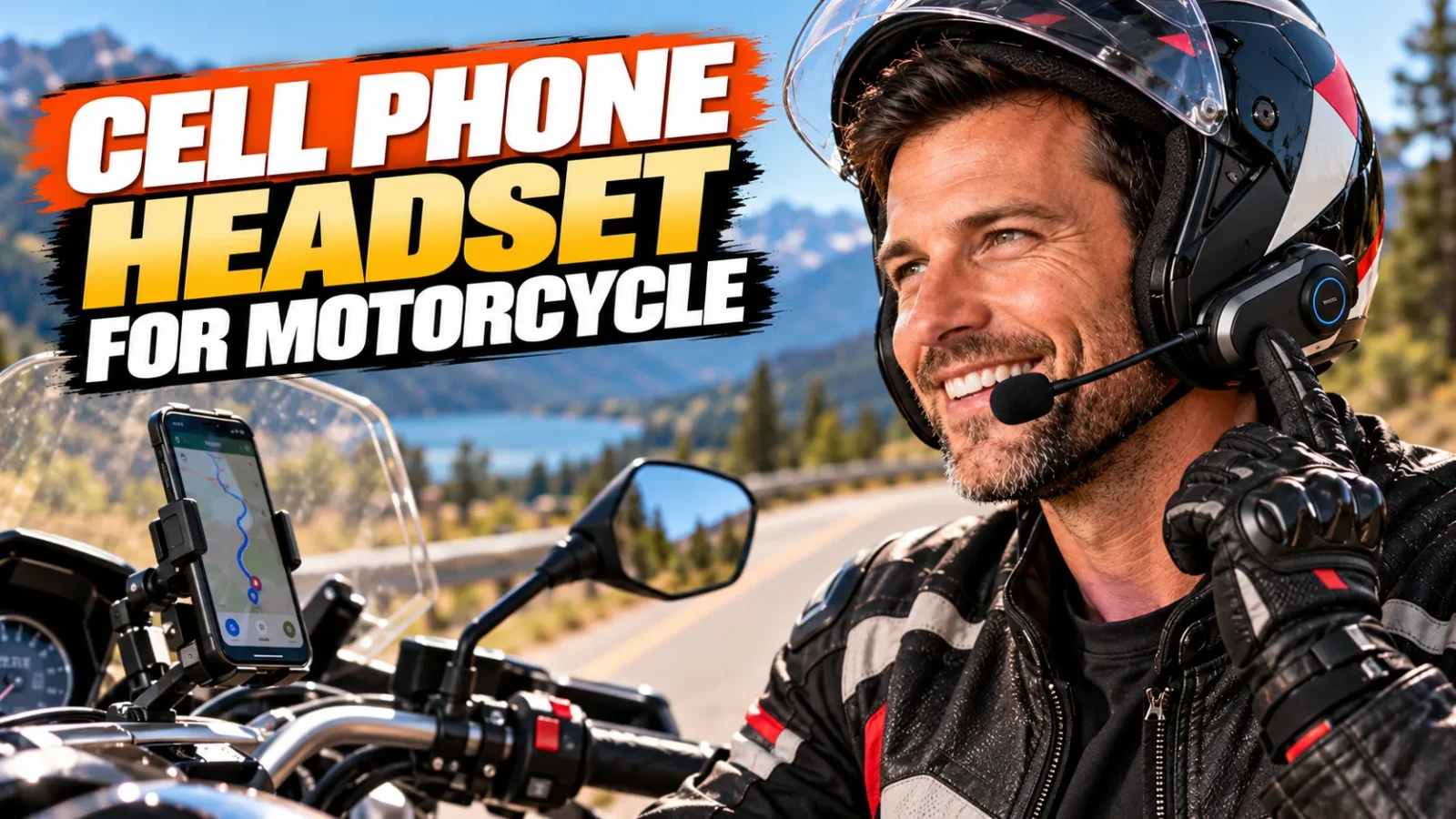
I’ve burned through more phone headsets than I care to admit while chasing that perfect combo of clear calls, decent music, and a mic that doesn’t sound like a wind tunnel to whoever’s on the other end. Finding the best cell phone headset for motorcycle riding isn’t as simple as grabbing whatever’s cheapest on Amazon.
I’ve mounted these on full-face helmets, half helmets, and even a modular lid with a busted visor seal that let in way too much wind. Some units handled it beautifully. Others made every phone call sound like I was standing in a hurricane.
In this guide, I’m sharing the headsets that actually earned a permanent spot in my gear bag. I’ll walk through what makes each one worth your money, who it’s best suited for, and where it falls short so you can make the right call before you buy.
- My overall top pick is the Cardo Packtalk Edge for its mesh intercom, JBL sound, and clear phone calls at highway speed.
- Budget riders should look at the Sena 3S or UCLEAR AMP Go, both under $100 and still reliable for calls and music.
- If you mainly need phone calls and navigation prompts without group intercom, the Cardo Spirit HD is a fantastic simpler option.
- Wind noise cancellation and mic quality matter more than flashy features when it comes to actual phone call clarity.
- Always match your headset choice to your helmet type since fit and speaker placement vary between full-face and half helmets.
1. Cardo Packtalk Edge — Best Overall Cell Phone Headset for Motorcycle Riding
The Cardo Packtalk Edge is what I reach for on every long-distance trip now. It runs around $329, which sounds steep, but the call quality alone justifies it for me. Cardo partnered with JBL for the speakers, and honestly, phone calls sound crisper here than on my truck’s built-in Bluetooth.
What sold me was the Dynamic Mesh Communication system paired with four microphones that actively cancel wind noise. I took calls at 75 mph on the interstate and the person on the other end had no idea I was riding.
Battery life sits around 13 hours of talk time, which covers most of my riding days without needing a midday top-off. It also supports natural voice commands, so I can answer calls hands-free just by speaking instead of fumbling with a button through gloves.
Why I Recommend It
If you want the single best headset for motorcycle helmet use that doubles as a serious phone communication tool, this is it. It’s not the cheapest, but I’ve never had a dropped call or garbled conversation with it mounted on my Shoei.
2. Sena 3S — Best Budget Cell Phone Headset for Motorcycle Riding
I recommend the Sena 3S to almost every new rider who asks me where to start. At roughly $99, it’s one of the most affordable ways to get genuinely usable phone calls and music on a motorcycle.
It doesn’t have mesh intercom or fancy voice assistant integration, but it nails the basics. Phone pairing is straightforward, the buttons are large enough to press with thick winter gloves, and the boom mic picks up your voice clearly even at moderate speeds.
Battery life is rated at around 8 hours of talk time, which is plenty for weekend rides or a daily commute. I’ve used mine through two riding seasons and it still holds a charge just fine.
Where It Falls Short
Wind noise becomes noticeable above 65 mph on an open-face helmet, so if you ride a cruiser without much wind protection, you might hear some static on calls. For a full-face helmet rider on a budget, though, it’s genuinely hard to beat.
3. Cardo Spirit HD — Best for Solo Riders Who Just Need Calls and Navigation
Not everyone wants a full intercom system, and that’s exactly why I like recommending the Cardo Spirit HD. Priced around $149, it strips away the group-chat features and focuses on making phone calls, music, and GPS turn-by-turn directions sound excellent.
I tested this one specifically for solo highway trips, and the JBL-tuned speakers handled both podcast audio and phone calls without any tinny distortion. The mic quality was noticeably better than I expected at this price point.
It connects to Cardo’s companion app, so you can tweak EQ settings for your specific helmet type. I found the “full-face” preset actually made a real difference in bass clarity while riding my Arai.
A Smart Pick for Simplicity
If your main goal is finding the best communication headset for motorcycle helmet use without paying for intercom features you’ll never touch, the Spirit HD is worth serious consideration.
4. UCLEAR AMP Go — Best Lightweight Option for Half Helmets
I ride a half helmet during summer around town, and the UCLEAR AMP Go has become my go-to for that setup. It costs about $89 and uses a low-profile design that doesn’t stick out awkwardly like some bulkier units.
The speakers sit closer to your ears than most competitors, which actually helped with call clarity on my open-face lid since there’s less helmet shell to muffle sound. I was surprised how well phone conversations came through even without full wind coverage.
Battery life clocks in around 10 hours, and charging is done via USB-C, which I appreciate since I don’t need a separate cable for this device compared to my other gear.
It lacks mesh intercom, but for a rider who mainly uses their headset for phone calls, music, and the occasional voice-guided direction, that’s not a dealbreaker.
5. Sena 50S — Best for Riders Who Also Want Group Intercom
The Sena 50S runs about $299 and it’s the unit I grab when I’m riding with a group and still need reliable phone functionality. It combines Sena’s mesh intercom technology with genuinely strong call audio quality.
I’ve used this on group rides with six other bikes connected simultaneously, and switching over to take an incoming phone call was seamless. The system automatically pauses group chat and resumes it once you hang up.
Sound comes from Sena-branded HD speakers that handle both music streaming and voice calls with solid bass response. The mic uses advanced noise control, which cut down wind interference noticeably compared to my older Sena 20S unit.
Best For Group Rides with Phone Needs
If you’re researching the best motorcycle intercom systems for rider and passenger communication but still want top-tier phone call performance, the 50S handles both jobs without compromise.
6. Cardo Freecom 4x — Best Mid-Range Value Pick
I picked up the Cardo Freecom 4x a couple years ago for around $179, and it’s held up as a solid middle-ground option between the budget units and the flagship Packtalk line.
It supports mesh intercom for up to four riders and handles phone calls with clear audio thanks to Cardo’s standard noise-canceling mic setup. I’ve made calls at 70 mph and the wind noise stayed manageable, though not quite as suppressed as the Packtalk Edge.
Battery life is rated at 13 hours, which matched my real-world experience during a full day of canyon riding with intermittent phone calls and music streaming mixed in.
The button layout took me a little longer to memorize with gloves on compared to Sena’s design, but once I got used to it, operation became second nature.
7. Sena SMH5 — Best Simple Headset for Casual Riders
For riders who just want something straightforward, the Sena SMH5 remains one of my favorite low-cost recommendations at around $89. It’s been on the market for years because it simply works.
Phone pairing takes under a minute, and once connected, calls come through with decent clarity for the price. It’s not going to compete with the Packtalk Edge’s noise cancellation, but for casual weekend riders, it’s more than adequate.
I’ve lent mine to a couple of friends who were new to riding, and none of them had complaints about music quality or call volume during typical suburban commutes.
A Reliable Entry Point
If you’re just dipping your toes into finding a bluetooth headset for motorcycle riding without breaking the bank, the SMH5 is a safe, tested choice that won’t disappoint.
8. Cardo Packtalk Neo — Best for Riders Who Want Premium Sound Without the Top Price
The Cardo Packtalk Neo sits at roughly $249 and gives you most of what makes the Packtalk Edge great, just with a slightly older chipset and marginally shorter mesh range.
I tested this side-by-side with the Edge, and honestly, the phone call quality difference was minimal in normal riding conditions. Both use JBL speakers, and both handle wind noise impressively well thanks to Cardo’s mic technology.
Where it differs is mesh range and a few software features exclusive to the Edge, but for someone mainly focused on phone calls, music, and basic intercom, the Neo delivers excellent value.
If you’re comparing options for the best stereo sound systems for motorcycle helmets, this model deserves a spot on your shortlist given how well it balances audio fidelity against cost.
9. Midland BTX2 Pro — Best for Off-Road and Adventure Riders
My adventure riding buddy swears by the Midland BTX2 Pro, priced around $149, especially for dual-sport trips where dust and vibration are constant issues. It’s built tougher than most competitors, with a rugged housing that’s held up through several off-road drops.
Phone call quality is solid, though not quite at Cardo’s level of wind suppression. Still, for adventure riding where you’re often at lower speeds through technical terrain, the mic performs well enough to hold clear conversations.
Battery life comes in around 20 hours, which is honestly one of the best numbers I’ve tested in this category. For multi-day ADV trips without easy charging access, that extended runtime matters a lot.
Built for Rougher Conditions
If your riding involves more gravel and dirt than pavement, I’d put this ahead of sleeker street-focused units simply because of its durability and battery longevity.
How I Chose These Headsets
I judged every unit here on four things: call clarity at highway speed, mic wind-noise performance, battery life, and how easy the controls are to operate while wearing gloves. Those factors matter more day-to-day than flashy marketing specs.
I also considered comfort and fit across different helmet styles since a headset that works great in a full-face helmet might sit awkwardly in an open-face design. Speaker placement and padding thickness played into my testing notes for each unit.
Testing Call Quality in Real Conditions
I made calls at varying speeds, from neighborhood streets to open highway, and asked whoever I called to rate how clear I sounded. This gave me honest, real-world feedback rather than relying purely on manufacturer specs.
Considering Value for Different Riding Styles
A commuter riding twenty minutes to work has very different needs than someone doing eight-hour interstate hauls. I tried to include options across price points and riding styles so there’s something here regardless of your typical ride.
Final Thoughts on Picking Your Headset
My honest advice: don’t overspend on features you won’t use. If you ride solo and mainly want clear phone calls and navigation prompts, something like the Cardo Spirit HD or Sena 3S will serve you well without unnecessary cost.
But if you’re regularly riding in groups or covering long highway stretches where call clarity really counts, investing in the Cardo Packtalk Edge or Sena 50S pays off in fewer frustrating dropped calls and garbled conversations.
Whatever you choose, make sure it fits your specific helmet properly and actually test the mic before a long trip. A headset that sounds great in a quiet garage can behave very differently once wind starts hitting your helmet at 70 mph.
Frequently Asked Questions
Are motorcycle Bluetooth headsets legal to use while riding?
In most US states and many countries, using a single-ear or dual-ear Bluetooth headset while riding is legal, but laws vary by region. Some places restrict covering both ears, so always check your local regulations before you ride.
Can I use a regular phone headset instead of a motorcycle-specific one?
You can, but I don’t recommend it. Regular earbuds lack wind-noise cancellation, aren’t secured for helmet use, and have poor range compared to a proper bluetooth headset for motorcycle riding.
Do I need a headset with intercom if I always ride alone?
No, if you ride solo, a simpler headset focused on calls, music, and GPS (like the Cardo Spirit HD or Sena 3S) will save you money over a full multi-rider intercom system.
How long does the battery last on a typical motorcycle headset?
Most quality units I’ve tested get 8 to 20 hours of talk time per charge, depending on whether you’re using mesh intercom, streaming music, or just taking calls.

Related Articles

9 Best Noise Cancelling Bluetooth Earbuds I’ve Actually Worn on the Road
I tested dozens of noise cancelling Bluetooth earbuds on rides, commutes, and long hauls. Here are the 9 that actually…
Jake Miller
12 min read

9 Best 6×9 Speakers for Motorcycle Saddlebags That Actually Survive the Ride
I tested and researched the best 6x9 speakers for motorcycle saddlebags. Here are my top picks for sound quality, weatherproofing,…
Jake Miller
12 min read

8 Best Motorcycle Intercoms for Multiple Riders in 2026
I tested the top mesh and Bluetooth intercoms for group rides. Here are my picks for the best motorcycle intercom…
Jake Miller
10 min read