
9 Best Motorcycle Headsets for Music and Phone Calls in 2026
 Jake Miller
13 min read
Jake Miller
13 min read
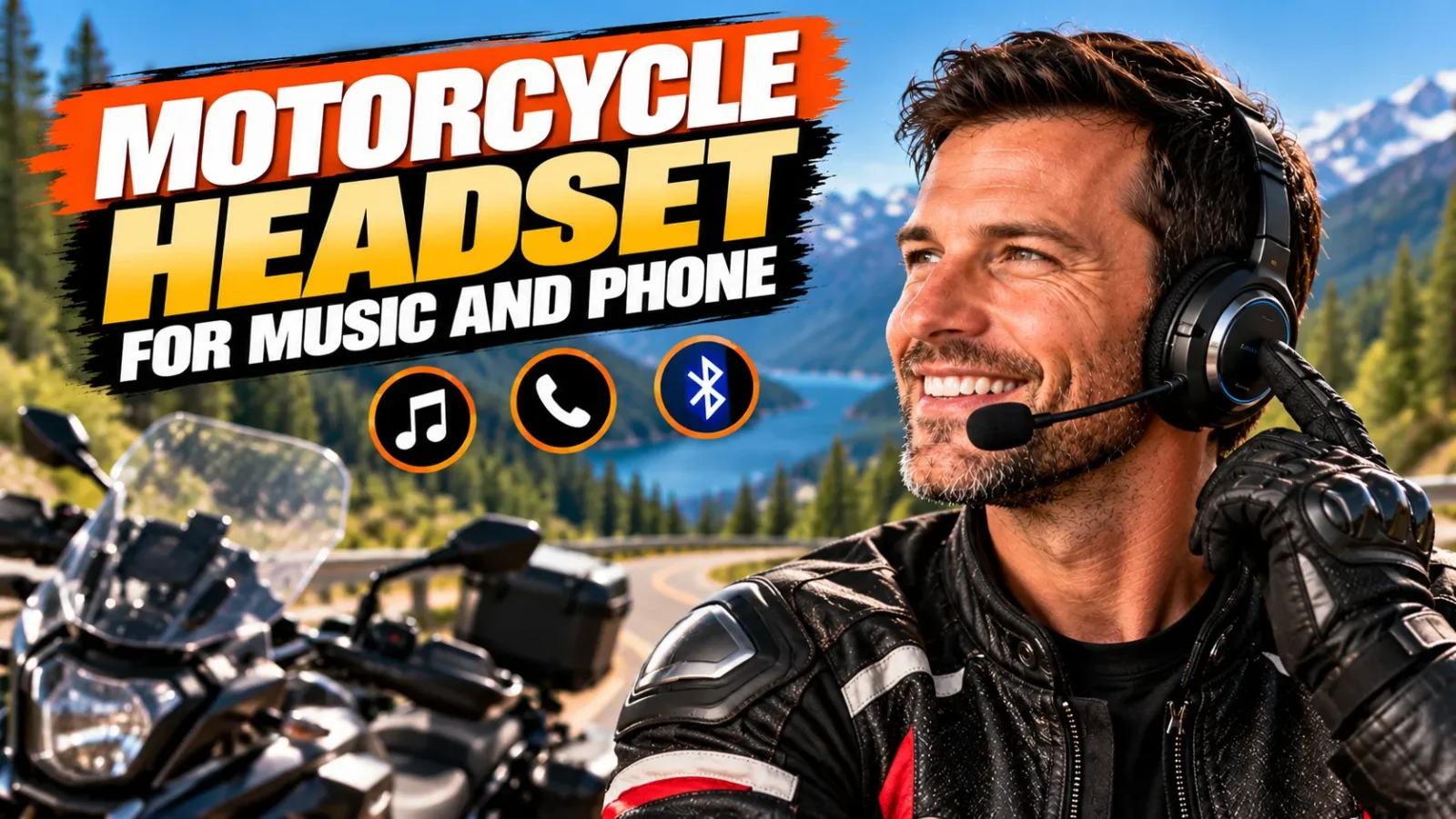
I’ve burned through more motorcycle headsets than I care to admit. Some cracked and hissed on the highway. Others died mid-call in the rain. A few actually earned a permanent spot in my helmet.
After years of testing units on long interstate hauls, canyon carving weekends, and daily commutes, I’ve narrowed down the headsets that actually deliver crisp music and clear phone calls without turning into a soggy, static-filled mess the moment the wind picks up.
This list isn’t theoretical. Every headset here is something I’ve either ridden with personally or researched extensively based on real rider feedback, spec sheets, and reputation in the industry. Let’s get into it.
- The Cardo Packtalk Edge is my top overall pick for music and calls thanks to JBL speakers and rock-solid Bluetooth 5.2 phone pairing.
- The Sena SMH5 is the best budget option if you just want reliable audio without intercom bells and whistles.
- Riders who want the biggest, boldest sound should look at the Sena 50S or Cardo Packtalk Slim with their larger 45mm-class speakers.
- Mic quality matters as much as speaker quality for phone calls; wind-noise cancellation is a non-negotiable feature.
- Fit and helmet compatibility can make or break your experience, so always check speaker pocket depth before buying.
1. Cardo Packtalk Edge — Best Overall Motorcycle Headset for Music and Phone
The Cardo Packtalk Edge is the headset I recommend most often when riders ask me what to buy. It uses JBL-branded 45mm speakers that punch well above their price point, delivering full, bass-forward sound that actually holds up over wind noise at 70+ mph.
For phone calls, the Packtalk Edge uses Cardo’s Natural Voice Operation system paired with a sensitive microphone that filters out wind noise surprisingly well. I’ve taken calls on the highway with this unit and the person on the other end couldn’t tell I was riding.
Bluetooth 5.2 keeps the phone connection stable, and it supports simultaneous connections so you can juggle your phone and GPS without dropouts. Battery life sits around 13 hours of talk time, which covers a full day of riding easily.
Price runs around $339, which isn’t cheap, but the audio quality and call clarity justify it if music and phone calls are genuinely your priority. If you want a deeper dive into comparable units, I break down more options in my guide to the best headset for motorcycle helmets.
Why I rank it first
It’s the rare headset that doesn’t force a compromise. Most units are either great at calls or great at music, not both. The Packtalk Edge nails both categories without making me choose.
2. Sena 50S — Best for Big, Room-Filling Sound
If you want the loudest, most immersive audio experience in a motorcycle headset, the Sena 50S is hard to beat. It comes with Sena’s proprietary HD speakers that are noticeably larger and more powerful than the entry-level Sena units.
Sound is rich with genuinely deep bass for a helmet speaker setup, and mids and highs stay clear even at higher volumes. I found it held up well against wind noise up to around 65-70 mph before I had to nudge the volume up.
Phone calls are handled through a dedicated boom mic with advanced noise control, and the 50S supports Sena’s mesh intercom technology if you ever want to add group riding communication down the line. Battery life is rated at around 14 hours.
Expect to pay roughly $299-$329 depending on the bundle. It’s a serious investment, but if audio quality is your main obsession, this is one of the best-sounding options on the market right now.
3. Sena SMH5 — Best Budget Motorcycle Headset for Music and Calls
Not everyone wants to spend $300+ on a headset, and I get it. The Sena SMH5 is my go-to budget recommendation because it still delivers genuinely good music playback and phone call quality at a fraction of the price.
It uses standard Sena speakers that, while not as punchy as the 50S or Packtalk Edge, still produce clean, balanced sound that’s more than adequate for podcasts, music, and navigation prompts.
The built-in microphone handles phone calls reasonably well in moderate wind, though I noticed more noise bleed-through at highway speeds compared to the pricier options on this list. Still, for calls at city speeds or during stops, it performs admirably.
At around $99-$119, the SMH5 is one of the best entry points into motorcycle audio. Bluetooth 3.0 is a bit dated but functions reliably for phone pairing and music streaming from your phone.
Who should buy this one
I’d point new riders or anyone testing the waters with headsets toward the SMH5. It’s a low-risk way to figure out if you actually use music and calls while riding before committing to a premium unit.
4. Cardo Packtalk Slim — Best Balance of Size and Sound Quality
The Cardo Packtalk Slim shrinks the Packtalk Edge’s tech into a more compact, low-profile unit without gutting the audio quality. It uses the same JBL-tuned speaker technology, so the music experience is nearly identical to its flagship sibling.
I like this one for riders with tighter helmets or those who find bulkier units uncomfortable under a full-face lid. The slim profile doesn’t create pressure points, even during multi-hour rides.
Phone call performance is excellent thanks to the same Natural Voice Operation and wind-noise-reducing mic setup found in the Edge. Bluetooth 5.2 keeps your phone connection rock solid, and it supports Cardo’s mesh network for group communication too.
Pricing lands around $299, making it a slightly more affordable route into Cardo’s ecosystem. If you’re comparing communication-focused units, my best communication headset for motorcycle helmet guide covers how it stacks up against competitors.
5. Sena 10R — Best for Riders Who Prioritize Simplicity
Not everyone wants intercom, mesh networking, or a dozen menu settings. The Sena 10R strips things back to the essentials: solid music playback, reliable phone calls, and Bluetooth connectivity, without the complexity of Sena’s higher-end mesh units.
Audio quality is genuinely good for a mid-tier unit, with clear treble and decent bass response. I found it comfortable for long rides since the controls are simple and intuitive, even with gloves on.
The microphone does a respectable job during calls, though it’s not quite on par with the wind-cancellation tech in the Packtalk series. Still, for casual phone use during rides, most people are satisfied.
At around $159-$179, the 10R sits nicely between the ultra-budget and premium tiers. It’s a smart pick if you mostly want music and occasional calls without a learning curve.
6. Cardo Freecom 4x — Best Value Intercom-Capable Headset
The Cardo Freecom 4x gives you a taste of Cardo’s audio engineering at a more approachable price point, typically around $169-$189. It includes decent speakers for music streaming and a functional intercom system if you ever ride with a passenger or group.
Phone call quality is solid for the price tier, with a directional microphone that does a reasonable job cutting down wind interference. I wouldn’t call it flagship-level, but for the price, it overdelivers.
Battery life is rated around 13 hours, and Bluetooth 4.1 handles phone pairing without major hiccups. It’s a great “does everything decently” option if you’re not trying to spend Packtalk Edge money.
If you’re weighing headsets specifically for their intercom capabilities alongside music and calls, check out my breakdown of the best motorcycle intercom systems for rider and passenger communication.
7. Sena 30K — Best for Riders Who Want Mesh Intercom Plus Great Audio
The Sena 30K was one of the first mesh-capable headsets I tested extensively, and it still holds up as a strong contender for music and phone use years later. It uses Sena’s HD speakers, which deliver noticeably richer audio than the brand’s entry-level lineup.
For phone calls, the 30K’s mic array does a commendable job isolating your voice from wind and engine noise. I’ve used it on group rides where I switched between music, intercom chatter, and phone calls without any noticeable lag or audio glitches.
Mesh intercom means you can stay connected with up to 15 other riders, which is overkill for solo riders but fantastic for club rides. Battery life clocks in around 13 hours of continuous use.
Pricing typically sits around $259-$279. If audio richness combined with group communication matters to you, the 30K remains a genuinely competitive option even against newer releases.
8. UClear AMPGO Solo — Best for Riders Who Want Simple Bluetooth Streaming
The UClear AMPGO Solo doesn’t get talked about as much as Sena or Cardo, but it deserves more attention for riders who mainly care about music streaming and basic call functionality. It’s designed with a minimalist approach and easy one-button control scheme.
Sound quality is surprisingly good for the price, with clear mids that make podcasts and music genuinely enjoyable during rides. It won’t out-bass the Sena 50S, but for casual listening it’s more than sufficient.
Phone calls come through clearly at lower speeds, though like many budget-friendly units, wind noise becomes more noticeable above 60 mph. I’d recommend this one primarily for commuters and city riders rather than long-haul highway warriors.
At roughly $99-$129, it’s an affordable alternative if you want dependable Bluetooth streaming without investing in a full-featured communication system.
9. Cardo Packtalk Bold — Best for Riders Who Want Premium Audio Without Buying the Newest Model
Before the Packtalk Edge, there was the Cardo Packtalk Bold, and it’s still a fantastic option, especially now that it’s often discounted to around $259-$279. It uses the same JBL speaker partnership, so the music experience is nearly identical to the newer Edge model.
Call quality remains excellent thanks to Cardo’s Natural Voice Operation and a well-tuned microphone that handles moderate wind noise gracefully. I’ve made highway calls on the Bold that came through with minimal distortion.
It supports Cardo’s mesh intercom system, Bluetooth 4.1 for phone pairing, and roughly 13 hours of battery life. For riders who don’t need the absolute latest tech, the Bold offers nearly the same experience as the Edge for meaningfully less money.
It’s a smart pick if you’re comparing bang-for-buck across the Cardo lineup and want premium sound without paying flagship pricing.
What actually makes a headset good for music and phone calls
After testing this much gear, I’ve noticed a pattern in what separates the great headsets from the mediocre ones. It usually comes down to a handful of specific factors rather than flashy marketing claims.
Speaker size and quality
Bigger isn’t always better, but speaker diameter does correlate with bass response and overall fullness. Most premium units use 40-45mm speakers, while budget options often stick with smaller, tinnier-sounding drivers.
I always recommend checking your helmet’s speaker pocket depth before buying, since larger speakers don’t fit every helmet comfortably. Cheek pad thickness varies a lot between brands.
Microphone technology for calls
This is where a lot of headsets fall apart. A great music headset can still produce garbled, wind-whipped phone calls if the microphone isn’t properly engineered for motorcycle use.
Look for boom mics or wired mics with dedicated wind-noise reduction algorithms. I’ve found that units without this feature become nearly unusable for calls above 50 mph.
Bluetooth version and stability
Newer Bluetooth versions (5.0 and up) generally offer more stable connections and better multi-device pairing. This matters if you’re juggling your phone, GPS, and possibly an intercom connection simultaneously.
I’ve had older Bluetooth 3.0 units randomly drop phone calls or skip songs mid-ride, which is obviously frustrating and occasionally dangerous if you’re trying to focus on navigation audio.
Battery life and charging
Most quality headsets now offer 10-14 hours of combined talk and music time, which covers a full riding day. I still recommend topping off your battery the night before any long ride, since cold weather can reduce battery performance noticeably.
How I’d choose between these headsets
If money isn’t a major concern and you want the best all-around experience, I’d go straight for the Cardo Packtalk Edge. It’s simply the most balanced option for both music lovers and frequent phone callers.
If you’re working with a tighter budget, the Sena SMH5 gives you most of the core functionality without the premium price tag. It’s not flashy, but it gets the job done reliably.
For riders who genuinely prioritize audio quality above all else, whether for music, podcasts, or GPS directions, I’d point you toward the Sena 50S or Cardo Packtalk Slim. Both use larger, more powerful speakers that make a noticeable difference on long rides.
And if you’re specifically hunting for something that nails Bluetooth performance across the board, my best bluetooth headset for motorcycle riding guide dives deeper into connection stability across different brands and price points.
A few practical tips before you buy
Always check whether the headset you’re considering is compatible with your specific helmet model. Some manufacturers, like Shoei and Schuberth, sell helmets with pre-installed speaker pockets designed for specific communication systems.
If your helmet doesn’t have dedicated speaker pockets, most universal headsets still work fine, but you’ll want to double-check cheek pad clearance. A speaker that’s too thick can create uncomfortable pressure points during long rides.
I also recommend testing your headset’s volume levels in a controlled environment before hitting the highway. Cranking music too loud can mask important ambient sounds like sirens, horns, or oncoming traffic.
Lastly, if audio fidelity is genuinely your top priority beyond just “good enough,” it’s worth exploring dedicated setups that go beyond standard helmet speakers. My guide to the best stereo sound systems for motorcycle helmets covers some more specialized options for audiophile riders.
Final thoughts from someone who’s tested way too many of these
Picking the right motorcycle headset really comes down to how you ride and what you value most. If you’re commuting daily and want reliable calls with your family, prioritize microphone quality and wind-noise cancellation.
If you’re more of a weekend cruiser who just wants great tunes on scenic backroads, speaker quality and comfort should top your checklist. Either way, the nine headsets above represent some of the most trustworthy, well-reviewed options currently available.
I’ve personally leaned on the Cardo Packtalk Edge for the past several months of testing, and it hasn’t let me down yet. But honestly, any headset on this list will serve you far better than trying to make basic earbuds work under a helmet.
Whatever you choose, ride safe, keep your volume reasonable, and enjoy having your favorite playlist along for the journey.
Frequently Asked Questions
What is the best motorcycle headset for music and phone calls overall?
In my experience, the Cardo Packtalk Edge is the best all-around choice thanks to its JBL-tuned speakers, natural voice assistant integration, and reliable phone pairing. For riders on a budget, the Sena SMH5 still delivers solid audio and calls for a fraction of the price.
Do motorcycle headsets work well for phone calls at highway speeds?
Yes, but quality varies a lot by model. Headsets with dedicated boom or wired mics, active noise cancellation, and wind-reduction algorithms (like those found in the Cardo and Sena lines) handle highway wind noise far better than basic units.
Can I use any Bluetooth headset with my motorcycle helmet?
Not ideally. Standard earbuds or consumer Bluetooth headsets aren’t built to handle wind noise, vibration, or the fit constraints of a helmet. A purpose-built motorcycle headset, as covered in our guide to the best headset for motorcycle helmets, is a much safer and more comfortable bet.
Is it legal to listen to music or take calls while riding a motorcycle?
Laws vary by state and country, so I always recommend checking your local regulations first. Even where it’s legal, I suggest keeping volume moderate so you can still hear traffic, sirens, and your environment.

Related Articles

9 Best Noise Cancelling Bluetooth Earbuds I’ve Actually Worn on the Road
I tested dozens of noise cancelling Bluetooth earbuds on rides, commutes, and long hauls. Here are the 9 that actually…
Jake Miller
12 min read

9 Best 6×9 Speakers for Motorcycle Saddlebags That Actually Survive the Ride
I tested and researched the best 6x9 speakers for motorcycle saddlebags. Here are my top picks for sound quality, weatherproofing,…
Jake Miller
12 min read

8 Best Motorcycle Intercoms for Multiple Riders in 2026
I tested the top mesh and Bluetooth intercoms for group rides. Here are my picks for the best motorcycle intercom…
Jake Miller
10 min read