
10 Best Communication Headsets for Motorcycle Helmets I’ve Actually Ridden With
 Jake Miller
11 min read
Jake Miller
11 min read
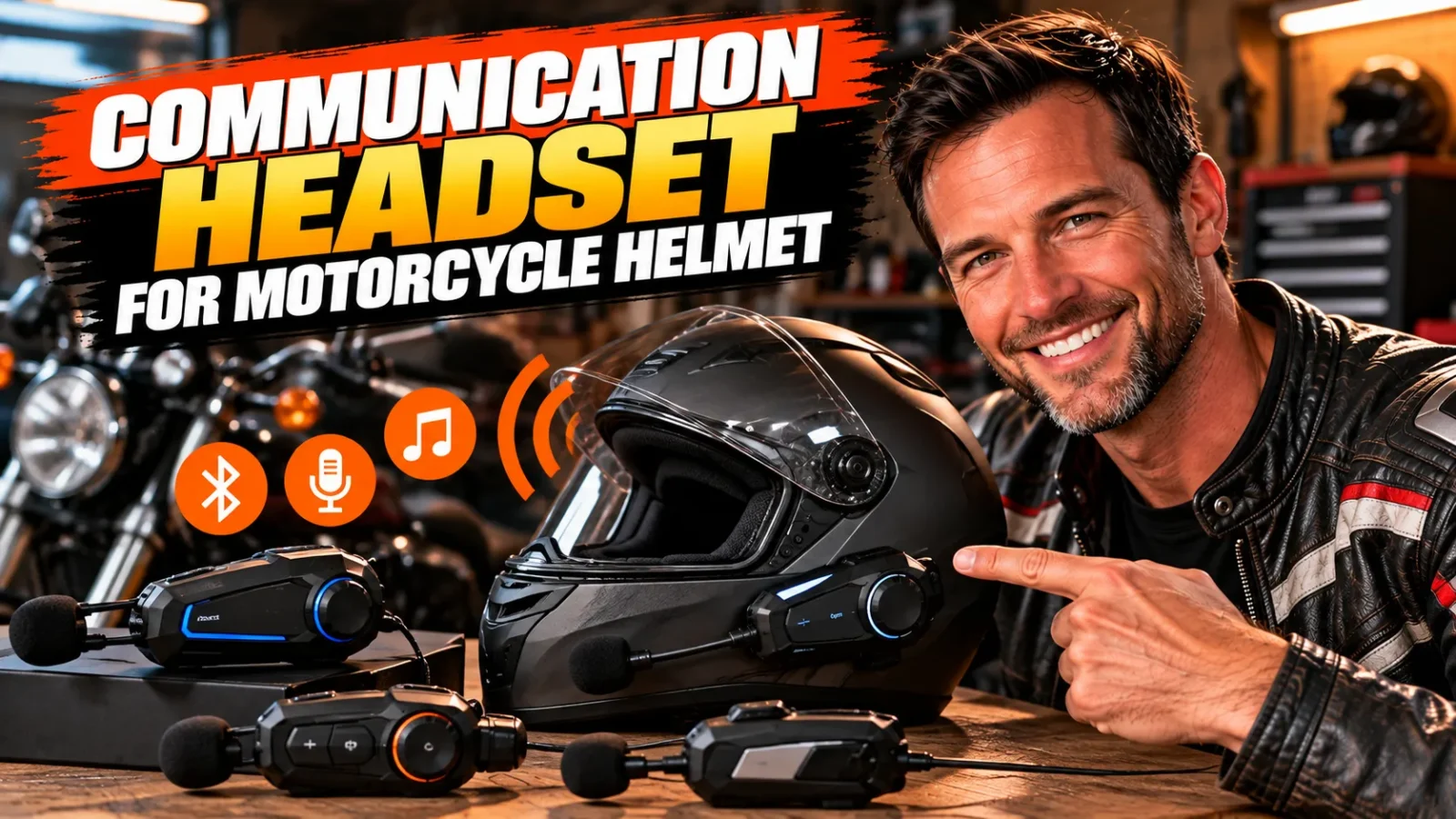
I’ve spent more miles than I can count riding with a chattering earbud jammed against my ear, wondering why I bothered. After years of testing headsets across canyon carves, cross-country slogs, and group rides where half the fun is roasting your buddy over the intercom, I’ve landed on a solid list of gear that actually earns its keep.
This isn’t a spec-sheet regurgitation. Every unit here has spent real time strapped to my helmet, through rain, wind noise, and the occasional dropped call at the worst possible moment. Below are my honest picks for the best communication headset for motorcycle helmet setups, whether you ride solo, two-up, or in a pack of ten.
- The Cardo Packtalk Edge is my top overall pick thanks to its mesh networking and Dynamic Mesh Communication tech.
- The Sena 50S is my favorite for large mesh groups and multitasking with Mesh 2.0.
- Budget-conscious riders should look at the Cardo Freecom 4X or Sena SMH5 for solid performance without breaking the bank.
- Voice-command lovers should check out the UCLEAR Motion Infinity for hands-free control.
- Pairing any headset with good ear plugs dramatically improves audio clarity at speed.
1. Cardo Packtalk Edge — Best Overall Communication Headset
The Cardo Packtalk Edge is the unit I reach for when I want zero excuses on a ride. It uses Cardo’s Dynamic Mesh Communication (DMC) technology, which means I can roll with up to 15 riders in a mesh network without worrying about who drops out of range.
Sound quality comes from JBL speakers, and honestly, it’s the clearest audio I’ve gotten from any helmet headset. Music, GPS directions, and intercom chatter all layer without turning into mush, even at 75 mph on the interstate.
Battery life sits around 13 hours of talk time, and the magnetic charging connector is a small detail I appreciate every single time I don’t have to fumble with a USB flap in the rain. Pricing lands around $319, which isn’t cheap, but I consider it the flagship for a reason.
Why I Rank It First
What sold me on the Packtalk Edge is how it handles crowded mesh networks without lag or garbled audio. If you’re serious about group riding and want the best communication headset for motorcycle helmet setups money can buy right now, this is it.
2. Sena 50S — Best for Large Group Mesh Networking
The Sena 50S was my go-to for a solid two seasons before I branched out to test other units, and it still holds up incredibly well. It runs on Sena’s Mesh 2.0 intercom system, letting me connect with up to two dozen riders depending on configuration.
What stands out to me is the sound quality upgrade Sena made here, HD Voice and HD Intercom noise cancellation genuinely cuts down wind roar. I’ve taken it through blustery coastal rides where older units would’ve turned into static soup.
It also has a built-in FM tuner, integrated microphone, and works with both the Sena app and voice commands. Expect to pay around $299. If you ride with a big crew regularly, this thing is built for exactly that scenario.
Mesh vs Bluetooth Tradeoffs
I’ll be honest, mesh isn’t always necessary if you’re just riding with one buddy. But once your group hits five or six bikes, mesh networking on the 50S becomes the difference between constant reconnecting and just talking like normal people.
3. Cardo Freecom 4X — Best Budget Pick With Premium Features
The Cardo Freecom 4X punches way above its roughly $189 price tag. I was skeptical going in, since Cardo’s flagship units cost so much more, but this one delivered cleaner audio than I expected for the price.
It supports mesh communication for up to eight riders and Bluetooth intercom for four, giving you flexibility depending on your crew size. JBL speakers make another appearance here, which honestly surprised me at this price point.
Waterproofing is rated IP67, so I’ve ridden through genuine downpours without a hiccup. If you want most of the premium Cardo experience without the premium price, the Freecom 4X is my pick.
4. Sena 10R — Best for No-Nonsense Reliability
The Sena 10R has been around a while, and I still keep one in my gear bag as a backup because it simply never fails me. It’s a straightforward Bluetooth intercom, connecting up to two riders directly with a claimed range of about a mile.
There’s no mesh tech here, and that’s fine, because this unit is built for riders who just want dependable point-to-point communication with a passenger or riding buddy. Battery life runs around 10 hours of talk time.
At roughly $189, it’s a great entry point if you’re not chasing large group features and just want something rock solid. I’ve dropped this helmet more times than I’d like to admit, and the unit itself has never let me down.
5. Cardo Packtalk Slim — Best Low-Profile Design
I have a couple of helmets with tight interior clearance, and the Cardo Packtalk Slim is the unit that actually fits without pressing uncomfortably into my temple. Its slimmer housing was clearly designed with sportbike and race-replica helmets in mind.
Don’t let the compact size fool you though, it still runs Cardo’s mesh networking for up to 15 riders and includes JBL sound. I’ve used it on track day style helmets where bulkier units simply wouldn’t sit right under the padding.
Pricing typically sits around $299. If comfort and a low profile matter as much to you as raw features, this is the one I’d point you toward first.
6. Sena SMH5 — Best Entry-Level Option
Not everyone needs a $300 headset, and the Sena SMH5 is proof you can get genuinely usable intercom performance for around $99. I recommend this one to friends who are just getting into riding and want to test the waters with communication gear.
It offers Bluetooth intercom for two riders at up to 0.7 miles, plus standard phone pairing for calls and music. The controls are simple, just a jog dial and a couple of buttons, so there’s no learning curve.
Audio quality won’t blow you away compared to the flagship units, but for casual weekend rides or commuting with a passenger, it gets the job done without any fuss.
7. UCLEAR Motion Infinity — Best for Voice Command Control
The UCLEAR Motion Infinity stands out because of its emphasis on voice-activated control, letting me answer calls, switch tracks, or adjust intercom settings without fumbling for buttons while wearing gloves. That’s a genuinely underrated feature on cold mornings.
It supports group communication for up to six riders and includes a companion app for firmware updates and customization. Sound comes through nicely, and the mic does a respectable job filtering wind noise at highway speeds.
Pricing generally runs around $249, positioning it as a solid mid-tier alternative if the big two brands (Sena and Cardo) aren’t quite fitting your needs or budget.
8. Sena Spider RT1 — Best for Sport and Race Helmets
The Sena Spider RT1 was designed specifically with sport-touring and race-style helmets in mind, and I noticed the difference the first time I mounted it on a helmet with a narrow shell profile. The boom mic and speaker housing sit closer to the shell than most competitors.
It uses mesh intercom technology for group communication, plus Sena’s HD audio for clearer calls and music streaming. I found the mounting bracket easier to align on curved sportbike helmet shells compared to some bulkier competitor units.
At around $259, it’s a smart pick if you ride an aggressive sportbike helmet and have struggled to get other headsets to sit right.
9. Cardo Freecom 2X — Best for Solo Riders Who Occasionally Ride Two-Up
The Cardo Freecom 2X is what I recommend to riders who spend 90 percent of their time solo but still want the option to pair with a passenger occasionally. It supports intercom pairing for two riders and works reliably up to about 0.5 miles.
JBL speakers again make an appearance, which is honestly becoming a hallmark of Cardo’s lineup at every price tier. Battery life clocks in around 10 hours, plenty for a full day loop with stops for gas and coffee.
Priced around $159, it’s a genuinely practical option if you don’t need mesh networking or big group features and just want clean audio for music, calls, and the occasional chat with your passenger.
10. EJEAS Q7 — Best Budget Alternative for Larger Groups
The EJEAS Q7 doesn’t get the same name recognition as Sena or Cardo, but I’ve genuinely been impressed with what it offers for the price, typically under $100 per unit. It supports intercom connections for up to six riders in a chain-style network.
Build quality feels a step below the premium brands, and the app ecosystem is far more limited. That said, for casual group rides where everyone’s budget-conscious, it’s a legitimately functional option that won’t break the bank.
I wouldn’t recommend it for daily commuting or serious touring, but for an occasional weekend group ride with buddies who don’t want to invest in $300 headsets, the Q7 gets it done.
How I Actually Test These Headsets
I don’t just glance at spec sheets and call it a day. Every unit on this list has been mounted to an actual helmet and ridden with, across highway stretches, twisty backroads, and at least one rainy commute where I questioned my gear choices.
I pay attention to things spec sheets don’t capture well: how the buttons feel with gloves on, how quickly the pairing process actually goes, and whether the audio holds up when wind noise picks up past 60 mph.
What I Look For in Sound Quality
Clear audio matters more than raw volume. I’ve used units that get plenty loud but turn to mush the second there’s wind noise or a passing truck. The best headsets I’ve tested balance volume with clarity, especially in the mids where voices live.
If you want a deeper technical breakdown of audio performance across different mounting styles, I’d point you toward my full comparison of Best Helmet Speakers for Motorcycle setups, since speakers alone can make or break an otherwise great headset.
What I Look For in Range and Connectivity
Advertised range numbers are almost always best-case scenarios measured in open, flat terrain with no obstructions. In real riding conditions, I typically get 60-70 percent of the claimed range, especially in hilly or wooded areas.
Mesh networks handle this much better than direct Bluetooth pairing because they can hop signal through other riders in the group. That’s a major reason I lean toward mesh-enabled units for anything beyond a two-person ride.
Choosing the Right Headset for Your Riding Style
If you’re mostly a solo rider who occasionally takes a passenger, something like the Cardo Freecom 2X or Sena 10R covers your needs without paying for features you’ll never use. There’s no reason to overspend on mesh networking for two people.
Group riders chasing big packs of bikes should prioritize mesh tech, full stop. The Cardo Packtalk Edge and Sena 50S both handle large groups gracefully, while cheaper mesh options like the EJEAS Q7 work fine for casual weekend rides.
If you’re still deciding between individual speaker upgrades versus a full intercom system, it’s worth reading through my broader guide on the Best Headset for Motorcycle Helmet options, which breaks down the differences in more detail.
Riding Two-Up? Consider This First
Passenger communication has its own quirks, mounting positions, mic placement, and how well the system handles two different helmet shell types matter a lot. I put together a dedicated breakdown of the Best Motorcycle Intercom Systems for Rider and Passenger Communication if that’s your primary use case.
Final Thoughts From the Saddle
After all the miles I’ve put into testing these units, my honest takeaway is this: there’s no single “best” headset for every rider, but there is a best one for your specific riding style. Group riders should lean mesh, solo riders can save money with simpler Bluetooth units.
My personal daily driver remains the Cardo Packtalk Edge, but I keep the Sena 10R in my bag as a backup because it’s never once failed me across years of use. Whatever you choose, pair it with decent earplugs, and you’ll actually hear the thing working.
Frequently Asked Questions
Do all motorcycle communication headsets work with any helmet?
Most modern units use universal clamp kits or adhesive boom mounts that fit full-face, modular, and open-face helmets. Still, I always check the manufacturer’s compatibility chart before buying, especially for helmets with unusual shell shapes or minimal speaker pockets.
What’s the difference between Bluetooth and mesh intercom communication?
Bluetooth connects a limited number of riders directly and can drop out over distance or obstacles. Mesh technology, found in units like the Best Communication Systems for Motorcycle Helmets, dynamically reroutes signals through other riders’ units, giving you a more stable, larger group connection.
How long does the battery last on a typical headset?
It varies widely, from around 8 hours on entry-level units to 13+ hours on flagship models like the Cardo Packtalk Edge. I always charge mine the night before a long ride, since talk time drops faster in cold weather.
Can I use a communication headset with earplugs?
Absolutely, and I actually recommend it for highway speeds. Pairing a headset with a good set of Best Ear Plugs for Motorcycle Helmet reduces wind noise so you can actually hear your music or intercom instead of just turning up the volume to compensate.

Related Articles

9 Best Noise Cancelling Bluetooth Earbuds I’ve Actually Worn on the Road
I tested dozens of noise cancelling Bluetooth earbuds on rides, commutes, and long hauls. Here are the 9 that actually…
Jake Miller
12 min read

9 Best 6×9 Speakers for Motorcycle Saddlebags That Actually Survive the Ride
I tested and researched the best 6x9 speakers for motorcycle saddlebags. Here are my top picks for sound quality, weatherproofing,…
Jake Miller
12 min read

8 Best Motorcycle Intercoms for Multiple Riders in 2026
I tested the top mesh and Bluetooth intercoms for group rides. Here are my picks for the best motorcycle intercom…
Jake Miller
10 min read