
8 Best Motorcycle Jacket Materials (And the Real Jackets That Use Them Best)
 Jake Miller
11 min read
Jake Miller
11 min read
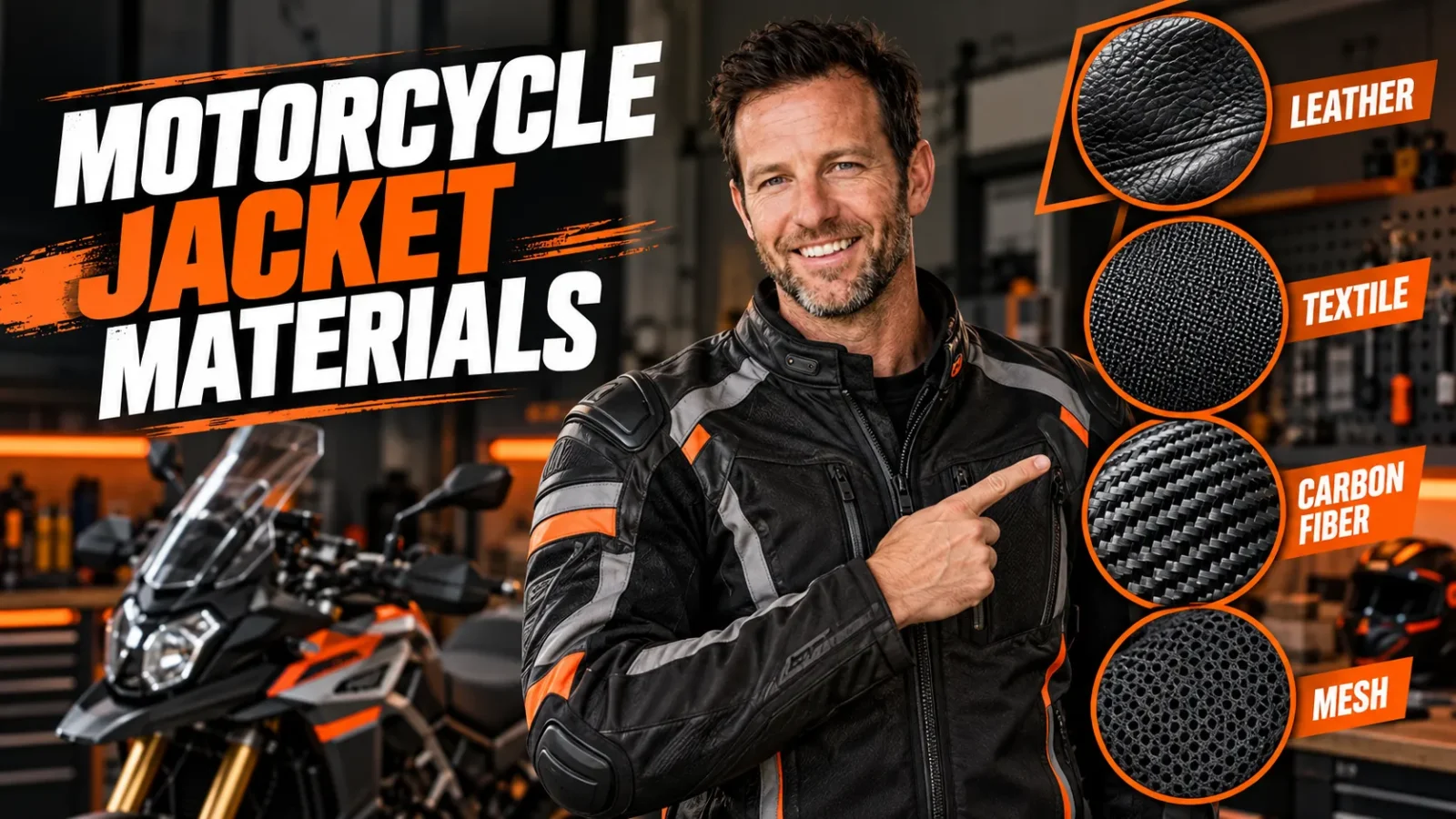
I’ve owned more motorcycle jackets than I care to admit, and I’ve slid down pavement in exactly one of them (long story, minor road rash, lesson learned). That experience taught me something textbooks never could: the material your jacket is made from matters more than almost any other spec.
Leather, textile, mesh, laminate shells—each one behaves completely differently in the wind, in the rain, and in a get-off. I’ve spent years cycling through all of them on everything from a sport bike to an adventure tourer, and I put together my full breakdown in the Ultimate Guide to Motorcycle Jackets if you want the deep dive.
But for this list, I’m getting specific. I’m naming the actual jackets I’d point a friend toward for each material category, based on what I’ve worn, tested, or researched down to the stitching.
- Full-grain leather (like the Alpinestars GP Plus R V3) still wins for max abrasion resistance on sport bikes.
- Textile with waterproof membranes (REV’IT! Sand 4 H2O, Klim Badlands Pro A3) is my pick for all-weather versatility.
- Mesh (Dainese Air Fast Tex, Icon Airform) is unbeatable for hot climates and summer commuting.
- Laminate Gore-Tex shells (Rukka Nivala) are pricey but nearly bombproof against rain.
- Match the material to your actual riding conditions, not just what looks coolest hanging in the shop.
1. Alpinestars GP Plus R V3 — Best Full-Grain Leather Jacket
If you want the gold standard of abrasion resistance, full-grain leather is still king, and the Alpinestars GP Plus R V3 is my go-to example of doing it right. It’s built from 1.3mm full-grain cowhide leather, which is thick enough to genuinely protect you but still supple enough to break in fast.
I’ve worn this jacket on twisty backroads and it moves with you rather than fighting you at the shoulders. Alpinestars uses accordion stretch panels at the elbows and back so the leather doesn’t bunch up when you’re tucked into a sporty riding position.
It comes with CE-certified Bio-Armor at the shoulders and elbows, plus a pocket for an optional back protector. Retail runs around $550-$600, which sounds steep until you consider this is the material that’s most likely to keep your skin intact in a slide.
Why leather still matters
Leather’s tight fiber structure resists tearing and abrasion better than almost anything else on the market. The tradeoff is breathability and weather resistance — leather gets hot in summer and needs conditioning to stay waterproof. That’s exactly why I don’t recommend it as a do-everything material.
2. REV’IT! Sand 4 H2O — Best All-Weather Textile Jacket
Textile is where I spend most of my riding hours, and the REV’IT! Sand 4 H2O is one of the smartest textile jackets I’ve tested. It’s made from REV’IT!’s PWR|shell 500D fabric, a rugged polyester weave that shrugs off scuffs from tip-overs and parking lot mishaps.
The H2O version includes a fully waterproof, breathable membrane bonded into the shell, so you’re not fumbling with a separate rain liner mid-downpour. There’s also a removable thermal liner, which makes this a genuine three-season jacket for me.
Armor-wise, it ships with SEESMART CE Level 1 protectors at the shoulders and elbows, upgradeable to Level 2. Pricing sits around $400-$450, which feels fair for how much versatility you’re getting out of one jacket.
If you’re trying to figure out how a jacket like this fits into a seasonal rotation, I’d point you to my breakdown on the best motorcycle jacket for spring riding, since textile jackets like this one shine in that unpredictable shoulder-season weather.
3. Klim Badlands Pro A3 — Best Premium Adventure Textile
When I need a jacket that can handle gravel roads, sudden downpours, and long highway stretches without complaint, I think of the Klim Badlands Pro A3. This is a top-tier adventure-touring textile jacket, and it uses a 3-layer GORE-TEX Pro shell combined with Karbonite ripstop reinforcement panels at high-wear zones.
GORE-TEX Pro is genuinely a different tier of waterproofing compared to generic “water-resistant” textile coatings. I’ve ridden through legitimately miserable rain in Gore-Tex gear and stayed bone dry, which is rare.
The Badlands Pro A3 includes D3O Level 2 armor at the shoulders and elbows, plus a pocket for a D3O Viper back protector. It’s not cheap — expect to pay around $1,400-$1,600 — but this is the jacket serious adventure riders buy once and keep for a decade.
4. Dainese Air Fast Tex — Best Mesh Jacket for Hot Climates
Living somewhere hot changes your entire gear philosophy, and this is where mesh jackets earn their keep. The Dainese Air Fast Tex is built from a perforated mesh fabric with strategically placed Tex fabric reinforcement panels for added structure.
I’ve ridden mesh jackets in 95-degree heat and the difference versus solid textile is night and day — air actually moves through the fabric instead of just around it. The Air Fast Tex includes Pro-Shape shoulder and elbow armor plus a G-Shock back protector pocket.
It’s priced around $280-$320, and while it’s not waterproof (you’ll want a packable rain shell in the bag), the tradeoff in comfort during summer rides is completely worth it for me.
5. Icon Airform — Best Budget Mesh Jacket
Not everyone wants to spend $300+ on a summer jacket, and that’s where the Icon Airform comes in. It uses a polyester mesh construction with a lightly padded, low-profile fit that I’ve found genuinely comfortable on hot commutes.
It includes removable CE-rated armor at the shoulders and elbows, and a back pad pocket if you want to add your own protector. At roughly $170-$200, it’s one of the more affordable ways to get real ventilation without giving up armor entirely.
I wouldn’t take this jacket on a track day, but for stop-and-go city riding in summer heat, it’s been a reliable pick in my own rotation for years.
6. Alpinestars Andes V3 Drystar — Best Budget All-Weather Textile
If leather and premium adventure gear are out of budget, the Alpinestars Andes V3 Drystar is the textile jacket I recommend most to newer riders. It’s made from a durable polyester shell with Alpinestars’ Drystar waterproof and breathable membrane built in.
This isn’t a race-spec jacket, but it comes with removable CE-certified protectors at the shoulders and elbows and a soft, adjustable fit that works well over a hoodie in cooler weather. It typically retails for $180-$220.
For riders just building their first real kit, I’d also suggest checking my motorcycle jacket fitting guide before buying — even the best material won’t protect you if the armor isn’t sitting where it should on your body.
7. Rukka Nivala — Best Laminate Shell for Serious Rain
Rukka doesn’t get talked about enough outside of Europe, but the Rukka Nivala is one of the most weatherproof jackets I’ve come across. It uses a 3-layer laminate construction with a Gore-Tex membrane fused directly to the outer shell rather than just floating as an inner liner.
That laminate build means water genuinely cannot get through the seams the way it can on cheaper waterproof-coated textiles. I’ve read rider accounts of multi-day rain tours in this jacket with zero leakage, which is a rare claim to make honestly.
It includes D3O armor at the shoulders and elbows and costs around $850-$950. It’s an investment piece, but if you commute through genuinely wet climates, this is the material combination — laminate plus Gore-Tex — that actually solves the problem long-term.
8. Aerostich R-3 Roadcrafter — Best Cordura Ballistic Nylon One-Piece
The Aerostich R-3 Roadcrafter is a bit of a cult classic, and for good reason. It’s built from 500-denier Cordura ballistic nylon, a material known for being incredibly tough against abrasion while still being lighter than leather.
Technically this is a one-piece suit rather than just a jacket, but the material story is too good to leave off this list. Riders have documented sliding across pavement at highway speeds in Roadcrafters and walking away with intact skin, which says a lot about Cordura’s real-world toughness.
It’s custom-made to order in the US, with prices starting around $1,050. It includes TF3 armor at the shoulders, elbows, and hips, making it one of the most protective non-leather options I’ve ever recommended.
How I actually think about choosing between these materials
Every material on this list does something well and something poorly — that’s just physics. Leather protects best but breathes worst. Mesh breathes best but protects least from rain and cold. Laminate textile splits the difference at a higher price point.
My honest advice: think about the riding you actually do, not the riding you imagine doing. If you commute daily in a mixed climate, a textile jacket like the REV’IT! Sand 4 H2O or Alpinestars Andes V3 Drystar will serve you better than a leather race jacket sitting unworn in your closet.
Matching material to riding style
Sport bike riders leaning into corners at speed benefit most from leather’s slide resistance. Touring and adventure riders benefit from Gore-Tex laminate or heavy-duty textile. Commuters in hot climates should lean mesh, full stop.
I go into this in a lot more depth in my article on how to choose the right motorcycle jacket for your riding style, which pairs nicely with everything I’ve covered here.
Don’t forget fit and certification
A great material in a poorly fitted jacket is basically wasted money. Armor needs to sit directly over your joints, and the jacket needs to stay put in a slide rather than riding up your arms. I always recommend checking the motorcycle jacket safety ratings explained resource so you understand what CE Level 1 versus Level 2 armor actually means before you buy.
A quick note for women riders
Material choice matters just as much for women’s-specific jackets, but fit differences can change how a material performs — a mesh jacket that’s too loose won’t seal properly, and a leather jacket that’s too tight will restrict the very stretch panels designed to help you move. I put together a dedicated list of options in my best jacket for women to wear when riding a motorcycle guide, and several of the materials discussed here show up in women’s-specific cuts too.
My final take
If I had to boil down eight jackets and four materials into one piece of advice, it’s this: buy the material that matches your climate and riding style first, then worry about brand loyalty second. I’ve made the mistake of buying gear because it looked good, not because it suited how or where I actually ride, and I paid for it in comfort more than once.
For most riders reading this, I’d start with a solid textile jacket like the REV’IT! Sand 4 H2O for versatility, add a mesh jacket like the Icon Airform for summer, and consider leather like the Alpinestars GP Plus R V3 if you’re spending serious time on a sport bike. That combination has covered nearly every mile I’ve ridden over the past several years, and it’ll likely do the same for you.
Frequently Asked Questions
What is the best material for a motorcycle jacket overall?
There’s no single winner—full-grain leather offers the best abrasion resistance, while textile with Gore-Tex or Drystar gives you weatherproofing and versatility. Your best pick depends on your climate and riding style, which I cover in the guide to choosing a jacket for your riding style.
Is textile or leather safer for motorcycle riding?
Leather generally has a higher abrasion threshold in a slide, but modern textiles like 500D-1000D Cordura and ballistic nylon come very close when built with reinforced panels. Always check the motorcycle jacket safety ratings before assuming one material is automatically safer.
What’s the most breathable material for hot-weather riding?
Mesh jackets like the Dainese Air Fast Tex or Icon Airform use perforated or open-weave fabric panels that let air flow directly through, making them my go-to pick for summer commutes and hot climates.
Do I need a different jacket material for spring versus summer riding?
Yes, I typically swap between a mesh jacket in peak summer and a versatile textile jacket with a removable liner in spring or fall. I go into more detail in my best motorcycle jacket for spring riding roundup.

Related Articles

9 Best Paints for Nylon Motorcycle Riding Jackets That Actually Hold Up on the Road
I tested 9 paints for nylon motorcycle jackets so you don't have to guess. Here's what actually sticks, flexes, and…
Jake Miller
12 min read

9 Best Female Motorcycle Jackets That Actually Fit Right in 2026
I've tested dozens of women's motorcycle jackets over the years. Here are my 9 favorites for fit, protection, and style—from…
Jake Miller
11 min read

8 Best Klim Jackets for Motorcycle Touring: My Real-World Picks
I've logged thousands of touring miles in Klim gear. Here are the 8 best Klim jackets for motorcycle touring, tested…
Jake Miller
10 min read