
9 Best Foam Earplugs for Motorcycle Riding to Save Your Hearing on Every Ride
 Jake Miller
13 min read
Jake Miller
13 min read
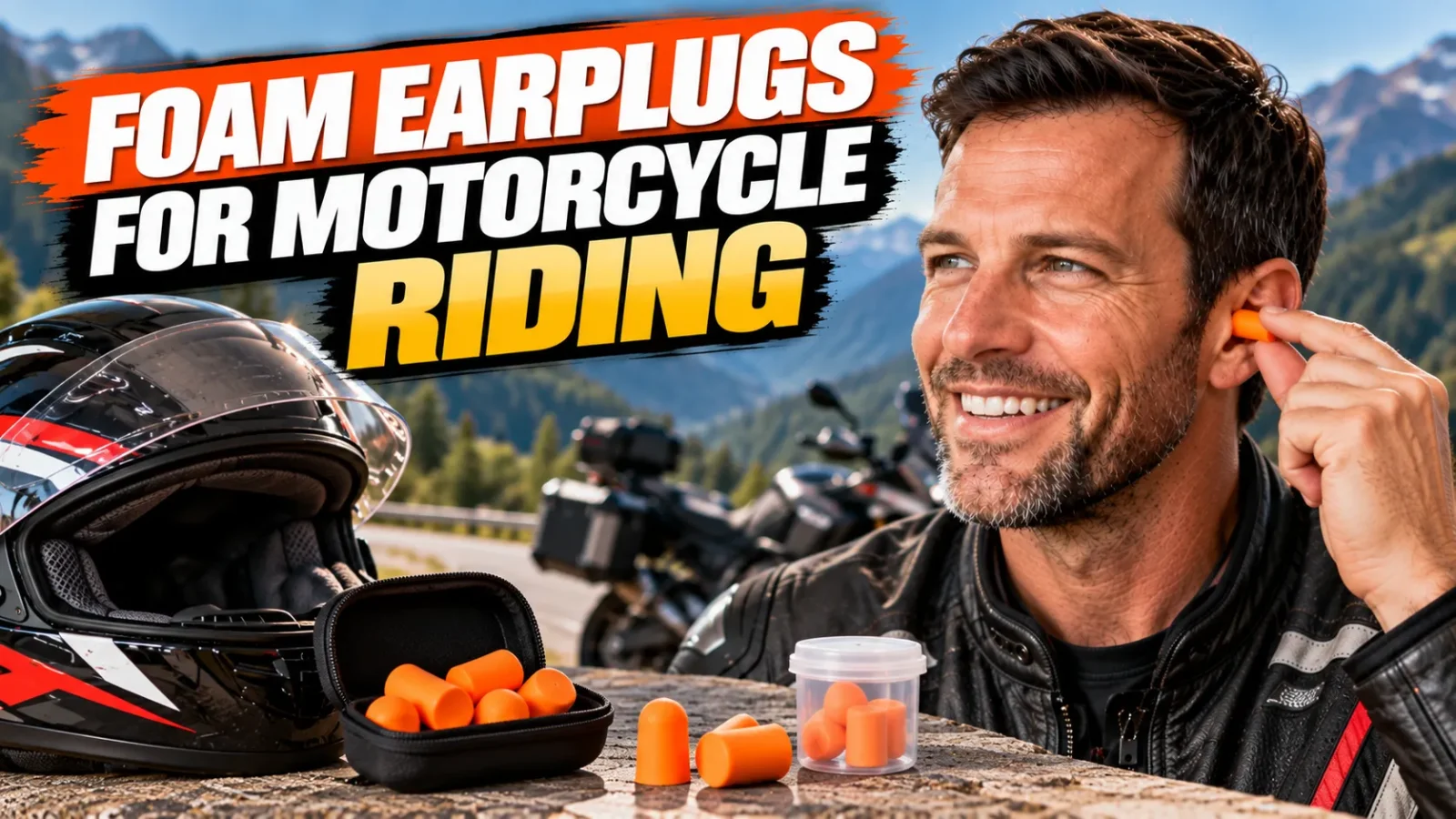
I still remember the ringing in my ears after my first 300-mile highway day, way back before I knew any better. That dull, tinny hum lasted almost two full days. It was my wake-up call, and it’s the reason I never throw a leg over my bike now without a pair of foam earplugs in my pocket.
Wind noise alone can hit 100 decibels or more at highway speeds, and that’s before you factor in exhaust, engine drone, and traffic. That kind of sustained noise causes real, permanent hearing damage over time, not just fatigue. I’ve spent years cycling through different foam earplugs on commutes, canyon rides, and multi-day tours, and I want to share which ones actually earned a permanent spot in my gear bag.
- My overall favorite is the Howard Leight by Honeywell MAX-1 for its balance of comfort, seal, and price.
- If you ride all day, every day, Mack’s Ultra Soft Foam Earplugs are the most comfortable option I’ve tried.
- For maximum noise reduction on loud bikes or track days, grab the 3M E-A-Rsoft FX with its 33dB NRR.
- Look for an NRR of 30+ and always pair earplugs with a snug, well-sealed helmet for the best results.
- Foam earplugs actually improve sound quality from Bluetooth headsets and intercoms by cutting background wind roar.
Why I Never Skip Earplugs on a Ride
Motorcycle noise isn’t just annoying, it’s genuinely hazardous. Riding for even an hour at 70 mph without protection can expose your ears to noise levels that OSHA would flag as dangerous for an entire workday.
The tricky part is that foam earplugs don’t cut you off from the world. A good pair still lets you hear horns, sirens, and your bike’s engine, just at a safer volume. That’s a huge difference from noise-canceling headphones, which aren’t safe or legal for riding anyway.
I also noticed something unexpected once I started wearing earplugs consistently: I arrived at my destination way less fatigued. Constant wind roar is mentally exhausting even if you don’t notice it in the moment. Cutting that noise down let me focus better and ride longer without that jittery, drained feeling.
1. Howard Leight by Honeywell MAX-1 — Best Overall Foam Earplugs
The Howard Leight MAX-1 is my go-to recommendation for almost every rider who asks me what to buy. They’re tapered, bright orange, and rated at NRR 33dB, which is about as high as foam earplugs get.
What sets these apart for me is the shape. The tapered design rolls down smaller than a lot of competitors, which makes it easier to seat them deep enough for a proper seal under a snug helmet. I’ve worn these on 500-mile days without any irritation.
They typically sell in bulk packs of 100 or more for around $15-20, which works out to pennies per pair. I keep a handful in my tank bag, my jacket pocket, and my garage, because there’s no excuse to ride without them at that price.
2. Mack’s Ultra Soft Foam Earplugs — Most Comfortable for All-Day Rides
If comfort is your top priority, Mack’s Ultra Soft Foam Earplugs are the softest I’ve ever pushed into my ears. They’re made from a low-pressure foam that expands gently instead of pressing hard against your ear canal walls.
These carry an NRR of 32dB, so you’re not sacrificing much protection for that softness. I’ve used these on multi-day touring trips where I wore the same pair for 10-plus hours, and they never got that sore, achy feeling some stiffer foam plugs cause by hour six.
Mack’s also color-codes their packaging clearly, and a 50-pair box runs around $12-15. My tip: warm them slightly in your palm before rolling them down, since the ultra-soft foam expands faster than average and you want time to insert them properly.
3. 3M E-A-Rsoft FX Foam Earplugs — Best Noise Reduction Rating
When I’m riding a bike with loud aftermarket pipes or heading to a track day, I reach for 3M E-A-Rsoft FX earplugs. They’re rated at NRR 33dB, matching the top of the industry, but the foam formulation is noticeably denser than standard options.
The trade-off is a slightly firmer feel going in, but the payoff is serious noise attenuation. I’ve worn these under a full-face helmet next to a straight-piped V-twin and still had a normal conversation without shouting.
These come in a bright orange/yellow color for easy visibility if one ever falls out, and 3M sells them in boxes of 200 pairs for roughly $25-30. That bulk pricing makes them a smart pick if you ride with a group that goes through earplugs fast.
4. Moldex Pura-Fit 6800 — Best Value Bulk Pack
The Moldex Pura-Fit 6800 earplugs are what I buy when I want maximum earplugs for minimum dollars. A box of 200 pairs typically runs under $20, which is some of the cheapest per-pair pricing I’ve found among trusted brands.
Don’t let the price fool you though. These carry a solid NRR of 33dB and use a bell-shaped design that’s genuinely comfortable for a budget option. I’ve handed these out to riding buddies who forgot their own earplugs and never gotten a complaint.
The polyurethane foam is a bit firmer than Mack’s Ultra Soft, so if you have sensitive ear canals you might notice it more on longer stretches. For the price, though, I still consider these one of the best value plays in this whole category.
5. Howard Leight Laser Lite — Best High-Visibility Option
The Howard Leight Laser Lite earplugs are the magenta/pink ones you’ve probably seen at any hardware store. I actually like this bright color for a practical reason: if I drop one in my garage or gear bag, I can spot it instantly instead of digging around.
These carry an NRR of 32dB and use the same tapered foam shape as the MAX-1, just with a slightly different foam density. I find them marginally softer than the MAX-1, making them a nice middle ground between comfort and protection.
A 100-pair box runs about $15-18, putting these right in line with other top disposable options. They’re widely available too, so if I’m on a road trip and forget mine, I can usually grab a pack at any gas station or hardware store along the way.
6. Hearos Xtreme Protection Series 7 — Best for Track Days and Loud Pipes
For the loudest environments I ride in, like track days or riding behind a buddy’s straight-piped exhaust, I trust Hearos Xtreme Protection Series 7. These are rated at a massive NRR of 33dB and are specifically marketed as the highest protection foam plug Hearos makes.
The foam here is noticeably dense, giving them a firmer, more deliberate insertion compared to something like Mack’s. But once seated, the seal is excellent, and I genuinely notice a difference in perceived loudness compared to standard-NRR plugs.
A pack of 14 pairs costs around $8-10, which is pricier per-pair than bulk industrial options, but I think it’s worth it for dedicated track or drag strip days when engine noise is at its absolute peak.
7. 3M 1100 Foam Earplugs — Best Budget All-Day Wear
The 3M 1100 is one of the most recognizable foam earplugs on the market, and for good reason. It’s a classic bullet-shaped design with an NRR of 29dB, slightly lower than some others on this list, but still more than adequate for typical highway riding.
I like these for shorter commutes and errands where I still want protection but I’m not out for 8 hours straight. The lower NRR means I retain a bit more ambient awareness, which some riders in city traffic actually prefer.
A box of 200 pairs costs around $20-25, and they’re sold basically everywhere, including most auto parts and hardware stores. If you just want a reliable, no-frills option to toss in your tail bag, this is it.
8. Flents Quiet Please Foam Ear Plugs — Best Drugstore Pick
Sometimes I need earplugs in a pinch, and Flents Quiet Please is the pair I’ve grabbed more than once from a CVS or Walgreens on a road trip when I left my stash at home. They carry an NRR of 33dB, which genuinely surprised me for something sold in small blister packs at drugstores.
The foam is soft and comfortable, similar in feel to Mack’s, and they come pre-packaged in small resealable cases that are handy for keeping a spare pair in your wallet or jacket pocket. They’re not the cheapest per-pair since you’re buying small quantities, usually $5-7 for a handful of pairs.
I wouldn’t necessarily buy these as my primary supply, but as an emergency backup option that’s available almost anywhere in the country, they’ve saved a ride or two for me.
9. Decibullz Percussion Filter Foam Tips — Best Hybrid Reusable Option
If you want something a step above disposable foam, Decibullz makes foam ear tips designed to pair with their moldable earpieces, offering a reusable alternative for riders who don’t want to toss a new pair every day. The foam tips slide onto a custom-molded base that you shape once to your own ear canal using hot water.
This hybrid approach gives you the comfort and sound-dampening benefit of foam with a bit more durability and a cleaner reusable design than standard throwaway plugs. I’ve found this setup particularly nice for riders who also want to eventually add wired or Bluetooth capability, since Decibullz sells earbud versions built on the same molded base.
Pricing runs higher than disposable packs, generally $15-25 depending on the kit, but if you hate the idea of constantly buying refills, this is a smart long-term investment.
What I Look for Before Buying Foam Earplugs
Noise Reduction Rating (NRR)
NRR tells you the maximum decibel reduction a plug can theoretically offer under ideal lab conditions. In real-world use with a helmet on, you’ll get somewhat less than the labeled number, but it’s still the best comparison tool we have.
For street and highway riding, I personally won’t go below an NRR of 29-30. For louder bikes, track days, or long tours, I bump that up to 32-33 whenever possible.
Foam Density and Shape
Softer foam, like what you get from Mack’s Ultra Soft, is more comfortable for long stretches but sometimes seals a hair less effectively than denser foam. Firmer foam, like the 3M E-A-Rsoft FX, offers a tighter seal but can feel more noticeable after many hours.
Tapered shapes, like the Howard Leight MAX-1, tend to be easier to insert correctly and roll down smaller, which matters if you’ve got smaller ear canals or you’re wearing a particularly tight-fitting helmet.
Fit Inside Your Helmet
This one gets overlooked a lot. A helmet with tight cheek pads can actually press against foam earplugs and push them slightly out of place over a long ride. I always double check my seal after the first 20-30 minutes of riding and reseat the plugs if needed.
Combining Foam Earplugs With Your Comms System
A question I get constantly is whether earplugs ruin the sound from a Bluetooth headset or intercom. In my experience, it’s actually the opposite. Cutting the wind roar with foam earplugs makes music, GPS directions, and intercom chatter noticeably clearer, since your headset speakers aren’t competing with 100 decibels of ambient noise.
If you’re shopping for a new setup, I’d point you toward my breakdown of the best bluetooth headset for motorcycle riding, since several models are specifically designed to work well over foam earplugs rather than fighting against wind noise.
Riding with a passenger or a group? Check out my guide to the Best Motorcycle Intercom Systems for Rider and Passenger Communication for options that pair nicely with earplugs to keep conversations clear without cranking the volume dangerously high.
If audio quality matters most to you, whether it’s music on long solo rides or clear navigation prompts, I’d also suggest browsing the Best Stereo Sound Systems for Motorcycle Helmets. Pairing quality speakers with a good set of foam earplugs genuinely transformed how I experience long highway stretches.
For riders who prefer a minimalist setup, it’s worth looking at the Best Helmet Speakers for Motorcycle as an alternative to bulkier headset units. And if you use your setup for calls or voice commands, my rundown of the Best Microphones for Motorcycle Helmets covers mic options that stay clear even with earplugs in and wind blowing past your helmet.
How I Insert Foam Earplugs for the Best Seal
Getting the seal right makes a bigger difference than which brand you buy. I roll the foam tightly between my thumb and finger until it’s as thin as possible, then reach over my head with the opposite hand to pull my ear up and back, straightening the canal.
From there, I insert the plug deeper than feels natural at first and hold it in place for about 20-30 seconds while it expands. Rushing this step is the number one reason people think foam earplugs “don’t work” for them.
If you can still hear a lot of high-frequency wind whistle after insertion, that’s usually a sign the seal isn’t complete yet. Give it another minute, or try repositioning before assuming the earplug itself is the problem.
Final Thoughts From My Garage
Foam earplugs are one of the cheapest, easiest upgrades you can make to your riding kit, and honestly one of the most overlooked. A $15 box of the Howard Leight MAX-1 or Mack’s Ultra Soft earplugs will do more for your long-term hearing health than almost anything else in your gear bag.
My advice is to keep a variety on hand. I use Mack’s Ultra Soft for casual weekend rides, 3M E-A-Rsoft FX for loud group rides, and always keep a backup pack of Flents in my jacket for emergencies. Try a few brands yourself, because ear canal shape varies a lot from rider to rider, and what feels perfect for me might feel different for you.
Whatever you choose, just wear them. Your ears will thank you decades from now.
Frequently Asked Questions
Are foam earplugs legal for motorcycle riding?
Yes, foam earplugs are legal in all 50 US states and most countries because they reduce harmful noise without blocking out all sound. You can still hear horns, sirens, and engines around you, just at a safer volume.
What NRR rating do I need for motorcycle riding?
I recommend an NRR of at least 30-33 decibels for regular street or highway riding. Wind and exhaust noise on a bike often exceeds 100 decibels at speed, so a high NRR foam earplug like the 3M E-A-Rsoft FX makes a real difference.
Can I still use a Bluetooth headset with foam earplugs in?
Absolutely, and honestly it sounds better this way. Foam earplugs cut the wind roar so you can actually hear your music or intercom clearly. Check out my guide to the best bluetooth headset for motorcycle riding for options that pair well with earplugs.
How often should I replace foam earplugs?
Disposable foam earplugs should be replaced daily or as soon as they get dirty, compressed, or torn. I keep a stash in my tank bag since a fresh pair rolls down smaller and seals better than one I’ve reused for a week.

Related Articles

9 Best Noise Cancelling Bluetooth Earbuds I’ve Actually Worn on the Road
I tested dozens of noise cancelling Bluetooth earbuds on rides, commutes, and long hauls. Here are the 9 that actually…
Jake Miller
12 min read

9 Best 6×9 Speakers for Motorcycle Saddlebags That Actually Survive the Ride
I tested and researched the best 6x9 speakers for motorcycle saddlebags. Here are my top picks for sound quality, weatherproofing,…
Jake Miller
12 min read

8 Best Motorcycle Intercoms for Multiple Riders in 2026
I tested the top mesh and Bluetooth intercoms for group rides. Here are my picks for the best motorcycle intercom…
Jake Miller
10 min read