
10 Best Motorcycle Amps and Speakers for Harley Riders Who Want Real Sound
 Jake Miller
13 min read
Jake Miller
13 min read
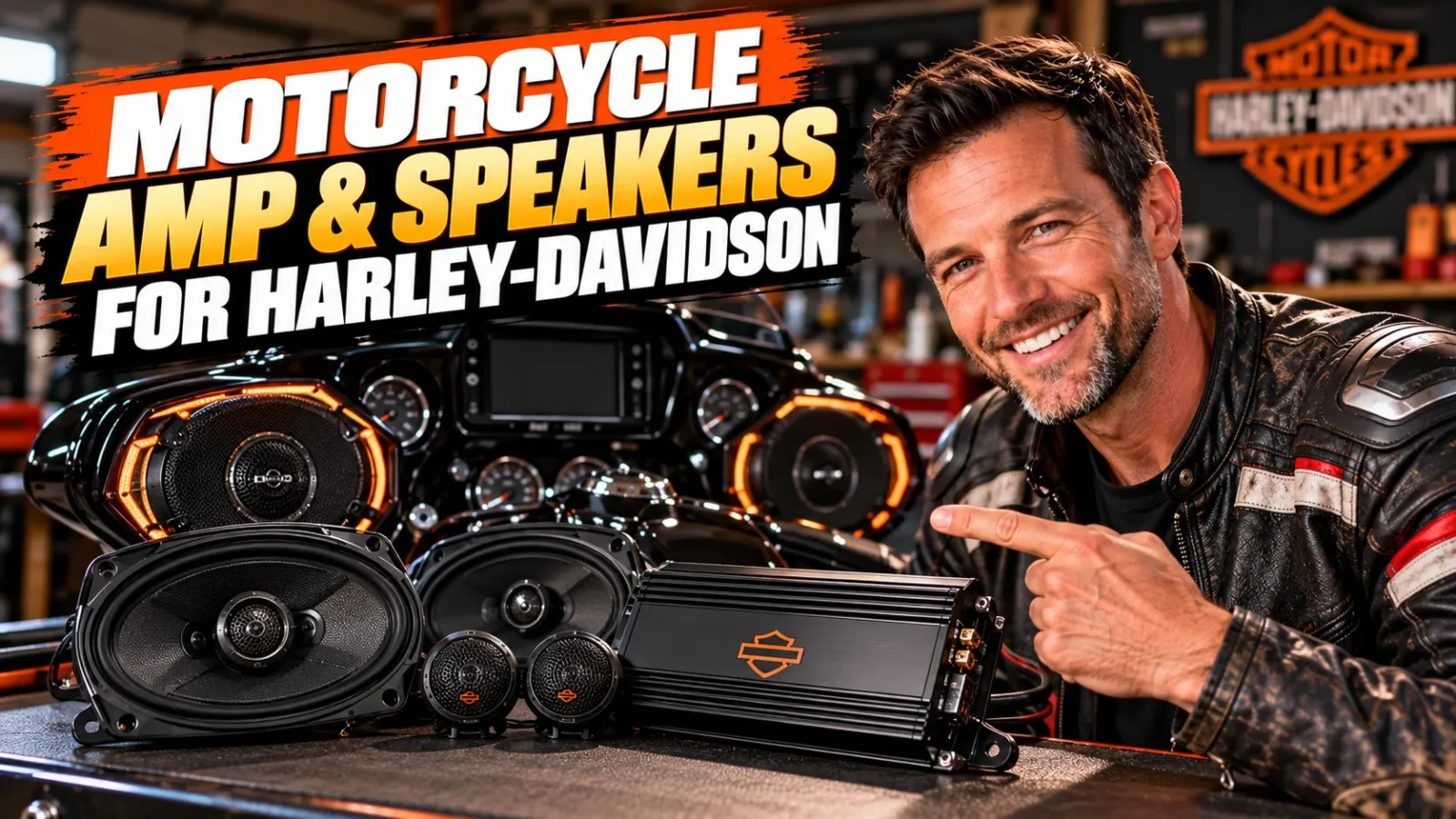
I’ve spent more weekends than I can count chasing better sound on my Harley, and I’ve burned through my fair share of cash on setups that just didn’t cut it. Wind noise, engine rumble, and highway speeds are brutal on stock audio systems. If you’ve ever cranked your factory speakers past half volume and heard nothing but distortion, you know exactly what I mean.
After testing gear on my own bike and talking shop with buddies who’ve done full audio builds, I put together this list of the best motorcycle amps and speakers for Harley riders who actually want to hear their music, not just feel the vibration. Whether you’re running a Street Glide, Road Glide, or Ultra Limited, there’s something here for your build and your budget.
- My top overall pick is the Rockford Fosgate RFHD-STAGE3 kit — it’s a plug-and-play combo built specifically for Harley fairings.
- If you want serious power without replacing your whole system, the Kicker PSHD2504 amp is the best add-on I’ve tested.
- Budget-conscious riders should look at Hogtunes Rev Series speakers — great sound without the premium price tag.
- For riders who want crisp highs, the Rockford Fosgate TW4 tweeter add-on made a noticeable difference on my own bike.
- Don’t forget your helmet setup complements your bike audio — I cover that in my best helmet speakers for motorcycle guide.
1. Rockford Fosgate RFHD-STAGE3 — Best Overall Amp and Speaker Kit
If I had to recommend just one system to a buddy starting from scratch, it’d be the Rockford Fosgate RFHD-STAGE3. This is a complete plug-and-play kit built specifically for select Harley-Davidson touring models, and it includes a 4-channel amplifier plus a matched set of speakers designed to bolt right into your stock fairing locations.
What I love about this kit is how little guesswork is involved. Rockford Fosgate engineers it to work with your bike’s factory wiring harness, so you’re not stuck splicing wires in a parking lot. The amp pushes out 400 watts RMS across four channels, which is plenty of headroom for highway riding.
Sound quality is where this kit really shines. The mids and highs stay clear even at 75 mph, and the bass response is tight without being muddy. Expect to pay a premium for this convenience, but in my experience, it’s worth every dollar if you want a “install it and forget it” solution.
Why I Recommend It
I appreciate that Rockford Fosgate designed this specifically around Harley’s electrical architecture. That means fewer compatibility headaches and a cleaner installation overall, something I can’t say for every universal kit on the market.
2. Rockford Fosgate TM8HB4 — Best 8-Inch Speaker Upgrade
For riders running Road Glide or Street Glide models with room for larger speakers, the Rockford Fosgate TM8HB4 is my go-to recommendation. These are 8-inch, 4-ohm speakers rated at 250 watts peak power, and they deliver noticeably fuller bass than the smaller 6.5-inch options most bikes ship with.
I swapped these into a friend’s Road Glide last summer, and the difference was night and day. Where the stock speakers sounded thin and tinny at highway speeds, the TM8HB4 speakers filled in the low end without sacrificing clarity in the vocals.
These speakers use a polypropylene cone and a UV-resistant rubber surround, which matters a lot when you’re riding in direct sunlight for hours. Harley owners who tour frequently will appreciate that kind of weatherproofing.
Price-wise, you’re looking at a mid-range investment, but I think it’s justified given the durability and sound quality improvement over stock.
3. Hogtunes Rev Series 8″ Speakers — Best Budget-Friendly Speaker Set
Hogtunes has been a trusted name in the Harley audio world for years, and their Rev Series 8-inch speakers remain one of my favorite budget picks. They’re built as a direct replacement for factory speakers on many touring models, so installation is straightforward even for someone with basic mechanical skills.
I’ve recommended these to a few riders on tighter budgets, and every single one has come back happy. The sound isn’t quite as refined as the Rockford Fosgate options, but for the price, it’s hard to beat.
These speakers handle 180 watts RMS and use a coaxial design that pairs a tweeter with the main woofer cone. That combination gives you decent separation between highs and lows without needing a separate tweeter kit.
A Solid Entry Point
If this is your first time upgrading your Harley’s audio, I’d start here before jumping into a full amp and speaker combo. It’s a low-risk way to hear what a real upgrade sounds like.
4. Kicker PSHD2504 — Best Standalone Amplifier
When I want raw power without replacing my speakers, I reach for the Kicker PSHD2504. This is a 250-watt, 4-channel amplifier designed specifically to fit inside Harley-Davidson touring fairings, and it’s compact enough to tuck away without any major bracket modifications.
What sets this amp apart is Kicker’s attention to Harley-specific mounting points. It uses the factory mounting holes on most touring models, so you’re not drilling new holes into your fairing just to get it installed.
I’ve run this amp with both stock and upgraded speakers, and it performs admirably either way. The built-in crossover lets you dial in exactly how much bass gets sent to your speakers, which helps prevent blown voice coils if you’re running smaller factory speakers.
For riders who already like their factory speaker sound but just need more volume and clarity, this amp alone can solve that problem without a full system overhaul.
5. J&M Performance Series 3-Way Speakers — Best for Detailed Sound
J&M Corporation has built a solid reputation in the powersports audio space, and their Performance Series 3-Way speakers are one of the more detailed-sounding options I’ve tested. The 3-way design splits sound into low, mid, and high frequencies using dedicated drivers for each range.
I noticed the difference most in vocal-heavy tracks and acoustic music. Where 2-way coaxial speakers can sound a bit blended, these J&M speakers separate the instruments more distinctly, which I really appreciated during long highway stretches.
These speakers are rated for 200 watts RMS and are designed as direct-fit replacements for many Harley touring models, including Electra Glide and Road King variants with fairing-mounted speakers.
They sit at a higher price point than Hogtunes, but if audio detail matters more to you than raw bass, I think they’re worth the upgrade.
6. Rockford Fosgate TW4 Tweeter Kit — Best Add-On for Crisp Highs
Sometimes you don’t need a whole new system, you just need better highs. That’s exactly what led me to add the Rockford Fosgate TW4 tweeter kit to my own bike a while back, and I haven’t looked back since.
These compact tweeters mount easily near your existing speaker locations and handle the high-frequency detail that regular coaxial speakers sometimes muddy up. I noticed cymbals, vocals, and guitar riffs became far more distinct after installing them.
The TW4 uses a 1-inch aluminum dome tweeter with a built-in crossover, so you don’t need to mess with separate wiring for frequency splitting. It’s a relatively affordable upgrade, especially compared to replacing your whole speaker setup.
A Small Upgrade With a Big Payoff
If you already like your current speakers but feel like something’s missing in the high end, this tweeter kit is the cheapest fix I can personally vouch for.
7. MTX Audio THUNDER75.4 — Best High-Power Amplifier for Serious Builds
For riders chasing serious volume, the MTX Audio THUNDER75.4 is a beast of an amplifier. This 4-channel amp is rated at 75 watts RMS per channel into 4 ohms, and it can bridge into a 2-channel configuration for even more power if you’re running a sub or a pair of high-power speakers.
I tested this amp on a Road Glide build that included aftermarket 6×9 speakers and a small enclosed sub under the saddlebag. The clarity at max volume was honestly impressive, with none of the harsh distortion I’ve heard from cheaper amps pushed to their limits.
This isn’t a plug-and-play Harley-specific unit like the Rockford Fosgate or Kicker options, so you’ll need a proper mounting location and some wiring know-how. I’d recommend this one for riders who are comfortable doing a more involved install or working with a shop.
If you’re building a system meant to compete with car audio setups at bike nights, this is the amp I’d point you toward.
8. Boom! Box GTS by Harley-Davidson — Best Factory-Integrated Upgrade
If you own a newer Harley touring model, chances are you already have some version of the Boom! Box GTS infotainment system. What a lot of riders don’t realize is that Harley-Davidson also offers upgraded speaker and amp packages designed to work seamlessly with this factory system.
I like recommending this route to riders who don’t want to deal with aftermarket wiring compatibility issues. Since it’s designed by Harley-Davidson itself, everything talks to your existing head unit without any weird workarounds.
The upgraded speaker packages paired with the Boom! Box GTS deliver noticeably better clarity and volume over base-model speakers, and the touchscreen controls remain fully functional for volume, EQ, and Bluetooth pairing.
It’s pricier than most aftermarket alternatives, but the seamless integration is hard to beat if keeping your warranty and factory look intact matters to you.
9. Hogtunes Amp 002A-RM — Best Mid-Range Amplifier
The Hogtunes Amp 002A-RM has been a reliable workhorse in the Harley audio community for years, and I’ve installed this one myself on a personal build. It delivers 400 watts of peak power across two channels, making it a solid match for upgraded 6×9 or 8-inch speaker setups.
What I appreciate most about this amp is how quiet it runs. Some cheaper amps introduce noticeable engine noise or electrical whine into your speakers, but I never had that issue with this one, even after a full riding season.
It’s designed to mount easily in the saddlebag or under the seat, depending on your bike’s layout. Wiring instructions are clear, and Hogtunes includes most of the hardware you’ll need for a clean install.
Reliable and Proven
This amp isn’t flashy, but it’s dependable, and after years in the Harley aftermarket scene, Hogtunes has earned my trust for consistent quality control.
10. Wild Boar Audio 6.5″ Speakers — Best for Direct Factory Fit
Rounding out my list is the Wild Boar Audio 6.5-inch speaker set, which I recommend for riders who want an easy factory-style fit without spending a fortune. These speakers slot directly into stock 6.5-inch locations found on many Harley touring and Softail models.
I tested a set of these on a Heritage Softail, and I was surprised by how full the sound was given the modest price point. They’re rated at 180 watts RMS and use a lightweight polypropylene cone that holds up well to sun and moisture exposure.
Installation took me less than 30 minutes since there was no cutting or fairing modification required. For riders who just want a simple, effective speaker upgrade without a full audio system overhaul, this is a great entry point.
How I Chose These Amps and Speakers
I didn’t just pull these picks out of thin air. I looked at power handling, build quality, ease of installation, and how well each product is known to hold up against vibration, heat, and weather exposure, all things that matter a lot more on a motorcycle than in a car.
I also weighed price against performance. Not every rider wants to drop a thousand dollars on a full system, so I made sure to include options at multiple price points, from budget-friendly speaker swaps to premium full-system kits.
Matching Your Amp and Speakers Properly
One mistake I see riders make constantly is mismatching amp wattage with speaker power handling. If your amp pushes more power than your speakers can handle, you risk blowing them out within the first few rides.
Always check the RMS rating on both your amp and speakers before pairing them together. I generally recommend keeping your amp’s RMS output close to, or slightly below, your speakers’ RMS rating for the best balance of volume and longevity.
Don’t Forget Your Helmet Audio Setup
Upgrading your bike’s sound system is only half the equation for a lot of riders. Personally, I also run a helmet-based audio setup for calls and navigation prompts when I don’t want to blast music through my fairing speakers.
If you haven’t looked into this yet, I’d recommend checking out my breakdown of the best stereo sound systems for motorcycle helmets. It pairs nicely with a fairing speaker setup for the best of both worlds.
For riders who frequently travel with a passenger, communication matters just as much as music quality. I’ve put together a detailed guide on the best motorcycle intercom systems for rider and passenger communication that’s worth a look if you haven’t upgraded that side of things yet.
Microphones and Headsets Matter Too
A great speaker system doesn’t mean much if your microphone setup is garbage during calls. I always suggest pairing your audio upgrades with a quality mic, and I’ve reviewed some solid choices in my guide to the best microphones for motorcycle helmets.
And if you’re still relying on a basic wired headset, it might be time for an upgrade there too. My guide on the best headset for motorcycle helmet covers some great options that pair nicely with a Bluetooth-enabled Harley sound system.
Final Thoughts From My Own Garage
Upgrading my Harley’s audio system has genuinely changed how much I enjoy long rides. There’s something satisfying about hearing your favorite playlist clearly at 70 mph instead of straining to make out muffled vocals over engine noise and wind.
My honest advice? Start with the Rockford Fosgate RFHD-STAGE3 if your budget allows it, since it takes all the guesswork out of matching amps and speakers. If you’re working with less cash, the Hogtunes Rev Series speakers or Wild Boar Audio 6.5-inch speakers are both excellent starting points.
Whatever you choose, just make sure your amp and speakers are properly matched, and don’t be afraid to layer in helmet audio for the times you want a more private listening experience. I’ve tried a lot of combinations over the years, and the setups on this list are the ones I keep coming back to.
Frequently Asked Questions
Do I need both an amp and speakers to upgrade my Harley’s sound?
Not always, but I strongly recommend it. Stock head units are usually underpowered, so pairing an amp like the Kicker PSHD2504 with upgraded speakers gives you the clarity and volume you actually need at highway speeds.
What size speakers fit most Harley touring models?
Most Harley Road Glide, Street Glide, and Ultra models use 6.5-inch fairing speakers, though some later models and aftermarket setups use 8-inch options like the Rockford Fosgate TM8HB4 for deeper bass response.
Will adding an amp drain my Harley’s battery?
A quality amp shouldn’t drain your battery if it’s wired correctly with a fused power lead straight to the battery. I always recommend having a shop check your charging system’s amperage before adding serious wattage.
Can I combine a helmet audio system with my bike’s speakers?
Absolutely, and I do this myself. Many riders run fairing speakers for passenger enjoyment and highway cruising, then switch to a helmet system for private calls or music, check out my guide to stereo sound systems for motorcycle helmets for that setup.

Related Articles

9 Best Noise Cancelling Bluetooth Earbuds I’ve Actually Worn on the Road
I tested dozens of noise cancelling Bluetooth earbuds on rides, commutes, and long hauls. Here are the 9 that actually…
Jake Miller
12 min read

9 Best 6×9 Speakers for Motorcycle Saddlebags That Actually Survive the Ride
I tested and researched the best 6x9 speakers for motorcycle saddlebags. Here are my top picks for sound quality, weatherproofing,…
Jake Miller
12 min read

8 Best Motorcycle Intercoms for Multiple Riders in 2026
I tested the top mesh and Bluetooth intercoms for group rides. Here are my picks for the best motorcycle intercom…
Jake Miller
10 min read