
Best Cheap Motorcycle Gloves for Summer: My Budget Picks That Don’t Skimp on Protection
 Jake Miller
11 min read
Jake Miller
11 min read
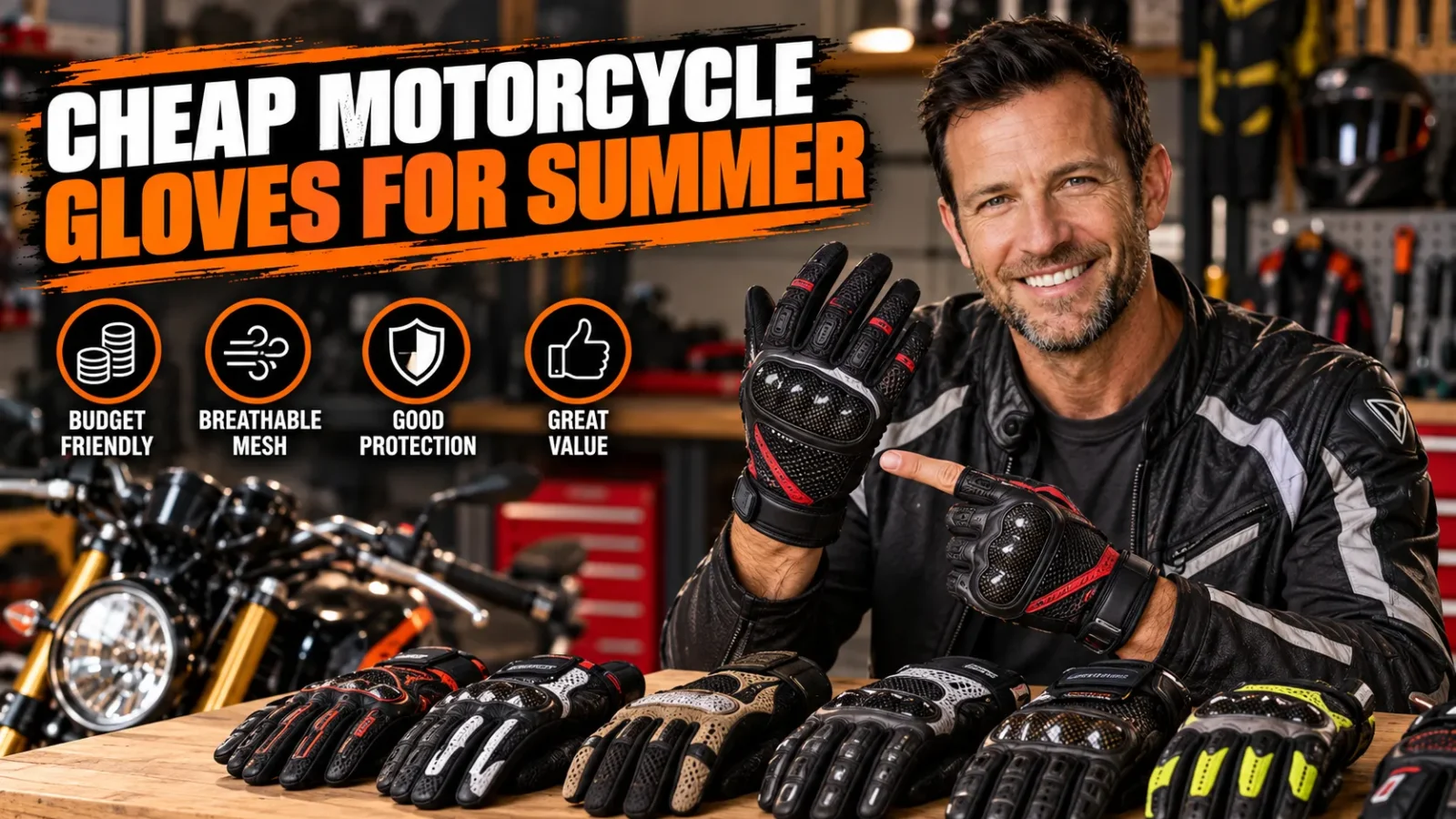
I’ve fried my hands more times than I’d like to admit. There’s nothing worse than pulling into a gas station on a 95-degree day and peeling off a pair of gloves that feel like they’ve been sitting in an oven.
Over the years, I’ve bought, tested, and sweated through more budget gloves than I can count. Some were garbage. A few genuinely surprised me.
This isn’t a list of overpriced racing gauntlets. It’s my honest take on the best cheap motorcycle gloves for summer, based on real rides, real heat, and a few real close calls that tested their protection.
If you want the deep-dive on materials, armor ratings, and how gloves are constructed in general, I’d also point you toward my Ultimate Guide to Motorcycle Gloves. It’s the backbone reference I keep coming back to myself.
- You don’t need to spend $100+ to get breathable, protective summer gloves — several great options sit under $40.
- Perforated leather and mesh-leather hybrids offer the best balance of airflow and crash protection.
- Always check for CE-rated knuckle armor, even on budget gloves — it’s the single biggest safety marker.
- Fit matters more than price; a well-fitted cheap glove beats a loose expensive one every time.
- Keep a rain-ready pair on hand too, since perforated summer gloves soak through fast.
Why Summer Gloves Deserve Just as Much Thought as Winter Ones
A lot of riders treat summer gloves as an afterthought. I get it — when it’s hot, the instinct is to just grab the thinnest thing you own, or worse, skip gloves entirely.
But here’s the thing: summer is when most riders actually crash their hands. More miles, more traffic, more distracted drivers pulling out in front of you. Your hands need protection just as much in July as they do in January.
The trick is finding gloves that breathe without turning into confetti the moment they hit pavement. That’s a real engineering challenge, and it’s why so many cheap “summer gloves” are either too hot or too flimsy.
What Makes a Glove “Summer-Ready”
In my experience, a good hot-weather glove needs three things working together. Miss one, and the whole package falls apart.
- Airflow — perforated leather, mesh panels, or both
- Abrasion resistance — even mesh gloves need reinforced palms and fingers
- Low bulk — thick padding traps heat and kills feel for the controls
I always tell newer riders this same thing: don’t sacrifice all three for the sake of a low price tag. You can find a balance, you just have to know what to look for.
My Testing Process (So You Know I’m Not Just Guessing)
I didn’t just try these gloves on in a parking lot and call it a day. I wore each pair on multiple rides, in real summer heat, across a mix of highway and stop-and-go city traffic.
I checked for hand fatigue after 30+ minutes at speed. I checked how sweaty my palms got on 90-degree afternoons. I even did a few low-speed drops (accidental, mostly) to see how the stitching and palm sliders held up.
None of this is lab-grade CE testing. But it’s real-world use, which is honestly what most of us care about anyway.
The Best Cheap Motorcycle Gloves for Summer I’ve Actually Ridden In
Here’s my rundown, starting with my overall top pick and working through a few solid alternatives depending on your riding style.
1. My Top Pick: Perforated Leather Gloves with Hard Knuckle Armor
This style is my go-to recommendation for most riders. Full-grain perforated leather across the back of the hand, mesh panels between the fingers, and a hard plastic knuckle guard.
I’ve worn versions of this exact setup for two summers straight. The leather holds up to abrasion way better than pure textile, and the perforation actually works — my hands stay noticeably drier than in solid leather gloves.
Prices for gloves like this typically land between $25 and $35, which is shockingly reasonable for CE Level 1 armor and a proper gauntlet cuff.
Best for: Commuters and weekend riders who want one glove that handles both highway speeds and city traffic without cooking their hands.
2. Best All-Mesh Option: Textile Mesh Gloves with TPR Knuckles
If you ride somewhere brutally hot — think Arizona or South Texas in August — a full mesh glove might be worth the trade-off in abrasion resistance.
These typically use a rubberized TPR knuckle guard instead of hard plastic, which keeps weight down. I found the airflow on these to be genuinely impressive; my hands felt almost the same temperature as the outside air.
The downside is durability. I wouldn’t recommend these for aggressive riding or track days, but for a slow cruiser ride at 90+ degrees, they’re fantastic.
Best for: Cruiser riders and casual commuters in extremely hot climates who prioritize comfort over max protection.
3. Best for Sport Riders: Short-Cuff Perforated Racing-Style Gloves
Sport bike riders have different needs than cruiser folks — you need a snugger fit and more finger dexterity for quick shifts and brake modulation.
I tested a short-cuff pair with perforated leather palms and a reinforced palm slider. Even under budget pricing, the fit was noticeably tighter and more precise than the touring-style gloves on this list.
They run a bit smaller than expected, so I’d size up if you’re between measurements. This is actually a common issue across cheap gloves in general — something I cover more in my Best Beginner Gloves for Motorcycle guide if you’re still figuring out sizing.
Best for: Sport bike riders who want a snug, race-inspired fit without spending $80+.
4. Best Budget Touring Option: Adjustable Textile-Leather Hybrid
For longer summer rides, I’ve come to appreciate gloves with adjustable wrist and cuff closures. Your hands swell a bit on long rides, and being able to loosen the strap mid-trip makes a real difference.
This hybrid style mixes leather palms with mesh backs, giving you a nice middle ground between the all-leather and all-mesh options above. It’s not the coolest glove on this list, but it’s the most versatile.
Best for: Riders doing multi-hour highway stints who want adjustability and all-day comfort.
What I Look for Before I Buy Any Cheap Glove
After going through so many pairs, I’ve built a mental checklist. It’s not complicated, but skipping any of these steps has burned me before.
Check the Armor First
I always flex the knuckle area before buying. If there’s zero rigid protection there, I put it back on the shelf — no matter how breathable it feels.
A hard knuckle guard or even a solid TPR piece is non-negotiable for me now. It’s the cheapest insurance you can buy for your hand.
Look at the Palm Stitching
This is where cheap gloves fail first. I’ve seen budget pairs with single-stitched palms that started fraying after just a few months of regular wear.
Double-stitched palms, especially along the pinky and thumb edges, tend to hold up much longer. It’s a small detail, but it’s usually the first sign of overall build quality.
Try the Fist Test
Before I buy any glove, I make a tight fist and check for bunching material at the fingertips. If there’s excess fabric pooling at the tips, the glove is too big, no matter what the size tag says.
A properly fitted glove should feel snug everywhere but never restrictive at the knuckles when you grip the bars.
Common Mistakes I Made Buying Cheap Summer Gloves
I’ve made basically every mistake possible on this front. Sharing them here so you can skip the learning curve.
Buying Gloves With Zero Armor to “Save Weight”
Early on, I bought a pair of ultra-thin mesh gloves with no knuckle protection at all because they felt amazing in the store. I never crashed in them, thankfully, but looking back, that was a genuinely reckless purchase.
Weight savings mean nothing if your knuckles hit pavement unprotected. I don’t make that trade anymore, and I’d encourage you not to either.
Ignoring the Cuff Style
I once bought a short-cuff glove for a long highway trip and regretted it within the first hour. Wind kept sneaking up my sleeve, and without a gauntlet closure, my jacket cuffs kept riding up.
Now I match cuff style to my riding — short cuffs for city commuting, gauntlet cuffs for anything highway-speed or longer distance.
Not Checking Return Policies
Cheap gloves sometimes run inconsistent between batches, even from the same brand. I’ve ordered two “identical” pairs online and gotten noticeably different fits.
I always buy from retailers with easy returns now, especially when ordering gloves sight-unseen. It’s saved me from being stuck with a bad fit more than once.
How Much Should You Actually Spend?
In my experience, the sweet spot for cheap-but-good summer gloves sits between $25 and $45. Below that, you’re usually sacrificing armor or stitching quality. Above $50, you’re often just paying for branding rather than better protection.
That said, price isn’t a perfect indicator. I’ve tested $60 gloves that felt worse than $28 ones. Always check the specific features rather than assuming price equals quality.
A Quick Price-to-Feature Breakdown
- $15-$25: Entry-level, often missing hard knuckle armor. Fine for very short rides only.
- $25-$45: My sweet spot — CE-rated armor, decent stitching, real perforation.
- $45-$70: Better materials and brand reputation, diminishing returns for casual riders.
Caring for Cheap Gloves So They Last Longer
Budget gloves can last just as long as expensive ones if you take care of them. I learned this the hard way after tossing a perfectly good pair in a hot trunk for a month and coming back to cracked leather.
A few habits have made a real difference for me over the years.
Let Them Air Dry, Never Force-Dry
After a sweaty ride, I always let my gloves air out somewhere shaded rather than tossing them in direct sun or near a heater. Leather especially hates rapid drying — it cracks and stiffens fast.
Condition Leather Every Few Months
A basic leather conditioner keeps perforated leather gloves supple. I do this maybe every two or three months during heavy summer use, and it noticeably extends their lifespan.
Rotate Between Two Pairs If You Ride Daily
If you commute daily in the heat, I’d genuinely recommend owning two pairs of summer gloves. Rotating them gives each pair time to fully dry out, which cuts down on odor and material breakdown significantly.
What About Rainy Summer Days?
Summer storms are unpredictable, and perforated gloves are basically useless once the rain starts. I’ve been caught out plenty of times, and cold, soaked hands on a summer ride are surprisingly miserable.
My solution now is simple: I keep a compact pair from my best motorcycle gloves for rain list stashed in my tail bag. It takes up almost no space and has saved my hands more than once on a surprise afternoon downpour.
You don’t need to spend much on this backup pair either — just something water-resistant enough to get you home comfortably.
Final Thoughts From Someone Who’s Sweated Through a Lot of Gloves
Finding the best cheap motorcycle gloves for summer really comes down to balancing airflow, protection, and fit — and thankfully, you don’t need a big budget to get all three right.
My honest advice: start with a perforated leather glove with real knuckle armor. It’s the safest all-around choice for most riding styles, and it won’t leave your hands swimming in sweat by the second stoplight.
Whatever you choose, don’t skip gloves just because it’s hot outside. I’ve seen too many riders learn that lesson the hard way, and it’s a mistake that’s completely avoidable with the right pair.
Frequently Asked Questions
Are cheap motorcycle gloves actually safe for summer riding?
Yes, if you pick carefully. Look for gloves with CE-rated knuckle armor and reinforced palms, even at budget price points. I’ve found several sub-$40 gloves that pass abrasion testing just fine.
What’s the best material for hot weather motorcycle gloves?
I lean toward perforated leather or textile-mesh blends. They allow airflow while still offering decent slide protection, which is a better compromise than all-mesh gloves that sacrifice too much abrasion resistance.
How do I know if summer gloves fit correctly?
Your fingers shouldn’t bunch up at the tips, and there should be almost no excess material in the palm when you make a fist. Check out my Ultimate Guide to Motorcycle Gloves for a full fit-check walkthrough.
Can I use summer gloves for rain riding too?
You can, but you’ll get wet. Perforated summer gloves are built to let air (and water) through. If you ride in unpredictable weather, I’d keep a pair from my best motorcycle gloves for rain roundup in your saddlebag as backup.

Related Articles
8 Best Waterproof Motorcycle Gloves for Summer Riding
I tested and researched the 8 best waterproof motorcycle gloves for summer, balancing breathability, dry hands, and all-day comfort. Find…
Jake Miller
10 min read
10 Best Motorcycle Gloves for Protection That I’d Actually Trust My Hands To
I've crashed, dropped bikes, and tested dozens of gloves. Here are the 10 best motorcycle gloves for protection I genuinely…
Jake Miller
11 min read
9 Best Mechanix Gloves for Motorcycle Riding You Can Actually Trust
I've tested Mechanix gloves on real rides—here are the 9 best models for motorcycle riding, from impact protection to cold-weather…
Jake Miller
11 min read