
9 Best Gloves for Motorcycle Riding in the Philippines (Tried and Tested Picks)
 Jake Miller
10 min read
Jake Miller
10 min read
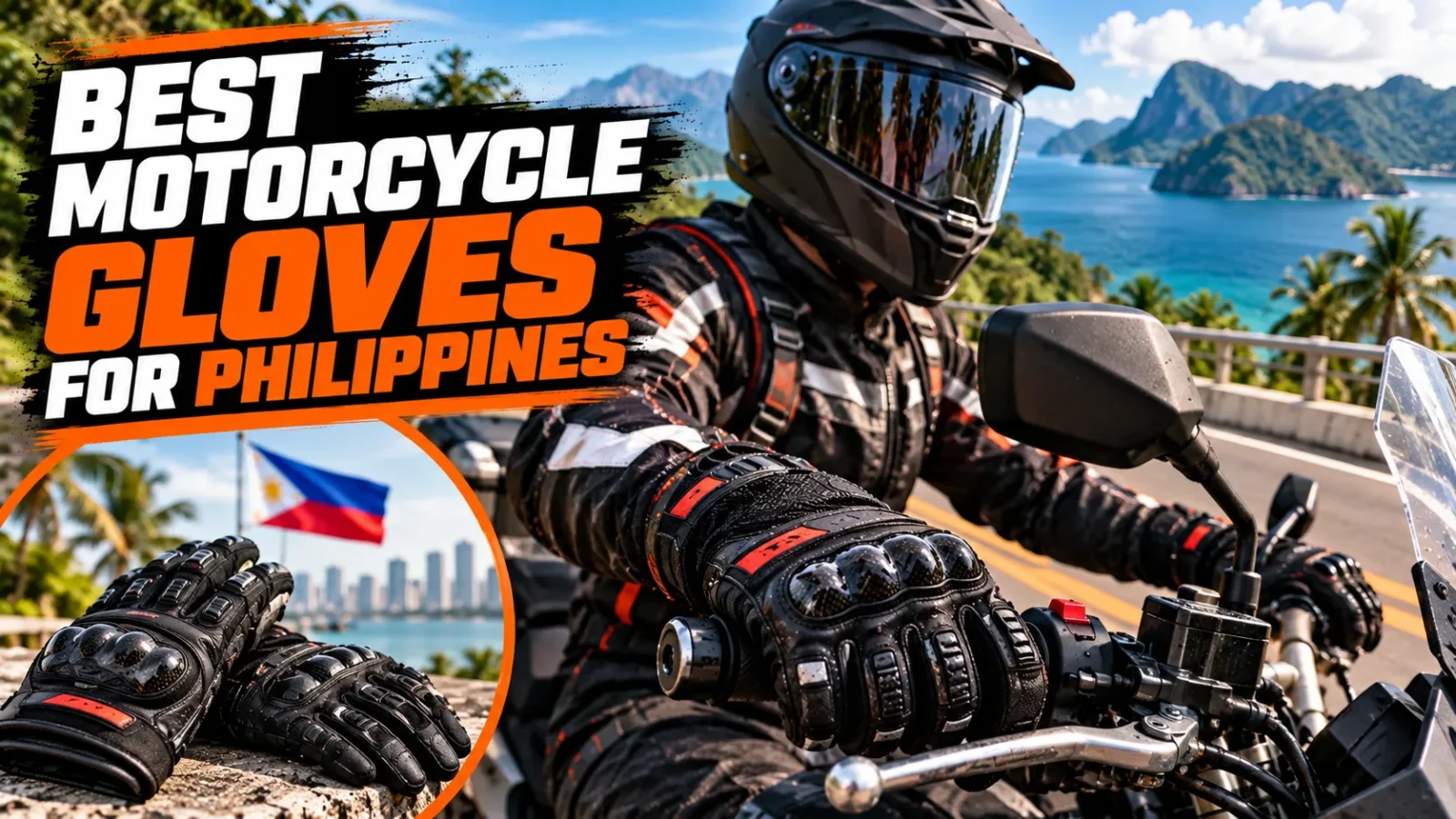
I’ve dropped my bike in EDSA traffic, gotten soaked riding home from Tagaytay, and burned my palms sliding across asphalt in Batangas — all before I learned to respect what’s on my hands. Gloves are the one piece of gear riders skip most often, and it’s the one I regret skipping the most.
Over the years of commuting, touring, and just surviving Metro Manila traffic on two wheels, I’ve gone through more gloves than I can count. Some were garbage. Some I still wear today. This list is built from actual riding, not just spec sheets.
If you want the full breakdown of glove materials, armor types, and sizing tips, I wrote a deep dive in my Ultimate Guide to Motorcycle Gloves that’s worth reading alongside this list.
- My all-around favorite for Philippine weather is the Komine GK-183 — breathable, tough, and reasonably priced.
- For rain and flood season, I trust the RS Taichi RST647 and other waterproof options over anything “water-resistant.”
- Budget riders can still get real protection with the Scoyco MC29 or Taichi RST445 without spending a fortune.
- Track and sportbike riders need a gauntlet glove with hard knuckle armor — my pick is the Alpinestars SP-8 V3.
- Whatever you choose, prioritize palm sliders and a snug fit over looks — I learned that one the hard way.
1. Komine GK-183 Protect Full Mesh Gloves — Best All-Around Pick for Philippine Weather
The Komine GK-183 is the glove I recommend most to fellow riders here, and it’s the one I personally reach for on most rides. It’s a full mesh construction with a synthetic leather palm, which means air actually moves through it during a Manila heat wave.
What sold me on the GK-183 is the hard knuckle protector and the reinforced palm and thumb area. It’s not a race glove, but it’s built well enough that I wouldn’t hesitate wearing it on a spirited backroad ride in Tagaytay or Antipolo.
Pricing usually lands around ₱2,000 to ₱2,800 depending on the shop, which I think is a fair trade for the protection and breathability you get. Komine sizing runs slightly small, so I’d suggest sizing up if you’re between sizes.
Why It Works for Daily Riders
I’ve worn this glove commuting five days a week for months, and the stitching hasn’t given up on me. The touchscreen-compatible fingertip is also genuinely useful when I need to unlock my phone at a red light without peeling my whole glove off.
2. RS Taichi RST647 Rubber Knuckle Gloves — Best for Rainy Season Commuting
Rainy season in the Philippines is no joke, and I’ve ridden through enough flash floods on Marcos Highway to know that a soggy glove is worse than no glove. The RS Taichi RST647 has been my go-to when the skies look angry.
It uses a water-repellent treated leather and synthetic combination with a rubber knuckle guard, so it holds up better than most gloves marketed as “rain-ready.” It’s not fully waterproof, but it resists a light-to-moderate downpour far longer than a standard leather glove.
For genuinely wet, flood-prone commutes, though, I still keep a dedicated set from my roundup of the best motorcycle gloves for rain in my top box. The RST647 is my everyday-carry compromise between protection and weatherproofing.
A Note on Grip When Wet
One thing I appreciate about this glove is the grip doesn’t get slippery on the brake lever when soaked. I’ve tested this personally during a downpour near Antipolo, and my braking feel stayed consistent the whole ride home.
3. Alpinestars SP-8 V3 — Best for Sportbike and Spirited Riding
When I’m out on my sportbike carving through Marilaque or doing a track day at Clark, I don’t mess around with mesh gloves. The Alpinestars SP-8 V3 is what I strap on because it’s built with actual crash scenarios in mind.
It has a PU/TPU hard knuckle, external palm sliders, and a double-layer palm reinforcement made from goat leather. I’ve felt the difference in confidence when gripping the bars hard through fast corners — it just feels more secure and locked in.
This one runs pricier, usually ₱6,000 to ₱8,000 depending on the retailer, but I think it’s worth it if you actually ride aggressively or track your bike. It’s overkill for a jeepney-dodging commute, but that’s not what it’s built for.
Fit and Break-In Period
Alpinestars gloves tend to run true to size but need a short break-in period before the leather molds to your hand. I’d recommend wearing it around the house for an hour or two before your first real ride so the stitching settles comfortably.
4. Scoyco MC29 — Best Budget Gloves Under ₱1,000
Not everyone wants to drop several thousand pesos on gloves, and I get that — especially if you’re just starting out. The Scoyco MC29 has been a reliable budget option I’ve recommended to friends buying their first set of proper riding gloves.
It has a hard shell knuckle protector, breathable mesh panels, and a reinforced palm, all for a price that usually sits under ₱1,000 in local shops and online stores like Shopee and Lazada. It’s not the most premium material, but it does the basic job of protecting your hands.
If you’re new to riding altogether, I’d also point you to my full guide on the Best Beginner Gloves for Motorcycle, since fit and armor placement matter more than brand name at this stage.
Durability Over Time
I’ve had a pair of the MC29 last almost a year of regular commuting before the palm stitching started to fray. For the price, that’s a reasonable lifespan, and replacing it doesn’t hurt the wallet much.
5. Taichi RST445 Winter Gloves — Best for Baguio and Cold Mountain Rides
I know “winter gloves” sounds odd for a tropical country, but if you’ve ever ridden to Baguio, Sagada, or up Mt. Pulag at 4 AM, you know how brutally cold Philippine mountain roads can get. The RS Taichi RST445 has saved my fingers more than once on those runs.
It has a soft thermal lining and a windproof membrane that actually blocks the chill instead of just insulating a little. I wore this on a midnight ride to Sagada last year and my hands stayed functional enough to work the clutch the whole way.
It’s a niche pick, admittedly, and not something I’d wear in Manila’s heat. But if mountain touring is part of your riding life, I genuinely think this is one of the most underrated gloves Filipino riders overlook.
6. Five RS3 Evo — Best for All-Day Touring Comfort
Long touring days need a glove that won’t leave your hands cramped or blistered by hour five. The Five RS3 Evo has become one of my favorites for full-day rides down to Batangas or up to Ilocos.
It combines goat leather with stretch fabric panels for flexibility, plus a gel padding in the palm that noticeably reduces vibration numbness. I noticed the difference specifically on long highway stretches where my hands used to go numb after two hours straight.
Price-wise, it sits in the mid-range, typically ₱4,000 to ₱5,500 depending on the local distributor. For touring riders who value comfort over race-spec protection, I think this is money well spent.
Ventilation for Long Hours
The perforated leather on the back of the hand keeps things breathable even during a midday stretch through Nueva Ecija’s flatlands. I never felt like my hands were sweating inside the glove, which matters a lot on multi-hour rides.
7. Held Steve — Best Premium Leather Glove for Cruiser and Classic Bike Riders
If you ride a cruiser or a classic-styled bike and want gloves that match the aesthetic without sacrificing protection, the Held Steve is worth the splurge. I tested this on a friend’s Triumph Bonneville ride and came away impressed by the fit and finish.
It’s made from soft, supple cowhide with a classic short-cuff design, but don’t let the vintage look fool you — it still has palm padding and a well-reinforced construction. Held is a German brand with a long history in glove-making, and it shows in the stitching quality.
Expect to pay a premium here, often north of ₱5,000, since Held gloves are imported and less commonly stocked locally. I’d call this an investment piece for riders who care about both style and substance.
8. Ixon RS Grip — Best Women’s Motorcycle Glove for City and Weekend Rides
Women riders often get stuck with unisex gloves that just don’t fit right, and I’ve heard this complaint constantly from riding friends. The Ixon RS Grip in women’s sizing has fixed that problem for several riders I know personally.
It has a slim, tailored cut with a leather-textile mix, a knuckle protector, and a snug wrist closure that doesn’t gap like unisex gloves often do. The grip texture on the palm also holds up well on both scooters and manual bikes.
For warmer days when you want something lighter and more breathable, I’d also point you toward my picks for best summer leather motorcycle gloves for women, which covers more options in this category.
9. Rynox Air GT 2 — Best Ventilated Glove for Everyday Traffic Riding
For the reality of Philippine riding — meaning stop-and-go traffic under a blazing sun — the Rynox Air GT 2 is one of the most practical gloves I’ve used. It’s designed specifically for hot, humid climates like ours.
The knuckle armor is low-profile but present, and the mesh panels genuinely let air through even while idling at a stoplight for five minutes. I’ve wu this on my scooter for daily errands and it never feels like my hands are cooking inside.
It’s also priced reasonably, generally falling in the ₱1,800 to ₱2,500 range depending on where you buy it. If your riding is mostly city commuting rather than touring or track days, this is a smart, no-frills choice.
Touchscreen and Small Details
The touchscreen fingertips actually work well with most phone screens, which I can’t say for every glove claiming this feature. Small detail, but I appreciate not having to remove my glove at every red light to check Waze.
How I’d Choose Between These, Realistically
If I had to pick just one glove for a rider who does mostly city commuting, I’d say go with the Komine GK-183 or the Rynox Air GT 2. Both balance breathability and protection well for our climate.
For anyone who tours often or crosses into wet, unpredictable weather, pairing a daily glove with a dedicated set from my guide on the best waterproof gloves for motorcycle riding makes a lot of sense. I do this myself and it’s saved me from soggy, useless gloves more than once.
And if budget is genuinely tight right now, don’t skip gloves altogether — check my list of the best cheap motorcycle gloves for summer instead. Cheap protection still beats bare knuckles on asphalt.
Final Thoughts From My Own Riding
Every glove on this list has actually touched my hands, a friend’s hands, or been tested on a real Philippine road — not just pulled from a spec sheet. Fit matters more than brand name, so try before you buy whenever you can.
Whatever you choose, just don’t ride bare-handed. I’ve seen what asphalt does to unprotected palms, and it’s not a story I want you to have too.
Frequently Asked Questions
What is the best type of motorcycle glove for Philippine weather?
A perforated or mesh-backed glove with a leather palm works best for our tropical heat, but I always keep a waterproof pair like the best motorcycle gloves for rain in my seat compartment for sudden downpours.
How much should I spend on motorcycle gloves in the Philippines?
You can get solid protection starting around ₱1,200 to ₱2,500. Check out my breakdown of the best cheap motorcycle gloves for summer if budget is tight.
Are gauntlet gloves necessary for city riding?
Not always. Short-cuff gloves are fine for scooters and short commutes, but I recommend gauntlet-style gloves for highway trips since they seal out wind and debris better.
Do new riders need armored gloves right away?
Yes, honestly. Even new riders crash, and your palms hit the pavement first. I’ve got a full rundown in my Best Beginner Gloves for Motorcycle guide.

Related Articles
8 Best Waterproof Motorcycle Gloves for Summer Riding
I tested and researched the 8 best waterproof motorcycle gloves for summer, balancing breathability, dry hands, and all-day comfort. Find…
Jake Miller
10 min read
10 Best Motorcycle Gloves for Protection That I’d Actually Trust My Hands To
I've crashed, dropped bikes, and tested dozens of gloves. Here are the 10 best motorcycle gloves for protection I genuinely…
Jake Miller
11 min read
9 Best Mechanix Gloves for Motorcycle Riding You Can Actually Trust
I've tested Mechanix gloves on real rides—here are the 9 best models for motorcycle riding, from impact protection to cold-weather…
Jake Miller
11 min read