
7 Best Motorcycle Riding Jeans for Hot Engine Days and Everyday Comfort
 Jake Miller
13 min read
Jake Miller
13 min read
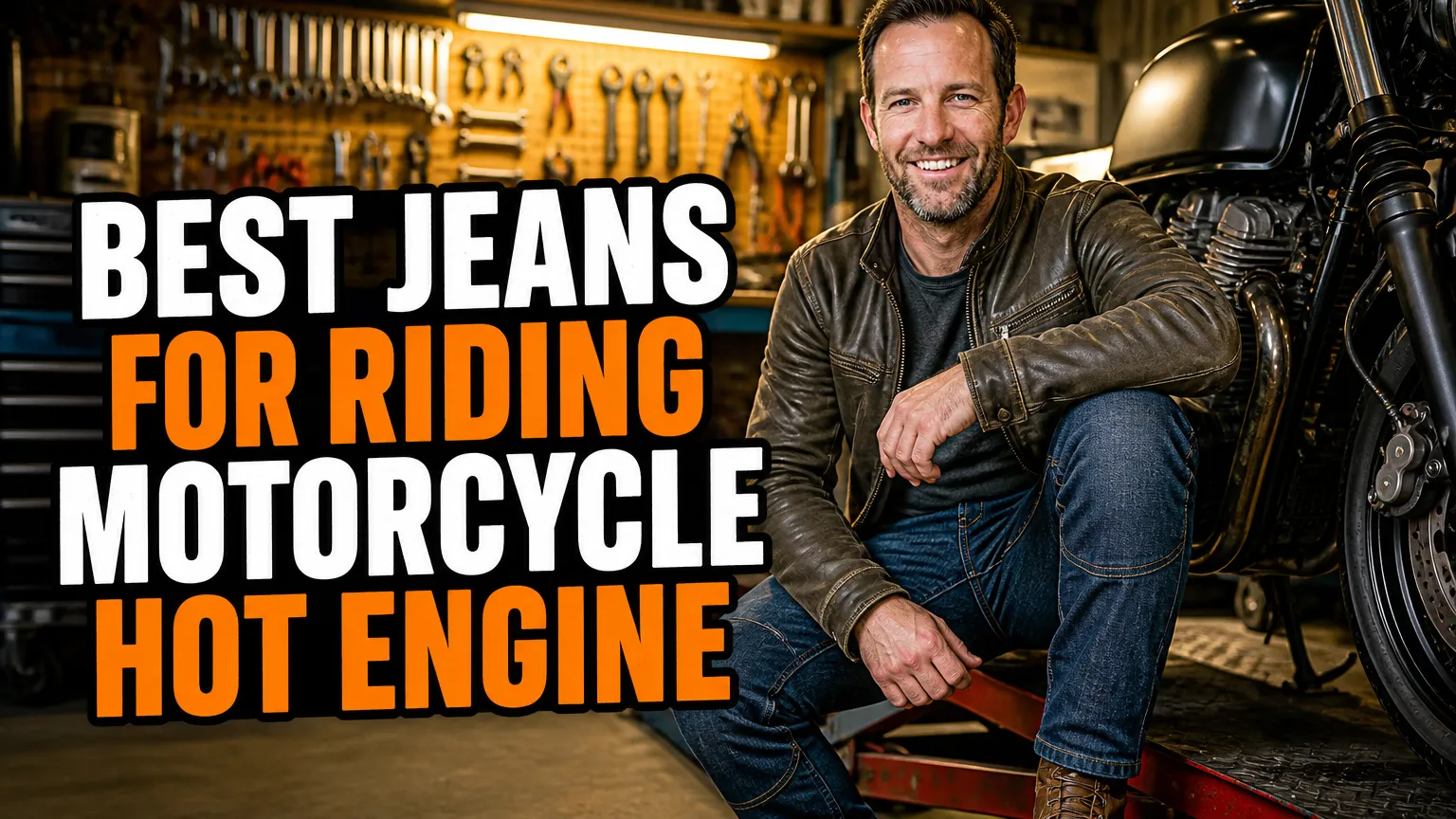
I know the appeal of ordinary jeans on a hot ride: they look familiar, feel casual, and seem like an easy answer when the engine is throwing warmth at your legs. But I never treat denim as a heat shield. Riding jeans are made chiefly to help protect against abrasion and impact in a crash, not prolonged contact with a hot engine or exhaust.
When I compare the best jeans for riding a motorcycle near a hot engine, I look at two separate things: protective construction and comfort in warm conditions. I also pay attention to how the jeans fit while seated, whether knee and hip armor are included, and whether the motorcycle’s heat shields are doing their job. The seven models below are specific options I’d consider, with the important reminder that no pair makes touching a hot engine safe.
- I choose motorcycle-specific jeans with a stated CE garment rating, not ordinary fashion denim.
- For higher abrasion ratings, I’d compare the REV’IT! Detroit 2 TF, John Doe Pioneer Mono, and Pando Moto Boss Dyn 01.
- I check whether knee and hip protectors are included, since armor provisions vary by model.
- I never rely on riding jeans to protect me from direct engine or exhaust heat; I keep clear and use the bike’s heat shields.
How I choose jeans when engine heat is part of the ride
I start by separating radiant warmth from direct contact. A warm engine can make a slow commute uncomfortable, but a leg touching an engine casing or exhaust component can suffer a burn much faster than jeans can make safe. If I’m regularly contacting hot parts, I address my riding position, the motorcycle’s heat shielding, and the source of the contact rather than shopping for supposedly heatproof denim.
For crash protection, I check the garment’s EN 17092 class where the manufacturer lists one. The A, AA, and AAA classes describe different levels of protective performance under that standard; they are not ratings for heat resistance. I also look for knee and hip armor, and I check whether each protector comes with the jeans or must be purchased separately.
Fit matters more than it might in street clothes. I want the knee armor to stay over my knees when I’m seated, the waist to remain secure, and the legs to overlap my boots. For more help comparing riding apparel as a whole, I also use this guide to best clothes for motorcycle riding.
1. REV’IT! Detroit 2 TF — My balanced everyday option
The REV’IT! Detroit 2 TF is the kind of riding jean I’d consider when I want a familiar denim look without choosing ordinary street jeans. REV’IT! uses its PWR|Shield reinforcement technology in the garment, and the model is commonly listed as a CE AA-rated riding jean. I would still check the label and product details for the exact version I’m buying, since specifications can vary by market or product update.
The Detroit 2 TF has a slim, everyday cut and uses SEESMART knee protectors in versions sold with that armor. I’d confirm the hip-protection details before checkout: a pocket for an optional protector is not the same as a protector included in the box. That distinction matters if I’m trying to buy a complete setup in one go.
Why I’d consider it in warm weather
I like the Detroit 2 TF as a middle ground: it looks more like casual denim than bulky textile overpants, but it is purpose-built riding gear. Like any protective jean, it can feel warmer than ordinary cotton denim because protective layers and armor add material. I’d try it on in a seated position rather than assuming that a slim fit will stay comfortable over a long ride.
For heat near the bike, I’d treat the Detroit 2 TF as abrasion gear, not a thermal barrier. If engine warmth is uncomfortable, I’d first inspect the bike’s heat shields and adjust how I sit or stand at stops. The jeans’ protective construction does not make direct contact with a hot component safe.
2. John Doe Pioneer Mono — My pick for a high-protection single-layer design
John Doe’s Pioneer Mono is a motorcycle jean built around the brand’s XTM-Fiber construction, a single-layer style intended to combine a denim-like exterior with protective fibers. John Doe offers versions with a high EN 17092 protective class; I’d verify the rating printed for the exact size and version, rather than relying on a retailer’s broad description. Product details and included armor can change between releases.
The single-layer format is appealing to me because it avoids the feel of a separate, bulky protective lining. That can make the jeans easier to wear off the bike and may feel less cumbersome in warm conditions than some heavily lined alternatives. It does not mean the fabric is cool like lightweight summer trousers, though, and I’d still expect protective denim to feel substantial.
What I’d check before buying
I’d confirm which knee and hip protectors are supplied with the Pioneer Mono and whether the knee armor can be adjusted to sit correctly when I’m in my riding position. I’d also check the size chart carefully: a jean that fits well standing up may ride too low or pull at the knees once I bend forward.
If I want a more complete overview of protective layers and accessories, I’d compare the Pioneer Mono with the recommendations in this guide to best gear for motorcycle safety top protective clothing and accessories. No riding jean eliminates the need for boots, gloves, a jacket, and a properly fastened helmet.
3. Pando Moto Boss Dyn 01 — My option for a technical denim feel
The Pando Moto Boss Dyn 01 is a specific riding-jean model I’d put on my shortlist when I’m looking for a protective, relatively streamlined alternative to ordinary jeans. Pando Moto’s product information describes a denim-based construction with technical reinforcement and motorcycle armor provisions. I’d check the current listing for its exact EN 17092 class and the armor supplied, because the details may differ by version and region.
What attracts me to the Boss Dyn 01 is its focus on a clean, casual silhouette rather than the appearance of an overpant. That makes it easier to imagine wearing it on a ride that includes errands or a stop at a café. I still judge it as riding equipment first: I want the protective areas to cover the right spots when I’m seated, not just to look like regular jeans.
How I’d use it for warm rides
I’d compare its weight, lining, and stretch with the other jeans on this list before calling it a hot-weather winner. A technical fabric may feel different from traditional denim, but it cannot stop engine heat from reaching my leg through direct contact. I’d use the bike’s intended heat shields and avoid resting my calf against the engine or exhaust.
I’d also make sure the fit works with my boots. A jean leg that rides up can expose skin and leave a gap at the ankle, so I prefer to test the hem while seated and with the boots I actually ride in. That small check is easy to overlook when shopping online.
4. Klim K Fifty 2 — My choice for a familiar denim cut
The Klim K Fifty 2 is a well-known motorcycle jean that combines a denim appearance with riding-oriented materials and protective features. Klim has offered this model with Cordura denim and D3O impact armor, and versions are associated with a CE AA garment rating. Since product generations and regional specifications can differ, I’d use the garment label and the current manufacturer listing as my final reference.
I’d consider the K Fifty 2 if I want a more traditional jeans look and a model from a brand with a strong motorcycle-gear focus. The important buying detail for me is not just the fabric name: I’d check exactly which armor comes with the pair, whether it includes hip protection, and whether the knee armor sits where it should on my body.
My comfort and fit notes
Protective denim can feel heavier and warmer than everyday jeans, and the K Fifty 2 is no exception to that general trade-off. I’d try it on in riding posture and walk around in it before deciding whether the weight works for my usual weather. If I ride in sustained high temperatures, I’d compare it with a lighter, ventilated motorcycle trouser rather than expecting jeans to provide both maximum airflow and strong abrasion protection.
When I’m helping a new rider build a practical kit, I point them toward a broader checklist for best motorcycle clothing for beginners. I find that getting the fit and armor right across the whole outfit is more useful than focusing on a single pair of pants.
5. Alpinestars Copper V3 — My casual-looking entry-level option
The Alpinestars Copper V3 is a motorcycle-specific jean with a more casual style and a lower protective class than some of the higher-rated choices here. Alpinestars lists riding features such as reinforced construction and knee armor provisions, with specifics depending on the version. I’d check the exact certification and whether the armor is supplied before buying; I would not assume that every retailer’s listing includes the same pieces.
I’d look at the Copper V3 when I want a recognizable riding-jean model from an established motorcycle brand and I’m prioritizing everyday wearability. Its lower rating, where listed, is an important trade-off rather than a detail I’d ignore. I’d compare it honestly with AA- or AAA-rated alternatives and decide based on my route, riding style, fit, and budget.
When I’d choose a lower-rated jean
I might choose the Copper V3 for shorter, lower-speed trips if it fits me better and I’ll actually wear it consistently. But I would not describe any A-rated jean as equivalent to a higher-rated garment, and I would not let a comfortable fit distract me from the protection difference. I’d also make sure the knee armor is correctly positioned, since armor that shifts away from the knee is less useful.
For hot engine conditions, I’d apply the same rule as with the more protective models: the Copper V3 is not a burn-prevention garment. I’d avoid direct contact with hot parts and have a mechanic check missing or damaged heat shields if my leg is getting unusually hot.
6. Bull-it Covert Evo — My option to compare for reinforced denim
Bull-it’s Covert Evo is a named motorcycle-jean range I’d investigate when I want a denim look with protective reinforcement. Bull-it is known for Covec-based protective fabric technology, but the exact construction, rating, and armor provision depend on the specific Covert Evo cut and version. Before I order, I’d check the product’s current certification details rather than assuming every Covert Evo listing has identical specifications.
I’d pay particular attention to the garment’s stated EN 17092 class and its fit around the knees and hips. If a retailer describes the jeans as “armoured,” I’d look for a clear list of included protectors; sometimes that wording can mean armor pockets rather than protectors supplied. I’d also check return terms, because getting the knee position right is difficult to judge from a product photo.
What I’d weigh against the price
Prices on protective jeans move around with sales, color, and stock, so I’d compare the current price of the Covert Evo with the REV’IT!, Klim, and John Doe options rather than treating one price as permanent. I’d pay for a higher rating or included armor only when I know what I’m receiving. If the details are vague, I’d contact the seller or choose a listing with a clear specification sheet.
For riders who want clothing advice beyond jeans, I also find it helpful to browse best womens jeans for motorcycle riding. Fit varies widely by cut and body shape, so I’d look for a model that holds its protective panels in place rather than buying based on a label or styling alone.
7. Rokkertech Slim — My premium slim-fit comparison
The Rokkertech Slim is a specific riding-jean model from Rokker, a brand focused on motorcycle denim. Rokker has offered technical single-layer jeans using protective fibers, with garment ratings and construction details that should be checked against the particular version being sold. I’d verify the current certification, armor compatibility, and included protectors before I treat any retailer’s description as definitive.
I’d consider the Rokkertech Slim if I want a close, contemporary cut and am prepared to spend time getting the fit right. Slim jeans can feel great while standing but bind at the knees or hips on a motorcycle, so I’d test the riding posture carefully. I’d also confirm that I can position compatible knee armor properly and that the jeans stay securely over my boots.
Why I wouldn’t buy it just for heat
A single-layer protective jean may be less bulky than a denim garment with a separate heavy lining, but that does not automatically make it cool in hot weather. Fabric weight, airflow, color, fit, and the amount of armor all affect comfort. I’d compare those details with my local climate and riding speed, not rely on “single-layer” as a promise of ventilation.
I’d also remember that protective fibers and CE ratings address crash-related risks, not engine contact. If the heat is coming from a damaged exhaust shield or a riding position that presses my leg against the engine, I’d fix that problem instead of expecting expensive jeans to solve it.
My final checklist before I buy
Before I choose among these models, I read the garment label and the manufacturer’s current specification page. I look for a clear EN 17092 class, the type and placement of included armor, and whether hip protectors are included or optional. If I can, I try the jeans on with my own boots and sit in a riding position to confirm the armor stays over my knees.
- I check the protection class: I don’t treat CE classes as heat-resistance ratings.
- I confirm the armor: I distinguish included knee and hip protectors from empty armor pockets.
- I test the seated fit: I make sure the waist, knees, and hems stay in place on the bike.
- I inspect heat management: I keep my leg clear of hot components and make sure the motorcycle’s heat shields are present and secure.
- I consider the whole outfit: I pair riding jeans with appropriate boots and the rest of my protective gear.
My practical picks are the REV’IT! Detroit 2 TF for a balanced everyday style, the John Doe Pioneer Mono for a technical single-layer approach, and the Klim K Fifty 2 for a familiar denim cut. I’d compare each model’s exact current rating, armor package, and fit before choosing, because specifications can change and comfort is personal.
Most importantly, I don’t ask riding jeans to do a job they were not designed for. They can help with abrasion and impact protection when they fit properly and meet the relevant standard, but I keep my legs away from hot engine and exhaust parts. If engine heat is making a ride uncomfortable, I fix the cause and choose clothing for the weather instead of relying on denim as a heat shield.
Frequently Asked Questions
Can motorcycle jeans protect my legs from a hot engine?
Not reliably. Motorcycle jeans are designed mainly for abrasion and impact protection, not sustained contact with a hot engine or exhaust. I keep my leg clear and use the motorcycle’s heat shields.
What should I look for in motorcycle jeans for hot-weather riding?
I check the garment’s EN 17092 rating, included knee and hip armor, fit on the bike, and whether the fabric is single-layer or lined. Breathability and fit matter, but neither replaces abrasion protection.
Are AAA-rated motorcycle jeans always the best choice?
Not automatically. An AAA rating indicates a higher abrasion-protection class under the relevant test, but I also consider armor, comfort, fit, and how I will use the jeans.
Do riding jeans need separate hip armor?
Some jeans include hip protectors, while others only provide hip-armor pockets. I check the exact model and add compatible protectors if they are not included.

Related Articles

5 Best Armored Motorcycle Shorts for Racing: CE Protection, Fit & Track-Day Picks
Compare five armored motorcycle shorts for racing, with notes on fit, impact protection, ventilation, and what I check before buying…
Jake Miller
12 min read

7 Best Motorcycle Riding Jeans for 5’9 Riders: Fit, Armor and Comfort
Compare seven protective motorcycle jeans that suit 5'9 riders, with practical notes on inseams, armor placement, stretch, and value to…
Jake Miller
10 min read

8 Best Motorcycle Touring Trousers for Comfort, Weather Protection, and Long Miles
Compare eight touring motorcycle trousers for comfort, weather protection, ventilation, and protection, with practical tips to help me choose the…
Jake Miller
12 min read