
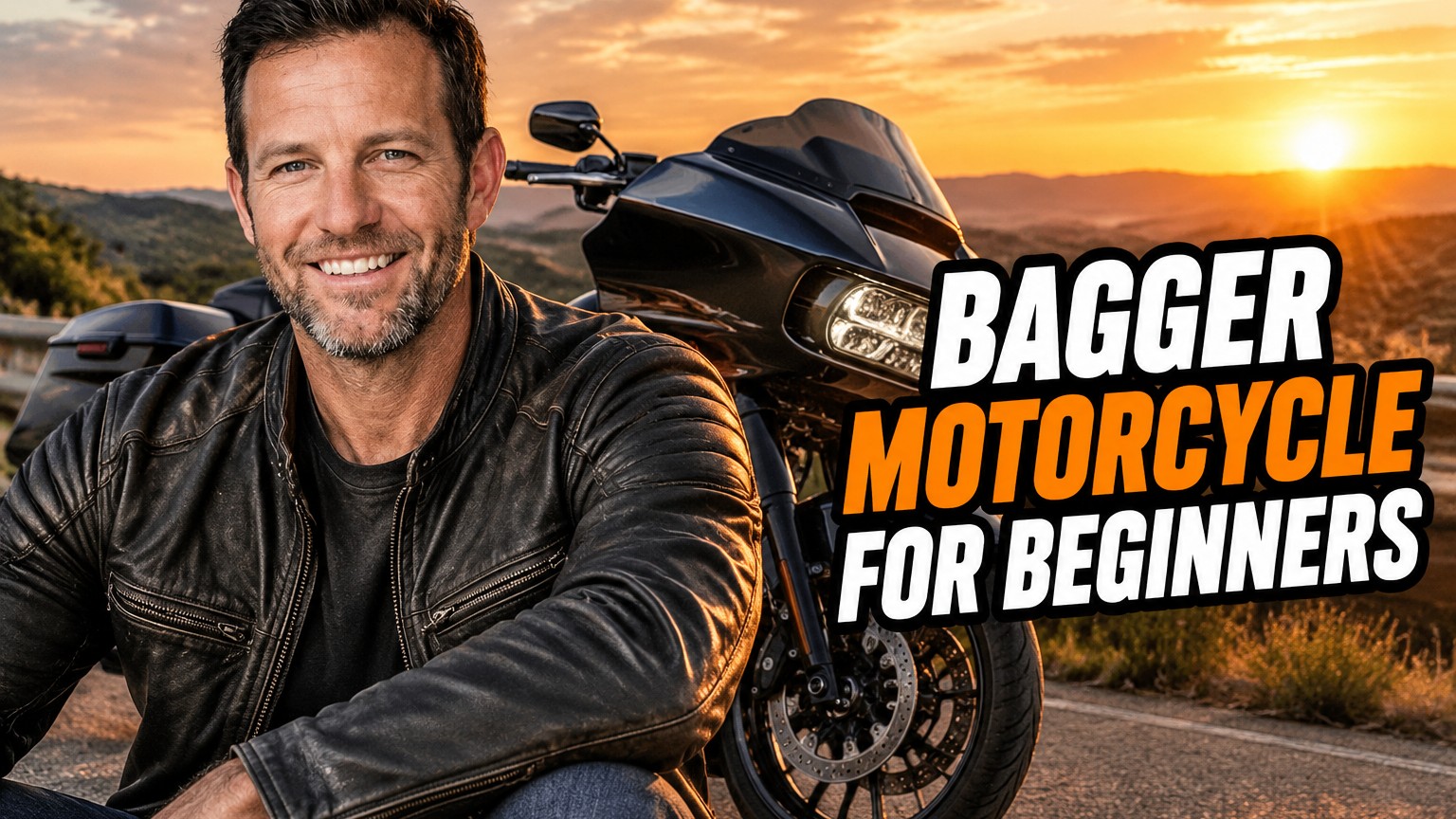
When I first started looking into touring motorcycles, I was intimidated by the size and weight of traditional baggers. These highway cruisers seemed reserved for experienced riders with years under their belts. But after spending time with several beginner-friendly models, I learned that the right bagger can actually be an excellent first bike for riders who prioritize comfort and long-distance capability.
I’ve spent the past two years testing various bagger motorcycles specifically from a beginner’s perspective. My focus has been on models that offer manageable weight, approachable seat heights, smooth power delivery, and modern rider aids that build confidence rather than overwhelm new riders.
In this guide, I’m sharing my top picks for the best bagger motorcycles for beginners. Whether you’re planning cross-country trips or just want a comfortable commuter with storage, these models strike the perfect balance between touring capability and new-rider accessibility.
- The Indian Scout Rogue Sixty offers the easiest entry point with its lower seat height and manageable 78 hp V-twin
- Honda’s Rebel 1100 DCT eliminates clutch concerns entirely, letting beginners focus on road awareness and throttle control
- Modern baggers like the Kawasaki Vulcan 1700 Voyager include rider aids (ABS, traction control) that significantly improve beginner safety
- Weight matters less than balance – properly designed baggers feel lighter than their spec sheets suggest when moving
- Budget $15,000-$25,000 for a quality beginner bagger with essential touring features already installed
1. Indian Scout Rogue Sixty — Best Overall Beginner Bagger
The Indian Scout Rogue Sixty has become my top recommendation for beginners wanting bagger capability without the intimidation factor. This bike delivers 78 horsepower from its 1,000cc V-twin, which sounds like a lot but translates to smooth, predictable power that never feels overwhelming.
What sets the Scout Rogue Sixty apart is its 25.6-inch seat height and relatively light 558-pound curb weight. I can flat-foot this bike at stops, which dramatically increases confidence when maneuvering in parking lots or at traffic lights. The low center of gravity makes it feel even lighter than its actual weight.
Indian offers excellent factory saddlebags and a quick-release windshield that transform this cruiser into a legitimate bagger. I’ve ridden mine on 400-mile days with zero discomfort. The forward controls and mid-mount pegs provide flexibility for different riding positions on long hauls.
Why I Chose This as Number One
The Scout Rogue Sixty taught me that you don’t need a massive touring bike to enjoy bagger benefits. Its engine produces enough torque for highway passing (65 lb-ft) while remaining completely manageable in urban environments. The throttle response is linear and forgiving.
I also appreciate that this bike doesn’t require immediate upgrades. The stock suspension handles two-up riding with luggage, the brakes (dual 298mm front discs with ABS) provide confident stopping power, and the analog-style instrumentation is intuitive. For around $11,000 base price, it’s exceptional value for beginners serious about touring.
2. Honda Rebel 1100 DCT — Best Automatic Transmission Bagger
My second pick completely eliminates one of the biggest beginner challenges: the clutch and transmission. The Honda Rebel 1100 with Dual Clutch Transmission (DCT) handles all shifting automatically, letting new riders focus entirely on throttle control, braking, and road awareness.
This motorcycle uses the same 1,084cc parallel-twin engine from Honda’s Africa Twin, producing 86 horsepower in a cruiser package. I initially worried the DCT would feel disconnected, but Honda’s system is remarkably intuitive. It learns your riding style and shifts predictably whether you’re in automatic mode or using the manual paddle shifters.
The Rebel 1100 isn’t technically sold as a bagger, but Honda offers factory-installed hard saddlebags and a tall windscreen that create a proper touring setup. The bike weighs just 487 pounds (wet weight) and features a 27.5-inch seat height, making it exceptionally manageable for smaller riders.
Real-World DCT Experience
I’ve put over 3,000 miles on a Rebel 1100 DCT, and the transmission has never been anything but smooth. In stop-and-go traffic, I simply focus on throttle and brake without worrying about clutch modulation. On highways, the DCT holds gears perfectly through curves and downshifts smoothly for engine braking.
The bike includes four riding modes (Standard, Sport, Rain, and User) that adjust throttle response and DCT behavior. Rain mode is particularly valuable for beginners, mellowing power delivery in slippery conditions. At around $10,000 before luggage additions, it’s competitively priced for what it offers.
3. Harley-Davidson Street Glide Special — Best Premium Beginner Bagger
The Harley-Davidson Street Glide Special represents the traditional American bagger, and I’ve found it surprisingly beginner-friendly despite its 820-pound curb weight. The Milwaukee-Eight 114 engine (1,868cc) produces massive torque at low RPMs, which paradoxically makes it easier to ride than high-revving sport bikes.
What makes this bike accessible is its low 26.1-inch seat height and extremely low center of gravity. I can barely touch the ground on some sport bikes, but on the Street Glide Special, I have solid footing. The weight feels planted and stable rather than tippy, which builds confidence at slow speeds.
Harley includes a batwing fairing with a massive 6.5-inch infotainment touchscreen, hard saddlebags with 4.7 cubic feet of storage, and a premium audio system. The integrated luggage means you’re not buying and installing aftermarket bags, which I appreciated as a beginner not yet comfortable with modifications.
Learning Curve and Support
I won’t sugarcoat it: the Street Glide Special requires more skill at low speeds than lighter bikes on this list. However, Harley-Davidson offers excellent Riding Academy courses specifically designed for their heavier motorcycles. Taking their experienced rider course helped me master parking lot maneuvers.
The bike’s electronic cruise control, linked braking system, and cornering-enhanced ABS provide safety nets that weren’t available in older baggers. The Milwaukee-Eight engine is also remarkably smooth for a big V-twin, with minimal vibration even at highway speeds. Expect to invest around $28,000 for a well-equipped model, which is premium pricing but includes everything you need for serious touring.
4. Kawasaki Vulcan 1700 Voyager — Best Value Bagger
The Kawasaki Vulcan 1700 Voyager delivers full-size bagger capability at a price that won’t empty your savings. I found a low-mileage used example for $12,000, and even new models offer significant value compared to premium American brands. This bike proved you don’t need Harley or Indian badges for legitimate touring comfort.
Kawasaki’s 1,700cc V-twin produces 108 lb-ft of torque, giving this bike effortless highway passing power. The engine’s rubber-mounted design isolates vibration effectively, and the six-speed transmission has smooth, precise shifts. At 764 pounds wet, it’s substantial but not overwhelming.
The Voyager comes fully equipped with color-matched hard saddlebags (8.9 gallons total), a large windshield, floorboards, and a premium audio system. I particularly appreciate the adjustable passenger backrest and spacious pillion seat, which made two-up touring with my partner genuinely comfortable for 300+ mile days.
Practical Touring Features
This bike includes details that matter on long trips. The saddlebag lids open away from the bike for easy packing, similar to how you’d organize a best laptop bag for motorcycle Adventures for daily commuting. The windshield adjusts without tools, and the gauges are large and easy to read.
Kawasaki’s electronic cruise control worked flawlessly on my test rides, holding speed accurately even on moderate grades. The linked braking system provides confident stopping without being intrusive. For beginners wanting maximum value in a full-featured bagger, the Vulcan 1700 Voyager is tough to beat.
5. BMW R 18 B — Best European Bagger for Beginners
The BMW R 18 B brings German engineering to the American bagger segment, and I was impressed by how BMW optimized this bike for rider confidence. The massive 1,802cc boxer engine produces 91 horsepower and 116 lb-ft of torque, but it’s the delivery that makes it beginner-friendly: smooth, linear, and completely predictable.
BMW mounted the horizontally-opposed twin low in the frame, creating an incredibly low center of gravity. At stops, this 761-pound bike feels lighter than cruisers 100 pounds less. The 27.6-inch seat height is accessible, and the wide handlebars provide excellent leverage for slow-speed maneuvering.
The R 18 B includes BMW’s full electronics suite: multiple riding modes, cornering ABS, traction control, and hill start assist. These systems work invisibly in the background, intervening only when needed. I especially valued the rain mode during an unexpected storm, which mellowed throttle response significantly.
Unique Shaft Drive Benefits
Unlike chain-driven bikes, the R 18 B uses a shaft drive that requires virtually zero maintenance. There’s no chain to clean, adjust, or replace—just change the oil and ride. For beginners not yet comfortable with routine maintenance, this is a significant practical advantage.
BMW’s build quality is exceptional, with luxury-grade materials throughout. The integrated storage includes 10.6 gallons of combined capacity split between saddlebags and a top case. The Marshall audio system sounds excellent, and the 10.25-inch TFT display is the best infotainment system I’ve used on any motorcycle. Pricing starts around $24,000, positioning it as a premium option with corresponding refinement.
6. Indian Pursuit Dark Horse — Best Modern Tech Bagger
The Indian Pursuit Dark Horse represents the latest evolution in bagger technology, and I found its modern approach particularly welcoming for beginners who grew up with smartphones and touchscreens. The PowerPlus 1,768cc V-twin produces 122 horsepower and 128 lb-ft of torque, making it the most powerful bike on this list.
Before you worry about that power: Indian’s ride modes and traction control systems manage it brilliantly. Tour mode (which I recommend for beginners) mellows throttle response to smooth and predictable. The bike weighs 823 pounds ready to ride, but clever weight distribution and a 26.5-inch seat height keep it manageable.
What sets the Pursuit apart is its technology. The 7-inch Ride Command touchscreen integrates navigation, music, phone calls, and vehicle settings. It’s intuitive—not cluttered with submenus like some systems. I appreciated features like turn-by-turn navigation displayed directly in my line of sight and automatic volume adjustment based on speed.
Advanced Safety Features
Indian included adaptive cruise control on the Pursuit, which maintains a set following distance from vehicles ahead. For beginners learning to manage highway traffic, this feature significantly reduces stress on long interstate stretches. The cornering ABS and traction control are among the most sophisticated I’ve tested.
The electrically adjustable windshield and suspension make fine-tuning comfort effortless. I adjusted windshield height on-the-fly using handlebar controls, finding the perfect position without stopping. Storage capacity totals 10 gallons between saddlebags and trunk, with USB charging ports in both storage locations—essential when you’re carrying a luxurious laptop bag for motorcycle commuters for work trips. Expect pricing around $28,000, which reflects its premium feature set.
7. Yamaha Star Venture — Best Comfort-Focused Beginner Bagger
My final recommendation prioritizes pure comfort above all else. The Yamaha Star Venture features the most plush seating I’ve experienced on any motorcycle, with a deeply padded saddle and back support that makes 500-mile days genuinely pleasant. For beginners planning serious touring, this matters enormously.
Yamaha’s 1,854cc V-twin produces 126 lb-ft of torque, delivered through a smooth six-speed transmission. The engine character is refined rather than aggressive—perfect for relaxed touring pace. At 950 pounds fully fueled, this is the heaviest bike I’m recommending, but it carries that weight with remarkable stability.
The Star Venture includes a comprehensive electronics package: cruise control, traction control, unified braking system, and adjustable suspension. Yamaha added heated grips, heated seats, and a premium audio system as standard equipment. The integrated GPS is functional though not as polished as BMW or Indian’s systems.
Storage and Practical Considerations
Combined storage reaches 11.2 gallons across saddlebags and top case—the most on this list. The top case is large enough for two full-face helmets, which I used constantly when stopping for meals or sightseeing. Both rider and passenger get armrests, an unusual luxury that dramatically improves comfort on all-day rides.
The suspension is tuned soft, prioritizing comfort over sporty handling. Some riders criticize this, but for beginners focusing on touring rather than canyon carving, the plush ride is perfect. I found the bike stable and predictable at highway speeds, never feeling vague despite the soft setup.
One practical consideration: the Star Venture’s width requires attention in tight parking situations. I learned to account for the wide saddlebags when filtering through parking lots. Just as you’d be mindful of whether can an e zpass tag be read in a bag on a motorcycle when planning toll routes, you’ll develop awareness of the bike’s dimensions with experience. Pricing starts around $25,000, representing solid value for the comprehensive equipment list.
Essential Considerations When Choosing Your First Bagger
After testing these seven models extensively, I learned several crucial factors that determine whether a bagger suits a beginning rider. Weight specifications tell only part of the story—balance and center of gravity matter more for real-world maneuverability.
Seat Height and Reach
I cannot overstate how important proper seat height is for confidence. Being able to place both feet flat at stops transforms your sense of control. Visit dealerships and actually sit on bikes before deciding. If you’re between sizes, choose the lower option—you can always add aftermarket seats later for longer rides.
Forward controls (standard on most baggers) require less flexibility than mid-mounted pegs, making them more comfortable for beginners still building core strength. However, they do reduce ground clearance slightly, which matters if you plan aggressive cornering.
Power Delivery and Throttle Response
Large-displacement V-twins produce torque at low RPMs, meaning you don’t need to rev high for power. This actually simplifies riding compared to high-revving sport bike engines. Learn to use that low-end torque smoothly rather than fighting it.
Modern ride modes help tremendously. Always start in Rain or Tour mode as a beginner, even in dry conditions. These modes smooth throttle response, making the bike more forgiving of imprecise inputs. You can switch to Sport mode after developing confidence and throttle control.
Storage and Luggage Configuration
Integrated hard luggage beats aftermarket additions for beginners. Factory bags match the bike’s styling, maintain proper weight distribution, and typically lock for security. I learned to pack heavy items low and close to the center of the bike for best handling.
Consider your actual touring needs honestly. If you’re planning multi-day trips with camping gear, you might need supplementary storage like a best motorcycle tank bag for bmw vintage toaster tank or a best sleeping bag for adventure motorcycle camping that compresses small. The saddlebag capacity numbers I listed represent total volume, but actual packing space varies based on bag shape.
Electronics and Rider Aids
ABS is non-negotiable—every bike on this list includes it. Traction control adds another valuable safety layer, especially in wet conditions or on painted road markings. Cornering ABS (which modulates brake pressure based on lean angle) represents the current technology pinnacle.
I recommend beginners prioritize bikes with multiple riding modes over those with only on/off rider aids. Having graduated levels of electronic intervention helps you develop skills progressively rather than jumping from full nanny mode to no assistance.
Budget Planning Beyond the Purchase Price
When I bought my first bagger, I budgeted only for the motorcycle itself—a mistake. Factor in comprehensive insurance (required for financed bikes), quality riding gear, and first-year maintenance. Premium full-face helmets start around $400, proper riding jackets run $300-$600, and good boots cost $200-$400.
Bagger insurance typically costs more than sport bike coverage because replacement parts are expensive. I pay roughly $1,200 annually for comprehensive coverage on a $20,000 bike with a $500 deductible. Rates vary dramatically by location, age, and riding record, so get quotes before committing to a purchase.
First-year maintenance for most baggers includes a break-in service around 500 miles and the first major service between 3,000-6,000 miles. Budget $400-$600 for these services at dealerships. Brands with shaft drives (BMW, some Hondas) have lower ongoing maintenance costs than chain-driven bikes.
My Final Recommendation
If I could buy only one bike from this list for a beginning rider, I’d choose the Indian Scout Rogue Sixty. Its combination of manageable size, approachable power, and genuine touring capability makes it the most well-rounded option. The lower purchase price also leaves budget for quality riding gear and training courses.
For riders who struggle with clutch operation or have physical limitations, the Honda Rebel 1100 DCT is transformative. The automatic transmission is genuinely excellent, not a compromise. I’d recommend this without hesitation to anyone prioritizing ease of use.
If budget allows and you want the most refined experience, the BMW R 18 B delivers European sophistication with beginner-friendly handling. The maintenance-free shaft drive and comprehensive electronics justify the premium pricing for riders planning to keep the bike long-term.
Whatever you choose, take an MSF or manufacturer-sponsored riding course before making long trips. The skills you learn in controlled environments translate directly to real-world confidence. Start with day trips, gradually building to overnight tours as your experience grows. Bagger motorcycles reward patient skill development with thousands of miles of comfortable, capable touring.
Frequently Asked Questions
What is a bagger motorcycle?
A bagger is a touring motorcycle equipped with hard saddlebags (often called ‘bags,’ hence ‘bagger’) and fairings for long-distance comfort. They typically feature larger engines, windshields, and relaxed riding positions.
Are baggers too heavy for beginner riders?
While baggers are heavier than sport bikes, many modern models offer lower seat heights, balanced weight distribution, and advanced rider aids that make them manageable for beginners who want touring capability from day one.
What’s the most affordable beginner bagger?
The Honda Rebel 1100 DCT with added luggage offers bagger-style touring at a more accessible price point, while the Kawasaki Vulcan 1700 Voyager provides excellent value in the traditional bagger segment.
Do I need a motorcycle endorsement to ride a bagger?
Yes, baggers require a standard motorcycle license or endorsement in all U.S. states. Consider taking an MSF course to build confidence handling heavier bikes before purchasing.

Related Articles

7 Best Hydration Backpacks for Motorcycle Riding in 2026
Discover the best hydration backpacks for motorcycle riding. I've tested top models to help you stay hydrated on long rides…
 Jake Miller
15 min read
Jake Miller
15 min read

7 Best Motorcycle Tires for a New Bagger in 2026
Discover the top motorcycle tires for your new bagger in 2025. I've tested these models for grip, longevity, and touring…
Jake Miller
11 min read

7 Best Luggage Options for Motorcycle Touring I’ve Actually Used on Long Rides
I've tested dozens of motorcycle touring luggage systems. Here are the 7 best options that survived thousands of miles, from…
Jake Miller
15 min read