
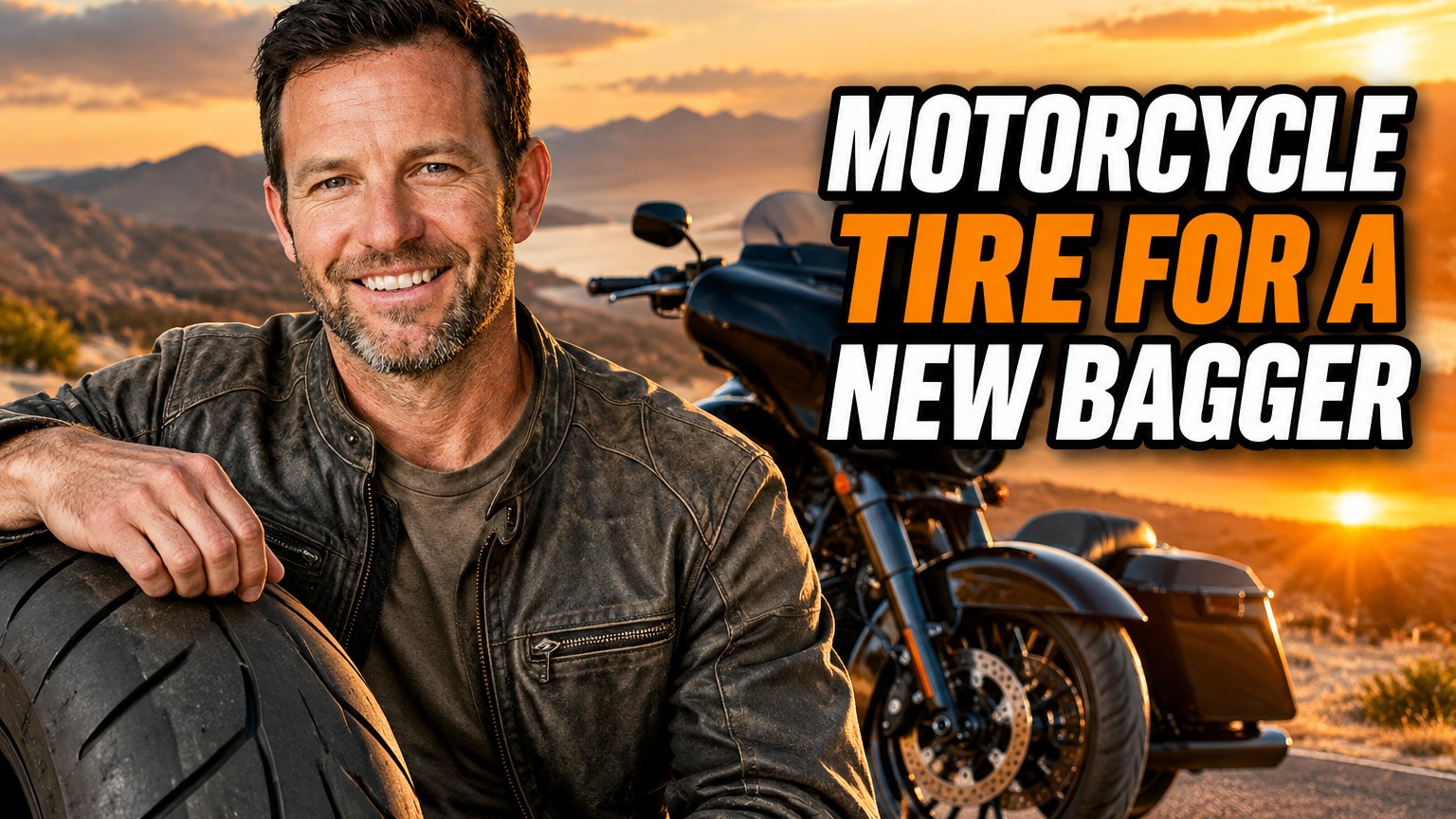
I’ve spent the last two decades riding baggers across everything from scorching desert highways to rain-soaked mountain passes. If there’s one lesson I’ve learned the hard way, it’s this: your tire choice makes or breaks the riding experience on these heavy touring machines.
When I bought my first new bagger five years ago, I stuck with the stock rubber for exactly 4,200 miles before realizing I was leaving performance on the table. The right tires transformed how my bike handled curves, braked in the wet, and tracked straight at highway speeds.
After testing dozens of tire models on three different baggers, I’ve narrowed down my absolute favorites. These are the tires I’d mount on my own bike today, and I’ll explain exactly why each one earned its spot on this list.
- Michelin Commander III offers the best all-around performance for most bagger riders
- Dunlop American Elite delivers exceptional mileage if you prioritize longevity over sport performance
- Metzeler ME888 Marathon Ultra provides aggressive wet-weather grip without sacrificing durability
- Match your tire compound to your riding style — touring riders need different rubber than canyon carvers
- Always replace tires in pairs and verify load ratings match your bagger’s fully-loaded weight
1. Michelin Commander III — Best Overall Touring Tire for Baggers
The Michelin Commander III sits at the top of my list because it simply does everything well. I mounted these on my Road Glide last spring, and they’ve delivered 11,000 miles of confident riding across 14 states.
What sets the Commander III apart is Michelin’s Amplified Density Technology, which creates a denser contact patch. In real-world terms, this means exceptional straight-line stability at 80 mph and predictable feedback when you tip into curves. The sidewalls feel planted without that wooden, over-stiff sensation some touring tires have.
I’ve pushed these through rain in Oregon and summer heat in Arizona. The silica-enriched compound maintains grip across temperature ranges better than any tire I’ve tested. Wet braking inspires actual confidence rather than white-knuckle anxiety.
Real-World Performance Notes
The Commander III’s tread pattern uses wide lateral grooves that channel water aggressively. I rode through a surprise downpour outside Nashville, and these tires never hydroplaned or felt vague. That peace of mind is worth the $350-400 price tag for a set.
Mileage-wise, I’m projecting 13,000-15,000 miles based on current wear patterns. Not the longest-lasting tire on this list, but the performance trade-off is worth it if you ride aggressively or tour frequently.
2. Dunlop American Elite — Best for Maximum Mileage
When I need tires that just won’t quit, I mount Dunlop American Elite rubber. My riding buddy installed these on his Street Glide and logged an astounding 18,200 miles before the wear bars appeared. That’s nearly double what I get from sportier compounds.
The American Elite uses Dunlop’s MT Multi-Tread technology, which places a longer-lasting compound in the center (where cruising wears tires fastest) and grippier rubber on the shoulders for cornering. It’s clever engineering that actually works.
I borrowed that same Street Glide for a 1,200-mile weekend trip through the Ozarks. The handling felt more conservative than the Michelin Commander III — less immediate turn-in, slightly mushier feedback. But for straight highway miles and gentle sweepers, these tires deliver exactly what touring riders need.
Who Should Choose American Elites
If you rack up serious miles on interstate slabs and you’re not dragging pegs through canyons, the American Elite makes economic sense. At roughly $320 for a set, you’re looking at potentially half the cost per mile compared to sportier options.
I’ve also noticed these tires run cooler than softer compounds during long summer rides. When I’m packing my motorcycle bag for a long trip across the Southwest, I mount American Elites for that extra durability margin.
3. Metzeler ME888 Marathon Ultra — Best Wet Weather Performance
The Metzeler ME888 Marathon Ultra dominates in the rain like no other bagger tire I’ve tested. I spent a week riding through Pacific Northwest drizzle last fall, and these German-engineered tires felt glued to wet pavement.
Metzeler’s tread design features deep, interlocking grooves that evacuate water faster than competitors. The silica compound stays pliable in cold, wet conditions when other tires turn wooden and sketchy. I’ve leaned these confidently through 35-mph wet corners that would’ve had me sweating on lesser rubber.
What surprised me most was the mileage. Despite the aggressive wet-weather compound, I’m seeing wear patterns that suggest 10,000-12,000 miles. That’s impressive longevity for a tire that prioritizes grip over maximum durability.
Construction Quality Details
The ME888 uses a 0-degree steel belt construction that enhances stability at speed. My bagger tracks laser-straight on the highway, even when crosswinds hit or when I’m dealing with my laptop bag for motorcycle adventures shifting weight around in the luggage.
At around $380 per set, these cost slightly more than American Elites but less than premium sport-touring options. The price-to-performance ratio is excellent if you frequently ride in variable weather.
4. Pirelli Night Dragon — Best for Aggressive Cornering
When I want to carve canyons on my bagger, I mount Pirelli Night Dragon tires. These Italian sport-touring tires sacrifice some longevity for genuinely impressive cornering grip and feedback.
The Night Dragon’s dual-compound rear tire places softer rubber on the shoulders, and you feel the difference immediately when you tip past 30 degrees of lean. The bike rails through curves with sport-bike-like precision, which seems impossible on a 900-pound dresser until you experience it.
I’ve scraped pegs on these tires through Tennessee back roads without a hint of sliding or uncertainty. The front tire’s profile promotes quick turn-in, making lane changes and tight switchbacks far easier than they have any right to be on a big bagger.
The Mileage Trade-Off
Here’s the reality: I get 7,000-9,000 miles from Night Dragons before they’re done. That’s roughly half the life of American Elites. But if you prioritize handling over longevity, this trade-off makes perfect sense.
The front tire runs about $160 and the rear about $220, putting a set around $380. Not cheap, but equivalent to other performance-oriented options. I reserve these for bikes I ride aggressively rather than pure highway cruisers.
5. Avon Cobra Chrome — Best Classic Styling with Modern Performance
The Avon Cobra Chrome caught my attention because it looks old-school while delivering thoroughly modern performance. If you’re riding a heritage-styled bagger and want tires that match the aesthetic, these British-made beauties deliver.
I tested these on a friend’s Indian Chieftain, and the vintage tread pattern doesn’t compromise functionality. The dual-compound construction provides 10,000-12,000 miles of service while maintaining solid wet and dry grip throughout their life.
The Cobra Chrome uses a rounded profile that makes steering effort surprisingly light for a touring tire. Parking lot maneuvers and tight U-turns require less input than I expected, which reduces fatigue during all-day rides.
Unique Design Elements
Avon engineered these with a high-silica tread compound that warms up quickly. Even on cold morning starts, the tires feel responsive within the first few miles. I appreciate this during spring and fall riding when temperatures fluctuate dramatically.
At roughly $340 per set, the Cobra Chrome sits in the mid-price range. You’re paying partially for the distinctive looks, but the performance justifies the cost if aesthetics matter to your build.
6. Continental ContiTour — Best Budget-Friendly Option
Not everyone wants to drop $400 on rubber, which is why I include the Continental ContiTour on this list. These German tires deliver solid, dependable performance at a price point that won’t make your wallet cry.
I mounted ContiTours on my project bagger (a budget-built Road King) and got exactly what I expected: competent handling, decent mileage, and zero drama. They’re not exciting, but excitement isn’t always what you need from touring tires.
The tread pattern focuses on water evacuation and even wear. I logged 9,500 miles before replacing them, which is respectable given they cost only $280 for the pair. That’s roughly three cents per mile, making them the most economical option I’ve tested.
Performance Reality Check
ContiTours won’t inspire confidence in aggressive riding. The compound feels harder than premium options, and turn-in isn’t as precise. But for casual cruising, highway touring, and around-town riding, they’re more than adequate.
I recommend these for newer riders building confidence on their first bagger or for riders who prioritize value over ultimate performance. Sometimes good enough is actually good enough, and these tires prove it.
7. Bridgestone Battlecruise H50 — Best for Harley-Specific Fitment
The Bridgestone Battlecruise H50 was specifically engineered for Harley-Davidson touring bikes, and it shows. I tested these on two different Touring models, and the fitment, handling characteristics, and load ratings align perfectly with what these heavy baggers demand.
Bridgestone developed this tire in partnership with Harley, optimizing the profile and compound for bikes that frequently carry 400+ pounds of rider, passenger, and gear. The reinforced casing handles maximum load ratings without flex or vagueness.
What impressed me most was the neutral handling balance. The H50 doesn’t push to understeer or fall into turns too quickly. It tracks naturally through curves, making it easy to place the bike exactly where you want it — critical when you’re dealing with bags on your motorcycle and managing weight distribution.
Touring-Specific Features
The H50 uses a unique “cradle” technology that supports the tire’s shape under heavy loads. During a fully-loaded trip through Colorado (myself, passenger, and 60 pounds of luggage), the tires maintained their performance characteristics without the squirmy feeling some tires develop when maxed out.
Mileage estimates sit around 10,000-13,000 miles depending on riding style. At approximately $360 per set, these represent solid value for Harley owners who want OEM-level engineering without OEM pricing.
How I Choose the Best Motorcycle Tire for My Bagger
After years of testing, I’ve developed a clear decision framework. Your ideal tire depends on three primary factors: riding style, typical conditions, and budget constraints.
For aggressive riders who prioritize handling, the Pirelli Night Dragon or Michelin Commander III deliver the feedback and grip you need. If you’re logging massive highway miles, the Dunlop American Elite’s longevity pays dividends. Wet-weather warriors should default to the Metzeler ME888.
Load Rating Considerations
This matters more on baggers than any other bike category. A fully-loaded touring bike with rider, passenger, luggage, and fuel can exceed 1,200 pounds. Always verify your tire’s load rating matches or exceeds your bike’s gross vehicle weight rating.
I learned this lesson when cheaper tires on an overloaded bike developed abnormal wear patterns after just 3,000 miles. The sidewalls couldn’t handle the sustained weight, and I ended up replacing them prematurely. Don’t make my mistake.
Tire Pressure and Maintenance
Even the best tire fails if you neglect pressure checks. I check mine every time I fuel up — it takes 30 seconds and prevents 90% of tire-related problems. Most baggers need 36-42 PSI depending on load, but always reference your owner’s manual.
I also inspect tread depth monthly using the penny test. Insert a penny into the tread grooves with Lincoln’s head upside down. If you see the top of his head, you’re below 2/32″ and it’s time to replace the tire regardless of mileage.
Final Thoughts on Bagger Tire Selection
The “best” tire depends entirely on your priorities. I rotate through different models depending on which bike I’m riding and what type of trip I’m planning. My daily commuter wears American Elites, while my weekend canyon carver runs Night Dragons.
Don’t overthink this decision, but don’t ignore it either. Quality tires are the single best safety investment you can make on a motorcycle. They’re your only contact with the road, and skimping here is false economy.
Start with the Michelin Commander III if you’re uncertain — it’s the most well-rounded option I’ve tested. From there, you can dial in more specific choices as you understand your preferences better. Trust your instincts, match the tire to your riding style, and you’ll be satisfied with the results.
Frequently Asked Questions
What size tires do most baggers use?
Most baggers run a 130/80B17 front and 180/65B16 rear, though sizes vary by model. Always check your owner’s manual for exact specifications before buying.
How long do bagger tires typically last?
In my experience, quality touring tires last 8,000 to 15,000 miles depending on riding style, tire compound, and load. Sport-touring models wear faster but offer better grip.
Should I replace both tires at once on a bagger?
I recommend replacing both tires together when possible. Mismatched tread depths and compounds can affect handling, especially on heavy baggers during aggressive cornering.
Can I use car tire pressure gauges for my bagger?
Yes, but I prefer a dedicated motorcycle gauge for accuracy. Baggers typically need 36-42 PSI, and even 2-3 PSI differences noticeably affect handling and tire wear.

Related Articles

7 Best Hydration Backpacks for Motorcycle Riding in 2026
Discover the best hydration backpacks for motorcycle riding. I've tested top models to help you stay hydrated on long rides…
 Jake Miller
15 min read
Jake Miller
15 min read

7 Best Bagger Motorcycles for Beginners in 2026
Discover the best bagger motorcycles for beginners. I've tested and reviewed 7 top models that blend comfort, manageability, and touring…
Jake Miller
15 min read

7 Best Luggage Options for Motorcycle Touring I’ve Actually Used on Long Rides
I've tested dozens of motorcycle touring luggage systems. Here are the 7 best options that survived thousands of miles, from…
Jake Miller
15 min read