
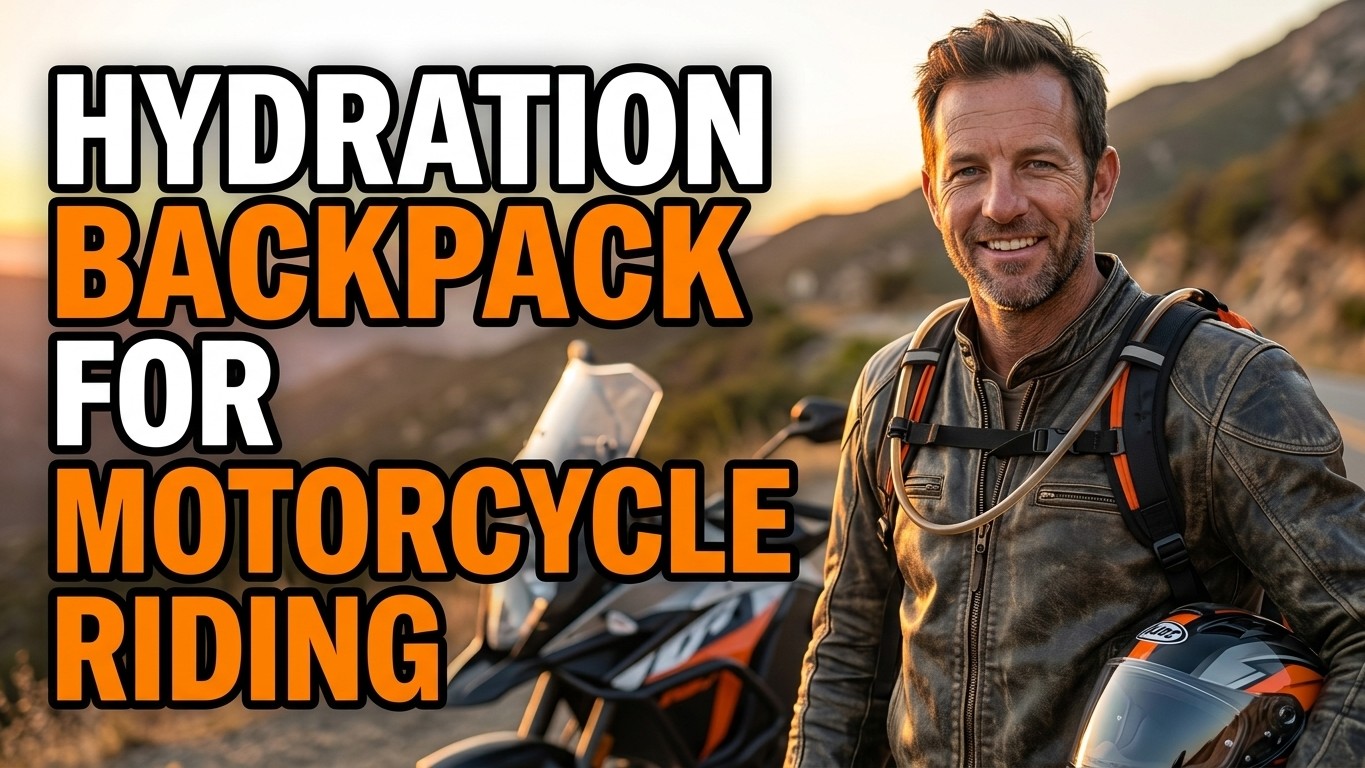
I’ve spent years riding through scorching deserts, winding mountain passes, and endless highway stretches, and I can tell you firsthand that dehydration sneaks up on you faster than you’d think. One moment you’re focused on the road, the next you’re dizzy, fatigued, and making poor decisions.
That’s why I never ride without a proper hydration system anymore. After testing dozens of packs across thousands of miles, I’ve narrowed down the absolute best hydration backpacks that actually work for motorcycle riding—not just hiking or cycling.
The right pack needs to stay secure at highway speeds, distribute weight evenly during aggressive cornering, and let you drink without taking your eyes off the road. I’ve made plenty of mistakes so you don’t have to.
- The Camelbak M.U.L.E. is my top overall pick for versatility and proven reliability across all riding styles
- For adventure touring, I trust the Kriega Hydro3 for its bomber construction and modular system
- Budget riders should look at the Teton Sports Oasis 1100 — impressive capacity without breaking the bank
- Capacity matters: I recommend 2-3L minimum for anything beyond short urban rides
- Proper fit with chest and waist straps is non-negotiable for safety and comfort at speed
1. Camelbak M.U.L.E. — Best Overall Hydration Pack for Motorcycle Riding
I’ve put the Camelbak M.U.L.E. through absolute hell over the past three years, and it’s still my go-to pack for 80% of my rides. The 3-liter Crux reservoir gives me enough water for most full-day rides, and the 9-liter cargo capacity swallows my tools, snacks, and emergency gear without feeling bloated.
What makes the M.U.L.E. special for motorcycle use is how well it stays put. The combination of chest and waist straps keeps it locked to my torso even when I’m hard on the brakes or leaning into tight corners. I’ve hit triple-digit speeds with this pack, and it doesn’t shift or bounce like cheaper alternatives.
Why I Trust This Pack
The magnetic bite valve holder is genius—I can grab the tube without fumbling around, even with gloves on. The reservoir’s quick-release system means I can refill at gas stops in under 30 seconds, which matters when you’re trying to maintain your riding schedule.
I’ve used the M.U.L.E. in 105°F desert heat and 40°F mountain mornings. The ventilated back panel actually works, keeping sweat buildup manageable even under my jacket. The build quality justifies the $130-150 price point—after hundreds of rides, the zippers still glide smoothly and the fabric shows minimal wear.
If you’re looking for something more substantial for passenger comfort, check out the best backpack for passenger to hold on motorcycle—though for solo hydration needs, the M.U.L.E. hits the sweet spot.
2. Kriega Hydro3 — Best Premium Adventure Touring Option
When I’m planning multi-day adventure tours through remote areas, I reach for my Kriega Hydro3 without hesitation. This British-made pack is built like a tank—the welded construction and ballistic nylon feel like they could survive an apocalypse.
The Hydro3 holds 3 liters of water in a shape-stable reservoir that doesn’t slosh around like cheaper bladders. I appreciate how Kriega designed this specifically for motorcycle use—the low-profile 3-liter storage compartment sits tight against your back, minimizing the sail effect at highway speeds.
Modular System Integration
What sets Kriega apart is the Quadloc harness system. I can attach additional Kriega packs or accessory pouches without adding more straps or buckles. On long tours, I often add a Kriega US-5 drypack on top for extra gear while keeping the Hydro3 as my hydration base layer.
The magnetic hose clip is more secure than Velcro alternatives I’ve used—it stays exactly where I position it on the shoulder strap. The bite valve has a twist lock that prevents leaks, which saved me when I accidentally compressed the reservoir with cargo straps during a trip through Moab.
At around $175-200, the Hydro3 isn’t cheap. But I’ve watched touring buddies replace cheaper packs twice in the time my Kriega has held up flawlessly. For serious adventure riders who log serious miles, it’s worth every penny.
3. Teton Sports Oasis 1100 — Best Budget-Friendly Choice
I bought the Teton Sports Oasis 1100 on a whim when I needed a backup pack, and I’ve been genuinely impressed with what you get for $40-50. The 2-liter bladder is adequate for shorter rides, and the 18-liter cargo capacity actually exceeds what I need for most day trips.
My expectations were low given the price point, but the Oasis 1100 punches above its weight class. The adjustable chest and waist straps keep it stable enough for spirited riding, though I wouldn’t trust it for aggressive track days. The padding is basic but functional—comfortable enough for 3-4 hour rides.
Where It Compromises
Let me be honest about the limitations. The bladder quality isn’t on par with Camelbak—I’ve noticed a slight plastic taste that took several cleanings to minimize. The zippers feel less robust, and I baby them more carefully than my premium packs.
The ventilation is minimal, so this pack gets sweaty under a jacket on hot days. I primarily use my Oasis 1100 for cooler weather rides or as a loaner when friends join me on short trips. For commuters who don’t need premium durability, this delivers solid value.
If you’re also carrying work gear, you might want to explore options like a luxurious laptop bag for motorcycle commuters in addition to your hydration pack.
4. Osprey Raptor 14 — Best for Hot Weather Riding
I discovered the Osprey Raptor 14 during a particularly brutal summer, and it’s become my default choice when temperatures climb above 85°F. The 2.5-liter reservoir capacity is ideal for half-day rides, and the AirScape back panel creates actual airflow between the pack and my back.
What makes the Raptor 14 exceptional in heat is the suspended mesh back panel—there’s a genuine gap that allows air to circulate. I’ve ridden through Death Valley with this pack, and while I still sweat, it’s dramatically less than with traditional hydration packs pressed flat against me.
Thoughtful Feature Set
Osprey included a magnetic sternum strap buckle that I can operate with gloves on, plus a dedicated tool roll that keeps my tire repair kit organized and accessible. The helmet attachment system is something I didn’t know I needed—being able to carry my helmet hands-free during gas stops is surprisingly convenient.
The 14-liter storage capacity handles my daily essentials plus a light rain jacket. I’ve fit a small DSLR camera in the main compartment when I’m chasing scenic photo opportunities. The hip belt pockets are perfectly sized for energy bars and my phone.
At $140-160, the Raptor 14 competes directly with the Camelbak M.U.L.E. on price. I choose the Raptor when ventilation is my priority and the M.U.L.E. when I need slightly more water capacity or cargo space.
5. Alpinestars City Hunter Backpack — Best for Urban Commuting
My Alpinestars City Hunter serves double duty as both a hydration pack and a professional-looking commuter bag. The sleek design doesn’t scream “outdoor gear,” which matters when I’m heading into client meetings straight from my bike.
The integrated 2-liter hydration system is smartly hidden—the routing channels keep the hose concealed until I need it. I appreciate how Alpinestars designed this with street riders in mind rather than adapting a hiking pack for motorcycle use.
Commuter-Specific Design
The padded laptop sleeve accommodates my 15-inch MacBook Pro securely, and there’s a separate tablet pocket that protects my iPad. For riders who need to carry electronics, this pack offers better organization than throwing a laptop into a generic hydration pack’s main compartment.
The reflective elements aren’t obnoxious, but they definitely increase visibility in low-light urban riding. I’ve noticed cars giving me more space during my pre-dawn commutes since switching to this pack. The sternum strap has an emergency whistle built in—a small touch that shows Alpinestars thinks about rider safety.
The City Hunter runs about $120-140, which is competitive considering you’re getting a legitimate commuter backpack with hydration functionality. If you’re specifically looking for laptop-focused options, the best laptop bag for motorcycle Adventures guide covers dedicated laptop carriers in more depth.
6. Source Tactical Rider 3L — Best for High-Speed Stability
I bought the Source Tactical Rider 3L after a sketchy experience with a poorly-secured pack shifting mid-corner on a mountain pass. This Israeli-made pack was designed for military use, and that overbuilt quality translates perfectly to high-speed motorcycle riding.
The Storm valve is the most sophisticated drinking system I’ve used—I can control flow rate with one hand, and the shutoff mechanism is genuinely leak-proof. The 3-liter Widepac reservoir has wide-mouth opening that makes adding ice cubes easy, which I do religiously on desert rides.
Bomber Construction
The Source Rider uses a four-point harness system that distributes load better than standard two-strap designs. I’ve pushed this pack to 140+ mph on track days, and it feels like it’s bolted to my body. The compression straps let me cinch it down to minimize profile when the cargo area is empty.
The materials are genuinely military-spec—heavy-duty Cordura that resists abrasion better than anything else I own. After two years of hard use, my Tactical Rider shows less wear than packs I’ve used for six months. The zippers are waterproof and chunky enough to operate with thick winter gloves.
At $160-180, this isn’t an impulse purchase. But for sport riders or anyone who regularly rides at sustained high speeds, the stability and security justify the premium. I trust this pack in situations where I wouldn’t trust anything else on this list.
7. Klim Nac Pak — Best Integration with Adventure Gear
My Klim Nac Pak gets the nod when I’m fully kitted out in adventure gear and need something that works seamlessly with that ecosystem. The 3-liter hydration bladder uses a quick-connect system that’s compatible with Klim’s other hydration-ready gear.
What sets the Nac Pak apart is how it’s designed to work with adventure jackets and chest protectors. The low-profile shape sits comfortably between my back protector and jacket without creating pressure points or interfering with armor placement.
Adventure-Ready Features
The 13-liter cargo capacity is just right for my adventure essentials—first aid kit, GPS unit, satellite communicator, and emergency supplies. The external attachment points let me strap on additional gear or a helmet when needed. I’ve used the Nac Pak on dual-sport rides where I’m constantly on and off the bike, and the grab handle makes it easy to carry separately.
The insulated reservoir sleeve keeps water cooler in summer heat and prevents freezing in shoulder season riding. I’ve noticed my water stays drinkably cool for several hours longer than in non-insulated bladders. The bite valve cover protects against mud and debris on rough trails.
Klim prices the Nac Pak around $150-170, positioning it in the premium mid-range. If you’re already invested in the Klim ecosystem or ride primarily off-road adventure routes, this pack integrates better than generic alternatives. For vintage bike enthusiasts exploring different carrying solutions, the best motorcycle tank bag for bmw vintage toaster tank offers an alternative mounting approach worth considering.
What I Look for in a Motorcycle Hydration Pack
After testing countless packs, I’ve developed clear criteria that separate functional motorcycle hydration systems from generic outdoor gear that happens to hold water. Not every hiking or cycling pack translates well to motorcycle use—the demands are fundamentally different.
Secure Fit at Speed
The single most important factor is stability. I need chest and waist straps that actually keep the pack stationary at highway speeds and during aggressive riding. A pack that shifts or bounces is more than annoying—it’s a safety hazard that affects my balance and control.
I test every pack on the highway at 70+ mph and through twisty roads at sport pace. If it moves, it’s disqualified regardless of other features. The best packs feel like they’re part of my body rather than cargo I’m hauling.
Adequate Water Capacity
I’ve learned through uncomfortable experience that 1.5 liters isn’t enough for anything beyond short urban rides. My minimum recommendation is 2 liters, with 3 liters being ideal for all-day riding or hot weather. Running out of water 50 miles from the nearest town is a mistake you only make once.
Larger reservoirs do add weight and bulk, but I’d rather carry extra water than risk dehydration. The cognitive impairment that comes with even mild dehydration can compromise riding safety in ways that outweigh any comfort benefit from a smaller pack.
Easy-Access Bite Valve
I need to drink without taking my eyes off the road or removing my hands from the controls. The bite valve should route over my shoulder in a position where I can find it by feel alone, even wearing thick gloves. Magnetic clips are dramatically better than Velcro for securing the tube where I want it.
The valve itself needs to flow easily but seal completely when not in use. I’ve had cheaper valves leak from vibration or stick shut when I actually need water. Quality bite valves are one area where premium packs really separate themselves from budget options.
Reasonable Cargo Space
While hydration is the primary function, I appreciate 10-15 liters of cargo space for tools, spare parts, and daily essentials. I don’t want a massive hiking pack on my bike, but I need room for the emergency gear that’s saved me multiple times—tire plugs, CO2 cartridges, first aid supplies.
Internal organization matters too. A single cavernous compartment becomes a frustrating mess where I’m digging for small items at every stop. I prefer packs with at least a few pockets or compartments to keep things sorted and accessible.
Common Mistakes I’ve Made (So You Don’t Have To)
My first hydration pack was a $25 generic hiking bladder that lasted exactly three rides before the seams split. I learned that the vibration and sustained speed of motorcycle riding destroys poorly-made gear faster than any other activity.
I also initially bought a 1.5-liter pack thinking I’d save weight and bulk. That worked fine until I rode through Arizona in July and ran out of water with 60 miles still to go. I now consider 2 liters the absolute minimum for any ride over an hour.
Fitting Issues
The biggest mistake I see other riders make is not properly adjusting straps. A loosely-fitted pack will shift and bounce no matter how good the design is. I spend five minutes before each ride checking that chest and waist straps are snug and positioned correctly.
I’ve also learned not to overfill the cargo area. A bulging pack catches more wind and sits uncomfortably against my back. I pack only essentials and compress everything down to maintain a low profile.
Maintenance Neglect
I got lazy about cleaning my first reservoir, and it developed a funk that made water taste like swamp. Now I clean and fully dry my bladder after every 3-4 rides. I use warm soapy water, rinse thoroughly, and hang it open to air dry completely. The ten minutes of maintenance is worth it to avoid replacing a disgusting bladder.
For riders wondering about other bag-related questions, like can an e zpass tag be read in a bag on a motorcycle, the answer is yes—RFID tags work fine through most pack materials.
My Final Recommendations
If I could only own one hydration pack, I’d choose the Camelbak M.U.L.E. for its proven reliability and versatility across different riding styles. It handles 90% of what I throw at it, from commuting to day tours to spirited canyon runs.
For riders who demand the absolute best and regularly tackle serious adventure touring, the Kriega Hydro3 is worth the premium price. I trust it in situations where gear failure isn’t an option and appreciate the modular system for extended trips.
Budget-conscious riders should skip the ultra-cheap Amazon specials and go with the Teton Sports Oasis 1100. It’s the least expensive pack on this list that I actually trust for regular use. Yes, it has limitations, but it won’t leave you stranded with a burst seam or failed zipper.
The most important thing is choosing a pack appropriate for your specific riding. A sport touring rider needs different features than an adventure rider or urban commuter. I’ve outlined my top picks across different categories so you can match the right pack to your riding style and needs.
Stay hydrated out there. Your focus, reaction time, and decision-making all suffer when you’re dehydrated—even mildly. A good hydration pack isn’t just about comfort; it’s a legitimate safety investment that’s saved me from heat exhaustion more than once. Find the right pack, adjust it properly, maintain it consistently, and you’ll wonder how you ever rode without one.
Frequently Asked Questions
How much water capacity do I need in a motorcycle hydration pack?
I recommend at least 2 liters (70 oz) for rides under 3 hours, and 3 liters for all-day adventures. In hot weather, I’ve learned that 3L is the minimum I need.
Can you wear a hydration backpack under a motorcycle jacket?
Yes, but I prefer low-profile packs under 15L that sit flat against your back. Larger packs work better worn over your jacket with chest and waist straps secured.
Do hydration backpacks affect motorcycle aerodynamics?
Streamlined packs with compression straps minimize drag. I’ve found that keeping the pack tight to your body and choosing tapered designs reduces wind resistance at highway speeds.
How often should I clean my hydration bladder?
I clean mine after every 3-4 rides or whenever I notice any taste. Use warm soapy water, rinse thoroughly, and let it dry completely to prevent mold growth.

Related Articles

7 Best Motorcycle Tires for a New Bagger in 2026
Discover the top motorcycle tires for your new bagger in 2025. I've tested these models for grip, longevity, and touring…
 Jake Miller
11 min read
Jake Miller
11 min read

7 Best Bagger Motorcycles for Beginners in 2026
Discover the best bagger motorcycles for beginners. I've tested and reviewed 7 top models that blend comfort, manageability, and touring…
Jake Miller
15 min read

7 Best Luggage Options for Motorcycle Touring I’ve Actually Used on Long Rides
I've tested dozens of motorcycle touring luggage systems. Here are the 7 best options that survived thousands of miles, from…
Jake Miller
15 min read