
9 Best Budget Tents for Motorcycle Touring That Actually Survive the Road
 Jake Miller
10 min read
Jake Miller
10 min read
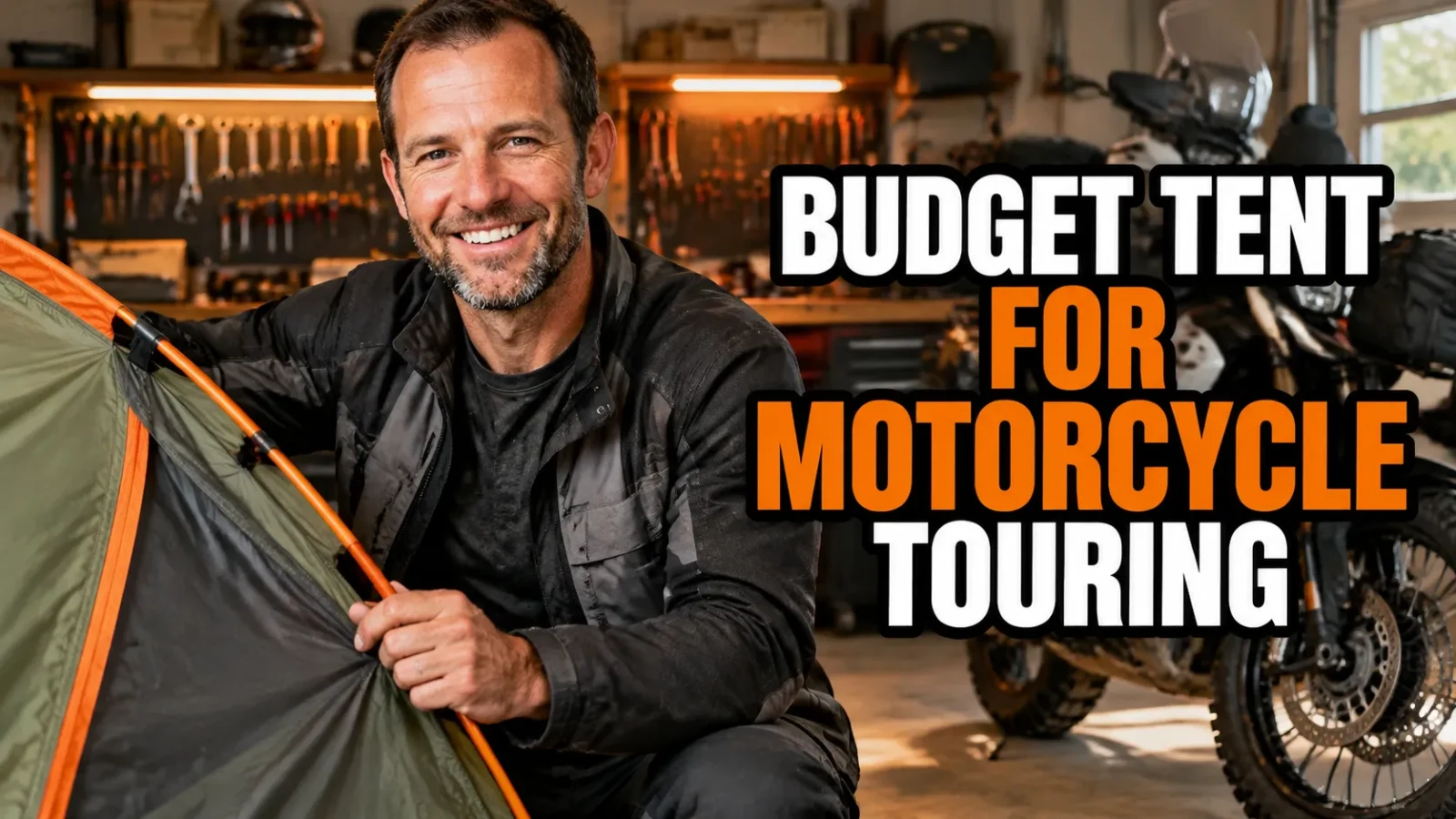
I’ve pitched tents in gravel pull-offs, muddy forest service roads, and one memorable night behind a gas station in eastern Montana. Over roughly 30,000 miles of touring, I’ve learned that the best budget tent for motorcycle touring isn’t the cheapest one — it’s the one that packs short, sets up fast when you’re tired, and doesn’t soak through at 2 a.m.
Weight matters less on a bike than it does on your back. I can carry an extra pound without noticing. What I do notice is a tent that’s 24 inches long when packed, because that thing fights every pannier and tail bag I own.
So I’ve optimized my picks around pack length, durability, and price. Here are nine tents I’d genuinely strap to my own bike this season.
- My top overall pick is the Big Agnes C-Bar 2 — short packed length and a real aluminum pole set at a budget price.
- Cheapest tent I’d actually trust: Naturehike Cloud Up 2, usually under $150.
- Packing length matters more than weight on a motorcycle, so I prioritize tents under 20 inches packed.
- Always add a footprint and a pole repair sleeve — that’s what saves a budget tent mid-trip.
1. Big Agnes C-Bar 2 — My Overall Budget Pick
The C-Bar 2 is the tent I recommend most often to riders who ask me this question at camp. It’s a two-person, three-season tent with a **packed size around 19 x 6 inches**, which means it slides across the pillion seat or tucks into a 40-liter duffel without a fight. Big Agnes uses aluminum poles here, not fiberglass. That’s the detail that separates it from the $80 tents on Amazon — fiberglass splinters, and a splintered pole in the middle of nowhere ends your trip’s comfort. The fly is coated and taped, and the floor is a proper bathtub design so ground moisture doesn’t wick up. **Weighing roughly 3 lb 14 oz**, it’s not ultralight, but on a motorcycle that’s irrelevant. Price hovers around $200 to $250 depending on sales. I’ve seen it drop under $180 during end-of-season clearance, and at that price it’s genuinely hard to beat.What I’d change
The included stakes are fine but not great. I swapped mine for MSR Groundhogs and never looked back, especially on hard-packed campsite pads.2. Naturehike Cloud Up 2 — The Cheapest Tent I’d Trust
If your budget is genuinely tight, the Naturehike Cloud Up 2 is where I’d land. It’s a Chinese-brand tent that’s earned a real following among backpackers and bikepackers, and I’ve used one on two shorter trips without complaint. It weighs about **3.5 lb** and packs to roughly 17 inches. That short pack length is exactly what you want on a bike. The 20D silnylon fly has a 4000mm hydrostatic head, which is honestly better than some $300 tents. Setup is a two-pole crossing design that takes me about four minutes in the dark. The inner pitches first, which means in rain you get wet putting it up — that’s the main tradeoff at this price. Expect to pay **$120 to $160**. For a first touring tent or a spare, that’s excellent value.Watch the seams
Mine came with decent seam sealing, but I’d still hit it with a tube of seam grip before a long trip. Cheap insurance.3. REI Co-op Half Dome SL 2+ — The Tent I Loan to Friends
The Half Dome has been around forever and that’s exactly why I like it. REI has refined this design over decades, and the SL 2+ version packs down to about **18 x 7 inches** at roughly 4 lb 3 oz. Where it shines for touring is livability. It’s a two-door, two-vestibule tent, so you’re not climbing over your gear or your riding partner to get out at night. On a long trip, that matters more than an ounce of weight. The **polyester fly with a 1500mm coating** holds up fine in normal rain, and REI’s warranty is the real selling point — if a pole snaps on the road, they’ll usually sort you out. Price is typically **$230 to $280**, but REI’s member sales and garage sales regularly knock it into budget territory. I picked mine up for $160 during a spring sale.Why I recommend it to newer tourers
Because you can walk into a store and see it, and because return service is straightforward if something goes wrong. That’s worth something when you’re 2,000 miles from home.4. Kelty Late Start 2 — The Budget Workhorse
Kelty’s Late Start 2 is a no-nonsense tent that I’ve seen hold up under some abuse. It uses **fiberglass poles**, which I don’t love, but the tradeoff is a price around **$130 to $160**. Packed size is roughly **22 x 7 inches**, which is a touch long for tight luggage. I’ve strapped mine lengthwise along the top of a dry bag without issue, so it’s manageable. The design is a straightforward two-pole dome with a full-coverage fly. **Two doors, two vestibules**, and enough headroom to sit up. For a budget tent, that’s a lot of livability. Kelty also sells replacement poles cheaply, which softens my fiberglass complaint. If a pole breaks, you’re out $20, not a whole tent.My honest take
It’s the tent I’d hand someone who tours twice a year and wants to spend the rest on fuel. It won’t win awards, but it’ll keep you dry.5. Marmot Tungsten 2P — The Sturdy Mid-Range Option
If you can stretch to around **$250 to $300**, the Marmot Tungsten 2P is a step up in pole quality and weather resistance. The **pre-bent aluminum poles** give it more interior volume than its footprint suggests, and that headroom is genuinely nice when you’re stuck inside during a storm. Packed size is about **20 x 6.5 inches** and it weighs around **4 lb 8 oz**. Heavier than the C-Bar, but the geometry is more livable for two people. The fly is fully taped and the floor is a durable 68D polyester. I’ve had mine through a night of sustained rain in the Ozarks and stayed completely dry.Who it’s for
Riders who want one tent to do everything — touring, car camping, and the occasional backpacking trip — without thinking too hard about it.6. NEMO Aurora 2P — Best Vestibule Space
The Aurora 2P is the tent I grab when I’m carrying a lot of gear. It has a **massive vestibule** on each side, big enough to swallow a helmet, boots, and a tank bag overnight. It packs to roughly **20 x 7 inches** and weighs about **4 lb 15 oz** — heavier than most here, but on a bike that’s fine. NEMO’s **OSMO fabric** is the standout feature. It’s a proprietary blend that resists UV degradation and holds water repellency longer than standard coatings. For a tent that lives strapped to a bike in the sun, that’s a real, practical benefit. Price runs **$280 to $330**, so it’s at the top of my budget list. Worth it if you value dry gear and long-term fabric life.A note on UV
This is the single biggest killer of budget tents. If you’re leaving a tent pitched in direct sun for days, even OSMO will eventually degrade. Pack it down when you leave camp.7. ALPS Mountaineering Lynx 2 — Best Under $150
The Lynx 2 is a classic budget tent that’s been recommended in forums for years, and I understand why. It’s **around $130 to $150**, packs to about **21 x 6 inches**, and weighs roughly **4 lb 14 oz**. It uses **aluminum poles**, which surprises people at this price. The fly is polyester with a solid coating and taped seams. The floor is a heavier denier than most budget tents, which I appreciate on rocky campsites. Setup is a two-pole dome, fast and intuitive. **Two doors and two vestibules** at this price is genuinely rare.The catch
It’s heavy and a bit bulky. On a bike, that’s an acceptable trade for the price and the aluminum poles.8. MSR Elixir 2 — The Reliability Pick
MSR gear costs more, but the Elixir 2 sometimes lands in budget range on sale — I’ve seen it near **$200 to $230**. Packed size is around **20 x 7 inches**, weight about **4 lb 13 oz**. What I love is the **freestanding design with a symmetrical layout**. It pitches fast, and MSR’s pole quality is excellent. The color-coded poles and clips make setup a two-minute job even in the dark. The fly has a **1500mm coating** and the floor is a durable 70D taffeta. It’s a tent that feels built to last, and MSR sells every spare part you could need.Why reliability matters on a bike
You’ve got a lot of systems to maintain on a touring motorcycle. A tent that never surprises you is worth the extra money.9. Coleman Sundome 2 — The Absolute Cheapest Pick
I’ll be honest: the Coleman Sundome 2 isn’t a great touring tent. But at **$40 to $70**, it’s the cheapest thing that’ll keep you dry in moderate weather, and I’ve used one as a backup. It packs to about **24 x 6 inches** — too long for tight luggage, so I strap it to the top of my load. Weight is around **5 lb 8 oz**, which is heavy. It’s a single-wall-ish dome with a partial fly, so **ventilation is mediocre** and condensation is real. In heavy, sustained rain, I wouldn’t trust it. But for fair-weather weekend trips on a tight budget, it works. And if you’re spending your money on the bike instead, check out the best cheap motorcycle for touring guide and put your savings there.How I Choose a Touring Tent
Pack length beats weight
On a motorcycle, you feel length far more than ounces. A 17-inch pack fits into a saddlebag or duffel; a 24-inch pack fights everything. I’d take a slightly heavier tent that packs short every single time.Aluminum poles or nothing
Fiberglass poles are lighter on the wallet and heavier on the regret. They splinter. Aluminum bends and can often be bent back. This is the single feature I’d pay extra for.Taped seams and a bathtub floor
These two features are what actually keep you dry. Taped seams stop wicking, and a bathtub floor means ground moisture can’t creep up the sides. If a budget tent skips these, walk away.Two doors with two people
If you tour with a partner, a two-door tent changes the whole experience. No climbing over anyone at 3 a.m.Gear to Pair With Your Tent
A tent is one system in a bigger kit. On the mechanical side, I run a fresh battery before every long trip — AGM for reliability, lithium if I want to shed weight. If you’re deciding, the what are the different types of motorcycle batteries ultimate guide breaks down the chemistry differences clearly. For longer tours, I’ve had great luck with the options in this roundup of the best battery for touring motorcycle, and if you want specifics on capacity, the best 6 battery for touring motorcycle piece covers the numbers. If tent camping is part of a bigger plan — dirt roads, remote campsites, national forest — you’ll want a bike that can handle it. This guide to the best motorcycle for adventure touring is where I’d start. And for long-haul highway trips where you camp alongside the road, the best motorcycle for touring america breakdown is worth a read.Accessories That Save Budget Tents
Footprint
Buy one. It’s $30 to $50 and doubles the life of your floor. On gravel and hardpack, the difference is dramatic.Pole repair sleeve
A $12 aluminum sleeve has saved two trips of mine. If a pole splinters, you slide the sleeve over the break and keep going.Upgraded stakes
Budget tents ship with budget stakes. MSR Groundhogs or similar hold in wind and hard ground, and they last forever.Final Thoughts
My pick for most riders is the **Big Agnes C-Bar 2** — it balances short pack length, aluminum poles, and a fair price better than anything else here. If your budget is tighter, the **Naturehike Cloud Up 2** is the tent I’d trust under $160. The truth is, the best budget tent for motorcycle touring is the one you’ll actually pitch instead of booking a motel because you’re too tired to fight it. Buy something that packs short, sets up in under five minutes, and has aluminum poles. Then go ride.Frequently Asked Questions
What’s the smallest packed tent I can strap to a motorcycle?
The Big Agnes C-Bar 2 packs down to roughly 18 x 6 inches and weighs under 4 lbs, which makes it one of the easiest tents to lash across a rear seat or tuck into a pannier. Anything under 20 inches packed length tends to fit motorcycle luggage far better than a bulky 24 inch tube.
Are cheap tents waterproof enough for multi-day touring?
Most of the tents on this list use a 1500mm to 3000mm hydrostatic head fly with taped seams. That’s plenty for steady rain. What kills budget tents is UV damage and pole fatigue, not the coating, so pack a repair sleeve and don’t leave the tent pitched in direct sun for weeks.
Should I bring a footprint with a budget tent?
Yes. A footprint costs 30 to 50 dollars and roughly doubles the life of your tent floor, especially on gravel campsites and rocky hardstands where motorcycle touring tends to put you. The Big Agnes and NEMO footprints are the easiest to find on sale.
How much should I spend on a tent for motorcycle touring?
I’d budget between 150 and 300 dollars for a two person, three season tent that packs short. Below 150 dollars you start losing taped seams, aluminum poles, or a proper bathtub floor, and those are exactly the features that keep you dry on a long trip.

Related Articles

7 Best 1-Person Tents for Motorcycle Adventures: Lightweight Shelters Tested for the Road
I've pitched these 7 one-person motorcycle tents across thousands of miles. From Big Agnes to MSR, here's the best 1…
Jake Miller
10 min read

7 Best 2-Person Tents for Motorcycle Camping: Packable Shelters I Actually Trust
I've pitched these 7 two-person tents on real moto trips. From Big Agnes to MSR, here's what actually fits in…
Jake Miller
10 min read

7 Best 3 Man Tents for Motorcycle Camping: Real-World Picks From a Rider Who Actually Hauls Them
I've packed 3 man tents onto motorcycles for years. Here are 7 real picks that survive the road, from the…
Jake Miller
11 min read