
Your Roadmap to Riding: Getting a Motorcycle Licence in Alberta
 Jake Miller
11 min read
Jake Miller
11 min read
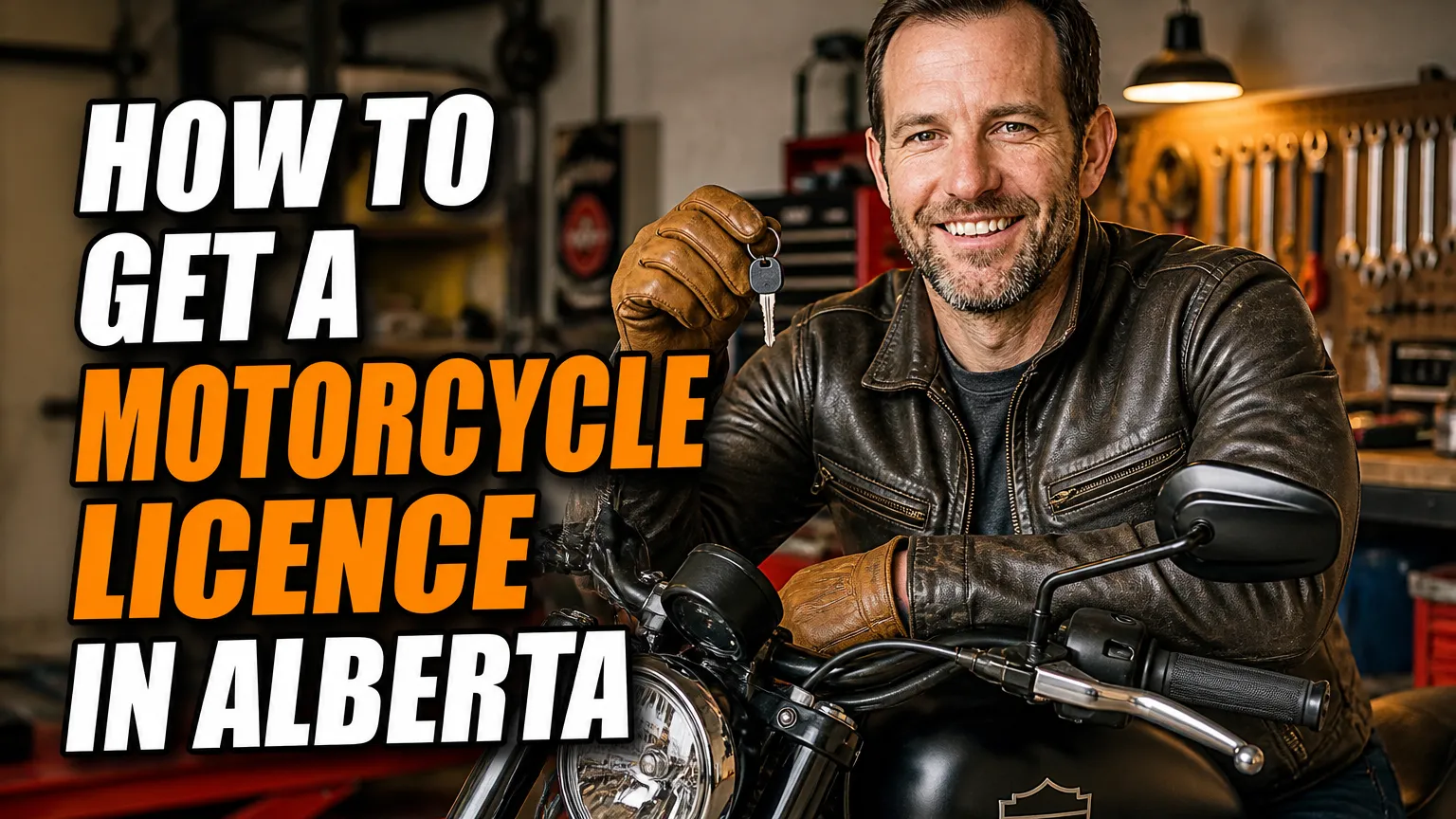
Getting a motorcycle licence in Alberta is a step-by-step process, and I find it much easier to tackle when I know what to expect before I visit a registry office. I need to meet the eligibility rules, pass a knowledge test, practise under the learner restrictions, and pass a road test before moving on to the next stage.
- I need to be at least 16 and hold a Class 7 or higher licence to apply for a Class 6 learner licence.
- I prepare for and pass the Class 6 knowledge test before practising on public roads.
- As a learner, I must ride with an eligible fully licensed Class 6 supervisor and follow all learner restrictions.
- I take a Class 6 road test to progress, then meet Alberta’s probationary-stage requirements before earning a full licence.
How Alberta’s motorcycle licensing stages work
When I map out the process, I think of it as three stages: the Class 6 learner stage, the Class 6 probationary stage, and the full Class 6 licence. Each stage gives me a way to build skills and experience while following rules intended to reduce risk.
Alberta uses graduated driver licensing rules, so the details matter. I always check the province’s current motorcycle licence information and ask a registry agent about my own situation, especially if I already have a licence from another province or country.
What a Class 6 licence lets me ride
Class 6 is Alberta’s motorcycle licence class. If I want to ride a motorcycle on public roads, I make sure my licence class and the vehicle I plan to ride are compatible before I set off.
I don’t assume that a car licence alone gives me permission to ride a motorcycle. I confirm the rules for the specific vehicle I have in mind and get the correct licence before riding it on public roads.
Check that I meet the eligibility requirements
To start the Class 6 process, I need to be at least 16 years old and hold a valid Class 7 learner’s licence or a higher Alberta licence. If I’m under 18, I also need consent from a parent or guardian, so I arrange that before heading to a registry agent.
I bring acceptable identification and any documents the registry requests. Because requirements can depend on my circumstances, I check with the registry ahead of time rather than assuming that one document will cover everything.
If I already have a licence from somewhere else
If I’m moving to Alberta with an out-of-province or international licence, I ask a registry agent how my riding experience and current licence affect the process. Licence exchanges and experience credits can depend on where my licence was issued and what documentation I can provide.
I avoid guessing that my previous motorcycle licence automatically transfers to a full Alberta Class 6. Getting confirmation first can save me an unnecessary test, appointment, or delay.
Prepare for the Class 6 knowledge test
My first formal step is passing the motorcycle knowledge test. I study Alberta’s current motorcycle learning materials instead of relying on general riding advice, because local rules, signs, and restrictions are what I need to know for the test and the road.
I pay particular attention to right-of-way, lane position, intersections, road signs, safe following distance, and the way a motorcycle handles in changing conditions. I also review the requirements that apply to Class 6 learners, since those rules affect what I can do once I pass.
How I study effectively
I break my study sessions into short sections and test myself after each one. When I get a question wrong, I go back to the relevant topic and work out why my answer was incorrect instead of memorizing a letter choice.
I also review the Alberta driver guides and confirm that I’m using the current motorcycle material. I don’t rely on an old quiz app as my only source, because it may not reflect the latest official information.
What to expect at the registry
I take my identification and ask the registry agent about the test fee, payment options, and any appointment requirements. The knowledge test is taken at a registry, and the agent can explain what I should bring and what happens after I pass.
I give myself enough time to read each question carefully. If I don’t pass on my first attempt, I treat it as useful feedback, review the areas I missed, and ask about the current retake rules before booking again.
Get comfortable with the learner stage
After I pass the knowledge test and meet the other requirements, I can get a Class 6 learner licence. This is a major milestone, but I remind myself that it is not permission to practise alone or ignore the learner conditions.
Before every ride, I check the conditions printed on my licence and the province’s current rules. Alberta can update licensing details, so I verify what applies to me rather than relying on something a friend remembers from years ago.
Ride with an eligible supervisor
As a Class 6 learner, I must ride with a fully licensed Class 6 supervisor who meets Alberta’s requirements. I make a plan with my supervisor before we ride, including the route, meeting points, weather, and what we’ll do if traffic or road conditions become uncomfortable.
I keep early practice rides simple. A quiet area and a short route give me room to focus on clutch control, braking, turning, and scanning for hazards without piling on unnecessary pressure.
Follow every learner restriction
Alberta’s learner conditions include restrictions on riding alone, carrying passengers, riding at certain hours, and alcohol or drugs. I check the current official requirements for the exact conditions that apply to my Class 6 learner licence, and I follow them every time I ride.
I don’t treat restrictions as technicalities. They’re boundaries I use to keep practice predictable while I’m still building judgement, coordination, and confidence on a motorcycle.
Build skills before booking a road test
I work on the basics until they feel repeatable, not merely lucky. That includes starting and stopping smoothly, using both brakes appropriately, maintaining a safe lane position, checking blind spots, and making controlled turns.
I also practise looking well ahead and leaving a generous space cushion. In my experience, the more I scan early and anticipate what traffic might do, the less likely I am to get surprised by a sudden stop, a turning vehicle, or a rough patch of pavement.
Consider professional motorcycle training
I strongly consider taking a motorcycle training course before my road test, particularly if I’m new to riding. An instructor can point out habits I may not notice myself and help me practise in a structured setting.
I ask what the course includes, what kind of motorcycle I’ll use, and whether it covers the skills I need for Alberta’s Class 6 road test. I see training as a way to build safer habits, not just as a shortcut to passing an exam.
Choose safe practice conditions
I avoid making my first practice session a long ride in heavy traffic or bad weather. I start with manageable conditions, then gradually add complexity as my control improves and my supervisor agrees that I’m ready.
I make sure I have properly fitting protective gear, including an approved helmet, gloves, sturdy footwear, and clothing that covers my arms and legs. I also check the motorcycle’s tyres, lights, brakes, and controls before riding, because good preparation is part of safe riding.
Pass the Class 6 road test
When I’m ready, I book a Class 6 road test through an authorized road-test provider. I check what appointment options are available, what the test costs, and what documents I need to bring, since those details can change.
Before test day, I confirm that the motorcycle is suitable for the test and is properly registered, insured, and in safe working condition. I also check the provider’s instructions about the motorcycle, helmet, and any other equipment I’m expected to supply.
What I practise for the test
I prepare to demonstrate safe, controlled riding rather than trying to impress the examiner with speed. I practise smooth starts and stops, proper lane positioning, shoulder checks, signalling, turns, and responding calmly to traffic instructions.
I make a point of looking at the road and traffic instead of fixating on the examiner. I signal in good time, leave enough space, and make my intentions clear so my riding looks predictable to other road users.
If I need another attempt
If I don’t pass, I ask what I should improve and write down the feedback while it’s fresh. I avoid immediately repeating the same test without addressing the specific skills that caused trouble.
I review the examiner’s comments with an instructor or experienced supervisor, then practise those areas in a controlled way. A failed test can be frustrating, but I can use it as a practical checklist for becoming a more capable rider.
Move through the probationary stage
Passing the Class 6 road test moves me into the next stage of Alberta’s licensing system, subject to the current rules and my individual circumstances. I continue to take the licence conditions seriously, because passing a test doesn’t mean I’ve stopped learning.
During the probationary stage, I follow the requirements that apply to my licence, including any restrictions on alcohol, passengers, or supervising other learners. I confirm the current conditions through Alberta’s official information or a registry agent, rather than relying on assumptions.
When I can qualify for a full licence
The time it takes to reach a full Class 6 licence depends on Alberta’s current graduated licensing requirements and my driving record. I check the official requirements for the minimum age, time in the probationary stage, and any conditions that affect moving to a full licence.
I plan ahead instead of waiting until I think I’m due to upgrade. A registry agent can check my licence status and explain what steps, if any, remain before I qualify.
Budget for the process
I budget for more than the knowledge test and road test. I may also need to pay for a licence, motorcycle training, protective equipment, insurance, and the motorcycle itself or access to a suitable test motorcycle.
Fees can change, so I confirm current costs with a registry agent, training provider, and road-test provider before I book. I’d rather know my likely total early than discover an unexpected cost when I’m ready to move forward.
Common mistakes I try to avoid
- I don’t study from outdated materials. I use current Alberta resources and check details that may have changed.
- I don’t ride outside my learner conditions. I confirm the rules that apply to my licence and follow them consistently.
- I don’t book a road test before I’m ready. I practise core skills until I can perform them safely and reliably.
- I don’t overlook the motorcycle itself. I check that the bike, documents, and equipment meet the test provider’s requirements.
- I don’t treat protective gear as optional. I wear appropriate gear from the first practice ride, not only on test day.
My final checklist before I ride
When someone asks me how to get a motorcycle licence in Alberta, I describe it as a process of preparation, supervised practice, and steady progress. I start by confirming that I’m eligible, study the current Class 6 material, pass the knowledge test, and learn the learner restrictions before riding.
Then I practise with an eligible supervisor, consider professional training, and book my road test when my skills are ready. I keep following the rules as I move through the probationary stage, and I confirm the latest requirements with Alberta or a registry agent whenever I’m unsure.
That approach helps me focus on more than passing a test: it helps me build the habits I want to carry into every ride. With current information, patient practice, and the right gear, I can make the path to a Class 6 licence clearer and begin riding with more confidence.
Frequently Asked Questions
What age can I get a motorcycle learner licence in Alberta?
I’d plan on being at least 16 and holding a valid Class 7 or higher licence. If I’m under 18, I also need parental or guardian consent.
Do I need a motorcycle road test in Alberta?
I need to pass the Class 6 road test to move from the learner stage to the probationary stage. I’d confirm current testing and licence requirements with an Alberta registry agent.
Can I ride alone with a Class 6 learner licence?
No. I must ride with an eligible fully licensed Class 6 supervisor, and other learner restrictions apply.
How long does it take to get a full motorcycle licence in Alberta?
The timeline varies, but I’d allow for the learner period, road-test preparation, and the required probationary stage. I’d check Alberta’s current GDL rules before estimating my completion date.

Related Articles
Your Roadmap to Riding Legally: UK Motorcycle Licence Steps, Tests and Age Rules
Learn the UK motorcycle licence route, from CBT and theory to A1, A2 or unrestricted A. I explain age rules,…
Jake Miller
10 min read
Utah Motorcycle License Costs: Fees, Training, and What I’d Budget
Find Utah motorcycle endorsement fees, permit and training costs, testing options, and realistic total budgets, plus the steps I’d take…
Jake Miller
10 min read

Can-Am Spyder in California: The License You Need Before You Ride
Riding a Can-Am Spyder in California? I explain whether a Class C license is enough, when an M1 endorsement matters,…
Jake Miller
9 min read