
Tame the Turbulence: Practical Ways to Make Motorcycle Wind Buffeting Better
 Jake Miller
10 min read
Jake Miller
10 min read
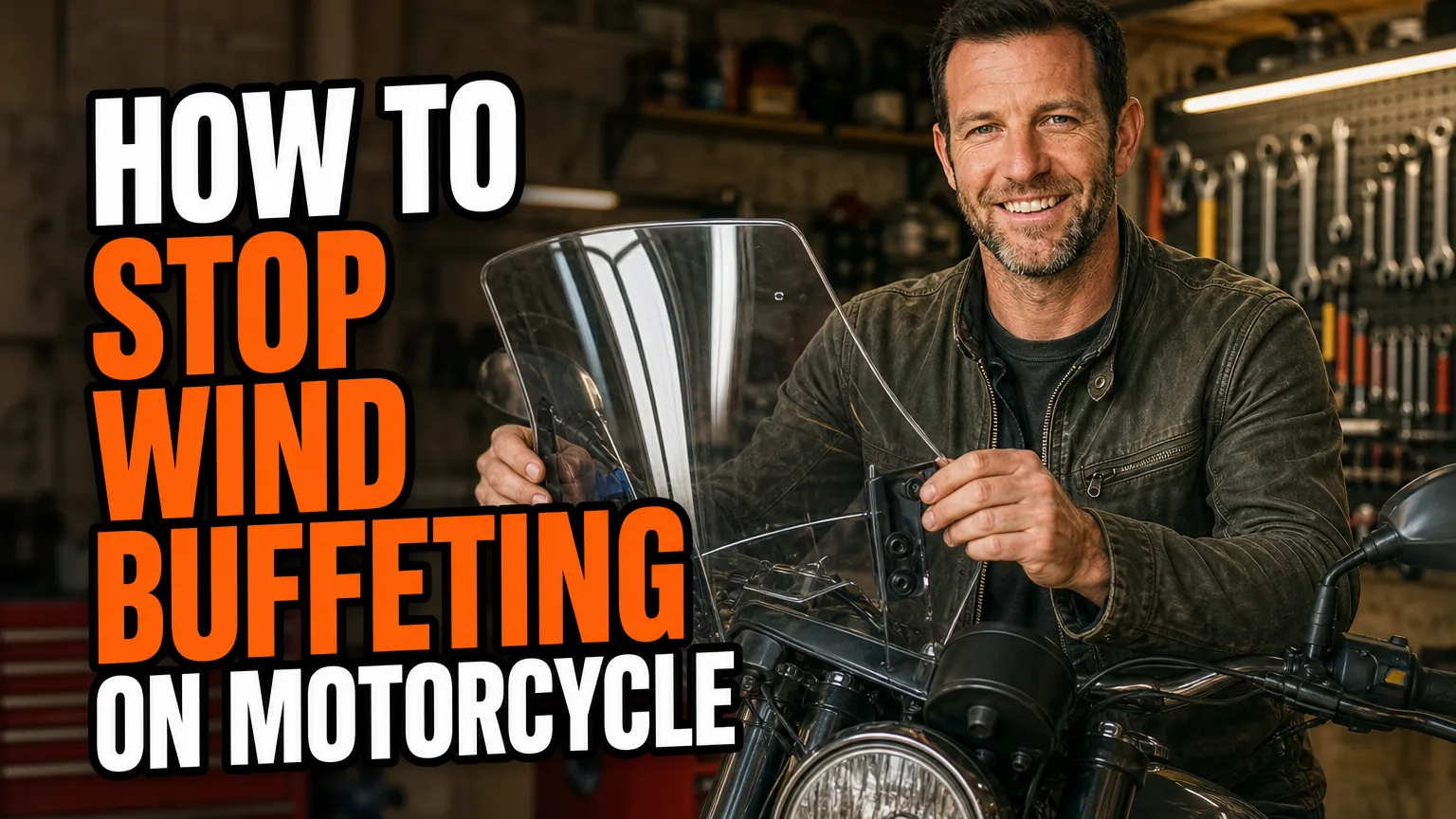
I know how quickly a comfortable ride can turn into a helmet-shaking workout. When turbulent air hits just the wrong spot, it can make my head bob, roar in my ears, and leave my neck tired long before I reach my destination.
The good news is that I don’t have to accept buffeting as an unavoidable part of riding. By figuring out where the turbulence comes from and changing one thing at a time, I can often make a noticeable difference without buying a pile of accessories.
- I check posture, helmet fit, and screen adjustment before buying parts.
- I test windscreen height and angle in small, reversible steps.
- I consider airflow around the sides and lower fairing, not just the screen top.
- I make one change at a time and test it safely at a familiar speed.
What I mean by buffeting, and why it happens
I use “buffeting” to describe the uneven, pulsing airflow that hits my helmet or upper body. It feels different from a steady wind pressing against me: turbulence tends to arrive in irregular bursts, sometimes pushing my head from side to side or making my helmet vibrate.
On a motorcycle, the windscreen and fairing split and redirect the air moving around the bike. That flow can become turbulent where it meets the cleaner air around my head and shoulders. A screen that sends its wake directly at helmet height can make the ride feel rough, even if it blocks a lot of wind from my chest.
I also remind myself that there isn’t one magic windscreen height that works for every rider. My height, seating position, helmet shape, bike geometry, and speed all affect where the turbulent air lands. What feels calm for another rider on the same model might feel noisy and choppy for me.
I start with the simplest checks
Before I shop for a new screen, I check the things I can adjust for free. I make sure my helmet fits snugly, sits straight, and has a securely fastened chin strap. A loose fit or a helmet that catches air awkwardly can make existing turbulence feel much worse.
I experiment with my riding position
I sit naturally rather than forcing myself into a crouch or stretching to reach the bars. Then, on a familiar and safe stretch of road, I briefly compare my normal posture with a slightly more upright or tucked position. If the buffeting changes sharply, I learn that my head’s position relative to the airflow is part of the problem.
I avoid holding an uncomfortable posture just to escape the wind. A position that strains my shoulders or makes it harder to steer is not a useful fix. Instead, I treat the comparison as a clue that helps me decide whether a screen adjustment or a different screen shape might work better.
I check the bike for loose or altered parts
I look over the windscreen mounts, fairing panels, mirrors, hand guards, and any added accessories. A loose part can vibrate or change the way air moves around me, so I check that fasteners are secure according to the manufacturer’s instructions.
I also think about recent changes. If buffeting began after I fitted a phone mount, top box, hand guards, or a different screen, I test that change as a possible cause rather than blaming the bike’s original design straight away.
I tune the windscreen instead of guessing
The windscreen is often the first thing I investigate because even a small change in its position can move the turbulent zone. If my screen has adjustable mounts, I try one setting at a time and note whether the air feels smoother, noisier, or simply different.
I don’t assume that raising the screen will solve everything. A taller screen may move the air over my helmet, but it may also create a new turbulent edge at exactly the wrong height. Lowering or changing the angle can sometimes send the airflow somewhere more comfortable.
I test screen height and angle in small steps
I begin with the screen manufacturer’s recommended settings and make a small adjustment. Then I ride a familiar route at a steady, legal speed, paying attention to my head, shoulders, and chest. I repeat the same conditions as closely as I can so I’m comparing the adjustment rather than a completely different ride.
If an adjustment makes the airflow worse, I put it back before trying another. I keep a note of what I changed and what I felt; that simple record helps me avoid going in circles or forgetting which setting was better.
I consider a different screen shape
If adjustment doesn’t help, I look at the shape of the screen, not just its height. Screens with a different curve, width, or upper edge can direct air differently. Some designs also use a vent or gap to let air pass behind the screen, which may reduce the pressure difference that contributes to turbulence.
Before ordering, I look for fitment details and reviews from riders whose height and bike setup are similar to mine. I treat those reports as useful clues, not guarantees. Since rider proportions and helmets vary, I prefer a retailer with a clear return policy when I’m uncertain.
I look beyond the top edge of the screen
Sometimes my helmet isn’t being hit by air coming over the top at all. Turbulence can also curl around the screen’s sides or rise from gaps near the lower fairing. If changing screen height barely affects the problem, I pay attention to where the air seems to reach me from.
On some bikes, side deflectors or lower extensions can help guide airflow around my body. On others, they make little difference or shift the discomfort somewhere else. I check that any accessory is designed for my model and installed securely, then evaluate it with the same careful, one-change-at-a-time approach.
I don’t overlook mirrors and add-ons
Mirrors, hand guards, luggage, and aftermarket parts can disturb airflow around the rider. I don’t remove everything at once, but I consider whether a recent addition could be sending a stream of air toward my helmet or shoulders.
If I test a change, I do it safely and legally. I never ride with essential equipment removed or leave an accessory loose just to see what happens. For uncertain installations, I ask a qualified mechanic or follow the manufacturer’s fitting guidance.
I make the helmet part of the solution
A helmet can’t fix every airflow problem, but it affects how that airflow feels. I check that my helmet is the right size and sits level, with the cheek pads and retention system fitted as intended. If it’s old, damaged, or a poor fit, I consider replacing it for safety and comfort reasons rather than expecting a new screen to compensate.
I also pay attention to helmet shape and features. Peaks, vents, and external attachments can respond differently in turbulent air, and a helmet that is quiet on one motorcycle may be noisy on another. When possible, I try a helmet on the bike or use a retailer’s fitting advice before deciding.
Earplugs can make a long ride more comfortable by reducing wind noise, but I use appropriate motorcycle earplugs and keep enough awareness to ride safely. They don’t stop physical buffeting, and they aren’t a substitute for addressing a helmet that is being shaken around.
I test changes without adding risk
I make comparisons on a familiar route, in manageable traffic and weather, and at a safe, legal speed. I avoid reaching for adjustment knobs or changing parts while moving. If I need to alter something, I pull over somewhere safe and make the change before riding again.
I also leave room for the conditions to affect what I feel. A crosswind, a passing truck, different clothing, or a small change in speed can alter the airflow. One rough patch of road isn’t enough for me to declare an adjustment a failure, so I repeat the test when it’s safe to do so.
Comfort matters because distraction matters. When I think about how to avoid accidents on a motorcycle, I include managing fatigue and keeping my attention on the road. If buffeting is stopping me from concentrating, I slow down or take a break rather than trying to tough it out.
I use a simple troubleshooting order
When I want a methodical answer instead of a shopping spree, I work through these checks in order. I change one variable at a time so I can tell which adjustment actually helped.
- Check the basics: I confirm helmet fit, screen security, and the condition of the bike’s panels and mounts.
- Notice where the airflow hits: I pay attention to whether the disturbance seems to come from above, beside, or below the screen.
- Compare posture: I briefly test a comfortable change in head or torso position on a safe route.
- Adjust the screen: I try a small, reversible change to its height or angle, if the bike allows it.
- Evaluate accessories: I consider whether luggage, mirrors, guards, or other additions may affect the airflow.
- Research before replacing parts: I compare screen designs and seek advice specific to my bike and riding position.
If I still can’t find a comfortable setup, I ask a dealer, experienced mechanic, or knowledgeable riding community for advice. I bring details about my height, helmet, bike model, screen settings, and the speeds where the problem occurs. Specific information usually gets me more useful suggestions than simply saying the ride feels windy.
I keep comfort in perspective
Every motorcycle has its own airflow character, and no setup can remove all wind from an exposed rider. My goal is to reduce the tiring, choppy turbulence without creating new problems, restricting my view, or compromising the way the bike handles.
I also avoid treating accident statistics as a reason to panic. When I read material about how many motorcycle accidents in thailand, how many motorcycle accidents per year in the us, or how many motorcycle accidents per year uk, I use it as a reminder to take safe riding seriously, not as a substitute for practical decisions on the road.
For me, that means making sure I understand how are most motorcycle accidents caused and staying alert to conditions around me. A comfortable screen setup can help me focus, but it doesn’t replace sensible speed, good following distance, protective gear, or regular breaks.
My final checklist before the next ride
When wind buffeting is bothering me, I start with fit, posture, and loose parts, then test screen settings one at a time. If the source still isn’t clear, I look at airflow around the screen’s sides and lower fairing before choosing an accessory or replacement screen.
I give each change a fair, safe test and keep the setup that feels stable and comfortable for me. With a little patience, I can usually narrow down the cause and make the ride calmer without guessing, overspending, or taking unnecessary risks.
Frequently Asked Questions
What causes wind buffeting on a motorcycle?
I usually find it comes from turbulent air flowing off the windscreen, fairing, or other parts of the bike and striking the helmet or upper body.
Will a taller windscreen stop helmet buffeting?
Not always. In my experience, a taller screen can help or make turbulence worse, so I test screen height and angle rather than assuming bigger is better.
Can I reduce buffeting without buying new parts?
Yes. I first check my riding posture, helmet fit, screen adjustment, and any loose or poorly fitted accessories before spending money.
Is wind buffeting dangerous?
It can be distracting and tiring. I reduce speed, leave extra space, and pull over if the turbulence makes it harder to control the bike or focus.

Related Articles

Smooth Motorcycle Downshifts: My Step-by-Step Guide to Rev Matching
Learn how I rev-match motorcycle downshifts smoothly, with clear steps, safe practice drills, common mistakes, and tips for different bikes…
Jake Miller
11 min read

Motorcycling in Early Pregnancy: Risks, Questions to Ask, and Safer Choices
Riding a motorcycle while pregnant in the first trimester raises safety questions. I cover crash risks, clinician advice, gear limits,…
Jake Miller
9 min read

How Road-Friction Tests Reveal What Happens When a Motorcycle Slides
I explain how motorcycle sliding-friction tests measure tire grip, what changes on wet or dirty roads, and how I use…
Jake Miller
10 min read