
Harley RDRS Problems: 7 Frustrating Issues I’ve Dealt With (and Fixes)
 Jake Miller
9 min read
Jake Miller
9 min read
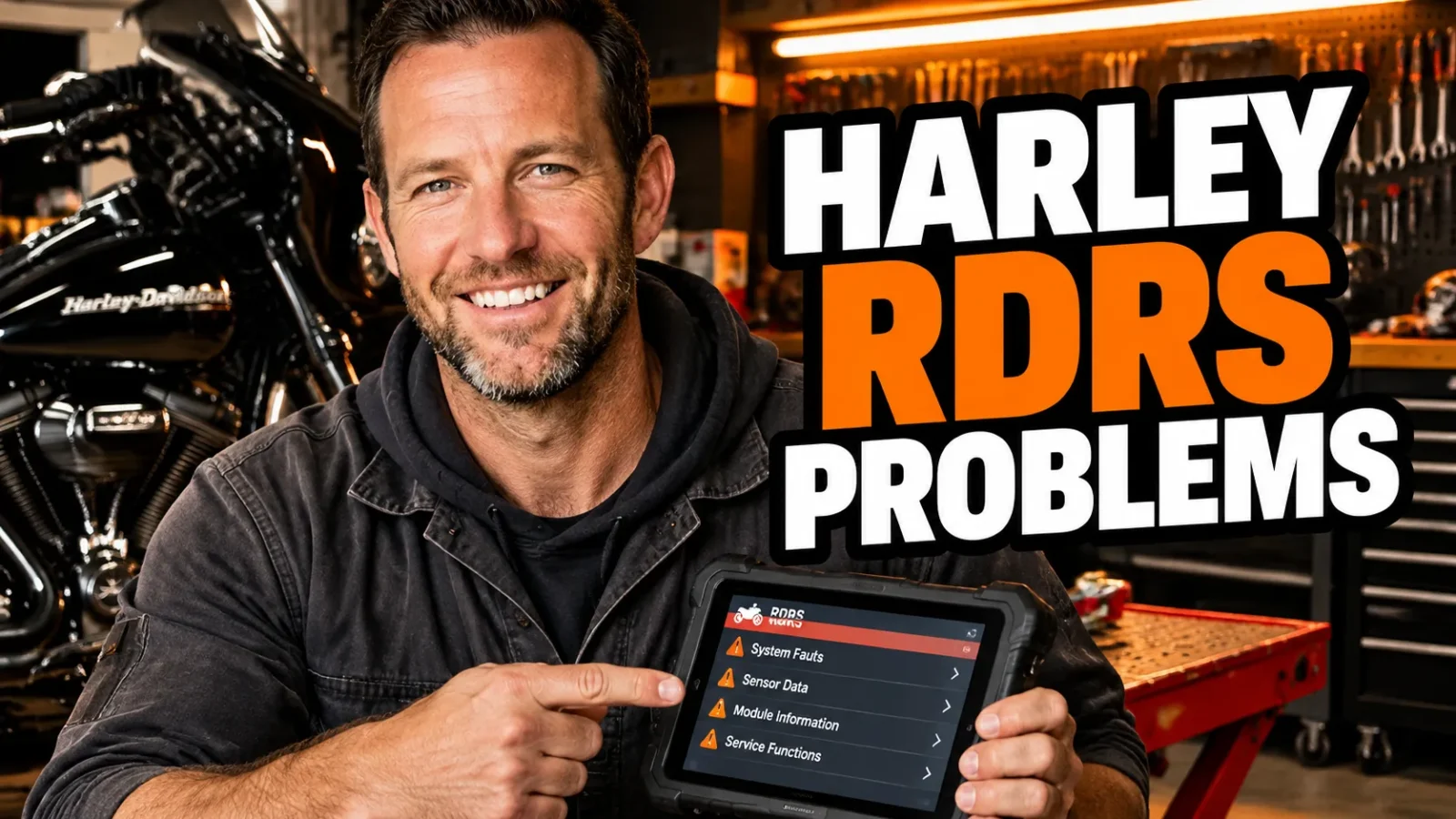
I have put tens of thousands of miles on Harley-Davidson motorcycles equipped with Reflex Defensive Rider Systems, or RDRS. If you are reading this, you have probably seen a warning light, felt the brakes act strangely, or watched your tire pressure sensor drop out on a cold morning. I have been there.
The good news is that most Harley RDRS problems are predictable, diagnosable, and cheaper to fix than you might think. The bad news is that the system often makes you chase your tail if you ignore the basics like battery voltage and sensor cleanliness.
I want to share what I have learned from my own experience and from helping other riders in the garage. This is not a lab test or a spec sheet summary. It is an honest, first-person look at the frustrations and fixes you will encounter.
- Most Harley RDRS problems come from ABS sensors, low battery voltage, and tire pressure monitor sensors, not complete module failure.
- Intermittent warning lights often clear after a battery load test, wheel sensor cleaning, or a proper TPMS relearn procedure.
- The system is generally reliable, but hard fault codes and ABS module failures can be expensive if ignored.
What RDRS Actually Does Before I Complain About It
I used to assume RDRS was just a fancy ABS system, but it is much more. It ties together cornering ABS, traction control, drag-torque slip control, vehicle hold control, and tire pressure monitoring. When all of it works, the bike feels more composed in rain, on gravel, and during hard braking.
That said, the complexity is exactly why Harley RDRS problems can feel confusing. A weak battery can trigger three unrelated warning lights. A dirty wheel sensor can make the front brake pulse at walking speed. If you want the full background on how the system is supposed to behave, I have a separate Harley RDRS overview that explains the component list.
The Most Common RDRS Faults I Keep Seeing
After years of ownership and more garage sessions than I care to count, a handful of issues show up over and over. Some are simple, some are annoying, and one or two can be genuinely expensive. I have broken them down below from a rider’s perspective.
Weak Battery Voltage Triggers a Warning Light Parade
I call this the classic RDRS red herring. Harley’s electronics are extremely sensitive to voltage drops, and the RDRS modules are some of the first things to complain when the battery is soft.
On my own bike, a slightly tired battery once turned the dash into a Christmas tree. The ABS light, traction control light, and check engine light all came on at the same time. The bike still ran fine, which made the diagnosis confusing.
What I learned is that a load test matters more than resting voltage. A battery can show 12.6 volts at rest and still collapse under load. Whenever I see multiple RDRS warnings, I start with my Harley battery troubleshooting guide.
ABS Wheel Speed Sensor Failures and False Activation
My first real RDRS hardware problem was a dirty rear wheel speed sensor. I felt the front brake lever pulse at a walking pace on dry pavement, and the cornering ABS light stayed on.
The sensors pick up metallic debris from brake pads and belt dust. A damaged sensor wire from a sloppy tire change can cause the same behavior. I now clean the sensors with a soft cloth and inspect the reluctor ring every time I have the wheel off.
If the code keeps returning after cleaning, I use my Harley fault code guide to see whether it is an open circuit, a short, or signal loss. That usually tells me if I need a new sensor or a wiring repair.
TPMS Sensor Dead Batteries and Relearn Headaches
Tire pressure monitoring is part of the broader RDRS package on many models, and it has caused me more minor annoyance than anything else. The sensors are battery-powered, and those batteries do not last forever.
I have seen a sensor drop out on a frosty morning, then return after the tire warms up. I have also seen a new tire installation break a sensor or leave it paired to the wrong wheel. The dash then shows a dashed line instead of a pressure reading.
My advice is to replace TPMS sensors as a pair when the tire is off anyway. I also double-check pressures with a quality gauge before trusting the dash. I cover that habit in my Harley tire pressure setup guide.
ABS Modulator and Hydraulic Unit Codes
This is the scary one because it sounds expensive, and it can be. But in my experience, a hard ABS modulator fault is much rarer than online forums suggest.
I chased a C-code on a friend’s bike for two weeks. It ended up being a corroded connector at the ABS unit, not a failed module. Cleaning the pins and applying dielectric grease fixed it permanently.
That said, internal ABS hydraulic failures do happen. If you lose front brake pressure or see fluid leaking from the modulator, do not ride it. The repair is not cheap, but ignoring it is worse.
Software Glitches and Dealer Reflash Dependency
One of the most frustrating parts of owning an RDRS bike is that some problems can only be corrected with a dealer-level reflash. The system runs on firmware, and like any software, it has bugs.
I have felt the vehicle hold control release too early on a hill, then behave perfectly after an update. I have also seen false traction control cuts that disappeared after a reflash. This is not something you can fix in your garage without the right tool.
I recommend keeping a log of warning lights and conditions. If a dealer tells you the code is not active, your notes can help them justify a software update instead of sending you home.
Other RDRS Annoyances That Are Not Real Failures
Drag-Torque Slip Control Can Feel Abrupt
Drag-torque slip control is meant to prevent the rear wheel from hopping during aggressive downshifts, but it can feel like the bike is fighting you. I have had it intervene on damp roads when I was not riding hard.
Once I understood what the sensation was, it stopped alarming me. It is usually not a fault, just a system operating inside its programming window.
Vehicle Hold Control Release Point
Vehicle hold control is useful on steep inclines, but the release point can feel inconsistent. Sometimes it holds a beat too long, sometimes it lets go before I expect it. I have found that brake lever pressure and rear brake pedal input change the behavior more than I initially realized.
Traction Control Cutting Power on Loose Surfaces
On gravel or wet leaves, the cornering traction control can cut power abruptly. It is doing its job, but the sudden throttle reduction can catch you off guard. I have learned to ride smoothly and let the system do its thing rather than fighting the bars.
Can You Ride with an RDRS Fault Showing?
This is the question I get most often. The short answer is maybe, but you need to know what is disabled. If the base braking system still works, you can usually ride gently to a safe place.
But riding aggressively or in the rain without cornering ABS and traction control is a risk I do not recommend. The whole point of RDRS is to add a safety net, and ignoring a fault removes that net.
How I Diagnose Harley RDRS Problems at Home
I have a simple sequence I follow before I spend money at a dealer. It has saved me hundreds of dollars and a lot of frustration.
Step One: Load Test the Battery
I always start here. A weak battery can create ghost faults that make you think half the bike is failing. I charge the battery fully, then load test it. If it drops below 9.6 volts under load, I replace it.
Step Two: Pull the Codes
I use a proper Harley scan tool to read the fault memory. Not all code readers can access the RDRS modules, so make sure yours can. My Harley fault code guide explains what the common codes mean and which ones point to a sensor rather than a module.
Step Three: Clean and Inspect Wheel Speed Sensors
I remove each sensor, clean the tip gently, and check the wiring for rub marks or corrosion. While I am there, I inspect the wheel bearings for play. A loose bearing can cause an erratic signal and false ABS activation.
Step Four: Relearn TPMS and Verify Tire Pressures
After any tire service, I park the bike away from other sensors and run the TPMS relearn procedure. I verify pressures with a separate gauge. This clears up most dashed-line or wrong-wheel readings.
Preventative Habits That Reduce RDRS Headaches
I have learned that RDRS reliability is closely tied to basic maintenance. Brake fluid flushes, a clean battery connection, and careful tire changes go a long way.
I avoid pressure washing directly at wheel speed sensors and ABS connectors. I use a battery tender when the bike sits for more than a week. I also replace the battery every three to four years, even if it still starts the bike.
My Honest Take on RDRS Reliability
After years of riding with RDRS, I would not let the fear of Harley RDRS problems stop me from buying a bike equipped with it. The system has genuinely helped me in a couple of low-traction surprises, especially in the rain.
Yes, the warning lights can be annoying, and the dealer reflash dependency is a real downside. But most issues I have seen trace back to simple things like voltage, dirty sensors, or old TPMS batteries.
If you stay on top of maintenance and diagnose systematically, RDRS is more of a helpful companion than a fragile headache. I say that as someone who has been stranded by electrical gremlins before and learned the hard way.
Frequently Asked Questions
What is the most common Harley RDRS problem?
Low battery voltage is the most common trigger. The RDRS system is very sensitive to voltage drops, so a weak battery often throws multiple warning lights before any real hardware failure occurs.
Can I ride my Harley with an RDRS fault light on?
You can usually ride home slowly if the base brakes still work, but cornering ABS and traction control may be disabled. I always address the fault before any aggressive or long ride.
How do I clear a false RDRS warning light?
Start by fully charging or load testing the battery, cleaning the ABS wheel speed sensors, and checking tire pressures. If the code persists, a dealer reflash or dedicated Harley scan tool is often required.
Are RDRS problems expensive to fix?
Many fixes are cheap, like sensor cleaning and battery replacement. A failed ABS modulator is the expensive exception, but it is much rarer than online forums make it seem.

Related Articles

Harley Davidson ABS Problems: My Honest Rider’s Guide to Diagnosing and Fixing Brake Failure
Struggling with Harley Davidson ABS problems? I’ll walk you through the most common causes, warning signs, diagnostic steps, and fixes…
Jake Miller
10 min read

Harley Bank Angle Sensor Problems: What I’ve Learned From the Road
Discover common Harley bank angle sensor problems, from stalling to no-start gremlins. My real-world guide covers symptoms, testing, and fixes…
Jake Miller
10 min read

Harley Davidson Radio Display Not Working? My Troubleshooting Guide and Real Fixes
Is your Harley Davidson radio display not working? I'll walk you through the most common causes, DIY resets, and real…
Jake Miller
10 min read