
Is Harley-Davidson in Trouble? My Honest Take After 15 Years in the Saddle
 Jake Miller
9 min read
Jake Miller
9 min read
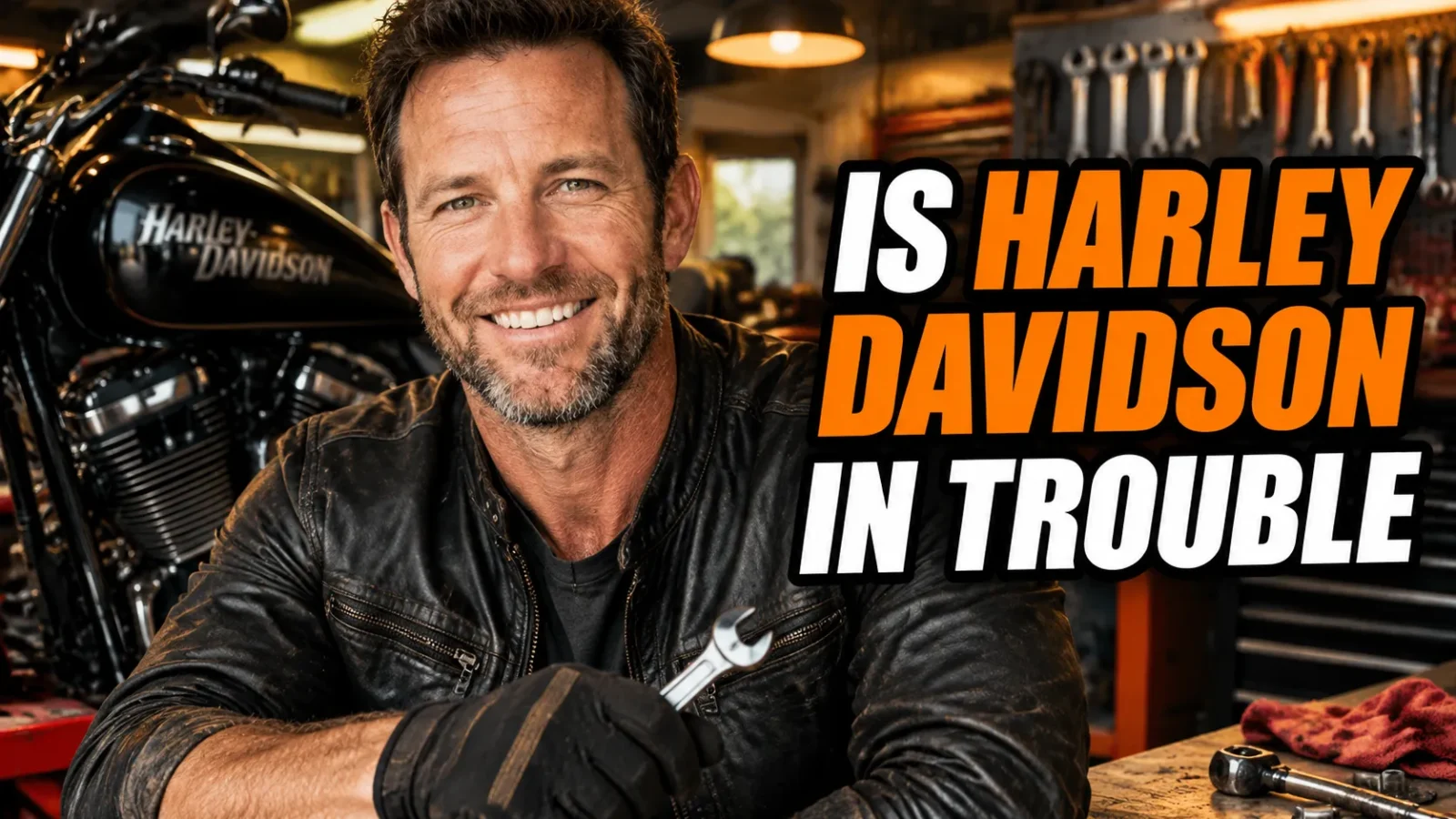
I’ve been riding Harley-Davidsons long enough to remember when the sound of a big twin rolling through a small town made people stop and stare. I’ve owned three of them, wrenched on more than I can count, and I’ve sat in dealerships during both the boom years and the quiet, nervous Saturdays where the sales staff outnumbered the customers. So when people ask me “is Harley Davidson in trouble” — and they ask a lot lately — I don’t give a quick yes or no.
I give them the view from the saddle, from the garage, and from watching the company’s decisions over the last decade. The truth is more complicated than a simple headline. The Motor Company absolutely has problems. Some are serious, some are self-inflicted, and some are just the painful reality of a changing motorcycle market.
But does that mean Harley-Davidson is dying? Not yet. Let me explain what I’ve seen and where I think this is heading.
- Harley-Davidson’s U.S. sales have declined for years, and the core buyer is aging out of riding.
- The LiveWire electric gamble is smart long-term but hasn’t offset cruiser losses yet.
- Brand loyalty is still incredibly strong, but high prices and a dated image are pushing new riders away.
- Harley isn’t bankrupt, but it’s facing the most important pivot in its 120-year history.
The Sales Slide I’ve Seen With My Own Eyes
I used to look forward to the annual Harley-Davidson dealer meeting like it was a rock concert. New models, new paint, and that unmistakable feeling that the Motor Company could do no wrong. But starting around 2015, the vibe shifted. Dealerships started carrying more used inventory than new bikes, and the glossy brochures felt a little thinner every year.
Harley’s U.S. retail sales have fallen from a peak of roughly 250,000 new motorcycles in 2014 to under 130,000 in some recent years. That’s not a small dip; that’s a collapse of nearly half in a decade. I’ve watched local dealers close, merge, or pivot heavily into service and apparel just to keep the lights on.
The used market is also flooded. I can buy a clean, low-mileage used Softail for thousands less than a new one — and I see identical bikes sitting on Facebook Marketplace for months. That used-bike glut crushes new bike margins, because a lot of potential buyers simply see no reason to pay the premium for brand-new steel.
So yes, the sales data supports the worry behind “is Harley Davidson in trouble”. But sales alone don’t tell the whole story. Harley still commands nearly 40 percent of the 601cc-plus U.S. motorcycle market. It’s the leader in a shrinking segment, which is both a blessing and a slow-motion trap.
The Average Harley Rider Is Getting Older — Including Me
I’m 47, and I’m on the younger side of the average Harley owner these days. That should tell you something. For years, the average age of a Harley buyer has hovered around 50, and it’s not moving down fast enough to replace the riders aging out.
Motorcycling in general skews older, but Harley’s heavyweight cruisers lean especially hard into the baby boomer and Gen X crowd. Those riders have money, yes. But they’re also putting fewer miles on their bikes every season, and many are trading two wheels for a trike or a convertible.
The company knows this. I’ve seen Harley try to court younger riders with lighter bikes, street-focused customs, and even the Pan America adventure machine. But changing a brand image built on chrome, leather, and rebellious Americana is like turning an aircraft carrier — slow, awkward, and easy to second-guess from the shore.
Younger riders I talk to don’t hate Harleys. They just see them as expensive, heavy, and maybe a little bit “my dad’s bike.” That perception is the real existential threat, not the price of steel or tariffs.
The Electric Gamble: LiveWire and the Long Game
I’ll be honest — the first time I saw a LiveWire, I didn’t know what to make of it. No exhaust note, no vibration at idle, just a silent surge that felt almost futuristic on a bike wearing the bar-and-shield badge. It was bold. It was also priced at $29,799, which is a lot of money for a city commuter electric motorcycle.
Harley spun LiveWire into its own all-electric brand, and I respect the forward thinking. Urban electric bikes make sense, and Harley’s engineers clearly know how to build a quality chassis and battery system. But the volume hasn’t arrived. LiveWire sells in the thousands per year, not the tens of thousands Harley needs to offset cruiser declines.
Charging infrastructure for long-distance touring on an electric bike is still painful, especially in the rural areas where Harley riders love to roam. I can’t imagine doing a 400-mile day through Montana on an electric bike without planning every stop around a charger. That’s a fundamental mismatch for a brand built on freedom and open road touring.
So when people ask me if the electric bet is saving Harley, I say it’s keeping them relevant in tech, but it’s not paying the bills. Yet.
Quality, Loyalty, and the Weight of the Badge
One thing I’ve learned after years of owning Harleys is that the badge itself carries enormous weight. I’ve seen grown men tear up talking about their first Electra Glide. I’ve watched families pass a Springer Softail down three generations. That kind of emotional equity can’t be engineered or advertised into existence.
But loyalty cuts both ways. The same riders who love Harley also expect a certain level of fit, finish, and reliability that older Harleys sometimes didn’t deliver. Modern Harleys are much better built than the AMF-era bikes, but the reputation for oil leaks and electrical gremlins lingers. I’ve had to torque my own primary cover bolts more times than I care to admit.
Harley also faces a price problem. A new Street Glide can easily push past $28,000 before fees. Even a basic Sportster S starts over $16,000. When a young rider can buy a used Japanese standard for $4,000 or a new Royal Enfield for under $7,000, the value proposition gets hard to justify.
I don’t think Harley is losing customers to other brands as much as it’s losing them to the used market and to no-bike-at-all. That’s a subtle but important difference. The love is still there, but the wallet often wins.
The Culture Problem Harley Can’t Seem to Solve
I’ve spent hours in Harley dealerships, and I can tell you the culture is both the company’s greatest asset and its biggest blind spot. The “us versus them” attitude — loud pipes, leather vests, American iron — creates fierce loyalty. But it also alienates the very riders Harley needs to survive.
Adventure riders, urban commuters, women riders, and younger first-time buyers often feel like outsiders in a Harley showroom. I’ve watched a young couple walk in, browse for ten minutes, and leave without a single staff member saying hello. That’s not a product problem; that’s a culture problem.
Harley has tried to expand with the Pan America and the new Sportster S, but the dealership experience hasn’t always kept up. If the brand wants to attract a broader audience, it needs to make those riders feel welcome, not tolerated. I’ve said for years that the best marketing campaign Harley could run would be a genuine attitude shift in the showroom.
I still love the bikes. But the tribe around them can be intimidating, and that intimidation is costing Harley customers.
What Would Actually Get Me Back in a Harley Dealership
I’m not a hard sell. If Harley built a genuinely lighter, more affordable middleweight cruiser with a modern suspension and a price tag under $12,000, I’d be first in line. The Sportster S is close, but it’s still a bit heavy, a bit expensive, and a bit confused about what it wants to be.
I’d also like to see Harley embrace the used market instead of fighting it. Certified pre-owned programs, factory-backed warranties on used bikes, and trade-in bonuses that actually make sense would go a long way. Right now, the used market is Harley’s biggest competitor, and I think the company should treat it as an ally.
More than anything, I want Harley to remember that motorcycling is supposed to be fun. Not a lifestyle statement, not a financial flex, just the pure joy of leaning into a corner or rumbling through a small town at golden hour. The bikes that deliver that feeling will sell themselves.
So, Is Harley-Davidson in Trouble?
Yes and no. If you look purely at the numbers — declining sales, aging demographics, a stalled electric transition — then the answer to “is Harley Davidson in trouble” is a qualified yes. The company is facing the kind of structural headwinds that have killed plenty of legacy brands.
But if you look at the balance sheet, the brand loyalty, and the genuine engineering talent inside the company, there’s still a fighting chance. Harley has the cash reserves to survive several more down years. It has the product pipeline to surprise people. And it still has that intangible soul that makes a rider’s heart beat a little faster when a big twin fires up.
The next five years will decide whether Harley-Davidson becomes a leaner, smarter company or a cautionary tale taught in business schools. I’m not betting against the bar-and-shield just yet, but I’m also not ignoring the warning lights on the dash.
What I do know is this: I’ve never met a Harley rider who didn’t want the brand to succeed. The question is whether Harley wants it badly enough to change — and whether it can do so without losing itself in the process.
I’ll keep riding, keep watching, and keep asking the hard questions. Because in the end, the best thing for Harley-Davidson is exactly what the company has always claimed to represent: freedom, honesty, and the open road ahead.
Frequently Asked Questions
Is Harley-Davidson actually going bankrupt?
No, Harley-Davidson is not currently bankrupt. But the company faces serious structural headwinds: declining U.S. sales, an aging core customer, and a slow electric transition. It has enough cash and brand equity to pivot, but the next five years are critical.
Why are Harley-Davidson sales declining?
Sales are declining because the traditional cruiser buyer is aging out of riding, younger riders are less drawn to heavyweight V-twins, and used Harleys flood the market at low prices. Rising prices also push new buyers away.
What is Harley-Davidson doing to attract younger riders?
Harley launched the Pan America adventure bike, the Sportster S, and the LiveWire electric brand. They also offer smaller-displacement bikes in international markets and riding academies to lower the barrier to entry.
Is the LiveWire electric motorcycle a success?
LiveWire has struggled with high pricing and limited charging infrastructure for long trips. It’s a smart long-term bet for urban riders, but it hasn’t yet delivered the volume Harley needs to offset cruiser declines.

Related Articles

The Best Stuff for Cleaning a Harley: What I Actually Keep in My Garage
After years of trial and error on my own Harleys, here are the cleaners, polishes, and towels I actually trust,…
Jake Miller
11 min read
Best Heat Shield for a Harley Softail: What I Actually Run (And Why)
After years of burnt thighs and melted denim, here are the best heat shields for a Harley Softail, what I…
Jake Miller
8 min read
Harley Davidson Bolt Size Chart: The Rider’s Guide to Every Fastener You’ll Touch
Stop guessing bolt sizes on your Harley Davidson. I share my personal bolt size chart, torque tips, metric vs SAE…
Jake Miller
12 min read