
7 Best Smartphones for Motorcycle Navigation: Bright, Tough Picks for the Road
 Jake Miller
13 min read
Jake Miller
13 min read
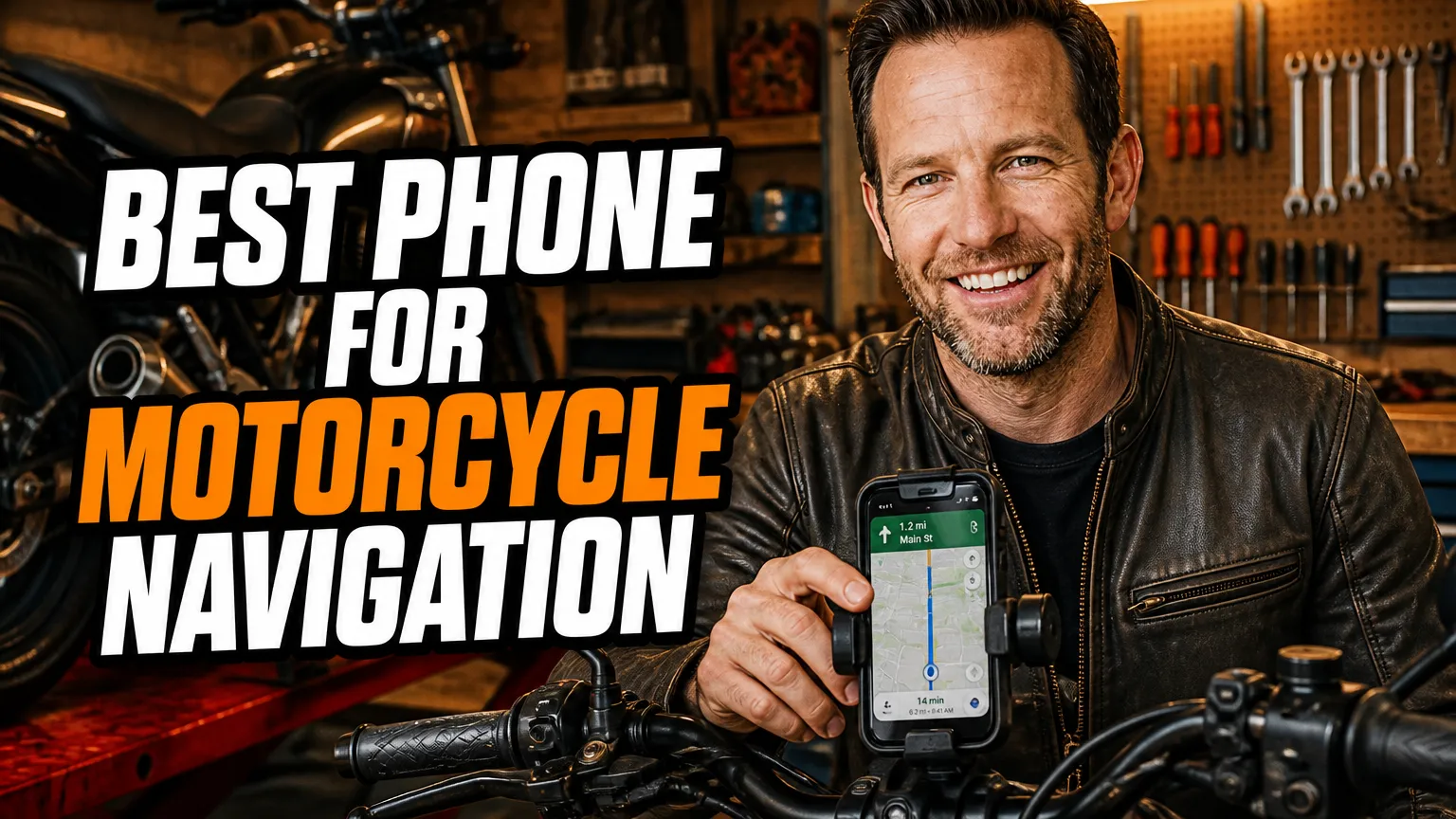
I’ve learned that a phone can be a brilliant motorcycle navigator right up until the screen washes out in sunlight, the battery drains, or a rough road sends too much vibration into its camera. So when I pick a phone for the bike, I look beyond processor speed and camera quality. I care most about a readable display, dependable GPS, practical battery life, and a setup I can protect from weather and vibration.
Below, I compare seven real phone models I’d consider for motorcycle navigation, from premium everyday phones to purpose-built rugged options. I also share how I’d mount and power them, because even the best phone won’t help much if it’s hard to see or safely secure on the handlebars.
- I’d choose the Samsung Galaxy S25 Ultra for its large, bright screen and versatile everyday performance.
- I’d pick the Ulefone Armor 27T Pro when ruggedness and a large battery matter more than a slim, light phone.
- I’d use a vibration-damping mount and external power for long rides, even with a water-resistant phone.
- I download offline maps before leaving, since mobile coverage can disappear on remote routes.
1. Samsung Galaxy S25 Ultra — My Best All-Rounder for a Large, Bright Display
The Samsung Galaxy S25 Ultra is the phone I’d reach for when I want a premium screen that’s easy to glance at and a capable device for everyday use off the bike. Its 6.9-inch display gives maps plenty of room, and Samsung lists peak brightness of up to 2,600 nits. In my experience, more screen area and strong brightness make a meaningful difference when I’m checking a route in changing daylight.
Why I’d use it on the bike
The S25 Ultra has an IP68 water- and dust-resistance rating, a 5,000 mAh battery, and a high-end camera system with optical image stabilization. That stabilization is useful when I’m taking photos off the bike, but it’s also the part I’d take care to protect from prolonged handlebar vibration. I’d put the phone in a case and use a mount with a vibration-damping system rather than clamp it directly to a bare, vibrating bar.
Its large display and flagship price are trade-offs. I’d expect to pay a premium, and the wide handset may not fit every mount or motorcycle cockpit comfortably. Before buying, I’d check the clamp’s supported dimensions and leave space to operate the bike’s controls safely.
My verdict
I’d pick the Galaxy S25 Ultra if I want one excellent phone for navigation, communication, and daily use, and I’m willing to invest in a proper mount and power setup. For a broader comparison of dedicated navigation units and phone-based options, I’d also read this guide to the best gps navigation for motorcycle.
2. Apple iPhone 16 Pro — My Pick for Riders in the Apple Ecosystem
I like the iPhone 16 Pro for its compact-for-a-flagship 6.3-inch display, polished software, and dependable integration with Apple services. Apple rates it for up to 2,000 nits of outdoor peak brightness and IP68 water resistance under specified test conditions. That makes it a strong everyday navigation choice, though I still wouldn’t treat its water rating as permission to leave it exposed to every storm.
What I’d consider before mounting it
The iPhone 16 Pro is a comfortable option if I already use an iPhone, Apple Maps, or another iOS navigation app. I can download maps in compatible apps before a trip, pair a headset, and keep my normal messages and calls available. As with any phone, I’d verify the app’s offline features and route coverage before heading somewhere with patchy service.
I’d be especially careful about vibration with this model because it has optical image stabilization. Apple has warned that high-amplitude vibrations, such as those from some motorcycle engines, can affect iPhone camera systems. I’d use a quality vibration-isolating mount, avoid unnecessarily long exposure on the handlebars, and consider taking the phone off the mount when I’m not navigating.
My verdict
I’d recommend the iPhone 16 Pro to riders who want an excellent general-purpose phone and already prefer iOS. It isn’t a purpose-built motorcycle navigator, so I’d budget for a suitable case, mount, and charging solution rather than relying on the phone alone.
3. Google Pixel 9 Pro — My Choice for Google Maps and a Manageable Size
The Google Pixel 9 Pro gives me flagship features in a 6.3-inch form, which I find easier to fit on a crowded handlebar than some oversized phones. Google lists peak display brightness of up to 3,000 nits, IP68 protection, and a 4,700 mAh battery. I’d value that bright screen on an exposed mount, while remembering that peak brightness figures are not the same as sustained brightness in every condition.
How it fits my navigation routine
I’d use the Pixel 9 Pro with Google Maps or another navigation app that supports the route I’m riding. Google Maps lets me download map areas for offline use, which is a useful backup when cell service drops. Before a long ride, I’d still check that the downloaded area includes my full route and that I understand what features may be limited without a connection.
The Pixel is also a premium phone with a stabilized camera, so I’d protect it from engine and road vibration. Its battery should be treated like any other phone battery when the screen stays on and GPS is running: I’d plan to charge it during a long day, especially if I’m also using mobile data, Bluetooth, or a bright screen.
My verdict
I’d choose the Pixel 9 Pro if I want a high-end Android phone in a less enormous size and I’m already comfortable with Google’s apps. I’d pair it with a mount that grips the handset securely without pressing on the buttons or blocking the charging port.
4. OnePlus 13 — My Battery-Minded Pick for Long Days
The OnePlus 13 stands out to me for its 6,000 mAh battery and large 6.82-inch display. OnePlus lists IP68 and IP69 ratings for water and dust protection, plus very high peak display brightness. Those headline features make it appealing for riders who run navigation for hours, although actual screen-on time depends heavily on brightness, temperature, reception, and app use.
Why its battery matters to me
When I ride with the screen on, GPS active, and Bluetooth connected to a headset, the battery drains faster than it does during ordinary pocket use. A larger battery gives me more breathing room before I need to plug in, and the OnePlus 13 supports fast charging for quicker stops when I can access a suitable charger. I’d still bring a dependable charging cable and use a weather-aware power setup for all-day routes.
The OnePlus 13 is a large, expensive phone, so I’d check its dimensions against my mount before buying. Its camera system also means I’d follow the same vibration precautions I use with other premium phones. Water resistance helps, but I’d still cover the phone and USB-C connection in heavy rain.
My verdict
I’d consider the OnePlus 13 when battery capacity and a big screen are high on my list. If I ride a Honda Gold Wing or another motorcycle with a distinctive cockpit, I’d check mounting options specific to that setup, including this guide to the best motorcycle phone mount for a goldwing.
5. Samsung Galaxy XCover7 — My Practical, Replaceable-Battery Option
The Samsung Galaxy XCover7 is a more work-focused choice than a typical flagship. Samsung specifies IP68 protection and MIL-STD-810H testing, and its 4,050 mAh battery is removable. I like the idea of being able to carry a charged spare for a long day, rather than needing to find an outlet whenever the phone runs low.
What I’d trade for durability
The XCover7’s 6.6-inch display is roomy enough for maps, but it’s not in the same premium class as the brightest flagship screens on this list. I’d expect a more modest overall performance and display experience than I get from the S25 Ultra or iPhone 16 Pro. In return, I get a phone designed for tougher work settings, with a replaceable battery that can be useful when I’m away from a charger.
I’d still use a secure mount and keep the device protected from direct spray and dirt. Rugged ratings don’t make a phone indestructible, and the exact level of protection depends on the device’s condition and how it’s been handled. I’d also confirm that the version sold in my market has the network bands and storage configuration I need.
My verdict
I’d choose the XCover7 if I value practical toughness and battery swapping over a top-tier display or camera. It’s a sensible option for riders who want a phone they can use for work and navigation without putting a flagship handset on the handlebars.
6. Ulefone Armor 27T Pro — My Rugged Pick for Remote Touring
The Ulefone Armor 27T Pro is the most purposefully rugged phone in my list. Ulefone specifies a 10,600 mAh battery, IP68 and IP69K protection, and MIL-STD-810H testing. It also includes a FLIR thermal camera, a distinctive feature that may be useful for certain inspection tasks away from the bike, though it isn’t necessary for ordinary route guidance.
Where I think it makes sense
The large battery is the main reason I’d look at the Armor 27T Pro for remote rides. I’d want to run navigation for long stretches without depending on a power outlet, and the extra capacity can offer more reserve than a conventional slim phone. Its rugged construction is another advantage when I expect dust, rain, or rough handling.
The compromises are real: this is a bulky, heavy phone, and I’d check that my mount can securely hold its size and weight. I’d also verify the exact model’s network compatibility, software support, and availability where I live. Rugged phones can differ significantly by region, so I’d buy from a seller with a clear warranty rather than assuming every listing is equivalent.
My verdict
I’d choose the Ulefone Armor 27T Pro when battery reserve and rugged construction matter more to me than a light, pocketable design. For riders planning remote or mixed-surface routes, I’d compare phone navigation with dedicated devices in this overview of the best gps for adventure motorcycle touring.
7. Sony Xperia 1 VI — My Pick for Riders Who Want a Narrower Phone
The Sony Xperia 1 VI is a premium Android phone with a 6.5-inch display, IP65/IP68 ratings, and a 5,000 mAh battery. Its 19.5:9 screen is less unusually tall than some earlier Xperia displays, but the handset’s relatively narrow shape can still make it easier for me to grip and position than a very wide phone. Sony also includes a microSD card slot, which can be handy for keeping media and files available offline.
What I’d check before choosing it
I’d treat the Xperia 1 VI as a high-end everyday phone that can do navigation well, not as a motorcycle-specific device. Its water-resistance ratings are useful, but I’d use a weather cover in sustained rain and keep the charging port protected. I’d also check screen visibility in person if possible, since published peak brightness figures don’t tell me exactly how a display will look through my own helmet visor in direct sun.
As with other premium phones, I’d protect its camera hardware from vibration and make sure a mount fits its dimensions. I’d download maps before a trip and test the setup on a short ride before trusting it for a long touring day.
My verdict
I’d consider the Xperia 1 VI if I want a premium Android phone with a narrower feel, expandable storage, and water resistance. It’s a more specialist choice than the Samsung or Google options, so I’d compare local pricing and software support before committing.
How I Choose a Phone for Motorcycle Navigation
I start with screen readability. A display that looks sharp indoors can become hard to read in direct sun, especially behind a tinted visor. I look for a bright screen, enough size to read route instructions quickly, and a mount position that lets me glance down without taking my eyes off the road for too long.
Battery, maps, and weather protection
I treat battery life as a system question, not just a number on a product page. GPS, a bright screen, mobile data, Bluetooth, and cold or hot weather can all affect runtime, so I carry a charging plan for longer rides. Before I leave, I download offline maps and check that my preferred navigation app can guide me when the mobile network disappears.
I also remember that an IP rating is not a guarantee against every kind of water exposure. Age, wear, repairs, and damaged seals can affect protection, and charging in wet conditions adds another risk. In poor weather, I use a phone cover or sheltered cockpit position and avoid connecting a wet cable.
Mounting and vibration
I don’t consider the phone complete until it’s held securely and positioned safely. I choose a mount compatible with the phone’s dimensions, avoid blocking controls, and use vibration damping for models with optical image stabilization. If I want a fast on-and-off setup, I compare options in this guide to the best quick release phone mount for motorcycle top 5 picks.
I test the whole setup close to home before relying on it for a tour. I check that the phone remains secure over bumps, the screen is readable from my normal riding position, and the charging cable can’t snag on the bars. When I’m considering a dedicated unit instead, I’d also look at this overview of the tomtom rider 550 best gps for adventure motorcycle riding.
My Final Recommendation
For most riders who want one premium phone for the bike and everyday life, I’d start with the Samsung Galaxy S25 Ultra, iPhone 16 Pro, or Google Pixel 9 Pro. I’d choose between them based on operating system, preferred screen size, and what fits my budget, then spend extra attention on vibration protection and power.
If I expect rough conditions or want a replaceable battery, I’d consider the Samsung Galaxy XCover7. If I want a notably large battery and rugged construction, I’d look at the Ulefone Armor 27T Pro and accept its extra bulk. Whichever phone I pick, I’d download maps, test my mount, and set up charging before the ride rather than troubleshooting at the roadside.
Frequently Asked Questions
What matters most when I choose a phone for motorcycle navigation?
I prioritize a readable screen, reliable GPS, enough battery for the ride, water resistance, and a secure mount with vibration protection.
Can I use my everyday phone on a motorcycle?
I can, but I use a vibration-damping mount, weather protection, and external power. Prolonged vibration can damage some phones, particularly their camera stabilization systems.
Is a rugged phone better for motorcycle navigation?
I choose a rugged phone when impact protection and long battery life matter most. For brighter screens and better cameras, I often prefer a flagship in a protective case.
Should I download maps before a motorcycle trip?
Yes. I download offline maps before I leave, then check that my navigation app can route without mobile data in the areas I plan to ride.

Related Articles

6 Best Motorcycle Phone Mounts That Keep Your Phone Charged on the Road
Compare six dependable motorcycle phone mounts with wireless or USB charging, including fit, power wiring, vibration protection, weather resistance, and…
Jake Miller
10 min read

5 Best Motorcycle Phone Mounts for Naked Bikes and Open-Cockpit Riding
I compare secure, vibration-conscious phone mounts for naked and touring bikes, with fit notes, real trade-offs, and setup tips for…
Jake Miller
11 min read

7 Best Phone Mounts for Sport Bikes: Secure, Vibration-Smart Picks
Compare secure phone mounts for sport bikes, including clip-on fit, vibration control, case systems, prices, and my practical picks for…
Jake Miller
12 min read