
Will Removing Baffles Hurt a Harley? My Real-World Test and Honest Answer
 Jake Miller
11 min read
Jake Miller
11 min read
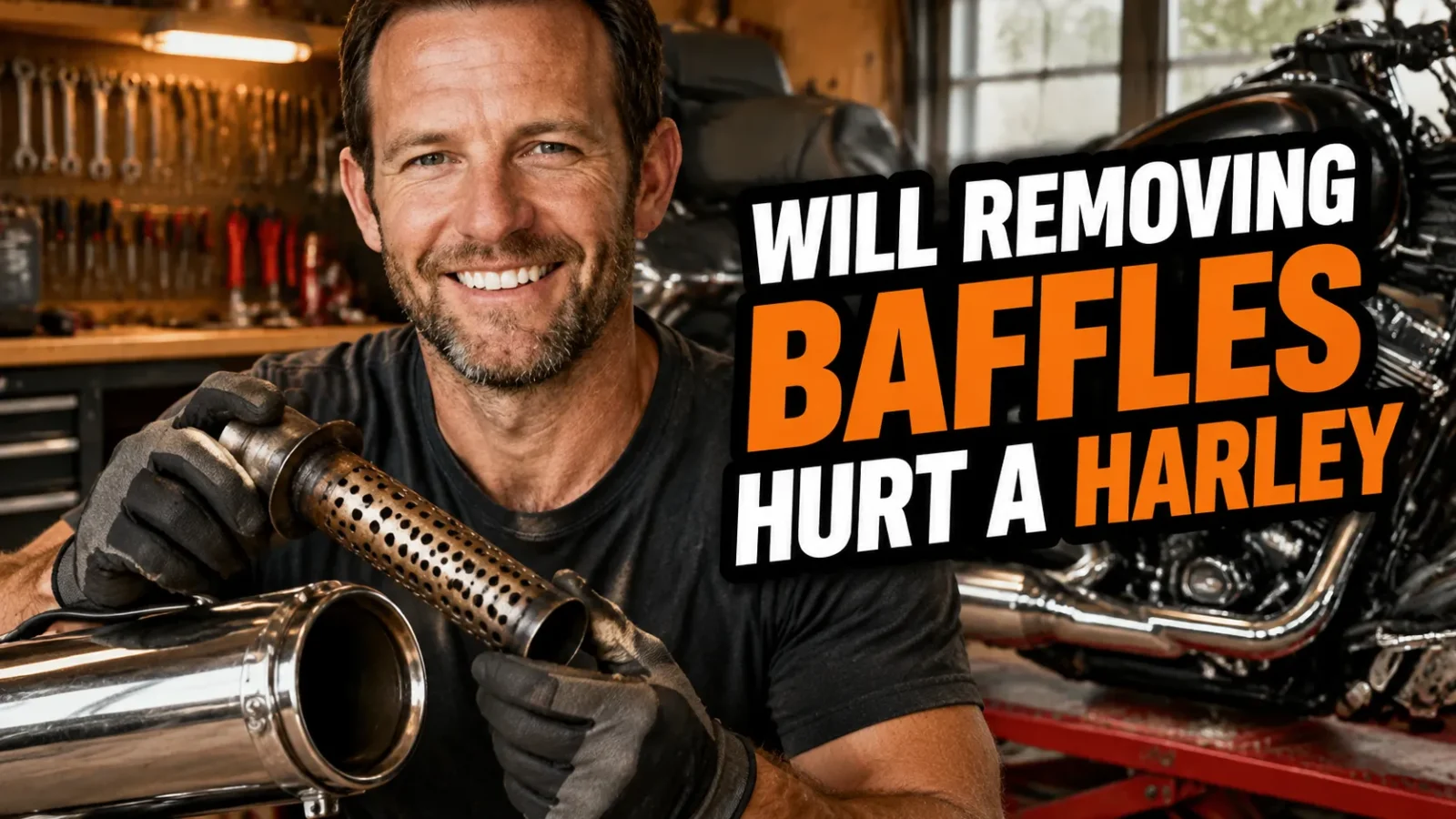
I’ll never forget the first time I pulled the baffles out of my Harley. I was chasing that deep, thundering roar that makes people turn their heads three blocks away. The bike sounded incredible at idle, but within a few weeks I started noticing things that made me ask the exact question you’re probably asking right now: will removing baffles hurt a Harley?
I’ve since tested this on multiple bikes, read the dyno charts, and talked to mechanics who’ve rebuilt engines that ran lean for too long. My answer isn’t a simple yes or no, because the truth depends on how you do it, how you tune it, and how hard you ride.
In this article I’m going to share what I’ve learned firsthand. I’ll break down the science, the risks, the tuning needs, and the reality of living with a baffle-less Harley every day. By the end, you’ll know exactly what you’re getting into.
- Removing baffles alone usually won’t destroy your engine overnight, but it can cause lean running and excessive heat over time.
- A proper fuel tune is essential if you want to avoid long-term valve and piston damage.
- Expect more noise, a slight loss of low-end torque, and possible legal or inspection headaches.
- Safer alternatives include aftermarket slip-ons or modified baffles that keep enough backpressure.
What Actually Happens When You Remove Baffles
Before I pulled mine, I assumed baffles were just there to quiet things down. I was wrong. Baffles do more than muffle sound—they also influence exhaust flow, backpressure, and how the engine breathes.
When you yank them out, you open up the exhaust path dramatically. Less restriction means the engine can expel spent gases faster. On paper, that sounds great, but your Harley’s fuel injection system responds to that change in specific ways.
The Science of Backpressure and Exhaust Flow
Backpressure is one of those terms riders throw around without always understanding it. I used to think more backpressure was always bad, but that’s not true for a street-tuned V-twin.
Harley engines, especially the Milwaukee-Eight and Twin Cam, are designed to balance intake charge with exhaust scavenging. The exhaust pulse timing relies on some restriction to keep a portion of the fresh air-fuel mixture from escaping out the exhaust valve during overlap. Remove too much backpressure, and you lose some of that scavenging efficiency at low and mid RPM.
In practical terms, this means your bike may feel softer off the line and harder to launch smoothly. I noticed a slight hesitation when rolling on the throttle from a stop after removing the baffles, especially before the engine fully warmed up.
How a Harley’s EFI System Reacts
Modern Harleys use an electronic fuel injection system with oxygen sensors. Those sensors read the exhaust gases and adjust fuel delivery to maintain a target air-fuel ratio. When you open up the exhaust, more air moves through, and the sensors try to compensate.
The problem is that the stock EFI calibration has limits. Harley tunes these bikes lean from the factory to meet emissions, and the oxygen sensors are narrowband—they can only correct so much. When you remove the baffles, the engine often runs even leaner than stock, especially during open-loop conditions like hard acceleration or cold start.
That lean condition is the main reason I now tell people to think carefully before just gutting the exhaust. It’s not the noise that hurts your Harley—it’s the heat and cylinder temperatures that come from running too lean for too long.
Will It Cause Engine Damage? The Short and Long Answer
Let me answer the question directly: will removing baffles hurt a Harley? The short answer is yes, it can, but not in the way you might fear. It won’t grenade your engine the first week. What it does is slowly cook internal components if you don’t tune for the change.
I’ve seen bikes run baffle-less for years without a rebuild, but those riders usually added a tuner or rode gently. I’ve also seen valves with burned edges and pistons with heat scoring from prolonged lean running. The risk is real, and it’s cumulative.
Short-Term Risks: Lean Running and Heat
The first thing I noticed after removing baffles was heat. My right thigh felt noticeably warmer, and the engine seemed to radiate more heat at stoplights. That’s a classic sign of lean air-fuel ratios—leaner mixtures burn hotter.
On an air-cooled engine like most Harleys, excess heat is the enemy. It causes oil breakdown, accelerates cylinder wear, and can lead to detonation (pinging) under load. I heard faint pinging on a hot day climbing a steep hill, and I knew exactly what was happening.
Long-Term Risks: Valve Damage and Cylinder Wear
Over time, sustained lean running can burn exhaust valves. The valve margins thin out, and you lose compression. I’ve seen leak-down tests show 10-15% leakage on bikes that ran lean for 20,000 miles without a tune.
Pistons aren’t immune either. The extra heat can cause micro-welding on the piston crown, leading to scuffed cylinder walls. Once that happens, you’re looking at a top-end rebuild that costs thousands. Removing baffles without a tune is a slow, expensive gamble.
Real-World Cases I’ve Seen
One of my riding buddies pulled the baffles from his Street Glide and rode 8,000 miles before the rear cylinder started losing power. A compression test showed low numbers, and the borescope revealed a burned exhaust valve. His mechanic blamed the lean tune from the open exhaust.
Another friend had a full stage 1 with a proper tune and removed baffles only temporarily for a rally. He put them back after a weekend because the bike ran poorly and popped on deceleration. The difference a tune makes is night and day.
The Tuning Question: Do You Need a Fuel Management System?
In my experience, if you remove the baffles on a fuel-injected Harley, you need a fuel tuner. Period. I tried running without one for a few weeks, and the bike felt flat, ran hot, and popped on decel.
A proper tuner—like a FuelPak, Power Vision, or Dynojet—allows you to richen up the fuel curve to match the increased airflow. That single change transforms the bike from a lean, angry machine into something that runs smooth and still sounds insane.
My Experience Without a Tune
Without a tune, my bike would surge at steady throttle and pop loudly when I rolled off. The heat from the rear cylinder was uncomfortable in summer traffic. I also noticed the idle was less stable, and cold starts required a longer warm-up.
I honestly thought I had damaged something, but a quick plug check showed the plugs were bone white—textbook lean. That was my wake-up call to stop riding it until I could add fuel.
The Difference a Proper Tune Makes
After installing a tuner and loading a map for an open exhaust, the bike ran cooler, idled perfectly, and pulled harder from low RPM. The decel popping disappeared, and the exhaust note became a deep rumble instead of a harsh crackle.
If you plan to remove baffles permanently, factor the cost of a tuner and possibly a dyno tune into your budget. It’s not optional—it’s part of the modification.
Performance Changes: Does Removing Baffles Help or Hurt Power?
I expected removing baffles to make my Harley feel faster. The noise alone tricks your brain into thinking you gained 10 horsepower. But on the road, I actually lost a bit of low-end punch.
The engine felt lazier below 3,000 RPM, which is exactly where most street riding happens. Above 4,000 RPM it breathed a little better and felt more eager to rev, but that’s not where a big V-twin lives.
Low-End Torque vs Top-End Scream
Harley engines are tuned for torque, not horsepower. Removing baffles shifts the powerband slightly upward, sacrificing that tractor-like pull off the line. I noticed I had to slip the clutch more in traffic to get moving smoothly.
For a drag strip or wide-open backroad, the top-end feel might be acceptable. For daily commuting or two-up riding, the loss of low-end torque gets old fast. You end up working the engine harder to do the same job.
Legal and Practical Considerations
Before you cut anything, let’s talk about the real world. I’ve been pulled over for loud pipes, and I’ve failed a state inspection because my exhaust was too loud. Removing baffles can make your Harley a target.
Many states and municipalities have noise ordinances that set decibel limits for motorcycles. Without baffles, your bike can easily exceed those limits. Police officers in my area have started using sound meters during roadside checks.
Noise Level and Neighbor Relations
I love a loud Harley, but the baffle-less roar is obnoxious at 5 a.m. My neighbors did not appreciate it, and I got a few passive-aggressive notes on my garage door. If you live in an apartment complex or a quiet neighborhood, think hard about this.
The constant drone on long highway rides also causes ear fatigue. I wore earplugs before, but after removing baffles I needed them just to tolerate a 30-minute commute. The sound is aggressive, but it wears on you over time.
Law Enforcement and Inspections
In states with annual motorcycle inspections, a missing baffle is an automatic fail. You’ll have to reinstall the stock baffles or risk a fine. I’ve also seen insurance companies deny claims after an accident if the exhaust was modified illegally.
Beyond legal trouble, there’s the risk of being “that guy” at bike nights. Some riders respect the open pipe, but many find it obnoxious. It’s your bike, but consider how you want to be perceived on the road.
Alternatives to Yanking Baffles Completely
After my experiments, I found a middle ground that gives me the sound I want without the lean-running headaches. You don’t have to choose between stock quiet and fully gutted. There are better options.
I recommend looking at aftermarket slip-ons or modified baffles before you take a drill to your stock exhaust. These give you a deeper tone while maintaining enough backpressure to keep the engine happy.
Aftermarket Slip-Ons
Slip-on mufflers from brands like Vance & Hines, Rinehart, or Bassani are designed to sound louder while keeping the correct backpressure for a stock tune. Many of them don’t require a full tune, though I still recommend at least checking your plugs.
I installed a set of slip-ons on my second Harley and got 90% of the aggressive sound with none of the lean-running issues. The low-end torque stayed intact, and the bike passed inspection without a problem.
Drilled or Modified Baffles
If you want to keep your stock pipes, you can modify the baffles instead of removing them entirely. Drilling a few small holes or installing a lollipop-style baffle can deepen the tone while preserving some backpressure.
I’ve tried this on a friend’s Sportster. We drilled three half-inch holes in the rear of each baffle. The sound got noticeably louder, but the bike still ran fine without a tune. It’s a cheap compromise that avoids the worst risks.
My Final Verdict: Should You Do It?
So, will removing baffles hurt a Harley? In my honest opinion, yes—it can hurt if you do it carelessly. Running without baffles and without a tune invites lean conditions, excess heat, and eventual engine damage. It also makes your bike louder than most people are willing to live with.
If you absolutely must have that straight-pipe sound, do it the right way. Install a good tuner, richen the fuel map, and monitor your engine temperatures. Better yet, consider high-quality aftermarket slip-ons that give you the sound without the sacrifices.
I’ve made the mistake of chasing noise at the expense of reliability, and I don’t want you to repeat it. A Harley that runs hot, pings, and burns valves isn’t a cool bike—it’s a rolling repair bill. Ride smart, tune properly, and keep that V-twin healthy for the long haul.
Frequently Asked Questions
Will removing baffles hurt my Harley engine?
Not immediately, but long-term lean running and increased heat can cause accelerated valve and piston wear. A proper tune greatly reduces the risk.
Do I need a fuel tuner after removing baffles?
Yes, highly recommended. Without a tune, the EFI may not compensate enough for the extra airflow, leading to lean conditions and heat.
Will removing baffles make my Harley faster?
Usually it improves high-RPM feel but robs low-end torque. You may notice more noise than actual power gains.
Is removing baffles legal?
In many areas, no. It can violate noise ordinances and fail inspections. Check local laws before modifying your exhaust.

Related Articles

The Best Stuff for Cleaning a Harley: What I Actually Keep in My Garage
After years of trial and error on my own Harleys, here are the cleaners, polishes, and towels I actually trust,…
Jake Miller
11 min read

Best Heat Shield for a Harley Softail: What I Actually Run (And Why)
After years of burnt thighs and melted denim, here are the best heat shields for a Harley Softail, what I…
Jake Miller
8 min read

Harley Davidson Bolt Size Chart: The Rider’s Guide to Every Fastener You’ll Touch
Stop guessing bolt sizes on your Harley Davidson. I share my personal bolt size chart, torque tips, metric vs SAE…
Jake Miller
12 min read