
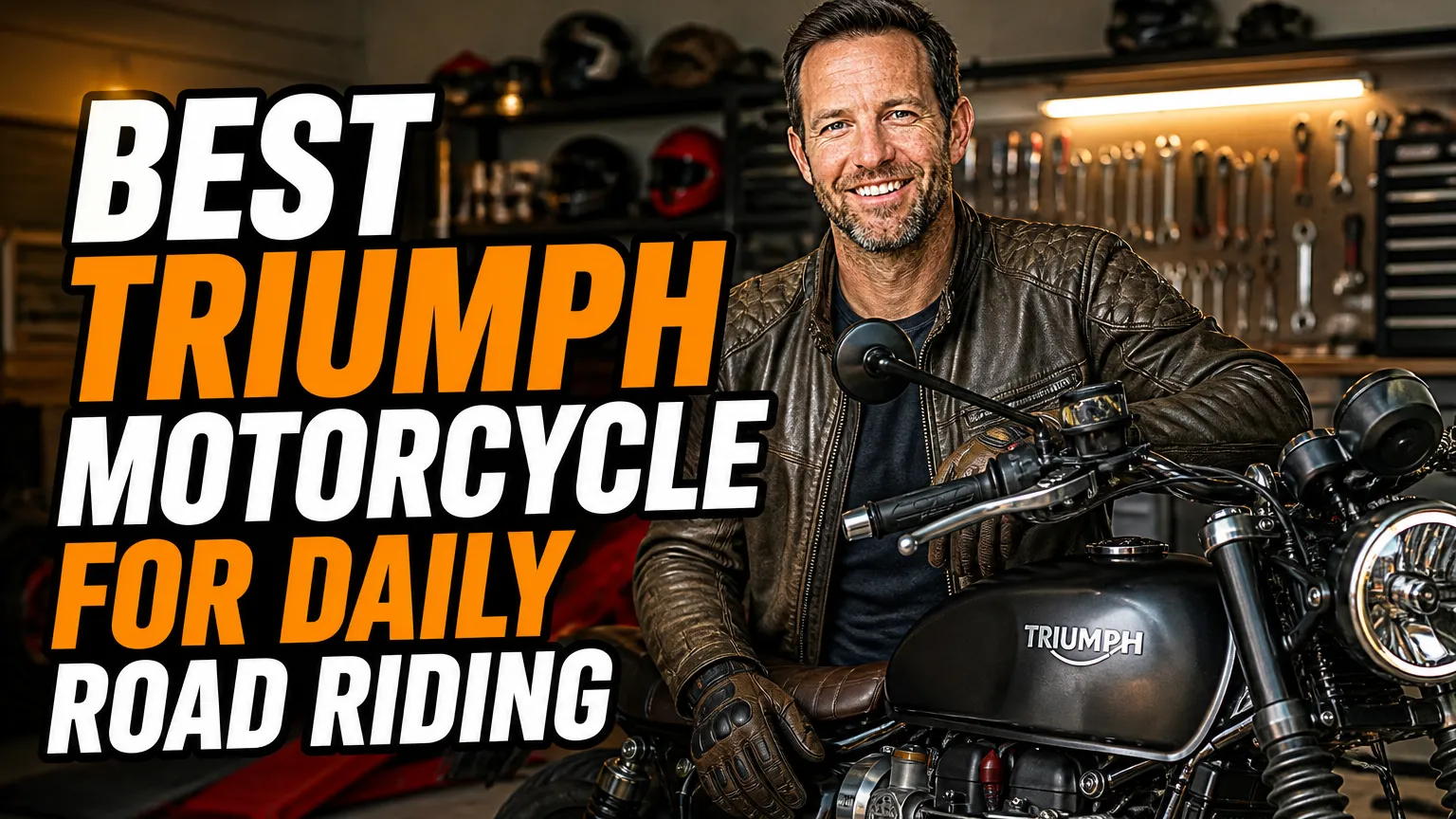
When I choose a motorcycle for everyday roads, I look beyond engine size and styling. I want something that feels manageable in traffic, stays comfortable on longer rides, and has enough performance to make ordinary trips enjoyable without feeling like hard work.
Triumph’s range covers everything from an approachable 400cc roadster to a capable middleweight adventure-tourer. My choice for the best Triumph motorcycle for daily road riding depends on my route, budget, passenger needs, and whether I prioritize easy city handling or all-day comfort.
- I’d pick the Speed 400 for an affordable, approachable everyday roadster.
- I’d choose the Tiger Sport 660 for a versatile commute plus weekend trips.
- The Trident 660 brings lively three-cylinder performance in a manageable road bike.
- I’d test seat height, passenger comfort, and local service costs before buying any model.
1. Triumph Speed 400 — My Pick for an Approachable Daily Roadster
I’d put the Speed 400 near the top of my shortlist if I wanted a Triumph that felt friendly and straightforward in everyday traffic. Its 398cc single-cylinder engine produces about 40 PS and 37.5 Nm of torque, which gives me useful low- and mid-range response without the weight and power of a larger motorcycle.
The Speed 400’s upright riding position and relatively compact dimensions make it an appealing fit for stop-and-go routes. I also like that it has modern essentials such as ride-by-wire, switchable traction control, and ABS, while keeping a classic roadster look rather than adding unnecessary bulk.
Why I’d consider it for commuting
At around 170 kg wet, depending on model year and market specification, the Speed 400 is easier for me to maneuver at low speeds than many larger bikes. Its six-speed gearbox and 17-inch road wheels suit paved streets, while the low seat height helps make frequent stops feel less intimidating.
It’s not the choice I’d make for frequent two-up touring or sustained high-speed riding. For those needs, I’d look at a larger Triumph and compare options in this guide to the best 300cc motorcycle for 2 up riding to think through how much room and passenger comfort matter to me.
My buying notes
I’d treat the Speed 400 as a strong-value entry point, with pricing generally positioned around the lower end of Triumph’s range; exact MSRP varies by country and model year. Before buying, I’d sit on it in my normal riding gear and check whether its wind exposure and seat work for my commute.
2. Triumph Scrambler 400 X — My Choice for Rougher Routes
I’d consider the Scrambler 400 X if my daily roads included broken pavement, steep driveways, or occasional gravel access. It shares the Speed 400’s 398cc engine, with approximately 40 PS and 37.5 Nm, but its more upright stance and scrambler-style setup give it a different kind of everyday appeal.
The larger 19-inch front wheel, longer-travel suspension, and increased ground clearance help it feel better suited to uneven surfaces than a conventional roadster. Triumph also equips the Scrambler 400 X with practical details such as hand guards and a wider handlebar, though equipment can vary by market and model year.
Where I think it works best
For me, the Scrambler 400 X makes sense when a commute isn’t limited to smooth city streets. The taller riding position can improve my view through traffic, and its suspension gives me more room to deal with imperfect pavement, but the extra height may be less convenient for shorter riders.
I’d still remember that it’s a road-oriented small-capacity motorcycle, not a full-size off-road machine. Its roughly 179 kg wet weight is manageable for many riders, but I’d compare its seat height and low-speed balance against the Speed 400 before deciding which one better suits my daily route.
My buying notes
I’d expect the Scrambler 400 X to cost somewhat more than the Speed 400, with actual prices depending on location, year, and dealer charges. I’d choose it when the added suspension travel and scrambler ergonomics solve a real problem for me, rather than buying it solely for its rugged appearance.
3. Triumph Speed Twin 900 — My Pick for Relaxed, Stylish Road Miles
I’d look at the Speed Twin 900 if I wanted a daily motorcycle with classic lines and more relaxed engine character. Its 900cc parallel-twin engine makes about 65 PS and 80 Nm in recent specifications, giving me a broad spread of torque that feels well suited to ordinary roads and quick overtakes.
The Speed Twin 900’s low, roadster-style stance is appealing when I want a bike that feels planted and approachable at stops. It combines modern equipment with traditional design cues, including a twin-sided rear swingarm and round headlight, so I can get contemporary usability without an overtly futuristic look.
What I’d weigh up for everyday use
I’d expect its larger engine to feel less strained than a 400cc bike when traffic opens up or I carry luggage. The trade-off is more weight and a higher purchase and running-cost commitment, so I’d think carefully about whether my regular route makes that extra capacity worthwhile.
If most of my riding is through tight streets and crowded parking, I might prefer a smaller Triumph. I’d also check how the seat, bars, and footpeg position feel after a proper test ride, since classic styling alone doesn’t guarantee comfort over a full working week.
My buying notes
I’d budget for a middleweight-class price and confirm the current local specification, because equipment and pricing can differ across markets. When I want a road-focused classic that can handle a daily commute and a relaxed weekend ride, the Speed Twin 900 is one of Triumph’s most appealing options.
4. Triumph Trident 660 — My Pick for Lively Everyday Performance
I’d choose the Trident 660 if I wanted a compact roadster with the distinctive character of a triple engine. Its 660cc three-cylinder motor delivers strong performance for ordinary road use; published output has been around 81 PS and 64 Nm on earlier versions, while specifications can change with model updates and markets.
The Trident’s relatively upright ergonomics and manageable proportions make it easier for me to imagine using every day than a more aggressive sportbike. I also value its modern rider aids, including ABS and traction control, with additional electronic features depending on the model year and trim.
Why the triple suits a mixed commute
I like the idea of having smooth low-speed behavior for traffic, then a stronger surge when I reach open roads. The Trident 660 gives me more performance headroom than the 400cc options, while still keeping the straightforward naked-bike format that works well for errands and city parking.
Wind protection is limited, as I’d expect from a naked motorcycle, so I’d factor that into any regular highway commute. For a broader comparison of road-focused choices, I’d also browse this guide to the best motorcycle for street riding.
My buying notes
I’d expect the Trident 660 to sit above the smaller 400 models in price and performance. I’d confirm the current model’s power figures, electronics, and seat height with a local Triumph dealer, then take a test ride that includes both slow traffic and a faster stretch of road.
5. Triumph Tiger Sport 660 — My Pick for Commuting and Weekend Trips
I’d choose the Tiger Sport 660 when my daily ride might turn into a long weekend route. It uses Triumph’s 660cc triple, with earlier versions rated at about 81 PS and 64 Nm, and pairs that engine with a more upright riding position and a practical sport-touring layout.
Its 17-inch road wheels, useful wind protection, and approximately 17.2-liter fuel tank make it a versatile choice for paved roads. A pillion seat and the option to fit luggage can also help when I need to carry a passenger or pack for a short trip.
Where I find it especially useful
Compared with the Trident 660, I’d expect the Tiger Sport 660 to feel more relaxed over distance because of its taller screen and touring-friendly ergonomics. It’s still designed primarily for roads, so I wouldn’t mistake its adventure-inspired silhouette for a reason to take it onto serious off-road terrain.
At roughly 206 kg wet in commonly listed specifications, it’s heavier than the small 400s, and I’d want to check how easily I can handle it when parking or filtering through traffic. If my routine is mostly short trips in dense neighborhoods, I’d compare it with this guide to the best motorcycle for town riding.
My buying notes
I’d place the Tiger Sport 660 among the best balanced Triumph options for riders who commute during the week and travel on weekends. Before choosing one, I’d test the screen at my usual road speed and see whether the riding position remains comfortable after at least half an hour in the saddle.
6. Triumph Street Triple 765 R — My Pick for a Sportier Daily Ride
I’d consider the Street Triple 765 R if I wanted my commute to feel more exciting and regularly rode open, flowing roads. Its 765cc triple produces around 120 PS and 80 Nm in common R-specification figures, making it substantially more powerful than I need for routine errands but rewarding when I have room to use it responsibly.
The Street Triple 765 R is a focused naked sportbike, with sharp handling, strong brakes, and adjustable suspension. That hardware gives me plenty of control on good pavement, although the firmer setup and more purposeful riding position may be less relaxing over rough streets or very long stop-and-go commutes.
What I’d consider before choosing it
I’d be honest with myself about whether I want that much performance for everyday use. Its roughly 189 kg wet weight is still reasonable for a high-performance motorcycle, but engine power, tire costs, and insurance can make ownership more demanding than it is with a Speed 400 or Speed Twin 900.
I’d also pay attention to heat, riding position, and the condition of the roads I use most. If I ride mostly through congested urban areas, I’d compare more practical choices in this guide to the best motorcycle for urban riding before committing to a sportier machine.
My buying notes
I’d choose the Street Triple 765 R because I genuinely enjoy a precise, energetic road bike, not because I assume its top performance automatically makes it a better commuter. I’d check the latest model-year electronics and suspension specification, and I’d budget for premium tires and regular maintenance.
7. Triumph Bonneville T100 — My Pick for Classic Everyday Character
I’d shortlist the Bonneville T100 if I wanted the feel and appearance of a classic British roadster with modern essentials. Its 900cc parallel twin produces roughly 65 PS and 80 Nm in recent specifications, and I’d expect its low-rev torque to make ordinary road speeds feel natural rather than demanding.
The T100 brings a traditional riding position, wire-spoke wheels, and familiar Bonneville styling, along with features such as ABS and traction control. Its roughly 790mm seat height can make it feel approachable, though the bike’s listed wet weight of around 228 kg is something I’d notice when moving it around a garage or parking space.
How I’d use it day to day
For me, the Bonneville T100 suits someone who values unhurried, comfortable road riding and wants a motorcycle with a strong sense of heritage. It can commute and tour, but its weight and classic-oriented setup may be less convenient than the 400cc models when my route involves constant filtering or tight parking.
I’d take a test ride over my typical roads and see how the seat feels after an hour, rather than judging comfort from a quick spin around the block. I’d also consider wind protection, since the standard T100 has little of it compared with a touring-oriented model.
My buying notes
I’d expect the T100 to cost more than the entry-level Triumphs and would check local pricing, service schedules, and accessory costs before buying. I’d choose it when classic styling and relaxed twin-cylinder character matter just as much to me as basic commuting practicality.
How I’d Choose Between These Triumphs
When my priority is light weight, manageable power, and a lower entry price, I’d start with the Speed 400. I’d move to the Scrambler 400 X if my regular roads are rough, while the Speed Twin 900 and Bonneville T100 appeal more when I want classic styling and a bigger twin-cylinder engine.
If my commute includes frequent highway stretches or I want one motorcycle for both work and weekend trips, I’d test the Trident 660 and Tiger Sport 660 back to back. I’d lean toward the Trident for a nimble naked-bike feel and the Tiger Sport when wind protection, luggage potential, and longer-distance comfort matter more to me.
My practical test-ride checklist
I’d bring the riding gear I use every day and check whether I can place my feet comfortably at a stop. Then I’d pay attention to clutch effort, low-speed balance, mirror visibility, and whether the controls feel natural after a few turns and stops.
I’d also price insurance, scheduled servicing, and any luggage or screen I expect to add. No motorcycle is the right daily choice for every route, and I’d never choose a bike for winter conditions based on its name or looks alone; I’d read a dedicated guide to the best motorcycle for riding in snow before riding in genuinely wintry weather.
My Final Verdict
For a straightforward, accessible road bike, I’d choose the Triumph Speed 400. For a more versatile all-rounder that can handle commuting and longer paved rides, I’d put the Tiger Sport 660 at the top of my list, while the Trident 660 is my choice when I want stronger performance in a compact roadster.
I’d make my final decision after riding my likely choices on familiar roads and checking their total ownership costs. The best Triumph for my daily routine is the one that feels comfortable, manageable, and enjoyable on the roads I actually ride.
Frequently Asked Questions
Which Triumph is best for daily commuting?
I’d start with the Speed 400 for affordable, manageable commuting or the Tiger Sport 660 if I wanted more power and touring comfort.
Is the Triumph Speed 400 suitable for highway riding?
Yes, I consider it capable of occasional highway trips, but its 398cc engine has less passing reserve than Triumph’s larger models.
Which Triumph is best for a daily ride with a passenger?
I’d look at the Tiger Sport 660 for its upright position and practical versatility, then test the passenger seat and suspension with my passenger aboard.
Are Triumph motorcycles expensive to maintain?
Costs vary by model, location, and service interval. I’d check local dealer labor rates, scheduled maintenance requirements, and parts availability before buying.

Related Articles

Triumph Tiger 1050 Problems: An Owner’s Honest Guide to What Actually Goes Wrong
I've ridden and wrenched on the Triumph Tiger 1050 for years. Here are the real problems to watch for, from…
 Jake Miller
8 min read
Jake Miller
8 min read