
8 Best Beginner Motorcycles for Comfortable, Confident Everyday Riding
 Jake Miller
10 min read
Jake Miller
10 min read
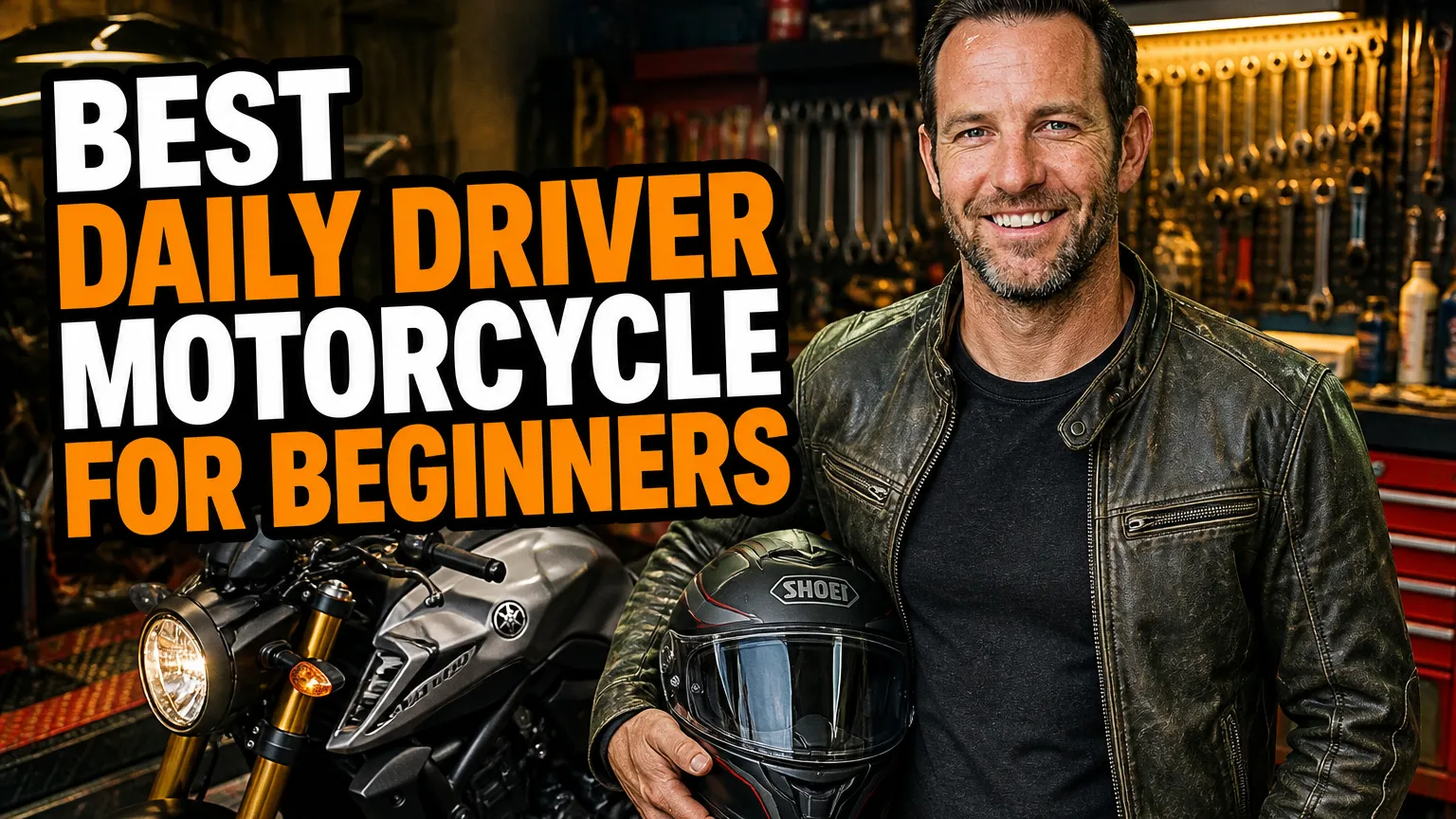
When I look for the best daily driver motorcycle for beginners, I want more than a bike that feels friendly in a parking lot. I want something I can handle in traffic, park without a wrestling match, and ride comfortably on the way to work or out for a weekend loop.
My shortlist below covers several styles and budgets, from light naked bikes to approachable cruisers and small adventure models. I’d still sit on any bike I’m considering and, if possible, take a supervised test ride: fit and confidence matter just as much as the spec sheet.
- I’d start with a light, predictable bike that fits me comfortably, rather than choosing by engine size alone.
- The Yamaha MT-03 and Kawasaki Z500 ABS are strong all-round naked-bike options for everyday riding.
- I’d look at the Honda Rebel 500 ABS or Kawasaki Eliminator ABS if I prefer a low seat and cruiser ergonomics.
- I’d budget for protective gear, training, insurance, and maintenance as well as the motorcycle itself.
How I choose a beginner-friendly daily rider
I value predictable throttle response, accessible controls, and a riding position I can sustain for a commute. A low seat can make stops feel less intimidating, but it isn’t the only measure of fit; handlebar reach, footpeg position, and the bike’s balance matter too.
I also consider weight, engine character, fuel range, service access, and whether ABS is available. ABS can help prevent a wheel from locking during hard braking, but it doesn’t replace practice. I’d take a recognized rider-training course and check local licensing rules before shopping.
Displacement is only a rough guide. Riders comparing smaller machines can also browse my guides to the best 125cc motorcycle for beginners, the best 250cc motorcycle for beginners, and the best 300cc motorcycle for beginners. I’d treat those as starting points, then compare real fit and local road needs.
1. Yamaha MT-03 — My pick for a light, approachable commute
The Yamaha MT-03 is the bike I’d put near the top of a new rider’s test-ride list if they want a compact naked motorcycle. Its 321cc liquid-cooled parallel-twin engine is paired with a six-speed gearbox, and its narrow, upright layout makes it feel suited to city streets and everyday errands.
I like the MT-03’s relatively light feel and straightforward controls for slow-speed practice and tight parking. Its inverted front fork and dual-channel ABS add useful hardware, though I’d still take time to learn smooth braking and clutch control before carrying a passenger or tackling busy roads.
What I’d consider before buying
The MT-03 has less passing reserve than a larger twin, so I’d think carefully about my commute if it involves frequent high-speed highway travel. Recent U.S. new-bike pricing is generally in the low-to-mid $5,000 range before dealer charges, with model year and location affecting the final price.
2. Kawasaki Z500 ABS — My all-rounder for mixed city and highway use
The Kawasaki Z500 ABS gives me a little more engine capacity while keeping the upright, unfaired naked-bike format. Its 451cc liquid-cooled parallel twin and six-speed transmission make it a sensible choice for riders who expect to mix city commuting with occasional faster roads.
I’d pay attention to its seat height and feel at a stop, rather than assuming a bigger engine automatically makes it difficult. The Z500’s standard ABS version gives me the braking aid I’d want to see on a daily bike, while its compact proportions help keep the riding experience approachable.
Why I’d test it against the smaller options
Compared with a 300cc-class motorcycle, the Z500 offers more flexibility for joining faster traffic, but it also costs more and asks me to manage additional power responsibly. Depending on model year and trim, I’d expect U.S. new-bike pricing to land around the mid-$5,000s to low-$6,000s before fees.
For riders narrowing down the middleweight beginner category, I’d also compare it with options in my guide to the best 400cc motorcycle for beginners. I’d choose based on comfort and control, not a spec-sheet contest.
3. Honda Rebel 500 ABS — My choice for a low-seat cruiser
The Honda Rebel 500 ABS stands out to me when a rider wants cruiser styling without jumping straight to a very large machine. It uses a 471cc liquid-cooled parallel twin, and its low 27.2-inch seat gives many riders a reassuring place to start when they come to a stop.
I’d consider the Rebel for a relaxed commute, local errands, and weekend rides. Its low seat doesn’t mean it fits everyone equally well: I’d check whether my knees feel cramped and whether the forward-set foot controls suit my body before deciding.
Where I see the trade-offs
The Rebel’s relaxed layout may be less appealing if I want an upright, highly maneuverable feel for filtering through dense city traffic. I’d choose the ABS version if available in my market, and I’d compare recent U.S. pricing in roughly the mid-$6,000 range before taxes and dealer fees.
4. Royal Enfield Hunter 350 — My value-minded city pick
The Royal Enfield Hunter 350 is a simple, characterful option I’d consider for urban riding and shorter commutes. Its 349cc air-oil-cooled single-cylinder engine makes modest power, and the five-speed gearbox suits a relaxed pace rather than aggressive acceleration.
I like the Hunter’s approachable styling and relatively compact footprint. It can make sense when my routine is mostly city streets, local roads, and lower-speed trips, and I’d check that the local dealer network can support the servicing schedule where I live.
Who I think it suits best
I wouldn’t choose the Hunter 350 if my daily route depends on sustained high-speed highway riding or frequent quick overtakes. Its single-cylinder character and manageable performance are part of the appeal, but they also define its limits. Recent U.S. pricing is typically around the low-to-mid $4,000s before taxes and fees, depending on model year and dealer.
5. KTM 390 Duke — My pick for a lively, tech-forward naked bike
The KTM 390 Duke is a more spirited option I’d consider for a rider who wants compact dimensions and modern features. Recent versions use a 399cc liquid-cooled single-cylinder engine with a six-speed transmission, and the bike’s upright stance works well for a mix of commuting and weekend rides.
Its ride-by-wire throttle and electronic rider aids can offer useful flexibility, depending on the model year and market. I’d still take time to understand the controls and settings instead of treating extra electronics as a substitute for smooth inputs or training.
My caution for new riders
The 390 Duke’s energetic character may feel more engaging than a calmer commuter, so I’d be honest about my confidence and self-control before buying. It’s also important to check the exact equipment on the bike I’m considering, since features can vary by year and region. Recent U.S. pricing is generally around the high-$5,000s before fees.
6. Kawasaki Eliminator ABS — My low-seat option with more room to grow
The Kawasaki Eliminator ABS combines cruiser-inspired proportions with a 451cc liquid-cooled parallel twin. Its low seat, around 28.9 inches, may make stops feel more manageable for riders who prefer a feet-forward posture, while its engine gives it more flexibility than a small single-cylinder commuter.
I’d try the Eliminator if I want a low-slung bike but find the Rebel’s shape or feel less comfortable. Seat height is only part of the story, so I’d check my reach to the bars and how naturally I can move the bike at walking speed.
How I’d use it day to day
The Eliminator can work for urban trips and moderate-distance rides, but I’d make sure its cruiser ergonomics suit my body before committing to longer days in the saddle. ABS is a feature I’d prioritize for daily use. Recent U.S. pricing for ABS versions is typically in the mid-$6,000s before destination and dealer charges.
7. Honda SCL500 — My versatile retro-style pick
The Honda SCL500 gives me a different take on the familiar 471cc Honda parallel twin. It has a retro scrambler look, an upright riding position, and a 19-inch front wheel, making it an option I’d consider for city riding and imperfect pavement as well as ordinary paved commutes.
I’d look closely at its seat height, around 31 inches, and its weight, roughly 418 pounds curb depending on specification. Those numbers may feel manageable to one rider and awkward to another, especially while maneuvering in a parking space. I’d practice slow turns and stops before deciding it’s the right fit.
What makes it stand out to me
The SCL500’s twin-cylinder engine is familiar from other Honda models, and its upright layout gives me more variety than a dedicated low-seat cruiser. I’d expect new U.S. pricing to be around the upper-$6,000s, though model year and dealer charges affect the out-the-door total.
8. Honda NX500 — My pick for an upright commuter with touring potential
The Honda NX500 is the most adventure-inspired choice on my list. Its 471cc parallel twin, upright riding position, windscreen, and 19-inch front wheel make it appealing if I want a daily motorcycle that can also handle weekend trips on paved roads.
I’d consider the NX500 for longer commutes where wind protection and a more spacious stance matter. Its curb weight is around 432 pounds and its seat is taller than those on the Rebel or Eliminator, so I’d want to verify that I can manage it confidently at stops and in tight parking spots.
When I’d choose it over a naked bike
I’d choose the NX500 if I value its upright ergonomics and touring-friendly shape more than the lighter, simpler feel of a small naked bike. It includes ABS, and recent U.S. pricing is typically in the low-to-mid $7,000s before fees. For a new rider, I’d pair it with basic luggage only after I’m comfortable handling the bike unladen.
How I’d make the final choice
I’d start by sitting on each motorcycle in riding boots and checking that I can reach the bars, operate the controls, and support the bike comfortably at a stop. If seat height is my main concern, I’d also read my guide to the best motorcycle for short beginners, then test the actual models available nearby.
Next, I’d match the bike to my route. A light MT-03 or Hunter 350 could suit a mostly urban commute, while the Z500 or NX500 may make more sense if I regularly use faster roads. I’d also compare insurance quotes, fuel costs, scheduled maintenance, and the availability of parts and service before setting a budget.
Finally, I’d reserve money for a certified helmet, protective jacket and pants, gloves, boots, and rider training. My favorite bike on paper isn’t necessarily the right daily rider if it’s uncomfortable, too costly to insure, or intimidating in traffic. I’d pick the model that lets me practice consistently and ride with a calm, comfortable margin.
Frequently Asked Questions
What engine size is best for a beginner’s daily motorcycle?
I’d choose based on your training, roads, and confidence, not displacement alone. Models around 300cc to 500cc can offer manageable power with enough flexibility for commuting.
Is a 500cc motorcycle too powerful for a beginner?
Not necessarily. I’d look at throttle response, weight, seat height, and ergonomics as well as engine size. A calm, well-fitted 500cc bike can be approachable, but practice and training matter.
Should I buy a new or used beginner motorcycle?
I’d compare the total cost, maintenance history, condition, and insurance. A used bike can save money, while a new bike may offer a warranty and modern safety features such as ABS.
What should I prioritize in a daily motorcycle?
I’d prioritize a comfortable riding position, predictable controls, ABS where available, manageable weight, reliable local servicing, and enough power for the roads I ride.

Related Articles
Motorcycle Wheelbase Explained: How It Shapes Stability, Handling, and Comfort
Learn what motorcycle wheelbase measures, how it influences stability, cornering and comfort, and how I compare the spec when choosing…
Jake Miller
11 min read
Inside the Backbone: How This Motorcycle Frame Works and What Riders Should Know
Learn how a motorcycle backbone frame works, how it compares with other chassis designs, and what I check for in…
Jake Miller
10 min read
7 Best Touring Motorcycles for New Riders Who Want to Go Far
Seven approachable touring motorcycles for new riders, with real specs, comfort trade-offs, price guidance, and my picks for highways, weekends,…
Jake Miller
12 min read