
7 Beginner-Friendly Three-Wheel Motorcycles for Confident, Stable Riding
 Jake Miller
11 min read
Jake Miller
11 min read
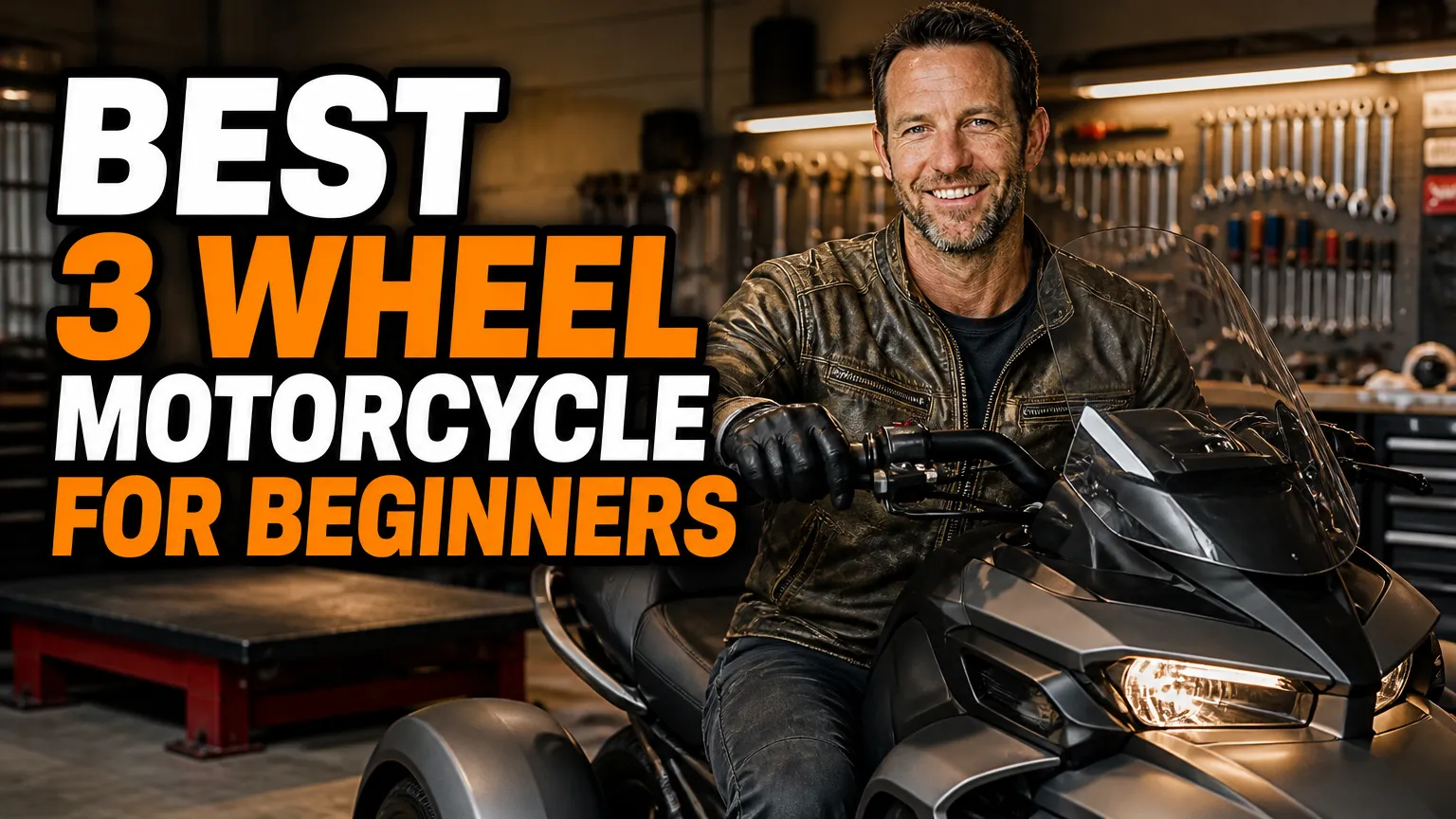
When I look for the best 3 wheel motorcycle for beginners, I focus on more than the extra tire. A three-wheeler can feel reassuring at a stop, but steering, weight, braking, and licensing can differ significantly from a conventional motorcycle. The right choice depends on whether you want a light scooter, a nimble recreational ride, or a full-size touring machine.
Below, I compare seven real models I’d consider for a new rider. I’ve included approachable options first, along with larger machines that may suit a beginner who has a specific need for touring comfort or additional carrying capacity. Model availability and prices can vary by country and model year, so I’d confirm local specifications with a dealer.
- I’d start with the Can-Am Ryker 600 for its automatic transmission and beginner-manageable power.
- The Piaggio MP3 310 and Yamaha Tricity 300 are scooter-style choices with two front wheels.
- A three-wheeler can stay upright at a stop, but it still requires practice, protective gear, and careful steering.
- I’d treat full-size Can-Am and Harley-Davidson touring models as specialized, heavy options rather than automatic beginner picks.
How I choose a three-wheeler for a new rider
I first consider how the vehicle steers. A Can-Am Spyder or Ryker has two wheels at the front and one at the rear, while the Piaggio MP3 and Yamaha Tricity use two front wheels and a single rear wheel in a scooter layout. Those designs can feel quite different from each other, so I would test ride the exact model I’m considering.
I also pay attention to power delivery, weight, braking, and how easy it is to move the vehicle around a parking area. Three wheels may help a machine remain upright when stopped, but they don’t make a heavy vehicle effortless to maneuver or guarantee that a beginner will feel comfortable on the road.
Before buying, I check local license and training requirements. I’d also ask a dealer about the vehicle’s safety systems, maintenance schedule, storage, and whether a beginner course is available. If I’m open to two wheels instead, I’d compare these options with the best 125cc motorcycles for beginners and other smaller-displacement bikes before making a decision.
1. Can-Am Ryker 600 — My pick for an approachable first ride
The Can-Am Ryker 600 is where I’d begin if I wanted a purpose-built three-wheeler with a relatively simple learning curve. Its 600cc Rotax twin-cylinder engine, continuously variable transmission, and automatic-style operation mean I don’t have a clutch lever or conventional gears to coordinate while learning the basics of traffic awareness and braking.
The Ryker uses Can-Am’s two-front, one-rear layout and includes electronic rider aids such as stability control and traction control. It also has reverse, which I value when parking in a tight space. The 600 is less powerful than the Ryker 900, making it the more sensible starting point for a rider who doesn’t need extra acceleration.
What I like, and what I’d check
I like that the Ryker is designed around recreational riding rather than long-haul touring. Its adjustable foot pegs and handlebars help accommodate different body sizes, although I’d still sit on one in person. Pricing varies by trim and model year, but I’d expect it to sit below the larger Spyder touring models, with dealer fees and accessories adding to the final bill.
The Ryker is not a two-wheeled motorcycle with training wheels. Steering input and cornering feel different, and I’d practice at low speeds in a safe area before riding in busy traffic. For that combination of manageable engine size and straightforward controls, it’s my strongest all-around starting recommendation.
2. Can-Am Ryker 900 — My choice when I want more passing power
The Can-Am Ryker 900 keeps the same general format as the Ryker 600 but uses a larger 900cc Rotax engine. Depending on the trim and model year, Can-Am lists output around 82 horsepower. It retains the CVT-style transmission and electronic stability features, so the rider’s basic control routine is much like that of the 600.
I’d consider the 900 if I expected to ride on faster roads, carry a passenger, or simply wanted stronger acceleration. That extra performance is useful, but I wouldn’t assume it makes the 900 a better first vehicle. New riders should be honest about their comfort with throttle response and their ability to manage speed.
Who I think it suits
The Ryker 900 makes sense for a beginner who has already completed training or who is confident starting with a more powerful recreational machine. It has reverse and an adjustable riding position, but it remains a compact open-air vehicle with limited weather protection and less touring storage than a Spyder RT.
I’d compare the 900’s price and equipment with the 600 before deciding. If my priority were to learn on a conventional two-wheeler instead, I’d also look at the best 250cc motorcycles for beginners or best 300cc motorcycles for beginners to see whether a lighter, narrower machine better fits my plans.
3. Can-Am Spyder F3 — My pick for a more substantial roadster
The Can-Am Spyder F3 is a larger, more powerful step up from the Ryker. Recent F3 versions use a 1,330cc Rotax ACE three-cylinder engine paired with a six-speed semi-automatic transmission and reverse. The transmission lets me shift without a manual clutch, but I still need to learn the shift controls and pay attention to the bike’s size and pace.
I like the F3’s roadster character and more substantial feel for longer rides. Its two-front-wheel layout, stability control, traction control, and anti-lock braking system provide useful assistance, but none of those features replaces rider skill. Depending on trim, the F3 can add conveniences such as different seating, wind protection, and storage.
Why it may not be my first recommendation
The F3 is heavier and more powerful than a Ryker 600, and its higher purchase price can make a minor parking mishap more costly. I’d want a test ride and preferably some three-wheel training before choosing it as my first powered two- or three-wheeled vehicle.
If I were set on the Spyder platform but wanted a machine for regular highway use, the F3 would be on my shortlist. I’d check the exact trim carefully because equipment and pricing vary. For a brand-new rider primarily learning basic control, though, I’d usually start with the Ryker 600.
4. Can-Am Spyder RT — My choice for two-up touring comfort
The Can-Am Spyder RT is the touring-focused model in this group. It shares the 1,330cc Rotax three-cylinder engine and semi-automatic transmission used in other Spyder versions, but its larger body is built around rider and passenger comfort. Depending on the model year and trim, touring equipment can include substantial storage, a passenger backrest, wind protection, and comfort features such as heated contact points.
That equipment makes the RT appealing if I want to cover distance with luggage or ride with a passenger. It also makes the machine large and expensive compared with a compact Ryker. I would not mistake its comfort features for beginner-friendly handling at walking speed; parking, backing up, and navigating tight spaces still take practice.
My beginner caveat
I’d shortlist the Spyder RT if a new rider has a clear touring need, can comfortably manage the machine, and has budgeted for training and protective gear. I’d ask the dealer to demonstrate reverse and parking procedures before leaving the lot, then practice in a quiet area.
For most people learning to ride, I see the RT as a machine to grow into rather than the easiest place to start. It’s a good example of why I choose by intended use instead of simply picking the largest or most feature-packed model.
5. Piaggio MP3 310 — My pick for urban scooter-style riding
The Piaggio MP3 310 is a three-wheel scooter with two wheels at the front and one at the rear. Its 310cc single-cylinder engine, automatic transmission, step-through layout, and scooter-style controls make it a very different proposition from the Can-Am machines. I’d consider it for commuting and everyday trips rather than long-distance touring.
A distinctive MP3 feature is its front suspension system, which allows the front wheels to lean while riding and can be locked at a stop in suitable conditions. It also comes with modern braking and rider-assistance equipment that varies by version and market. I’d check the local specification sheet rather than assume every market gets identical features.
Where it fits best
I like the MP3’s practical layout for low-speed city use, but I’d still take time to learn how its leaning front end feels when cornering. Its weight and width are different from those of a regular scooter, and local rules may classify it differently from a motorcycle.
Availability and pricing depend heavily on the country, so I’d confirm that the MP3 310 is sold and supported near me. For a beginner who wants automatic controls and useful urban practicality, it’s a compelling alternative to a recreational trike.
6. Yamaha Tricity 300 — My pick for a commuter with two front wheels
The Yamaha Tricity 300 is another scooter-style three-wheeler, built around Yamaha’s Leaning Multi Wheel system. Its approximately 292cc single-cylinder engine and automatic transmission suit commuting better than high-speed touring. Yamaha’s design lets the two front wheels lean together when cornering, giving the rider a different steering sensation from a Can-Am Ryker or Spyder.
Features such as ABS and a parking brake help make the Tricity practical for day-to-day stops. Some versions also offer a standing-assist system to help keep the scooter upright when stationary. I’d verify the equipment on the exact year and market version, since availability and specifications can change by region.
My take on its learning curve
The Tricity 300 appeals to me as a commuter for someone who wants scooter ergonomics and the added front-wheel contact patch. It is not a machine I’d buy without trying first: the leaning front suspension feels distinctive, and a beginner needs to build confidence with its steering and braking.
Like the Piaggio, the Tricity is not available in every market. I’d confirm local dealer support, licensing classification, and parts access before committing. If I planned to ride mostly on open roads rather than through town, I’d compare it with a conventional beginner motorcycle in the 300cc or 400cc class.
7. Harley-Davidson Tri Glide Ultra — My pick for a full-size touring trike
The Harley-Davidson Tri Glide Ultra is a factory-built touring trike with a Milwaukee-Eight V-twin engine, a passenger-friendly touring setup, and substantial luggage capacity. It is designed for long-distance comfort, not for being lightweight or inexpensive. Its reverse gear, touring amenities, and three-wheel stance can be helpful for some riders, but its size and mass demand careful practice.
I’d put the Tri Glide Ultra on a beginner’s list only when the rider has a strong reason to choose a full-size trike, such as a touring requirement or a preference for Harley-Davidson’s format. It is a much larger commitment than the Ryker 600 or a scooter-style three-wheeler, and its purchase and ownership costs are typically high.
What I’d do before buying
I’d sit on the Tri Glide, practice low-speed turns with a qualified instructor, and ask a dealer to explain the controls, reverse operation, braking system, and current model-year equipment. I would also check that I can manage it comfortably when maneuvering into a parking space, not just when cruising down a highway.
For a rider who wants a premium touring trike and is ready for its physical scale, it can be a rewarding choice. For most beginners without that specific need, I’d start with something smaller and build experience first.
My final advice before choosing
For a straightforward starting point, I’d put the Can-Am Ryker 600 at the top of my list. The Piaggio MP3 310 and Yamaha Tricity 300 deserve a close look if I want an automatic scooter for city use, while the Spyder RT and Tri Glide Ultra make more sense when comfort and touring capacity matter more than low weight or a modest budget.
I’d test ride more than one layout if possible, take a recognized training course, and wear a properly fitted helmet and protective gear. I’d also confirm licensing requirements before putting down a deposit. A three-wheeler can be a confidence-building way to ride, but I still treat it as a motor vehicle that calls for skill, attention, and respect.
If I decide that a traditional two-wheeler might suit me better, I’d compare seat height, weight, and engine size across other beginner options, including the best motorcycles for shorter beginners and the best 400cc motorcycles for beginners. The best first ride is the one I can control confidently and use for the kind of riding I actually plan to do.
Frequently Asked Questions
What is the easiest three-wheel motorcycle for a beginner to ride?
I would start by considering the Can-Am Ryker 600 for its automatic transmission, manageable power, and accessible controls. A test ride and training are still essential.
Do I need a motorcycle license for a three-wheel motorcycle?
Licensing rules depend on your location and the vehicle classification. I recommend checking with your local licensing agency before buying; some places require a motorcycle endorsement or a separate three-wheel test.
Are three-wheel motorcycles safer than two-wheel motorcycles?
Three wheels can provide more stationary stability, but they do not remove the risks of riding. I still use protective gear, take training, and ride within my limits.
Is a three-wheel motorcycle a good choice for a short beginner?
It can be, but seat height is only one part of the fit. I check reach to the handlebars and controls, weight, and whether I can comfortably maneuver the vehicle. A motorcycle fit guide for shorter beginners can help with those checks.

Related Articles
Motorcycle Wheelbase Explained: How It Shapes Stability, Handling, and Comfort
Learn what motorcycle wheelbase measures, how it influences stability, cornering and comfort, and how I compare the spec when choosing…
Jake Miller
11 min read
Inside the Backbone: How This Motorcycle Frame Works and What Riders Should Know
Learn how a motorcycle backbone frame works, how it compares with other chassis designs, and what I check for in…
Jake Miller
10 min read
7 Best Touring Motorcycles for New Riders Who Want to Go Far
Seven approachable touring motorcycles for new riders, with real specs, comfort trade-offs, price guidance, and my picks for highways, weekends,…
Jake Miller
12 min read