
Ninja 400 vs Ninja 650: An Owner’s Honest Take on Which One You Should Buy
 Jake Miller
9 min read
Jake Miller
9 min read
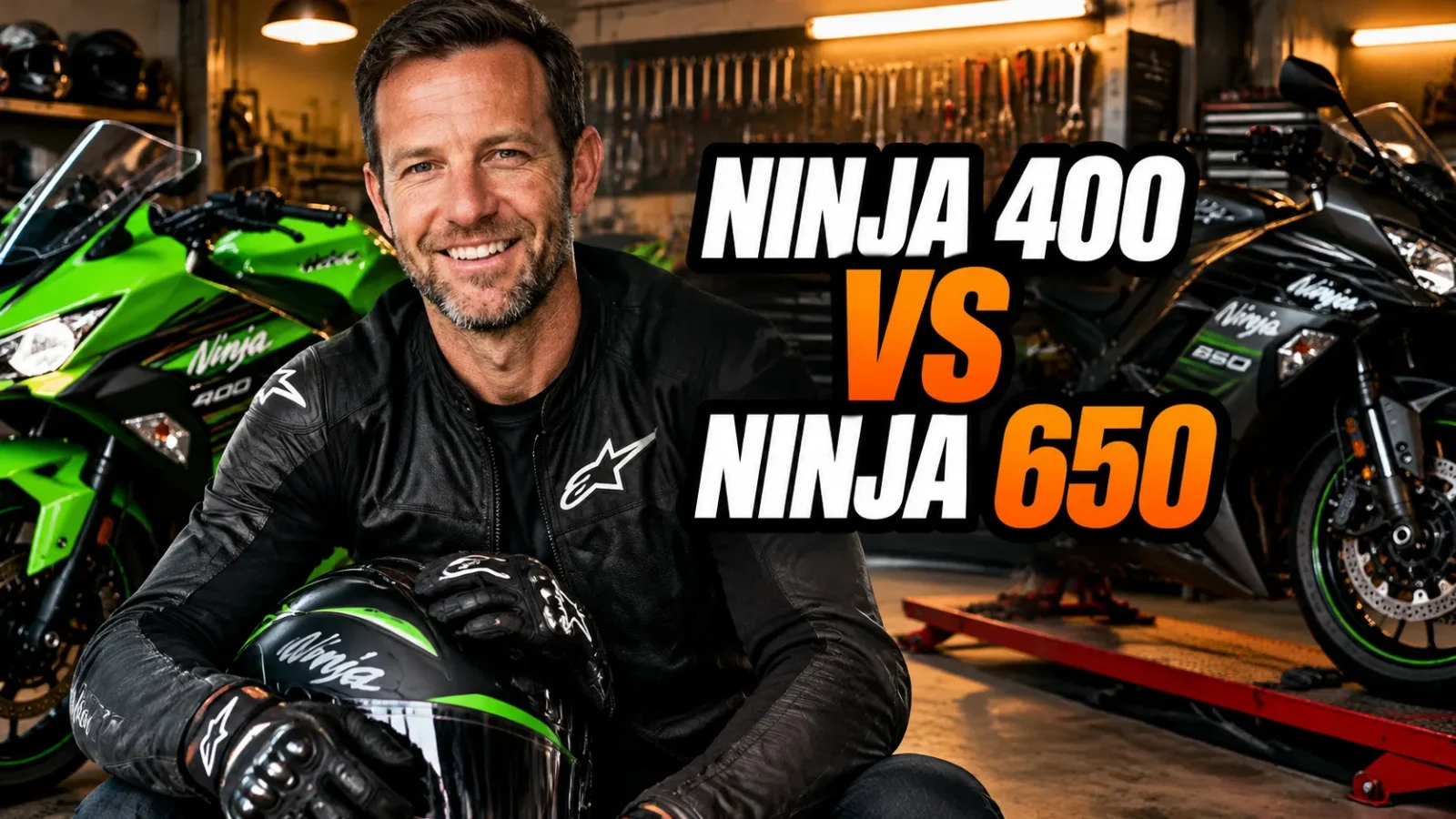
I bought a Ninja 400 as my first brand new motorcycle, put about 14,000 miles on it over two seasons, and then spent a long summer borrowing a friend’s Ninja 650 while my bike was in the shop for a valve check. That overlap turned out to be the best thing that ever happened to my riding, because it forced me to stop guessing about the difference between these two bikes and actually feel it.
Since then, I’ve ridden both back to back on canyon roads, on interstate slogs, in city traffic, and on one very regrettable 400-mile day. I’ve also watched half a dozen friends agonize over this exact decision. So here’s my honest, owner-level breakdown of the Ninja 400 vs Ninja 650, including the parts nobody mentions in spec sheet comparisons.
- The Ninja 400 is lighter, cheaper, and easier to learn on, but feels busy at sustained highway speeds.
- The Ninja 650 makes roughly 20 more horsepower and a lot more midrange torque, which transforms highway riding.
- Both share the same friendly parallel-twin character and a slipper clutch, so neither is intimidating.
- Insurance, purchase price, and tires all favor the 400 by a wide margin.
- If you ride mostly city and back roads, buy the 400. If you commute on highways or plan to keep the bike for years, buy the 650.
Why This Comparison Is Harder Than It Looks
On paper, these two bikes look like they’re in completely different leagues. One is a 399cc entry-level machine, the other is a 649cc middleweight. But sit on them in a showroom and the gap shrinks dramatically.
They share the same basic architecture: a liquid-cooled parallel twin, a six-speed gearbox, a light assist-and-slipper clutch, and an upright-ish sportbike riding position. Kawasaki clearly designed the 650 as the natural upgrade path for 400 owners, and you can feel that family resemblance the moment you pull away.
That’s exactly why this decision trips so many people up. It isn’t a comparison between a beginner bike and an expert bike. It’s a comparison between two versions of the same idea, tuned for different jobs.
Engine and Power: Two Very Different Twins
The 400’s rev-happy little engine
The Ninja 400’s 399cc engine makes around 45 horsepower and needs revs to do its best work. Below 5,000 rpm it’s perfectly polite and easy to manage, which is why it’s such a forgiving first bike. Above 7,000 rpm it wakes up and pulls surprisingly hard for its size.
I genuinely enjoyed wringing it out. There’s something satisfying about using every gear and every rpm and still staying within legal-ish speeds. You feel like a hero at 60 mph, which is a real and underrated quality in a motorcycle.
The tradeoff is that you’re always working the gearbox. Passing a truck on a two-lane road requires planning, a downshift or two, and commitment.
The 650’s torquey bigger brother
The Ninja 650’s 649cc engine makes roughly 67 horsepower, and more importantly it makes usable torque much lower in the rev range. From about 3,500 rpm it just pulls, smoothly and without drama.
My first ride on it was genuinely eye-opening. I rolled on the throttle at 65 mph in sixth gear and the bike simply accelerated, no downshift required. After two years of planning every pass on the 400, that felt like a superpower.
It’s not a fast bike in absolute terms. A modern 600 supersport would demolish it. But it’s fast enough everywhere it matters, and it never feels like it’s straining.
Weight, Size, and What It Feels Like to Sit On
The Ninja 400 weighs in around 366 pounds wet. The Ninja 650 is closer to 423 pounds. That 55-ish pound difference sounds small on paper, but it changes everything about how the bike feels at a standstill.
Pushing the 400 around a garage, backing it out of a parking space, or catching a wobble at a stoplight, it feels almost toy-like. The 650 feels like a real motorcycle, with real weight to manage. Neither is heavy by motorcycle standards, but the 400 is noticeably friendlier for shorter or less experienced riders.
Seat heights are nearly identical, around 31 inches on both, and the reach to the bars is similar. The 650 does feel slightly wider between your knees, and its extra bulk makes slow-speed maneuvering a bit more deliberate.
Handling: Flickable vs. Planted
On tight, twisty back roads, the Ninja 400 is more fun. There’s no other way to say it. Its lighter wheels and lower mass let it change direction with a thought, and you can carry surprising corner speed because the bike never fights you.
The Ninja 650 is more planted and more stable, especially at higher speeds and over imperfect pavement. It doesn’t flop into corners as eagerly, but once it’s leaned over it feels glued down.
Here’s the thing I didn’t expect: on longer rides, I preferred the 650. On short, aggressive rides, I preferred the 400. The bike that suits you depends entirely on the roads you actually ride.
Highway and Long-Distance Reality Check
This is where the two bikes separate most sharply, and it’s the single most common reason people upgrade.
At 75 mph, the Ninja 400 is spinning high, buzzing through the bars and pegs, and has very little left in reserve. It’ll do it all day, but it isn’t relaxing. Wind protection is minimal and the bike gets pushed around by crosswinds and passing semis.
The Ninja 650 at the same speed feels unhurried. It’s smoother, more stable, and it has enough power to pass without a full tactical briefing. If your commute involves any real highway mileage, this alone justifies the price difference.
I did a 400-mile day on each. On the 400 I was exhausted. On the 650 I was tired but fine. That’s a meaningful distinction if you ever plan to travel.
Brakes, Suspension, and the Spec Sheet Stuff
Both bikes run a 41mm telescopic fork up front with no adjustment, and both use a single rear disc. The big difference is up front: the Ninja 400 has a single front disc, while the Ninja 650 gets dual front discs.
In practice, the 400’s single disc is entirely adequate because the bike is so light. The 650’s dual setup gives it more consistent stopping power when you’re riding hard or carrying a passenger.
Neither bike has adjustable suspension, and both are set up soft from the factory. If you’re heavy or you ride aggressively, you’ll want to respring the front end eventually. That’s true of both, so it’s not a deciding factor.
Cost of Ownership: Where the 400 Wins Big
This is the part that gets glossed over, and it’s the part that actually matters for most buyers.
The Ninja 400’s MSRP is thousands less than the Ninja 650’s. Insurance quotes on the smaller bike were roughly 30 to 40 percent cheaper for me, and I have a clean record. Tires are narrower and cheaper. Fuel economy is better, generally in the 50 to 60 mpg range versus the 650’s mid-40s.
Over three years, that gap adds up to a genuinely significant amount of money. If budget is a real constraint, the 400 is the smarter financial decision by a wide margin.
The 650 counters with better resale stability and lower running costs per mile if you ride a lot of highway, since it isn’t working as hard. But up front, the 400 is clearly cheaper.
So Which One Should You Actually Buy?
Buy the Ninja 400 if…
You’re a newer rider, you’re on a budget, or most of your riding is city streets and tight back roads. It’s light, forgiving, cheap to run, and genuinely fun. I’d happily own another one as a second bike.
It’s also the better choice if you’re short, light, or nervous about managing a heavier machine. Confidence matters more than horsepower in your first few thousand miles.
Buy the Ninja 650 if…
You commute on highways, you plan to keep the bike for five years or more, or you’ve already outgrown a smaller bike. The extra torque, weight, and stability make it a far better do-everything motorcycle.
It’s also the smarter buy if you ride two-up or want to tour. The 400 can technically do both, but it isn’t happy about either.
The Mistake I See New Riders Make
The most common error is buying the 400 for the wrong reason, then upgrading within a year and eating the depreciation. If you already know you want to ride highways and keep the bike long term, skip the 400 and go straight to the 650. It’s manageable enough for a careful beginner.
The second mistake is buying the 650 because you’re worried about looking like a beginner. That’s a bad reason. Nobody at a bike meet cares what you ride, and the 400 will make you a better rider faster because you can actually use all of it.
One practical note: if you’re shopping new, the Ninja 400 has been replaced by the Ninja 500 in several markets. It’s essentially the same bike with a bit more displacement, so everything here still applies to that comparison.
My Honest Verdict
If I could only own one, I’d take the Ninja 650. Not because it’s better in every way, but because it covers more of the riding I actually do. It’s comfortable on the highway, capable in the canyons, and it never feels like it’s holding me back.
But I’d recommend the Ninja 400 to more people, especially anyone in their first two years of riding. It’s cheaper, lighter, more forgiving, and it teaches you skills that a bigger bike will let you skip. You’ll learn to carry momentum, use the gearbox properly, and brake late, all things a torquey 650 will mask.
Ride both if you possibly can. Twenty minutes on each will tell you more than any spec sheet, including this one. The right answer depends entirely on your roads, your budget, and your experience, and you already know more about those than I do.
Frequently Asked Questions
Is the Ninja 650 too much motorcycle for a beginner?
Not really. The Ninja 650 makes about 67 horsepower, but it delivers it smoothly and predictably, and the assist and slipper clutch keeps the rear wheel from chattering on clumsy downshifts. That said, the Ninja 400 is the friendlier first bike because it weighs roughly 55 pounds less and costs thousands less to buy and insure.
How much faster is the Ninja 650 than the Ninja 400?
In real world riding, noticeably. The Ninja 650 is roughly 1.5 seconds quicker to 60 mph and about 1.5 seconds quicker through the quarter mile. The bigger difference is roll-on acceleration at highway speed, where the 650 pulls cleanly without needing to downshift.
Which is better for highway commuting, the Ninja 400 or the Ninja 650?
I’d pick the Ninja 650 for daily highway duty. Its extra torque means you can pass without dropping two gears, and its extra weight and wind protection make 70 mph feel calmer. The Ninja 400 can do it, but it feels buzzy and busy at sustained interstate speeds.
Does the Ninja 400 cost less to insure than the Ninja 650?
Usually, yes. Insurers group bikes by engine displacement and value, so a 399cc machine with a lower MSRP almost always quotes cheaper than a 649cc one. My own quotes were roughly 30 to 40 percent lower on the smaller bike, though your age, record, and location matter more than anything else.

Related Articles

CBR650R vs R7: Which Middleweight Sportbike Actually Won Me Over
I've ridden both the Honda CBR650R and Yamaha YZF-R7 back to back. Here's how they really compare on power, weight,…
Jake Miller
9 min read

DRZ400E vs DRZ400S: I’ve Ridden Both, and Here’s the One I’d Actually Buy
DRZ400E vs DRZ400S: I break down carb, power, weight, street legality, and which of these two Suzuki dual sports I'd…
Jake Miller
9 min read

Ironhead vs Shovelhead: An Honest Wrench Turner’s Guide to Picking Your Vintage Harley
I've ridden and wrenched on both Ironhead Sportsters and Shovelhead Big Twins. Here's the honest difference in power, reliability, parts,…
Jake Miller
9 min read