
7 Beginner-Friendly Used Motorcycles You May Find Around $1,200
 Jake Miller
11 min read
Jake Miller
11 min read
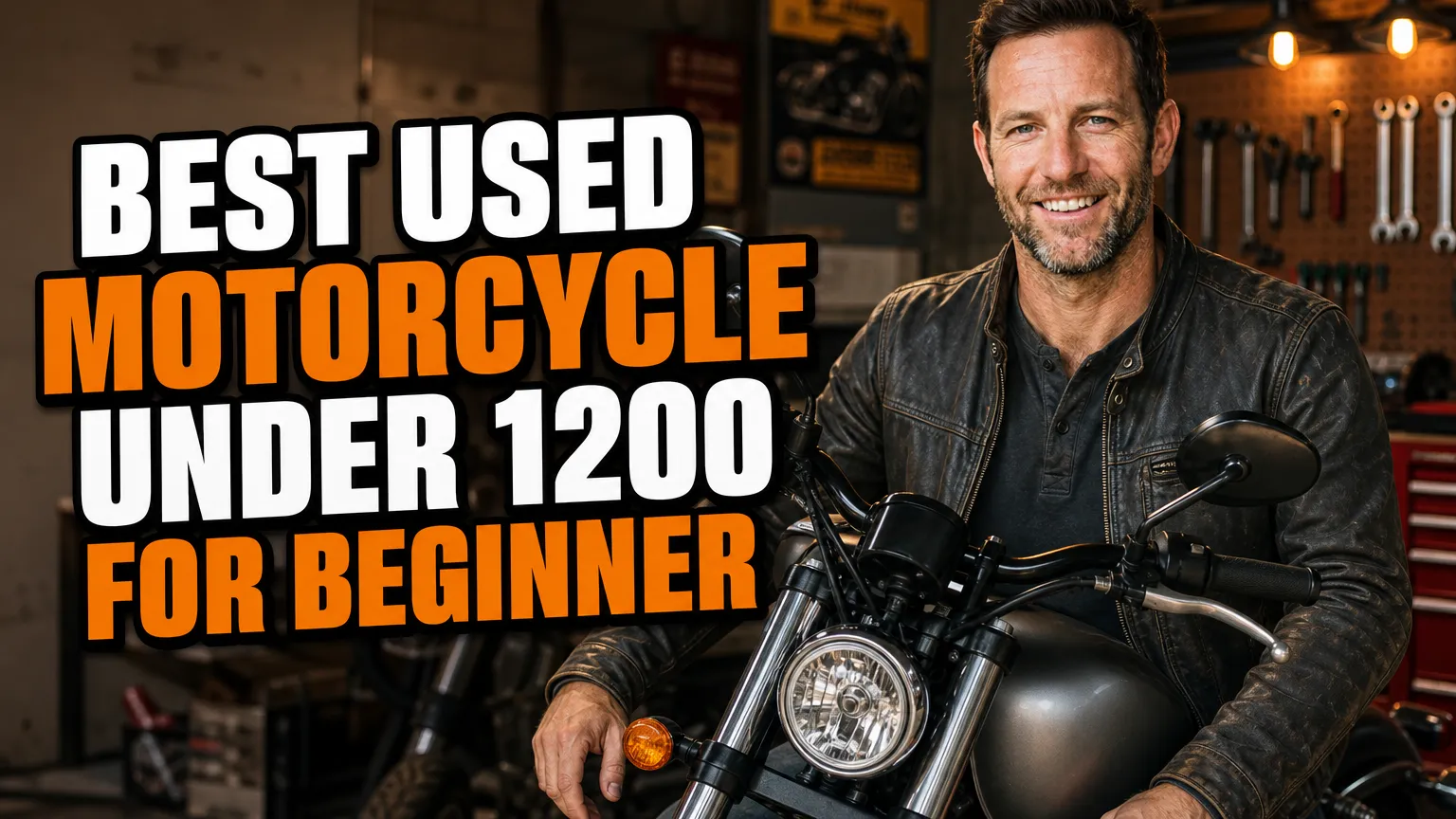
Finding a reliable first motorcycle for about $1,200 is possible, but I treat that figure as a shopping target rather than a promise. At this price, I’m usually looking at an older bike with cosmetic wear, incomplete service records, or a repair that needs attention before I ride far.
My approach is to focus on manageable engines, predictable handling, and a clean title, then judge each individual motorcycle on its condition. The models below are real, established bikes that I’d consider while searching; local prices vary widely, so I wouldn’t assume every example will fall under budget.
- I’d prioritize condition, a clean title, and safe operation over a particular badge or low asking price.
- The Honda Rebel 250, Suzuki GZ250, and Kawasaki Eliminator 125 are approachable places to begin my search.
- I treat $1,200 as the bike-price ceiling only if I have separate money for paperwork, repairs, and protective gear.
- I’d arrange an inspection and test ride before buying any older motorcycle.
How I’d Shop for a Motorcycle on a $1,200 Budget
I start by setting aside money for costs beyond the seller’s price. Registration, insurance, a pre-purchase inspection, a battery, tires, or a basic service can quickly turn a seemingly affordable motorcycle into an expensive one.
I also check local listings rather than relying on a single national price estimate. A running bike with a clean title may be a bargain in one area and priced well above budget in another, while a very cheap listing may hide missing parts, neglected maintenance, or title problems.
My non-negotiable checks
- Title and identification: I match the vehicle identification number on the frame to the paperwork and confirm the seller can legally transfer ownership.
- Cold start: I ask the seller not to warm the engine before I arrive, then listen for difficult starting, smoke, or unusual mechanical noise.
- Safety items: I inspect the tires, brakes, lights, chain or final drive, and signs of leaks before considering a test ride.
- Fit: I sit on the motorcycle and check whether I can manage its weight, reach the controls, and move it confidently at walking speed.
If I find a bike that seems promising, I budget for a mechanic’s inspection rather than treating my own quick look as a substitute. A cheap beginner motorcycle is only a good deal when I can make it safe and keep it running.
1. Honda Rebel 250 (CMX250C): My All-Around Starter Search
The Honda Rebel 250 is one of the first models I’d look for when I want a small, approachable street bike. Its 234cc parallel-twin engine, five-speed gearbox, and cruiser layout make it a manageable option for learning basic clutch and throttle control.
I like the Rebel 250’s low seat and straightforward feel, especially for riders who want to put both feet down easily at stops. Older examples may show up near a $1,200 asking price, but I’d expect condition and location to make a major difference.
What I’d inspect on a Rebel 250
I’d pay close attention to tires, chain condition, brakes, and cold starting, as I would on any older motorcycle. I’d also check that the bike shifts through its gears cleanly and that the charging system and lights work before deciding its low price is worth pursuing.
For me, the Honda Rebel 250 is a sensible first place to search, not a reason to overlook a poorly maintained listing. If I need room for a passenger, I’d compare options in this guide to the best beginner motorcycle for 2 people before assuming a small starter bike will suit both of us.
2. Suzuki GZ250: My Pick for Simple, Everyday Riding
The Suzuki GZ250 is a 249cc, air-cooled single-cylinder motorcycle with a five-speed transmission. I’d consider it for a new rider who wants a conventional, relatively uncomplicated bike for neighborhood streets and modest local trips.
Its cruiser styling gives it a relaxed riding position, though I would still sit on the specific bike before buying. A used GZ250 can be an appealing budget candidate when one appears in good condition, but I wouldn’t count on every local example selling for less than $1,200.
Why I’d look closely at the individual bike
On an older GZ250, I’d ask about maintenance and check for signs of fuel-system trouble, leaks, damaged controls, or electrical issues. A bike that has been sitting for a long time may need more than a quick battery replacement, so I’d factor likely service into my offer.
I’d put the Suzuki GZ250 on my shortlist for its modest displacement and practical character. I’d still choose a well-cared-for motorcycle of another model over a neglected GZ250, because condition matters more than my preference for its layout.
3. Kawasaki Eliminator 125: My Choice for a Particularly Manageable Feel
The Kawasaki Eliminator 125 is a small-displacement cruiser with a 125cc engine and a five-speed gearbox. I’d consider it for a beginner who wants a light-feeling, low-seat motorcycle for learning and shorter local rides.
That small engine is also the main limitation I’d keep in mind. I wouldn’t choose the Eliminator 125 expecting strong acceleration or effortless highway travel; I’d match it to the roads I actually plan to ride and check local traffic conditions first.
What makes it worth a look
For my first-bike search, I value a motorcycle that feels approachable when starting, stopping, and maneuvering in a parking lot. The Eliminator 125’s modest size may suit that goal, but I’d inspect the bike’s age-related wear carefully and confirm that parts and service are practical where I live.
If I’m helping a younger rider choose a first street bike, I’d consider their experience, licensing rules, supervision, and protective gear alongside the motorcycle. I’d also compare guidance on the best beginner motorcycle for teenager rather than assuming the same bike suits every new rider.
4. Honda Nighthawk 250 (CB250): My Practical Standard-Style Option
The Honda Nighthawk 250, also known as the CB250 in some markets, is a small standard-style motorcycle with a 234cc parallel-twin engine and five-speed transmission. I like its upright riding position as a useful alternative to cruiser ergonomics.
I’d look for a Nighthawk 250 if I want a straightforward bike for learning and everyday short trips. Since these are older used motorcycles, I’d verify the precise model and year from the paperwork and identification number rather than relying only on the seller’s description.
My buying notes for the Nighthawk
I’d check the controls, tires, brakes, chain, and charging system, then ask when the bike was last serviced. If it has been stored outside or unused for a long spell, I’d be cautious about fuel-delivery issues and other age-related maintenance, even if it starts during a quick viewing.
The Honda Nighthawk 250 appeals to me because it offers a more upright standard-bike posture in a beginner-friendly size. I’d compare its fit with the Rebel and GZ250 in person; seat height and handlebar reach can feel quite different from one rider to another.
5. Kawasaki Ninja 250R: My Small Sportbike Option
The Kawasaki Ninja 250R is a fully faired small sportbike with a 248cc liquid-cooled parallel twin and a six-speed gearbox. It can be a fun choice for a beginner drawn to sport styling, though its riding position and fairings make it a different proposition from a basic standard or cruiser.
I’d be especially careful about condition when considering a low-priced Ninja 250R. Fairing damage, crash repairs, worn tires, and neglected maintenance can make a cheap-looking listing costly, so I’d inspect the frame and controls carefully and seek a mechanic’s opinion if I spot signs of a fall.
Where I’d draw the line
I’d choose the Ninja 250R only if it fits my roads, comfort, and skill level, and I would not buy one simply because its styling looks fast. For a beginner, smooth inputs and good protective gear matter much more than trying to ride quickly.
I’d also be realistic about the budget: an intact, well-maintained Ninja 250R may be difficult to find at this price in some markets. If the only examples near $1,200 need significant work, I’d move on rather than compromise on safety.
6. Yamaha Virago 250 (XV250): My Small V-Twin Cruiser Candidate
The Yamaha Virago 250, or XV250, is a 249cc V-twin cruiser. I’d consider it if I prefer cruiser styling and want a relatively compact motorcycle for learning on local roads.
With an older Virago, I’d pay attention to maintenance history and overall condition, not just how clean the paint looks. I’d check the tires, brakes, fuel system, lights, and final-drive components, and I’d ask the owner how the motorcycle has been stored and used.
How I’d decide whether it suits me
I’d sit on a Virago 250 before buying to make sure the reach to the bars and controls feels natural. A low seat can be reassuring at a stop, but I still need to feel comfortable steering, braking, and handling the bike at very low speeds.
I see the Yamaha Virago 250 as a model worth searching for, rather than a guaranteed bargain. If I expect to ride with a partner often, I’d compare its passenger comfort and carrying needs with the best beginner motorcycle for couples before settling on a small single-rider-focused choice.
7. Suzuki GS500E: My Bigger Used-Bike Possibility With Caution
The Suzuki GS500E is a 487cc parallel-twin standard motorcycle with a six-speed gearbox. It isn’t as small or as forgiving-feeling as the 125cc and 250cc choices above, so I’d consider it only if I’m comfortable managing the additional size and power.
An older GS500E may appear at a low asking price, but I’d be wary of maintenance needs and modifications. I’d inspect the brakes, tires, suspension, chain, and engine carefully, and I’d want a clear explanation of any nonstandard parts or recent repairs.
Why this isn’t my default beginner recommendation
I wouldn’t call the GS500E the right first bike for every new rider. Its extra displacement may be useful for some riders and routes, but I’d prioritize riding experience, training, and confidence over wanting more power straight away.
If I’m specifically seeking a larger-displacement motorcycle, I’d think carefully about the difference between choosing a sensible next step and starting with more bike than I can comfortably manage. I’d read a separate guide to the best 1000cc motorcycle for beginner only as a comparison, not as a reason to jump to a much larger engine.
How I’d Choose Between These Seven Bikes
I’d begin with the kind of riding I expect to do. For basic skills and local errands, I’d shortlist smaller options such as the Honda Rebel 250, Suzuki GZ250, Kawasaki Eliminator 125, or Honda Nighthawk 250; for sport styling, I’d inspect the Ninja 250R; and I’d approach the GS500E with extra care.
I’d then compare real examples rather than choosing by model reputation alone. A clean, well-maintained bike with a slightly higher price can be a better purchase than the cheapest listing once I add repairs, transport, and replacement parts.
My quick pre-purchase routine
- Read the listing closely. I ask for the year, mileage, title status, service history, known faults, and clear photographs.
- Check the bike cold. I look for leaks, damaged parts, uneven tire wear, rust, and evidence of a crash before starting it.
- Test basic operation. I confirm that the lights, horn, brakes, throttle, clutch, and gears work as they should.
- Arrange a professional inspection. If I’m not qualified to assess a mechanical issue, I ask a motorcycle mechanic to check it.
- Keep a repair reserve. I don’t spend every available dollar on the asking price if that leaves me unable to make the bike safe.
I’d also remember that these smaller motorcycles may not be ideal for every kind of trip. If my goal is regular longer-distance travel, I’d compare the costs and expectations in this guide to the best touring motorcycle for under 5k rather than expecting a $1,200 beginner bike to do everything comfortably.
My Final Take
For a first search near $1,200, I’d begin with the Honda Rebel 250, Suzuki GZ250, Kawasaki Eliminator 125, and Honda Nighthawk 250, then compare any clean Ninja 250R or Yamaha Virago 250 listings that appear. I’d consider the Suzuki GS500E only after honestly assessing whether its size and power suit my experience.
Most importantly, I wouldn’t buy a motorcycle just because it is cheap or because a familiar model name seems beginner-friendly. I’d choose the best-maintained bike I can comfortably handle, confirm the paperwork, leave room in my budget for safety and service, and take a training course before riding in traffic.
Frequently Asked Questions
Can I really buy a beginner motorcycle for under $1,200?
Sometimes, especially if I shop locally and consider older models, but prices and condition vary. I keep money aside for inspection, paperwork, repairs, and safety gear.
Which used motorcycle is easiest for a new rider to manage?
I would start by looking at small, light models such as the Honda Rebel 250, Suzuki GZ250, or Kawasaki Eliminator 125, then choose the best-maintained example that fits me.
Should I spend my entire $1,200 budget on the motorcycle?
I would not. I reserve part of my budget for registration, insurance, a mechanical inspection, immediate maintenance, and properly fitted protective gear.
Is a used 250cc motorcycle powerful enough for a beginner?
For learning and many local trips, a 250cc bike can be a sensible choice. I would check the specific model, my roads, and my comfort before deciding whether it suits my needs.

Related Articles
Motorcycle Wheelbase Explained: How It Shapes Stability, Handling, and Comfort
Learn what motorcycle wheelbase measures, how it influences stability, cornering and comfort, and how I compare the spec when choosing…
Jake Miller
11 min read
Inside the Backbone: How This Motorcycle Frame Works and What Riders Should Know
Learn how a motorcycle backbone frame works, how it compares with other chassis designs, and what I check for in…
Jake Miller
10 min read
7 Best Touring Motorcycles for New Riders Who Want to Go Far
Seven approachable touring motorcycles for new riders, with real specs, comfort trade-offs, price guidance, and my picks for highways, weekends,…
Jake Miller
12 min read