
Inside the Backbone: How This Motorcycle Frame Works and What Riders Should Know
 Jake Miller
10 min read
Jake Miller
10 min read
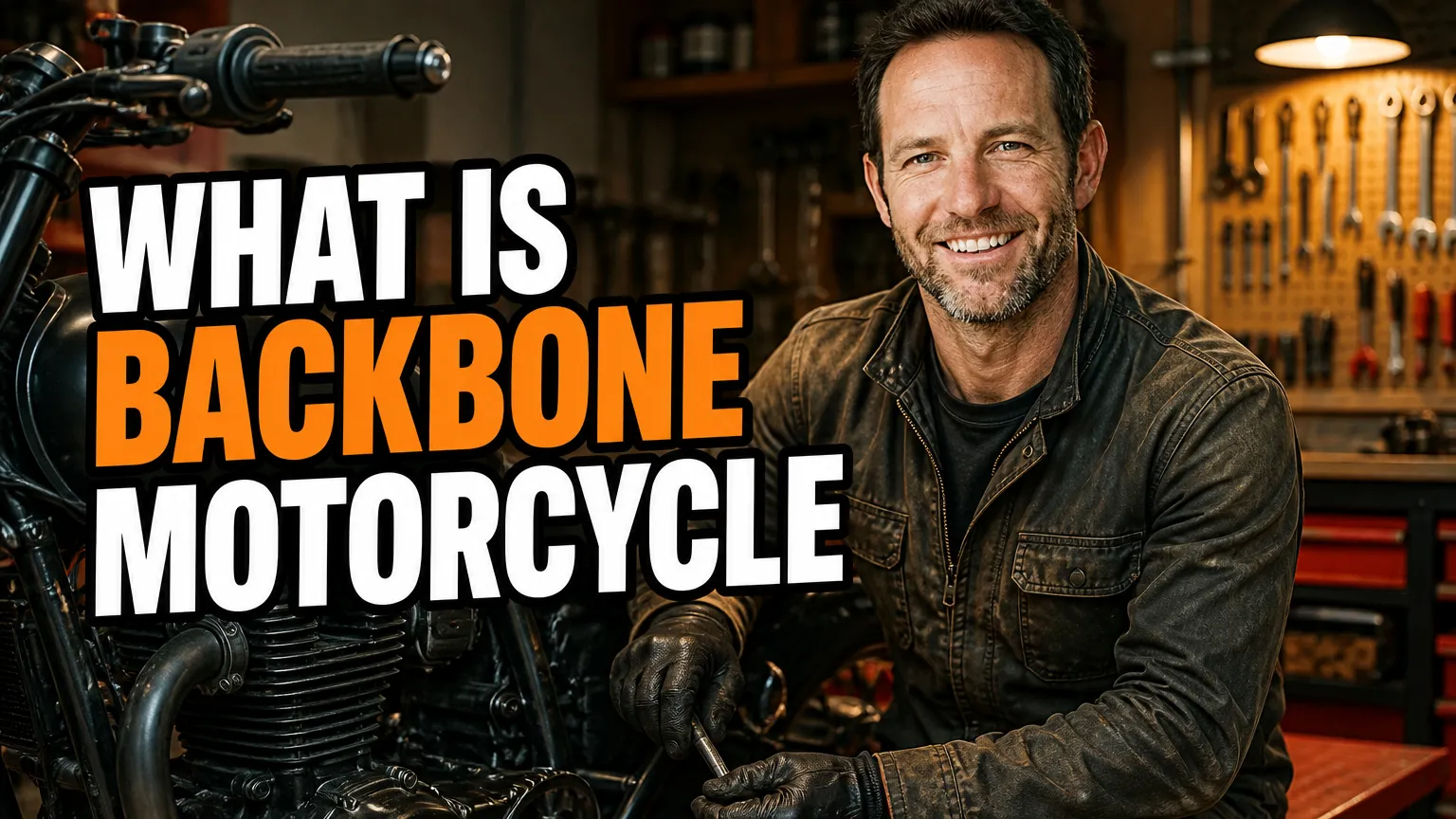
When someone asks me, “what is backbone motorcycle,” I take that to mean: what does a backbone-style motorcycle frame do, and how does it affect the ride? In simple terms, it is a chassis built around a main structural spine, with the engine and other components attached to or supported by that central member.
I find the design easiest to understand by picturing a strong beam running through the motorcycle’s middle. It can look straightforward, but that beam is part of a carefully engineered system that influences packaging, weight, stiffness, and maintenance access. Here’s how I think about it when I’m looking at a bike.
- A backbone frame uses a central structural spine to help support the motorcycle’s major components.
- Frame design can affect packaging, stiffness, and service access, but it doesn’t determine ride quality by itself.
- I check the whole chassis, welds, mounts, and handling rather than judging a bike by its frame label.
- Backbone and underbone are related terms, but they don’t always describe the same layout.
What the central spine actually does
On a backbone-style motorcycle, the main frame member runs through the center of the bike, commonly above or alongside the engine. The seat, steering head, swingarm area, and engine mounts connect into the chassis structure in a layout designed for that specific model.
I don’t think of the backbone as a decorative tube or a single part that carries every load by itself. The frame is a complete structure, and its shape, material, dimensions, joints, and connection points all matter. The engine may contribute to overall stiffness on some motorcycles, but I always check the manufacturer’s design rather than assume that it does.
Manufacturers can build a backbone from steel tubing, pressed steel, or other materials and shapes. The word describes the general arrangement, not one universal blueprint. That’s why two bikes described as backbone-style can look and behave quite differently.
How loads travel through the frame
When I accelerate, brake, lean through a corner, or hit a bump, forces move through the tires, suspension, and chassis. The frame has to hold the wheels in the intended relationship while flexing within the limits its designers planned. Too much unwanted flex can make a bike feel imprecise, while a poorly matched setup can feel harsh or nervous.
The main spine is one important part of that load path, but it doesn’t work alone. The steering head, engine mounts, rear structure, swingarm pivot, and joints all help determine how the complete motorcycle responds. I judge the bike as a system, not by the outline of one tube.
How I distinguish backbone, underbone, and cradle frames
I hear “backbone” used loosely in conversations, so I pay attention to the actual shape of the frame before deciding what someone means. Some designs have a prominent top spine, while others use lower rails, side members, or a step-through opening. Naming conventions can vary between manufacturers and riders.
Backbone compared with underbone
An underbone layout is often designed around a relatively open middle section, which can make it easier to step through or mount the motorcycle. The engine and other components fit into a frame structure that may include a central backbone-like member. That shared feature is one reason the terms sometimes get mixed up.
In my experience, it’s more useful to describe the visible construction and intended layout than to argue over a label. If I’m researching a particular model, I look at manufacturer specifications, a service manual, or a clear frame diagram. The name alone may not tell me enough to assess its structure.
Backbone compared with cradle frames
A cradle frame uses rails that pass beneath or around the engine, creating a supportive lower structure. Depending on the design, those rails may form a single cradle or a double cradle. A backbone frame, by contrast, is generally organized around a central spine, though the details vary widely.
I don’t consider one layout automatically stronger or better. The right answer depends on how the frame is engineered, what materials and joints it uses, how the engine is mounted, and what the motorcycle is built to do. A well-designed frame of either type can work well for its intended use.
What I notice about the ride
Frame layout can influence the way a motorcycle packages its engine, fuel tank, seat, and rider, and it can contribute to the bike’s overall stiffness. Still, I wouldn’t buy a motorcycle based on the frame style alone. Suspension setup, tires, geometry, weight distribution, engine characteristics, and condition have a huge effect on the ride I experience.
When I test a bike, I pay attention to how it changes direction, how settled it feels over uneven pavement, and whether it tracks consistently through a corner. I also notice if the riding position gives me a natural grip on the tank and comfortable control of the bars. Those real-world details tell me more than a frame label on a spec sheet.
Weight and handling are a whole-bike story
People sometimes assume that a simpler-looking backbone means a light motorcycle. I wouldn’t make that leap. The finished weight includes the engine, wheels, suspension, fuel, bodywork, and equipment, and the frame itself can be made in different ways. Two motorcycles with similar-looking spines may have noticeably different weights.
If a lighter bike is a priority for me, I compare published wet or curb weights using consistent figures and consider how the weight feels at a standstill. That matters especially when parking, making a slow U-turn, or picking the bike up off its side stand. For one useful comparison, I’d look into what is the lightest indian motorcycle.
Comfort and everyday practicality
I also consider how the frame layout affects the things I use every day. Is there room for my legs? Can I reach the ground comfortably? Is there space for luggage, a passenger, or a useful fuel tank? A compact frame can help a motorcycle feel approachable, but ergonomics depend on the complete design, not just the spine.
For new riders, I recommend sitting on a few bikes before settling on a category. I check whether I can balance the motorcycle, reach the controls, and move it around without straining. If small dimensions are high on my list, I’d also compare the options covered in what is the smallest indian motorcycle.
Potential advantages and trade-offs
One appeal I see in a backbone arrangement is packaging. A central spine can provide a clear structural route through the motorcycle and leave room around the engine for other components. Depending on the model, that can support a clean, compact layout that is straightforward to understand when I’m inspecting the bike.
But I don’t treat “simple” as a guarantee of easy maintenance. Components can still be difficult to reach, and the design may use covers, brackets, or tightly arranged parts that require extra work to remove. I check the service schedule and look for model-specific repair information before deciding whether a bike will suit my needs.
Strength depends on engineering, not appearance
A thick-looking tube may seem reassuring, but visual bulk alone doesn’t tell me how a frame performs. Material properties, wall thickness, shape, weld quality, joints, and stress distribution all contribute. I also consider whether the motorcycle has been modified, crashed, overloaded, or used in a way that could have damaged its structure.
That’s particularly important when I’m buying used. I look for bends, cracks, fresh paint that could hide repairs, and signs of impact around the steering head, engine mounts, and swingarm area. If anything makes me uneasy, I ask a qualified mechanic or frame specialist to inspect it rather than relying on a quick visual guess.
What I inspect before buying a backbone-style motorcycle
I start with the motorcycle’s history and service records, then look closely at the chassis and its mounting points. I want to know whether it has been in a crash, had structural repairs, or carried heavy accessories or loads. A clean-looking bike can still have a questionable history, so I don’t let shiny paint do all the persuading.
- Frame condition: I look for cracks, dents, bends, corrosion, and repairs that aren’t documented.
- Mounting points: I check around the engine, suspension, and swingarm connections for damage or loose hardware.
- Alignment: I look for signs that the front and rear wheels don’t track properly, and I ask a professional to verify alignment if I’m unsure.
- Ride behavior: On a safe test ride, I notice any unusual pulling, wobbling, or instability and stop if the bike feels unsafe.
- Service information: I confirm that I can find the correct inspection and maintenance guidance for that model.
I never treat welding a motorcycle frame as a casual garage repair. A repair that looks tidy may still alter the frame’s properties or leave a hidden weakness. If I find suspected structural damage, I pause the purchase and get a qualified assessment before riding or negotiating further.
Choosing by purpose, not by frame name
When I narrow down a motorcycle, I first ask what I want to do with it: commute, tour, ride trails, carry a passenger, or learn the basics. Then I compare fit, power, weight, comfort, service access, and total ownership costs. The frame matters, but it’s only one part of a decision that should match my riding life.
I also try to verify where a motorcycle is made rather than guessing from the badge or the style of its chassis. If that question is part of my research, I use this guide to what motorcycle is made in india and check the exact model and year for myself.
Brand research can also help me compare a manufacturer’s range, but I keep the questions specific. For example, I might look up what is the cheapest indian motorcycle when price is central to my search, or compare what is the fastest indian motorcycle if performance is what I’m curious about. Neither answer tells me whether a particular frame suits my body or riding plans, so I still evaluate the bike itself.
My bottom line on the design
When I hear someone ask “what is backbone motorcycle,” I explain that they’re probably asking about a motorcycle built around a central structural spine. That layout can influence packaging, construction, and the way components fit together, but it doesn’t automatically make a bike lighter, stronger, easier to repair, or better to ride.
I choose based on how a motorcycle fits me, how it behaves on the road, and whether its condition and maintenance history inspire confidence. A frame description is a useful starting point, not a verdict. If I understand the layout, inspect the structure carefully, and compare the complete bike against my needs, I’m much more likely to make a choice I’ll enjoy living with.
Frequently Asked Questions
What is a backbone frame on a motorcycle?
It is a chassis design built around a main structural spine, usually a strong tube or beam, with the engine and other components mounted beneath or around it.
Is a backbone frame the same as an underbone frame?
No. They are related descriptions of frame layouts, but an underbone frame is typically shaped to leave an open step-through area, while a backbone frame centers on a main spine.
Are backbone-frame motorcycles good for beginners?
They can be, but I would choose based on the motorcycle’s weight, seat height, power, and overall condition rather than frame type alone.
Can I repair a cracked backbone frame?
A damaged frame needs inspection by a qualified motorcycle frame specialist. I would not ride it or attempt an improvised weld, because a poor repair can affect safety and handling.

Related Articles

Motorcycle Wheelbase Explained: How It Shapes Stability, Handling, and Comfort
Learn what motorcycle wheelbase measures, how it influences stability, cornering and comfort, and how I compare the spec when choosing…
Jake Miller
11 min read

7 Best Touring Motorcycles for New Riders Who Want to Go Far
Seven approachable touring motorcycles for new riders, with real specs, comfort trade-offs, price guidance, and my picks for highways, weekends,…
Jake Miller
12 min read

7 Beginner-Friendly Used Motorcycles You May Find Around $1,200
I compare seven beginner-friendly used motorcycles that can appear near $1,200, with realistic price caveats, strengths, flaws, and a practical…
Jake Miller
11 min read