
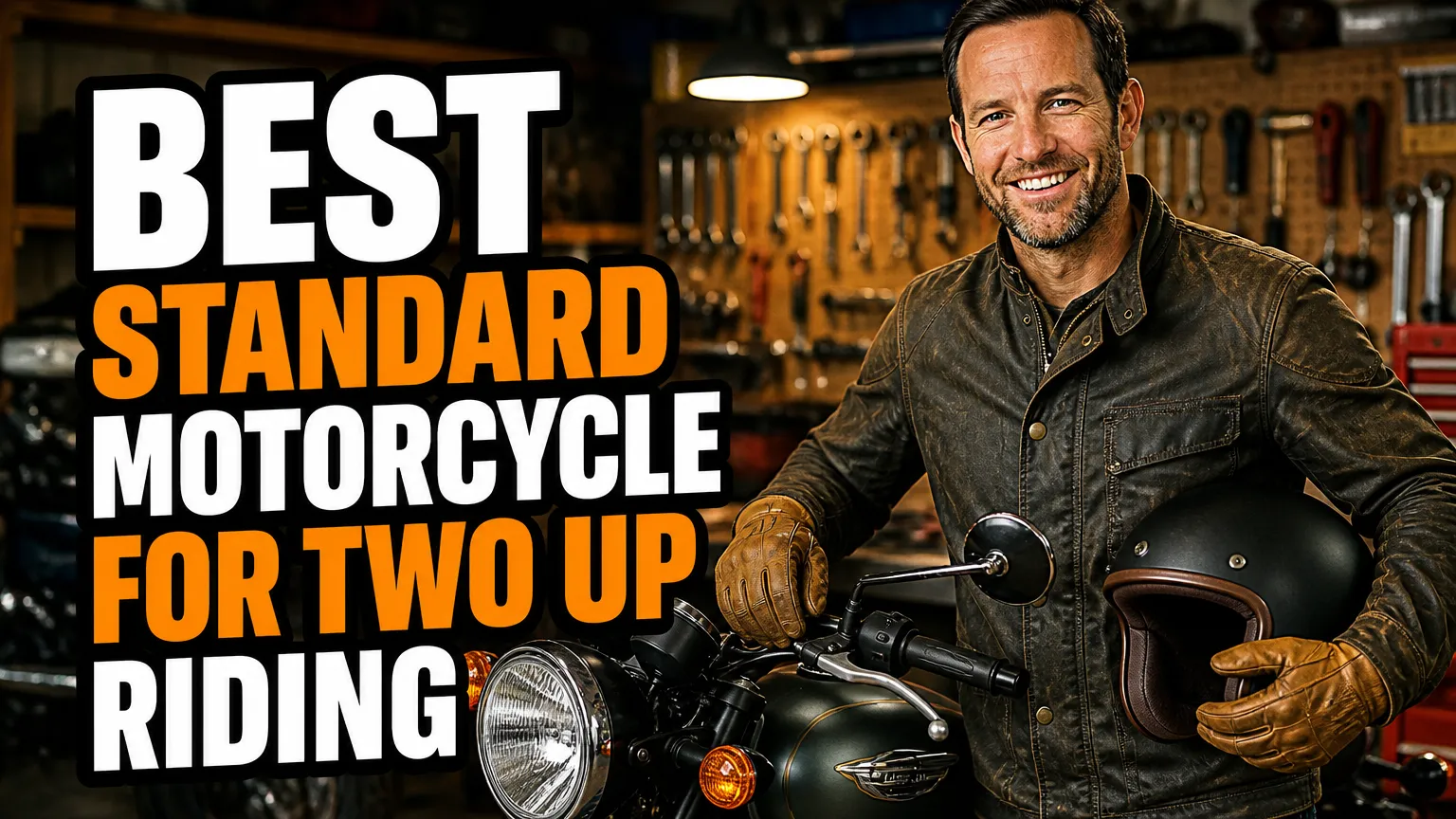
When I look for the best standard motorcycle for two up riding, I want more than a lively engine and an upright handlebar. My checklist starts with a passenger seat that feels usable, a sensible riding position for both people, and enough torque to pull away smoothly with extra weight onboard.
Standard motorcycles, often called naked bikes, can make excellent everyday partners for short rides and weekend escapes. Their trade-offs are usually limited wind protection, modest passenger accommodations, and less space for luggage than a touring bike. I’ve chosen these models for their balance of road manners, performance, availability, and two-person practicality.
- I’d start with the Suzuki GSX-8S or Triumph Trident 660 for an approachable mix of torque and everyday usability.
- The Yamaha MT-09, Kawasaki Z900, and BMW F 900 R offer more performance for carrying a passenger at highway speeds.
- I always check payload limits, passenger footpeg position, and seat comfort before choosing a bike for regular two-up trips.
- For frequent long-distance rides, I’d also compare dedicated touring options with more wind protection and luggage capacity.
What I Look for in a Two-Up Standard Bike
I start with the passenger’s experience, not the spec sheet. A pillion seat should be wide enough to sit on comfortably, and I want the passenger to have secure grab rails or another dependable handhold. Footpegs that force bent or cramped legs can turn even a short ride into a chore.
Next, I check the motorcycle’s maximum load or payload rating in the owner’s manual. Rider, passenger, luggage, and accessories all count toward that limit. I also look for suspension preload adjustment, because the bike may need a setup change when I add a passenger.
For a wider comparison, I’d also look at the best sport touring motorcycle for two up riding if wind protection and luggage matter more than a compact, naked-bike feel. Riders focused on easier handling may prefer the options in my guide to the best mid size motorcycle for two up riding.
1. Suzuki GSX-8S — My Balanced Pick for Everyday Two-Up Riding
The Suzuki GSX-8S is the bike I’d put near the top of my shortlist if I wanted a standard that feels manageable solo but still has useful pull with a passenger. Its 776cc parallel-twin produces about 82 horsepower and 57.5 lb-ft of torque. That torque-focused character makes it appealing for ordinary street speeds and relaxed acceleration without requiring a high-revving riding style.
Suzuki equips the GSX-8S with a six-speed transmission, a bi-directional quickshifter, and selectable ride modes. Its steel frame and upright stance suit daily use, while the twin-cylinder engine gives it a different, more accessible feel than a high-strung four-cylinder. New-bike prices generally sit around the upper-$8,000 to low-$10,000 range in the U.S., depending on model year and fees.
Why I’d consider it with a passenger
I like the GSX-8S as a two-up compromise because its engine has enough midrange for normal riding, yet the bike remains relatively approachable in town. The passenger accommodation is still that of a naked bike, not a touring machine, so I’d take my passenger for a proper test sit before committing.
For short commutes and weekend rides, I think the GSX-8S offers a satisfying balance of performance, modern electronics, and everyday usability. I’d be more cautious about choosing it for repeated all-day trips with luggage, where a broader seat and better weather protection make a noticeable difference.
2. Triumph Trident 660 — My Choice for a Friendly Triple
The Triumph Trident 660 gives me a distinctive three-cylinder engine in a relatively compact standard package. Its 660cc triple makes roughly 80 horsepower and about 47 lb-ft of torque, pairing a lively top end with a smooth, usable character for everyday roads. Triumph’s ride-by-wire system and selectable riding modes add useful control options.
The Trident’s compact proportions and manageable seat height can make it easier to handle than larger naked bikes, especially when maneuvering at low speed. Depending on model year and market, new examples are generally priced in the high-$8,000 to low-$10,000 range before dealer fees and accessories.
Where it works and where it compromises
I’d choose the Trident 660 for a rider who wants an engaging engine without moving straight to a heavy, high-powered machine. The passenger seat is usable for shorter rides, but I wouldn’t assume it will suit every passenger on a full day in the saddle. I’d check the footpeg position and handholds in person.
In my view, this is a strong all-rounder for occasional two-up use, especially if the bike will spend most of its time commuting or riding solo. If your needs are broader than a standard bike, my roundup of the best motorcycle for two for all around riding can help you compare different styles.
3. Yamaha MT-09 — My Pick for Strong, Accessible Performance
The Yamaha MT-09 combines an 890cc three-cylinder engine with a lively, upright chassis. It produces around 117 horsepower and 68 lb-ft of torque, giving me plenty of acceleration for highway merges and passing with a passenger. Recent versions include a six-axis IMU and rider aids such as traction control and cruise control, though equipment can vary by year and trim.
For a new MT-09, I’d expect pricing to land roughly in the $11,000 to $13,000 range before local taxes and fees. Its technology and performance make it a compelling choice, but I’d budget time to adjust the suspension for two-up riding rather than assuming the factory solo setup will work perfectly.
My passenger-comfort caveat
The MT-09 is a fun, powerful naked bike, but the passenger seat is not the reason I’d buy it. I’d have my passenger sit on the bike before purchase and take a short test ride together if possible. Wind exposure and the compact pillion area can become tiring on longer highway stretches.
I’d recommend the MT-09 to riders who want a versatile standard with strong performance and modern electronics, and who ride two-up often enough to value its extra power. If passenger comfort is the main priority, I’d compare it against a sport-tourer before making my decision.
4. Kawasaki Z900 — My Choice for a Bigger Four-Cylinder Standard
The Kawasaki Z900 is a strong option when I want the smoothness and horsepower of an inline-four. Its 948cc engine makes approximately 123 horsepower and 73 lb-ft of torque, giving it substantial reserves for carrying a passenger. The upright riding position and broad roadster proportions also make it a natural candidate for mixed solo and two-up use.
Depending on model year and trim, Z900 equipment can include a color TFT display, multiple power settings, and Kawasaki traction-control features. I’d expect new-bike pricing to be broadly around the $10,000 to $12,000 range in the U.S., with regional pricing and dealer charges affecting the final number.
When I’d pick the Z900
I’d lean toward the Z900 if I wanted a comfortable reserve of power and a composed engine character for faster roads. That doesn’t mean more horsepower automatically equals more comfort: passenger seat shape, suspension setup, and the combined load still matter. I’d check the manual’s payload guidance and adjust preload as needed.
For me, the Z900 makes the most sense for experienced riders who want a capable road bike and will sometimes carry a passenger. Its naked layout means I’d still plan around wind, breaks, and luggage limitations on longer tours.
5. BMW F 900 R — My Premium Pick for Road Features
The BMW F 900 R uses an 895cc parallel-twin engine producing about 105 horsepower and roughly 68 lb-ft of torque. It has the power for brisk two-up road riding, while the upright roadster position keeps it suitable for everyday use. BMW’s available equipment packages can add features such as advanced suspension options and expanded rider aids, so I’d compare the exact trim carefully.
Pricing varies substantially with options, but I’d generally place a new F 900 R in the upper-$9,000 to mid-$teens range in the U.S. once packages and dealer costs are considered. I like that flexibility, although it means two bikes with the same badge may have very different equipment and prices.
My take on its two-up value
I’d consider the F 900 R if I wanted a more premium feel and the option to tailor the bike with touring-friendly equipment. The passenger should still assess the seat and peg position directly; the BMW badge alone doesn’t guarantee pillion comfort. I’d also compare the cost of accessories with a dedicated touring model if longer journeys are frequent.
For a rider who values adjustable equipment and a strong middleweight engine, the F 900 R is an appealing standard. I’d put it on the list for mixed city, country-road, and occasional two-up highway use.
6. Honda CB650R — My Pick for a Smooth Four-Cylinder Feel
The Honda CB650R is a middleweight naked bike built around a 649cc inline-four. It produces about 94 horsepower and roughly 47 lb-ft of torque, with a smooth, rev-friendly character that feels different from the punchier twins in this list. Its steel frame, Showa Separate Function Big Piston front fork, and four-piston radial-mount front calipers give it a well-equipped road-bike foundation.
Honda has offered the CB650R with its E-Clutch system in some recent model years and markets; availability and specifications depend on location. I’d expect a new standard model to sit around the $9,000 to $11,000 range in the U.S., with E-Clutch versions and local fees potentially pushing the price higher.
What I’d check before riding two-up
I like the CB650R’s smooth engine and polished feel, but it delivers its strongest performance higher in the rev range than some larger twins. With a passenger, I’d plan my gear changes and avoid expecting effortless low-rev pull at every speed. A test ride is the best way to see whether its power delivery suits your combined weight and typical routes.
The passenger seat is suitable for shorter trips, but I’d treat this as a stylish, versatile naked bike rather than a dedicated two-up tourer. Riders comparing smaller engines can also read about the best 300cc motorcycle for 2 up riding to understand the different compromises in power and weight.
7. Honda CB500 Hornet — My Budget-Friendly, Manageable Option
The Honda CB500 Hornet is the approachable choice I’d consider for mostly urban riding, modest speeds, and occasional short trips with a passenger. Its 471cc parallel-twin makes about 47 horsepower, and its assist/slipper clutch helps keep the clutch action manageable. It also has ABS, a steel diamond-style frame, and a relatively accessible seat height compared with larger machines.
Depending on market and year, new pricing is generally in the high-$6,000 to low-$8,000 range before destination charges. The CB500 Hornet’s moderate power can be a benefit for a newer rider, but it leaves less passing and acceleration reserve than the 660cc-to-900cc bikes above.
Best for shorter rides and newer riders
I’d choose the CB500 Hornet if easy everyday handling and a lower purchase price matter more than rapid highway acceleration. Two-up riding is possible, but I’d keep expectations realistic: the passenger space is compact, and steep hills or high-speed passing may require more planning. I’d check the bike’s load limit and make sure the suspension is suitable for the combined weight.
For everyday solo use with occasional passenger rides, I think it’s a sensible, uncomplicated option. If I expected to carry a passenger most weekends or cover long highway distances, I’d move up to a larger engine and a more supportive seat.
How I’d Make the Final Choice
For a balanced mix of torque, modern equipment, and manageable everyday manners, I’d begin with the Suzuki GSX-8S and Triumph Trident 660. If I wanted more passing power for two-up highway riding, I’d compare the Yamaha MT-09, Kawasaki Z900, and BMW F 900 R. The Honda CB650R adds a smooth four-cylinder option, while the CB500 Hornet suits lighter-duty use and tighter budgets.
Before buying, I’d bring my passenger to the showroom, sit on the bike together, and check the grab points, footpeg reach, and seat space. I’d confirm the payload limit in the owner’s manual, ask about suspension adjustment, and budget for luggage or a small windscreen if our trips call for them. For everyday road use beyond this category, I’d also compare my shortlist with the best motorcycle for street riding.
My bottom line is that a standard motorcycle can be a rewarding two-up machine when the trips match its strengths. I’d choose the bike that keeps both people comfortable, has enough performance for the roads we ride, and stays within its load limits—not simply the one with the biggest engine or the longest feature list.
Frequently Asked Questions
What makes a standard motorcycle good for two-up riding?
I look for a supportive passenger seat, secure grab points, enough engine torque, a suitable load rating, and suspension that can be adjusted for a passenger.
Can a naked motorcycle handle long two-up trips?
Yes, though I recommend checking passenger comfort in person and planning for wind exposure, limited luggage, and more frequent breaks than on a touring bike.
Is a 650cc motorcycle enough for two-up riding?
It can be, especially for moderate speeds and shorter trips. I would prioritize torque, payload capacity, and passenger comfort over engine size alone.
Should I choose a standard or sport-touring motorcycle for riding with a passenger?
I would choose a standard for an upright, versatile ride and a sport-tourer for more wind protection, luggage capacity, and long-distance passenger comfort.

Related Articles
Motorcycle Wheelbase Explained: How It Shapes Stability, Handling, and Comfort
Learn what motorcycle wheelbase measures, how it influences stability, cornering and comfort, and how I compare the spec when choosing…
 Jake Miller
11 min read
Jake Miller
11 min read
Inside the Backbone: How This Motorcycle Frame Works and What Riders Should Know
Learn how a motorcycle backbone frame works, how it compares with other chassis designs, and what I check for in…
Jake Miller
10 min read
7 Best Touring Motorcycles for New Riders Who Want to Go Far
Seven approachable touring motorcycles for new riders, with real specs, comfort trade-offs, price guidance, and my picks for highways, weekends,…
Jake Miller
12 min read