
8 Best Cruiser Motorcycles for Older Riders: Comfortable, Manageable Picks
 Jake Miller
11 min read
Jake Miller
11 min read
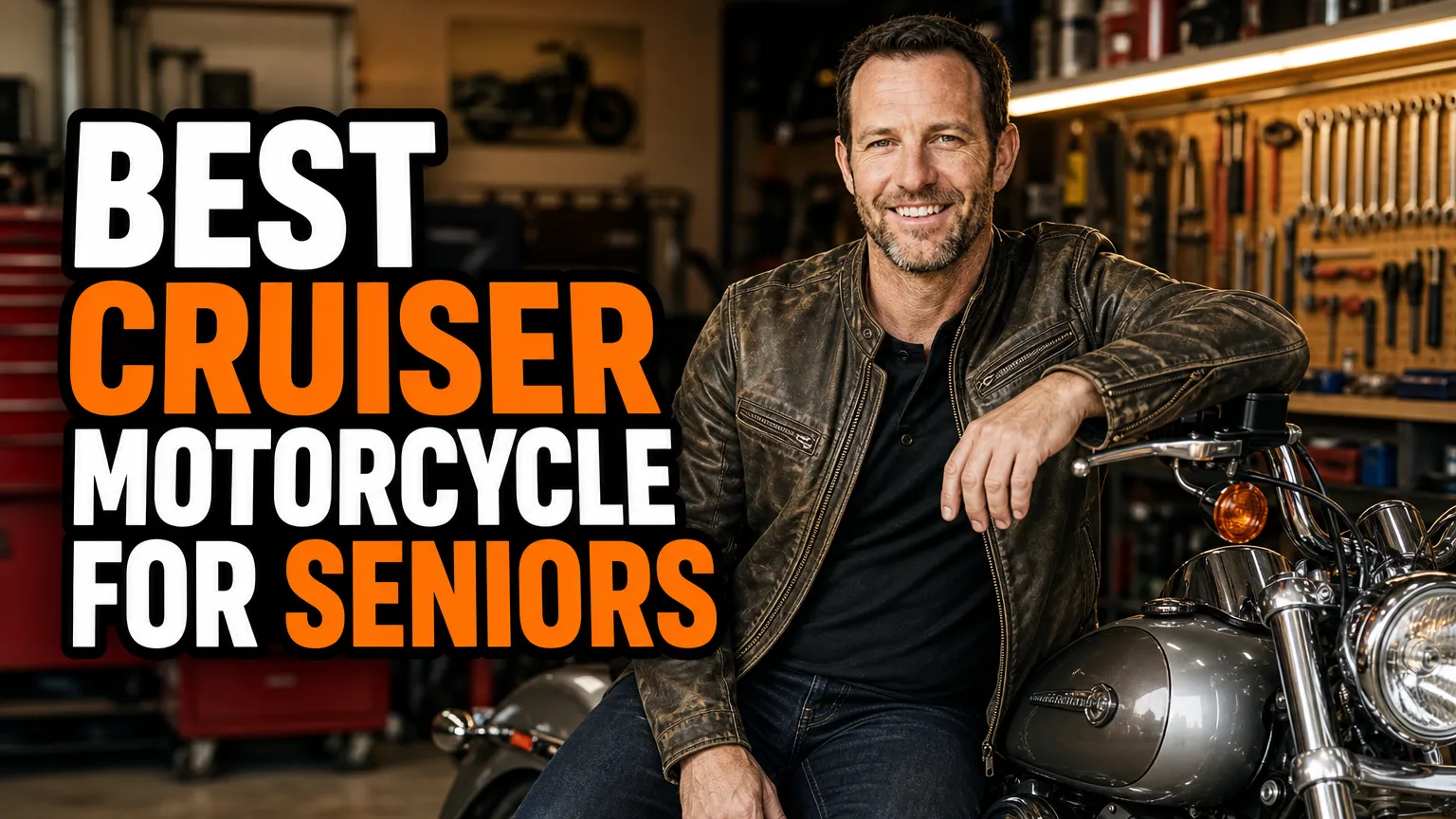
I don’t think age alone determines which motorcycle someone should ride. I pay closer attention to balance, reach, strength, confidence at low speeds, and the kinds of roads I want to travel. The best cruiser motorcycle for seniors is the one I can comfortably control in a parking lot as well as enjoy on an open road.
In this list, I’ve focused on real, current cruiser models with different weights, engine sizes, seating positions, and transmission choices. I’d treat specifications as a starting point, then sit on the bike and, if possible, test ride it before making a decision.
- I’d start with the Honda Rebel 500 or Kawasaki Eliminator for a lighter, approachable cruiser.
- I’d consider the Honda Rebel 1100 DCT if I want automatic shifting and more touring-friendly power.
- I’d compare seat height, total weight, and how the bike feels stopped, not just its engine size.
- I’d choose an ABS-equipped model where available and arrange a proper test ride before buying.
How I choose a cruiser that feels manageable
I don’t use a low seat height as my only measure of fit. A wide seat can spread my legs, while a narrow seat may let me reach the ground more easily even if its published height is similar. I also check whether I can comfortably reach the handlebars, work the clutch and brake, and turn the bike without straining.
Weight matters most when I’m maneuvering slowly, backing into a parking space, or recovering from a slightly awkward stop. I’d rather have a motorcycle I can confidently move around than extra engine capacity I rarely use. For a useful primer before comparing these models, I’d read this guide to best motorcycle engine size for beginners.
I also consider how I’ll ride. A compact cruiser may be ideal for town and day rides, while longer highway journeys can make wind protection, relaxed ergonomics, and passing power more important. Engine displacement alone doesn’t tell me how fast or comfortable a motorcycle will feel; gearing, weight, and the riding position all play a part.
1. Honda Rebel 500 — My approachable all-rounder
I’d put the Honda Rebel 500 near the top of my shortlist if I wanted a relatively light, straightforward cruiser. Its 471cc parallel-twin engine is paired with a six-speed manual transmission, and its low, 27.2-inch seat helps make stops feel less intimidating for many riders. The ABS version has a curb weight of about 414 pounds, which is notably manageable for this style of motorcycle.
The Rebel 500’s compact proportions and neutral handling are part of its appeal for me, especially when I’m thinking about traffic, tight turns, and everyday rides. I’d still check the reach to the bars and foot controls in person, since a low seat doesn’t guarantee that the whole riding position will suit my body.
I typically see new Rebel 500 pricing in the mid-$6,000 to low-$7,000 range, depending on model year, ABS, and local fees. I like it as a sensible option for riders who want enough performance for ordinary roads without taking on the bulk and power of a large-displacement cruiser.
2. Kawasaki Eliminator 450 — My lightweight, modern choice
The Kawasaki Eliminator 450 is another model I’d consider when keeping weight down is a priority. It uses a 451cc parallel twin and has a curb weight around 388 pounds in its non-ABS form, with ABS versions weighing a little more. Its seat is about 28.9 inches high, so I’d make a point of sitting on it rather than assuming a low seat based on its cruiser styling.
I appreciate that the Eliminator pairs a relatively light chassis with a six-speed transmission and an assist-and-slipper clutch. Those features can make shifting feel less demanding, though they don’t eliminate the need to operate a clutch lever. I’d also compare the Kawasaki’s footpeg position with the Rebel’s to see which one lets my knees and hips relax.
Depending on trim and market, I’d expect new pricing to land around the mid-$6,000 to low-$7,000 range before fees. For me, this is a strong choice if I want a contemporary, nimble-feeling cruiser and don’t mind a seat that sits higher than some traditional low-slung models.
3. Kawasaki Vulcan S — My adjustable-fit pick
I’d look closely at the Kawasaki Vulcan S if I wanted more engine capacity and a better chance of tailoring the fit. Its 649cc parallel twin is paired with a six-speed gearbox, and the ABS model weighs roughly 498 pounds. Kawasaki’s Ergo-Fit system offers different seat, handlebar, and footpeg configurations through accessories, which can help riders find a more comfortable reach.
That adjustability is especially useful to me because cruiser ergonomics aren’t one-size-fits-all. The standard seat height is about 27.8 inches, but I’d still ask a dealer which Ergo-Fit parts suit my height and inseam. A comfortable reach to the controls can matter just as much as putting both feet down.
I usually see the Vulcan S priced around the upper-$7,000 range, with variations by model year and equipment. If I wanted a middleweight machine that can handle varied roads but didn’t want a heavy, traditional V-twin cruiser, I’d make time to test this Kawasaki.
4. Honda Shadow Phantom — My traditional cruiser option
The Honda Shadow Phantom has a more classic cruiser character than the smaller Rebels. Its 745cc V-twin, five-speed transmission, low 25.6-inch seat, and shaft final drive make it appealing to me if I want a relaxed-feeling motorcycle with fewer routine chain-care chores. Its curb weight is around 543 pounds, so I’d be careful to assess how that mass feels when stationary.
I like that the Shadow Phantom offers a low seat and a familiar, simple layout, but I wouldn’t mistake those qualities for easy handling in every situation. A heavier bike can still be comfortable on the road while demanding more attention when I’m walking it backward or turning on a slope. I’d look for an ABS-equipped version where available and practice low-speed maneuvers in a safe space.
Pricing varies by year and market, but I’d budget roughly in the high-$8,000 to low-$10,000 range for a new example before taxes and fees. For me, the Phantom makes most sense when the rider wants a traditional V-twin feel and has the strength and balance to manage its weight confidently.
5. Royal Enfield Super Meteor 650 — My relaxed-distance option
I’d consider the Royal Enfield Super Meteor 650 for relaxed rides and touring-style comfort. It has a 648cc parallel-twin engine, a six-speed transmission, dual-channel ABS, and a low seat of about 29.1 inches. The trade-off is its approximate 531-pound curb weight, which makes a careful in-person fit check especially important for me.
The Super Meteor’s wide seat and laid-back cruiser layout may suit longer rides, while its engine is less intimidating on paper than the larger V-twins in this list. I’d pay attention to the distance to the bars and the fixed footpeg position, because a stretched-out posture can feel comfortable for one rider and tiring for another.
I’d expect new pricing to be around the upper-$6,000 to mid-$7,000 range in the United States, depending on trim and dealer charges. If I wanted a distinctive middleweight cruiser with touring intentions, I’d put it on my test-ride list, but I’d first make sure I’m comfortable moving its weight around at a standstill.
6. Honda Rebel 1100 DCT — My clutch-free, higher-power pick
The Honda Rebel 1100 DCT stands out to me because its dual-clutch transmission can shift automatically, removing the need to work a clutch lever or select gears manually in normal riding. It uses a 1,084cc parallel twin, and the DCT model weighs roughly 525 pounds. I’d consider it if hand strength, joint comfort, or frequent stop-and-go traffic makes clutch work less appealing.
I wouldn’t choose the Rebel 1100 DCT solely because it has automatic shifting. Its engine is substantially stronger than the smaller bikes here, and I’d take time to understand its throttle response, riding modes, and transmission behavior before riding in busy traffic. Its seat is about 27.9 inches high, but I’d assess the full bike’s balance and mass at a standstill.
New pricing generally falls around the low-$10,000 range and can rise with trim or accessories. For riders comparing smaller engine classes first, I find it useful to review how a 300cc motorcycle performs in this overview of how fast can a 300cc motorcycle go, and how a 500cc machine behaves in how fast can a 500cc motorcycle go. Those comparisons can help me think through real riding needs rather than shop by displacement alone.
7. Harley-Davidson Nightster — My lighter Harley-Davidson choice
I’d look at the Harley-Davidson Nightster if I wanted the brand’s cruiser identity in a package that is lighter than many large traditional cruisers. Its liquid-cooled 975cc V-twin produces strong performance, and the bike weighs about 481 pounds in running order. The seat is roughly 27.1 inches high, and the Nightster includes rider aids such as ABS, traction control, and selectable ride modes.
Those electronic aids can be useful, but I wouldn’t treat them as a substitute for a manageable fit or careful riding. I’d check the clutch effort, throttle response, and handlebar reach during a test ride, then compare the Nightster’s forward-leaning feel with the more upright models on this list.
I’d budget roughly around $12,000 or more for a new Nightster, depending on model year, trim, and local charges. I see it as a spirited option for someone who wants a modern Harley-Davidson and is comfortable with its power, rather than as an automatic choice for every older rider.
8. Indian Scout Sixty Classic — My low-seat, strong-engine option
The Indian Scout Sixty Classic combines a low seat, around 25.8 inches, with a 999cc liquid-cooled V-twin. That makes it interesting to me if I want a traditional cruiser appearance and easy reach to the ground, but I’d be mindful of its substantial power and weight, which is around the mid-500-pound range depending on specification.
I’d especially focus on low-speed control before choosing this Indian. A low seat can help me feel planted at stops, but it doesn’t make a heavy, powerful motorcycle effortless to turn or park. I’d test the clutch, steering at walking pace, and braking feel, and I’d look for ABS-equipped equipment in the version available to me.
New pricing can start around the low-$10,000 range and climb with options and destination charges. I’d recommend the Scout Sixty Classic for riders who genuinely want its performance and styling, not simply because its seat is low. If I were prioritizing lighter weight above all else, I’d compare it directly with the Rebel 500 and Eliminator 450.
What I’d check before buying
I test the fit, not just the seat height
I sit on a motorcycle in the riding boots I plan to wear and check whether I can reach the ground securely. I also notice whether the seat pushes my legs outward, whether the bars make me lean too far, and whether I can comfortably operate every control. If a dealer allows it, I ask to move the bike around with the engine off.
I compare weight and low-speed confidence
I think about the situations that are hardest for me: backing out of a sloped driveway, U-turns, gravel parking areas, or stopping on uneven pavement. A heavier motorcycle may feel stable once moving, but I want to be confident managing it at walking pace. I’d practice with a qualified instructor if I’m returning to riding or building new skills.
I choose safety features and engine size deliberately
I favor ABS when it’s available, and I look for a throttle response I can manage smoothly. I wouldn’t assume that the largest engine is automatically the best choice for highway travel. For another useful comparison, I’d read about how fast can a 150cc motorcycle go unleashing top speeds to understand why engine size alone doesn’t tell the whole story about real-world riding.
I also give myself permission to consider a different style if it better suits my body and routes. A cruiser isn’t the only comfortable option, and riders looking for a more upright position may want to explore the best adv motorcycle for short riders before deciding.
My final recommendation
If I were helping a friend choose, I’d begin with the Honda Rebel 500 and Kawasaki Eliminator 450 because their relatively low weights make them sensible first test rides. I’d move to the Vulcan S if adjustable ergonomics matter, and I’d consider the Rebel 1100 DCT if avoiding manual gear changes is a priority and its greater power feels comfortable.
For me, the right choice comes down to control, fit, and the kind of rides I actually plan to take. I’d compare the exact model and trim available locally, check pricing and ABS equipment, and take a test ride before committing. A cruiser that feels easy and enjoyable to handle is a better match than one chosen for its displacement, badge, or appearance alone.
Frequently Asked Questions
What should I prioritize when choosing a cruiser as an older rider?
I would focus on manageable weight, a comfortable reach to the ground and controls, easy steering, suitable power, and ABS.
Which cruiser on this list is easiest to manage at low speeds?
I would start by sitting on the Honda Rebel 500 or Kawasaki Eliminator. Both are relatively light for cruisers, but fit and confidence matter more than seat height alone.
Is a larger engine always better for highway riding?
No. I would choose enough power for my routes and comfort level, then consider weight, throttle response, wind protection, and how easily I can control the bike.
Should I choose a DCT motorcycle if I have trouble operating a clutch?
A DCT can remove clutch-lever and gear-shifting work, which may help some riders. I would test ride one first because its automatic behavior and added weight may not suit everyone.

Related Articles

7 Best Cruisers for Comfortable Two-Up Motorcycle Trips
Compare seven comfortable cruisers for two-up rides, with real-world notes on passenger comfort, power, luggage, pricing, and how to choose…
Jake Miller
12 min read

8 Comfortable Cruisers That Make Two-Up Riding More Enjoyable
Find a cruiser you and your passenger can enjoy together. I compare eight comfortable motorcycles, with real-world strengths, trade-offs, and…
Jake Miller
11 min read

7 Luxury Cruisers That Make Long-Distance Riding Feel First-Class
I compare seven luxurious cruisers for long-distance comfort, power, weather protection, luggage, technology, and value to help you choose the…
Jake Miller
13 min read