
9 Comfortable Cruisers That Give Bigger Riders More Room to Ride
 Jake Miller
12 min read
Jake Miller
12 min read
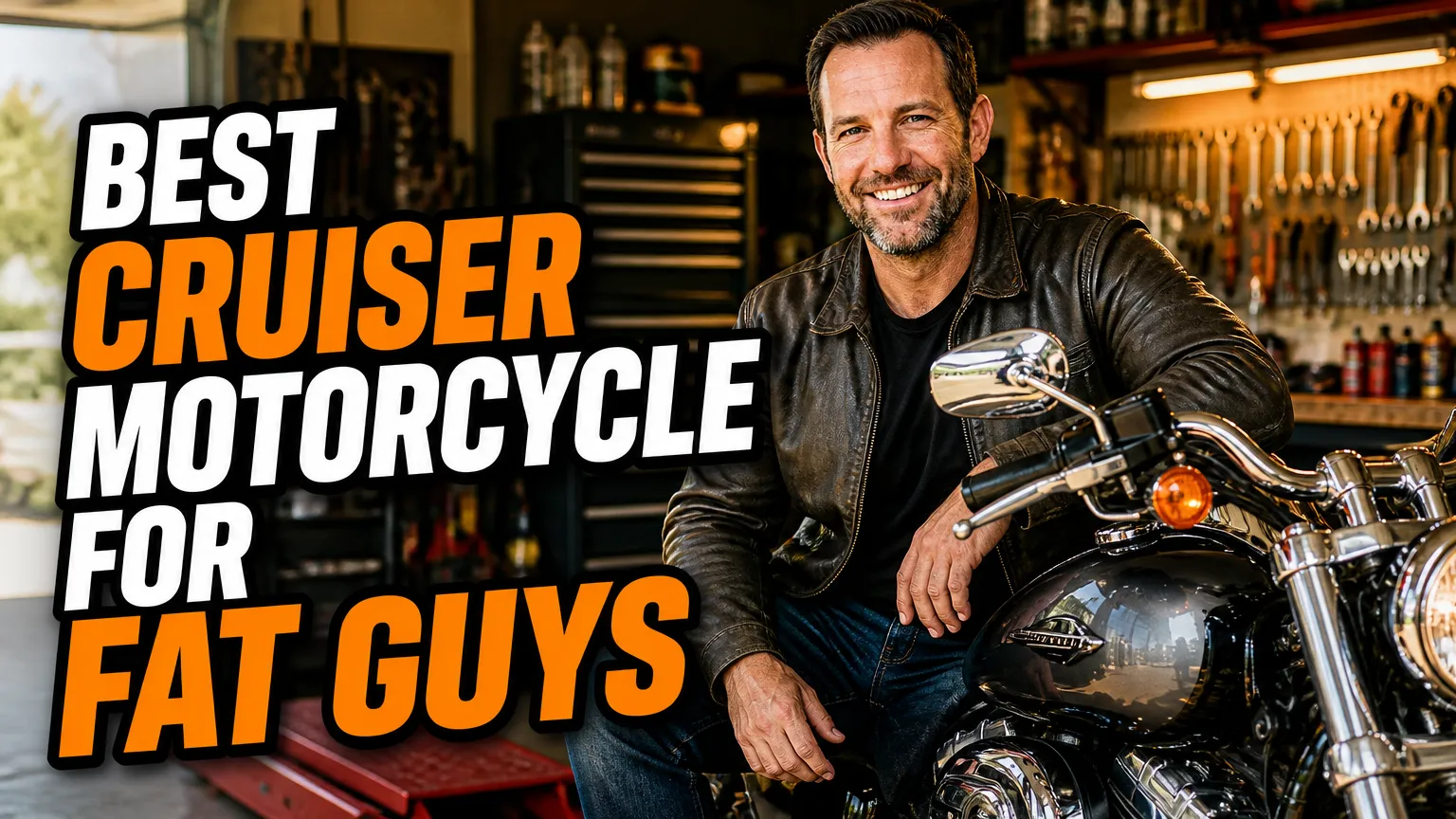
When I look for a cruiser that works well for a bigger rider, I don’t judge it by engine size or styling alone. Seat support, legroom, handlebar reach, suspension, low-speed balance, and the motorcycle’s official load limit all affect how comfortable and confident I feel.
These nine models cover everything from approachable middleweights to long-distance touring bikes. I’d still arrange a proper sit or test ride before choosing: comfort is personal, and a motorcycle that feels roomy to one rider may pinch another.
- I’d start with the Harley-Davidson Heritage Classic or Indian Super Chief Limited for a comfortable mix of cruising and touring.
- The Honda Shadow Aero, Kawasaki Vulcan 900 Classic, and Suzuki Boulevard C50 offer simpler, lower-cost cruiser options.
- Seat width, legroom, suspension setup, and handling matter as much as engine displacement.
- I always check the exact model-year payload rating before adding a passenger, luggage, or accessories.
1. Harley-Davidson Heritage Classic — My Pick for Versatile Touring Comfort
The Harley-Davidson Heritage Classic appeals to me when I want traditional cruiser looks without giving up useful touring equipment. Depending on model year and market, it pairs a Milwaukee-Eight V-twin with a six-speed transmission, a detachable windshield, and hard saddlebags, so I can set it up for a quick ride or a longer trip.
I like the Heritage’s upright cruiser layout and the option to change the windshield configuration. Its seat and riding position are worth trying in person, especially if I need more room between the seat, bars, and foot controls. A seat that looks plush in a showroom still needs to support my weight comfortably over an hour or more.
What I’d check before buying
Heritage Classic pricing is in the premium range, and it varies significantly by model year, trim, and dealer. I’d also confirm the payload figure for the specific bike rather than assuming a large touring-style cruiser can carry any amount of luggage or passenger weight.
My take: This is one of my strongest all-around choices if I want a substantial cruiser with touring features already included. If I’m still comparing my first bike, I’d also read this guide to the best beginner motorcycle for fat guys before deciding whether a full-size touring cruiser is the right starting point.
2. Harley-Davidson Street Glide — My Choice for Highway Miles
The Harley-Davidson Street Glide is built around a fairing-equipped touring platform, and that design is a major reason I’d consider it for longer rides. Its Milwaukee-Eight 117 V-twin, six-speed transmission, broad touring seat, and weather protection make it a compelling choice when I expect to spend real time on the highway.
I appreciate the fixed fairing because it keeps the main windscreen and instruments attached to the motorcycle rather than turning with the handlebars. That can make the bike feel different from a naked cruiser, so I’d take time to get comfortable with its size and steering response before committing.
Who I think it suits
A Street Glide can make sense if I want built-in touring equipment and have experience handling a heavy motorcycle at parking-lot speeds. It costs substantially more than a middleweight cruiser, and the seat fit is personal, so I’d compare the standard seat with available alternatives before buying.
I wouldn’t treat its big engine as proof of a high payload rating. I’d check the owner’s manual and certification label for the exact model year, then include my gear, any passenger, luggage, and accessories in the total load calculation.
3. Harley-Davidson Fat Boy — My Pick for a Bold, Wide-Stance Cruiser
The Harley-Davidson Fat Boy is easy to recognize, with its broad tires, solid-disc wheel styling, and muscular proportions. Its Milwaukee-Eight 117 engine gives it strong cruiser character, while its low stance can make the bike feel approachable when I’m stopped.
I’d be careful not to confuse a low seat with a roomy riding position. The Fat Boy’s wide rear tire and substantial build give it a distinctive feel, but I’d pay close attention to the distance to the foot controls and the way the seat supports my hips. I’d also practice slow turns and backing it up before taking it into tight spaces.
What I like and what I’d consider
For me, the Fat Boy’s appeal is its relaxed, imposing style and the familiar big-twin cruiser experience. It’s a premium-priced motorcycle, and its mass may be less forgiving for a newer rider than a lighter, lower-displacement option.
I’d choose it because the fit feels right, not because I assume its name or size makes it automatically more comfortable. A longer test ride would tell me more than a quick sit in the showroom.
4. Indian Super Chief Limited — My Pick for Classic Touring Features
The Indian Super Chief Limited combines traditional styling with equipment I value for longer rides. Depending on the model year, it features Indian’s Thunderstroke 116 V-twin, a six-speed gearbox, cruise control, a windshield, and lockable saddlebags, giving me a ready-made setup for day trips and touring.
I like having the option to remove or change touring pieces when I want a cleaner cruiser look. Its low, substantial profile may suit riders who prefer a planted feel, but I’d still check how the seat, floorboards, and bars line up with my own height and build.
Price and fit notes
The Super Chief Limited sits in the upper price bracket, and used examples can vary in price according to year, mileage, and equipment. I’d compare its seat comfort against the Heritage Classic rather than choosing from styling alone; both offer a strong mix of cruiser character and touring practicality.
Before carrying a passenger or loading the saddlebags heavily, I’d verify the exact load limit and suspension guidance for that model year. Accessories add weight, and some aftermarket seats or luggage may change the way the motorcycle fits me.
5. Honda Shadow Aero — My Pick for a Straightforward Midweight
The Honda Shadow Aero is a sensible choice when I want classic cruiser proportions without moving straight to a heavyweight touring motorcycle. Its 745 cc, liquid-cooled V-twin, five-speed transmission, and shaft drive make for a relatively simple package, while the low seat height can help me get both feet down at a stop.
I’d look closely at the foot-control position and seat support before deciding it has enough room for me. A low seat can improve confidence at a standstill, but it doesn’t automatically provide the thigh support or leg extension I want on a longer ride.
Why I’d consider it
The Shadow Aero is generally more affordable than large American touring cruisers, although prices vary by year and location. I like that its manageable power and traditional layout can make it less intimidating for someone moving up from a smaller bike.
If I’m unsure about the right engine size, I’d compare my needs with this guide to the best motorcycle engine size for beginners. I’d choose based on where I ride and how much weight the bike is rated to carry, rather than assuming a bigger engine is always the better fit.
6. Honda Rebel 1100 DCT — My Pick for Easy Urban Riding
The Honda Rebel 1100 DCT stands out because its automatic Dual Clutch Transmission option removes the need to operate a clutch lever. Its 1,084 cc parallel-twin engine, relaxed cruiser styling, and relatively compact dimensions give me a different kind of versatility from a traditional V-twin cruiser.
I’d consider the DCT if stop-and-go traffic or clutch operation is a concern. The Rebel’s seat is low, but its compact layout may feel less spacious than a larger touring cruiser, so I’d take a careful test ride to assess the seat width, legroom, and handlebar reach.
Where it fits best
For me, the Rebel 1100 DCT makes the most sense as a city-friendly cruiser that can also handle weekend trips. It is less of a full-dress touring machine than the Street Glide or Super Chief Limited, and accessories may be needed to tailor it for longer rides.
Prices differ between the manual and DCT versions and between model years. I’d check the exact trim’s equipment and payload rating, then factor in any luggage or comfort accessories I plan to install.
7. Kawasaki Vulcan 900 Classic — My Pick for Relaxed, Traditional Cruising
The Kawasaki Vulcan 900 Classic brings classic cruiser styling to a middleweight package. Its 903 cc V-twin, belt final drive, and five-speed transmission give it a familiar setup, and the low seat height may make it easier for me to feel grounded at a stop than on a taller motorcycle.
I’d consider the Vulcan when I want a bike with enough displacement for relaxed road riding but don’t need a large touring fairing or a premium price tag. I’d still make sure the foot controls let me stretch comfortably, since a low saddle alone doesn’t guarantee useful legroom.
My practical buying advice
Depending on the model year and condition, I may find the Vulcan 900 Classic new or on the used market. I’d inspect the suspension, tires, and maintenance history on a used example, then confirm the owner’s manual load guidance before adding a passenger or luggage.
If I’m also weighing smaller-displacement bikes, I’d keep realistic expectations about highway speed and passing power. These explainers cover how fast a 150cc motorcycle can go and how fast a 300cc motorcycle can go, which can help me compare engine classes with my actual routes in mind.
8. Suzuki Boulevard C50 — My Pick for Simple Shaft-Drive Cruising
The Suzuki Boulevard C50 is a traditional cruiser powered by an 805 cc, liquid-cooled V-twin. It uses a five-speed transmission and shaft final drive, and its low-slung styling gives me the classic cruiser look without the size or price of a full touring model.
I like the idea of the C50 for riders who want straightforward road manners and don’t need a huge engine. As with any middleweight cruiser, I’d spend time checking the seat’s support and the reach to the bars and foot controls. Those details can make a bigger difference to comfort than the number on the engine badge.
Availability and comfort
Model availability varies by market and year, so I’d check Suzuki’s current local lineup and reputable dealers before planning around a new one. The used market may offer more choices, where I’d review service records and inspect the shaft drive and tires carefully.
I’d also confirm the exact model’s payload information before carrying a passenger. If the seat doesn’t work for me, I’d price a suitable replacement seat and have the suspension set up correctly rather than trying to compensate by exceeding the motorcycle’s rated load.
9. BMW R 18 — My Pick for Big-Capacity Boxer Character
The BMW R 18 takes a distinctive route into cruiser territory with its 1,802 cc opposed-twin boxer engine, shaft drive, and long, low profile. I’d consider it if I want a premium motorcycle with a very different engine feel from the usual V-twin cruiser lineup.
Its substantial mass and low seat may feel reassuring once I’m moving, but I wouldn’t assume that a low seat makes it easy to handle everywhere. At parking speeds, I’d want to be comfortable managing the bike’s weight, especially on uneven ground or when backing it out of a tight space.
What I’d keep in mind
The R 18 is a premium-priced motorcycle, and its equipment and availability vary by model year and trim. I’d compare the standard bike with touring-oriented R 18 versions if I plan to ride longer distances, while checking whether their seats and control layouts suit my body.
I’d make the decision after a proper test ride and a careful payload check. The R 18’s large engine is part of its character, but comfort and load capacity still depend on the exact motorcycle, setup, and rider fit.
How I Choose a Cruiser That Fits My Body
I check the official payload, not just the engine size
I start by finding the motorcycle’s maximum permitted load in its owner’s manual or on its certification label. I then account for the rider, passenger, protective gear, luggage, and accessories together. Engine displacement does not tell me how much weight a motorcycle is rated to carry.
I judge the whole riding position
I check whether the seat supports my hips and thighs, whether my knees feel cramped, and whether I can reach the bars without leaning forward or stretching. I also test the foot-control position and how easily I can place my feet on the ground. If I’m shorter as well as heavier, I’d compare fit carefully and look at the best motorcycle scooter for short fat guys for alternative styles and seat-height considerations.
I plan for suspension, tires, and real riding
I set tire pressures to the manufacturer’s recommendations and ask a qualified shop whether the suspension needs an appropriate adjustment for my load. I wouldn’t make an unapproved modification or carry more than the motorcycle’s rating allows. A comfortable-looking bike still needs safe handling, suitable suspension, and enough braking performance for the way I use it.
Most of all, I sit on several motorcycles and arrange a test ride when possible. The right cruiser is the one that feels supportive and manageable for my body, my experience, and my usual routes—not simply the biggest bike on the showroom floor.
Frequently Asked Questions
What should a bigger rider look for in a cruiser motorcycle?
I would compare the seat’s width and support, knee and footpeg position, handlebar reach, suspension adjustment, and the motorcycle’s official payload limit.
Does a larger engine mean a motorcycle can carry more weight?
No. Engine size and payload capacity are separate specifications. I always check the owner’s manual or certification label for the exact model year.
Is a low seat always more comfortable for a bigger rider?
Not necessarily. I look for a seat that supports my hips and thighs, plus enough legroom and suspension travel, rather than choosing by seat height alone.
Can I improve a cruiser’s comfort after buying it?
Often, yes. I consider a wider aftermarket seat, adjustable foot controls, suitable suspension setup, and correct tire pressure, while staying within the motorcycle’s rated load.

Related Articles

7 Best Cruisers for Comfortable Two-Up Motorcycle Trips
Compare seven comfortable cruisers for two-up rides, with real-world notes on passenger comfort, power, luggage, pricing, and how to choose…
Jake Miller
12 min read

8 Comfortable Cruisers That Make Two-Up Riding More Enjoyable
Find a cruiser you and your passenger can enjoy together. I compare eight comfortable motorcycles, with real-world strengths, trade-offs, and…
Jake Miller
11 min read

7 Luxury Cruisers That Make Long-Distance Riding Feel First-Class
I compare seven luxurious cruisers for long-distance comfort, power, weather protection, luggage, technology, and value to help you choose the…
Jake Miller
13 min read