
8 Best Dirt Bikes for 15-Year-Old Riders, From First Trails to Race Tracks
 Jake Miller
14 min read
Jake Miller
14 min read
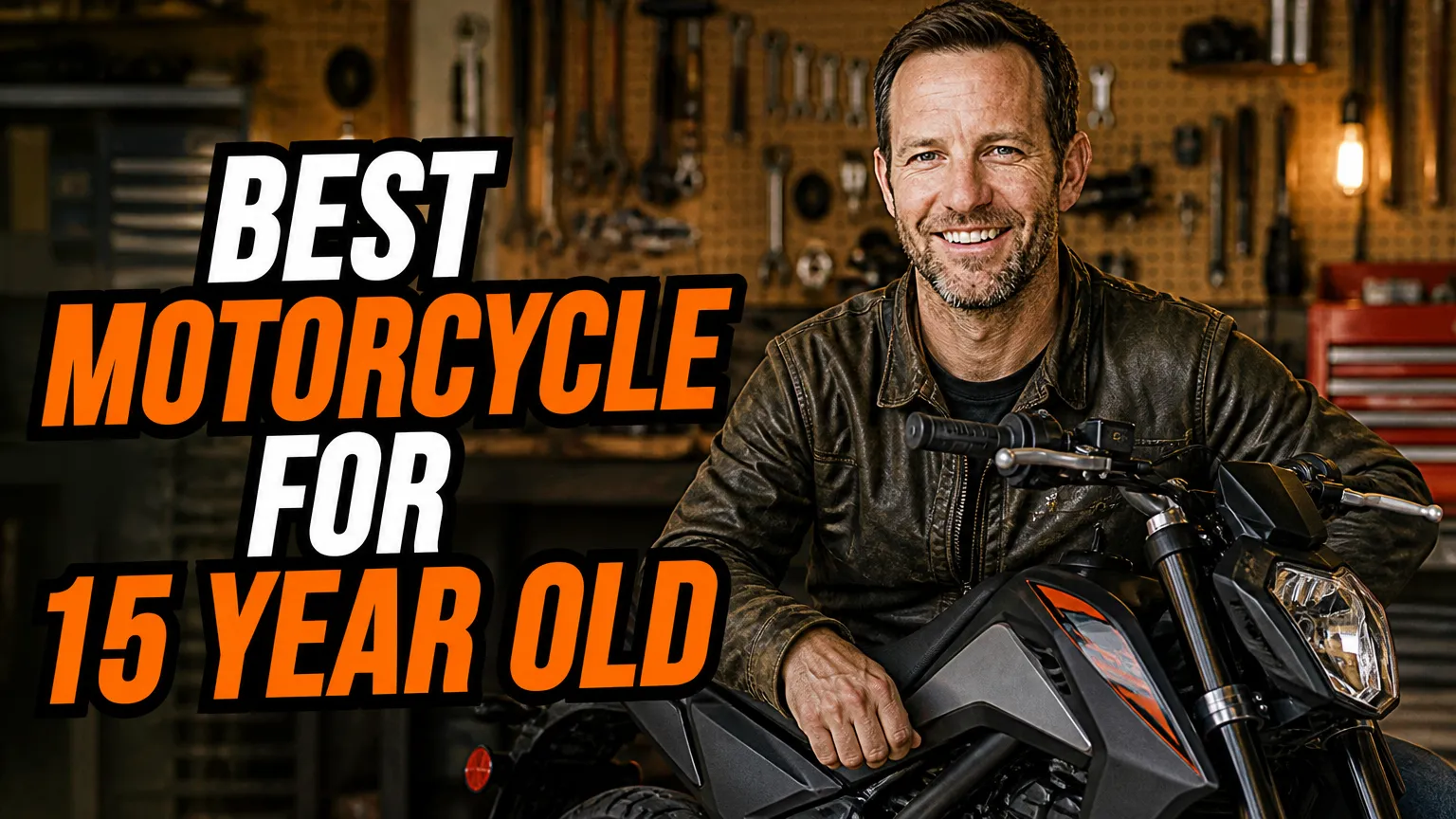
Choosing the best motorcycle for a 15 year old is less about finding the biggest engine and more about matching the bike to the rider’s size, confidence and experience. I’d also start by deciding where the bike will be ridden: the models below are primarily off-road dirt bikes, not a shortcut around road-licensing laws.
I’ve always believed a good first bike should help a young rider build skills without making every mistake feel overwhelming. Here are eight real models I’d consider, along with the features I’d compare before buying.
- I’d choose a bike that fits the rider now, rather than buying extra power for a future growth spurt.
- The Honda CRF125F and Yamaha TT-R125LE are strong all-around trail-bike starting points.
- Smaller 110cc bikes can suit shorter or newer riders, while the YZ85 is aimed at experienced motocross riders.
- I’d confirm local riding rules, arrange supervision and budget for proper protective gear before buying.
How I’d choose a bike for a teen rider
At 15, riders can differ enormously in height, strength and experience. I wouldn’t pick by age or engine capacity alone: I’d have the rider sit on the bike, check whether they can reach the controls comfortably and see whether they can manage it at a standstill.
For a newer rider, I generally favor a predictable four-stroke trail bike over a high-strung competition model. If you’re weighing engine sizes, I’d also read this guide to best motorcycle engine size for beginners. The right displacement still depends on the actual bike’s weight, gearing and throttle response.
One essential distinction: the dirt bikes on this list are intended for off-road riding. A motorcycle’s ability to move under its own power does not make it legal for public streets, trails or parks. I’d check local age, licensing, registration, land-access and supervision requirements before the first ride.
1. Honda CRF125F — My all-around trail-bike pick
The Honda CRF125F is where I’d start for a teen who is ready to move beyond a small pit bike but doesn’t need a race machine. It uses a 124.9cc air-cooled, four-stroke engine, a four-speed transmission and electric start, making it a straightforward choice for recreational trail riding.
Honda also sells a CRF125F Big Wheel version with larger wheels and a taller stance. I’d compare both versions in person: the standard model may suit a shorter rider, while the Big Wheel can offer a more comfortable fit for someone with longer legs. Neither variant is automatically the right choice just because the rider is 15.
What I like and what I’d check
I like the CRF125F’s approachable engine character and familiar, simple trail-bike layout. Its air-cooled design also keeps the bike less complicated than a liquid-cooled motocross model, though any used example still needs careful checks of its maintenance history, chain, tires, brakes and controls.
Expect a new-bike price in the roughly $3,500–$4,000 range in the United States, depending on version, dealer fees and model year. I’d confirm the current local price and sit on the bike before deciding. This is an off-road model, so I wouldn’t treat it as street-legal transportation.
2. Yamaha TT-R125LE — My pick for an easygoing, versatile ride
The Yamaha TT-R125LE is another 125cc-class trail bike I’d put near the top of a teen’s shortlist. Its 124cc air-cooled four-stroke engine, electric starting, manual clutch and five-speed transmission give a developing rider room to practice clutch control and shifting on a manageable platform.
The “LE” version has a larger front wheel than the smaller-wheel TT-R125, along with a front disc brake. I’d make sure the seat height and wheel size work for the rider rather than assuming that a larger version is automatically an upgrade. Being able to balance confidently matters more than having the tallest bike in the group.
Who I’d recommend it to
I’d consider the TT-R125LE for a teen who has learned basic riding skills and wants a trail bike they can continue to grow with. Its four-stroke power delivery is generally a better match for steady skill-building than the sharp hit of a small competition two-stroke, although throttle control and safe instruction still matter.
New examples commonly land around the mid-$3,000s to low-$4,000s before dealer costs, with prices varying by year and region. I’d compare it directly with the CRF125F: fit, dealer support, condition and the rider’s comfort may matter more than small spec-sheet differences.
3. Kawasaki KLX140R L — My choice for a taller teen wanting more trail-bike room
The Kawasaki KLX140R L uses a 144cc air-cooled four-stroke engine, electric start and a six-speed transmission. Its “L” trim has full-size-style 21-inch front and 18-inch rear wheels, so I’d consider it for a taller teen who finds a smaller 125cc trail bike cramped.
That larger wheel setup can help the bike feel more settled over uneven ground, but it also contributes to a taller seat and a different feel at low speed. I’d have the rider try it on level ground and verify that they can control it comfortably. If a rider can’t manage a bike when stopped, its extra trail capability won’t be much help.
Power and price considerations
At 144cc, the KLX140R L sits above the 110cc and 125cc models here, but I wouldn’t use displacement as a simple measure of danger or suitability. The rider’s experience, the terrain and the way the throttle responds are all part of my decision. For context on how different engine sizes can perform, I’d look at how fast can a 150cc motorcycle go unleashing top speeds.
I’d budget roughly $4,000–$4,500 for a new KLX140R L, before delivery, setup and tax. Prices vary by year and dealer. I see it as a step-up trail option for a rider who has the size and basic skills for it, not as the default choice for every 15-year-old.
4. Suzuki DR-Z125L — My straightforward manual-transmission option
The Suzuki DR-Z125L is a 124cc air-cooled four-stroke dirt bike with a five-speed transmission and a manual clutch. Its L trim uses 19-inch front and 16-inch rear wheels, giving it a taller, more full-sized feel than small-wheel play bikes while remaining a relatively simple trail-focused design.
I’d look at the DR-Z125L for a teen who wants to learn conventional shifting and clutch use on a modest four-stroke. Unlike the electric-start models on this list, it uses a kick starter, so I’d make sure the rider is comfortable starting it and can do so safely. I’d also confirm current availability and parts support in my area.
My buying notes
For a used DR-Z125L, I’d pay particular attention to starting behavior, signs of neglected maintenance, clutch operation and whether the bike has been modified. A clean, well-maintained older bike can be appealing, but I’d avoid buying solely because the asking price looks low.
Depending on year, condition and location, I’d expect used prices to vary widely, while a new or remaining-stock example may be in the low-to-mid $3,000s before fees. I’d check Suzuki’s current local listings and compare the actual condition against newer alternatives before committing.
5. Honda CRF110F — My smaller-bike choice for a newer or shorter rider
The Honda CRF110F has a 109cc air-cooled four-stroke engine, a four-speed transmission with an automatic clutch and electric start. That automatic clutch means the rider shifts gears without operating a hand clutch, which can make early practice less demanding for someone still learning basic coordination.
I’d consider the CRF110F if a teen is shorter, new to riding or simply more confident on a compact bike. The trade-off is that its small dimensions may feel cramped for a taller rider. I’d prioritize comfort, control reach and the ability to maneuver it over the assumption that a 15-year-old has outgrown every 110cc motorcycle.
Why I wouldn’t dismiss a smaller bike
A smaller engine can still be a useful learning tool, especially for practicing smooth braking, looking through turns and maintaining balance. I’d rather see a rider develop those habits on a bike they can control than struggle with a taller or more powerful model before they’re ready.
A new CRF110F often sits around the low-to-mid $2,000s before dealer fees, though pricing changes by model year and region. I’d also account for a helmet, boots and other safety equipment; protective gear is part of the purchase, not an optional extra I’d put off until later.
6. Yamaha TT-R110E — My easy-start option for learning the basics
The Yamaha TT-R110E is a 110cc air-cooled four-stroke trail bike with electric start and a four-speed transmission with an automatic clutch. I see it as a sensible option for a smaller teen or a beginner who wants to practice shifting without having to manage a manual clutch at the same time.
Its relatively low seat height can be reassuring for a rider who wants to get a foot down easily. But I’d check the fit carefully: a tall 15-year-old may find the TT-R110E too small for comfortable longer rides or uneven trails. I’d treat it as a learning or recreational choice, not a bike every teen will be able to use for years.
What I’d compare with the Honda
I’d test the Yamaha alongside the CRF110F if both are available nearby. The starting system, seat feel, control layout and the rider’s comfort are more useful comparison points than brand loyalty. I’d also check the exact model-year specifications and local pricing rather than relying on an old listing.
New pricing is typically in the low-to-mid $2,000s before fees, with variations by market and year. For a teen who is ready for a manual clutch, I’d look at a 125cc-class bike instead; for someone still building confidence, the automatic-clutch layout can be a helpful stepping stone.
7. Kawasaki KLX110R L — My compact pick with a manual clutch
The Kawasaki KLX110R L is a small-wheel trail bike with a 112cc air-cooled four-stroke engine, electric start and a four-speed transmission. Unlike the standard KLX110R, the L version adds a manual clutch, so it can suit a smaller rider who is ready to practice clutch control on a compact machine.
I’d pay attention to the rider’s size before choosing this one. Its 14-inch front and 12-inch rear wheels make it notably smaller than the 125cc and 140cc bikes, so some 15-year-olds may outgrow its dimensions quickly. On the other hand, I wouldn’t rule it out for a younger teen who is short, cautious or still learning.
My view on this bike’s best use
I’d mainly consider the KLX110R L for supervised recreational riding on suitable private property or permitted off-road areas. It gives a learner a manual-clutch experience in a smaller package, but I wouldn’t mistake compact size for a reason to skip adult supervision, training or protective equipment.
New pricing is often in the mid-$2,000s, before dealer charges and local taxes. I’d compare its size and clutch feel directly with the CRF110F and TT-R110E. If the rider is already tall enough for a full-size-style trail bike, I’d focus my search on the 125cc or 140cc options instead.
8. Yamaha YZ85 — My race-only pick for an experienced young rider
The Yamaha YZ85 is very different from the four-stroke trail bikes above. It is a liquid-cooled 85cc two-stroke motocross bike with a six-speed transmission, built for closed-course competition rather than casual trail riding. I’d only consider it for a teen with appropriate experience, instruction and access to a track or other permitted riding venue.
Its race-focused engine and chassis can reward a skilled rider, but that same character can make it a poor first motorcycle. The YZ85 also comes in different wheel configurations, including the YZ85LW, so I’d match the specific version to the rider’s height and competition needs. I wouldn’t buy one just because the rider is interested in motocross.
When I’d consider a motocross model
I’d choose a YZ85 only if the rider already understands clutch control, shifting, braking and basic off-road safety, and wants to develop on a closed course with responsible adult support. It also needs maintenance suited to a competition two-stroke, and I’d budget for more than the initial purchase price.
New YZ85 pricing is generally in the mid-$5,000s or higher before dealer fees, depending on version and model year. I’d check current Yamaha pricing and local track rules. For a new rider who wants relaxed trail time, I’d pick a four-stroke trail bike from earlier in this list instead.
Fit, safety and ownership checks I wouldn’t skip
When I’m choosing a first bike, I start with fit. I’d have the rider sit naturally, reach the bars and controls, and demonstrate that they can balance the motorcycle and move it around without panic. A rider doesn’t always need to place both feet flat on the ground, but they should feel in control rather than intimidated.
I’d also check the bike’s weight and power delivery, not only its engine size. If you’re comparing larger categories, these explainers on how fast can a 300cc motorcycle go and how fast can a 500cc motorcycle go offer useful context, but I wouldn’t treat top speed as a sensible goal for a young beginner.
Gear, training and the place you ride
I’d buy a correctly fitted helmet that meets applicable safety standards, goggles, gloves, over-the-ankle riding boots and durable protective clothing. I’d strongly consider knee and elbow protection and a chest protector, especially for off-road riding. A helmet that is too large or a boot that interferes with the controls can undermine the protection it is meant to provide.
I’d arrange proper beginner instruction and adult supervision, then choose a legal, appropriate riding area. Before each ride, I’d check the tires, brakes, chain, throttle return, fasteners and fuel or battery condition. I’d also set clear rules about speed, distance, terrain and riding with other people.
New or used: what I’d inspect
A used dirt bike can save money, but I’d ask for maintenance records and a cold start. I’d look for oil leaks, damaged levers, worn tires, loose spokes, unusual engine noises and signs of a bent frame or poorly repaired crash damage. If I wasn’t confident in my inspection, I’d have a qualified mechanic check it before purchase.
I’d compare the total cost, not just the advertised price. Registration or off-road permits, transport, maintenance, protective gear and training can add up. I’d also check whether the model has a local dealer or parts source, especially if I’m buying an older bike or a model that is less common in my area.
My final picks by rider and situation
If I had to narrow the list, I’d start with the Honda CRF125F or Yamaha TT-R125LE for a teen who fits a 125cc trail bike and wants a versatile four-stroke. For a taller rider with suitable experience, I’d compare the Kawasaki KLX140R L. For a shorter or newer rider, I’d look closely at the CRF110F, TT-R110E or KLX110R L.
I’d reserve the YZ85 for a young rider who is already committed to motocross and ready for a competition machine. There isn’t one perfect choice for every 15-year-old: my best pick is the bike the rider can manage confidently, ride legally and maintain with responsible adult support.
Frequently Asked Questions
Can a 15-year-old legally ride a motorcycle on public roads?
It depends on local licensing and vehicle rules. I recommend checking with your motor vehicle agency and sticking to permitted, supervised off-road areas unless the rider is properly licensed.
What size dirt bike should I consider for a 15-year-old beginner?
I would start with a manageable four-stroke that fits the rider, such as a Honda CRF125F or Yamaha TT-R125LE. Height, confidence and experience matter as much as age.
Is a 150cc dirt bike too powerful for a 15-year-old?
Not automatically, but engine size alone does not determine suitability. I would assess seat height, throttle response, weight, clutch skills and the rider’s training before choosing.
What safety gear should a teen wear on a dirt bike?
I recommend a properly fitted DOT-approved helmet, goggles, gloves, boots, durable riding clothes and body protection, plus adult supervision and formal training.

Related Articles

8 Comfortable, Confidence-Inspiring Motorcycles for Riders in Their 70s
Explore eight manageable motorcycles for riders in their 70s, with seat heights, weights, features, and practical advice for choosing a…
Jake Miller
12 min read

7 Approachable Motorcycles for Comfortable, Confident Riding at 65
Compare seven approachable motorcycles for comfort, weight, seat height, power and value, plus my practical test-ride checklist for choosing confidently…
Jake Miller
13 min read

7 Best Motorcycles for a 55-Year-Old Who Wants Comfort and Confidence
I compare seven approachable motorcycles for riders in their 50s, with real specs, comfort notes, price ranges, and practical advice…
Jake Miller
12 min read