
8 Best Youth Dirt Bikes for 13-Year-Old Riders: Smart Picks for Skill and Size
 Jake Miller
13 min read
Jake Miller
13 min read
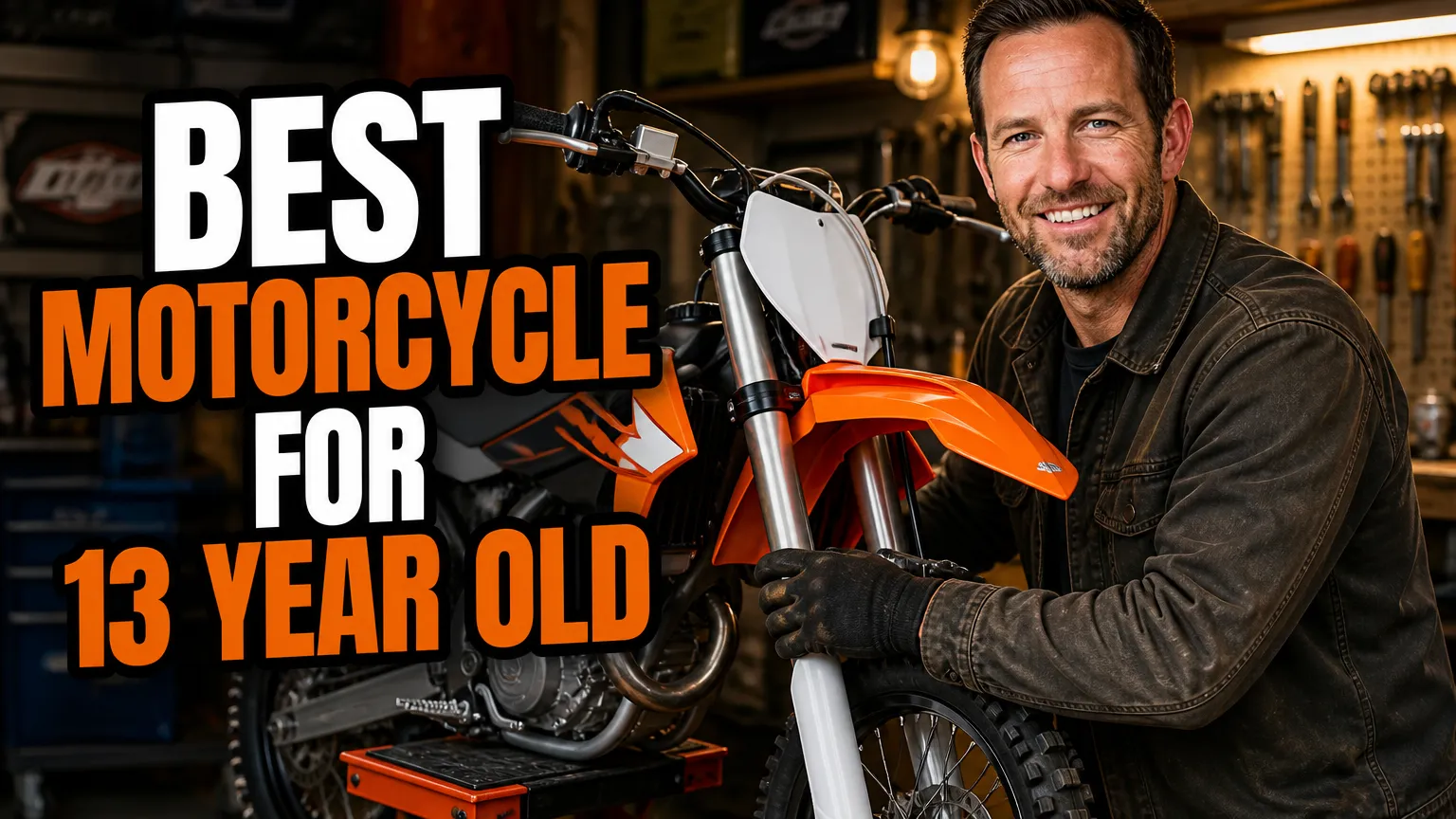
Choosing a motorcycle for a 13-year-old is really a matter of matching the bike to the rider, not buying the biggest engine the family can afford. I would look first at riding experience, height, strength, and where the bike will be used. A model that feels manageable at a standstill can still be too powerful or heavy for a young beginner once the trail gets rough.
My shortlist below focuses on genuine youth off-road motorcycles, from mild four-strokes to competition two-strokes. These bikes are generally intended for off-road use, not public streets, so I would check local rules, the manufacturer’s age guidance, and the riding area’s requirements before buying.
- I would choose for fit, confidence, and experience rather than age or engine size alone.
- For many beginners, a mild four-stroke such as the Honda CRF125F is a sensible starting point if the rider fits it.
- The Yamaha YZ85 and KTM 85 SX are powerful race bikes, not automatic beginner upgrades.
- I would budget for protective gear, training, maintenance, and safe, legal riding access as well as the motorcycle.
1. Honda CRF110F — Best for Shorter Beginners
I would consider the Honda CRF110F for a shorter or less experienced teenager who is still developing basic clutch-free riding skills. Its 109cc air-cooled four-stroke engine is tuned for approachable off-road riding rather than racing, and the automatic clutch means the rider does not have to manage a hand-operated clutch while learning to control the throttle and brakes.
The CRF110F has a four-speed transmission, electric start, and a seat height of about 26.3 inches. That low seat is reassuring when a rider needs to put a foot down, though I would check knee room and overall posture carefully: a 13-year-old may quickly find this bike cramped as they grow.
What I like, and what I would check
I like the combination of electric starting and a simple automatic clutch for new riders. The trade-off is that the compact size may limit how long a taller teenager can comfortably ride it. I would have the young rider sit on the bike in boots and protective gear and make sure they can reach the controls without stretching.
New-bike pricing varies by model year and dealer, but I would expect the CRF110F to land roughly in the mid-$2,000s to low-$3,000s in the United States before taxes and setup costs. I would also check the owner’s manual for maintenance requirements and confirm that the bike is appropriate for the rider’s experience.
2. Yamaha TT-R110E — Best for a Friendly First Trail Bike
The Yamaha TT-R110E is another mild 110-class choice I would put on a beginner’s shortlist. Its air-cooled 110cc four-stroke engine, four-speed transmission, automatic clutch, and electric start make it a straightforward trail bike for learning in a controlled area.
With a seat height of roughly 26.4 inches, the TT-R110E has a similar low-slung feel to the Honda CRF110F. I would compare both in person rather than assuming they fit identically; handlebar reach, seat shape, and a rider’s leg length can change which one feels more natural.
Who I think it suits
I would lean toward this Yamaha for a young rider who is still building confidence and does not need a competition bike. Its modest power delivery can make practice less intimidating, but its small size may be a poor match for a tall 13-year-old or someone who has already outgrown youth trail bikes.
The TT-R110E commonly costs around the mid-$2,000s to low-$3,000s new, depending on year, dealer, and region. Before I chose it, I would weigh the rider’s current ability against how quickly they may outgrow its size, not just compare the purchase price with other 110s.
3. Kawasaki KLX110R L — Best Small Bike for Riders Ready to Use a Clutch
The Kawasaki KLX110R L gives a young rider a compact platform with a more involved control setup than the standard KLX110R. It uses a 112cc air-cooled four-stroke engine and a four-speed transmission, and the “L” version adds a manual clutch and a taller seat, around 28.7 inches.
I would consider this model for a shorter teenager who has outgrown an automatic-clutch bike but is not yet comfortable on a full-size youth machine. Learning a manual clutch takes practice, so I would start on flat, open ground with a supervising adult and keep early sessions short.
Why the L version matters
The taller seat and manual clutch make the KLX110R L a different proposition from the basic KLX110R. I would make sure the listing clearly says KLX110R L before comparing specs or prices, because the two versions do not offer the same setup.
As with other 110s, fit is the main limitation for a 13-year-old. I would not buy it simply because the rider can touch the ground; I would also check whether the bike feels cramped while standing on the pegs. Pricing often falls around the high-$2,000s to low-$3,000s, but local dealer quotes and current model-year details matter.
4. Honda CRF125F Big Wheel — Best All-Round Trail Choice for Many Teens
For a 13-year-old who has basic skills and needs more room than a 110 offers, I would look closely at the Honda CRF125F Big Wheel. It has a 124.9cc air-cooled four-stroke engine, a four-speed transmission, and a manual clutch. The Big Wheel version uses larger wheels and has a seat height of about 31.8 inches, making it a better physical fit for many growing riders than the smaller CRF125F.
I like this as a potential middle ground: it is still a trail-oriented four-stroke, but it asks the rider to learn clutch control and has more room to grow into. I would not treat “125” as a guarantee that the power is suitable for every beginner, though. A cautious test sit and a supervised introductory lesson matter more than the number on the side cover.
What to expect from ownership
The CRF125F Big Wheel is a dirt bike, not a street motorcycle, and I would plan on transporting it to an authorized riding area. Prices are generally in the low-to-mid $3,000s new, depending on the year and dealer. I would ask the dealer to confirm the exact version, wheel size, and current specifications before putting down a deposit.
If I were comparing engine sizes for a new rider, I would also read this guide to the best motorcycle engine size for beginners. I use displacement as one clue, not as a substitute for checking a bike’s weight, throttle response, seat height, and intended use.
5. Kawasaki KLX140R L — Best for a Taller Teen Learning on a Trail Bike
The Kawasaki KLX140R L is a 144cc, air-cooled four-stroke trail motorcycle with a five-speed transmission and manual clutch. Its larger wheels and seat height of roughly 31.5 inches make it a more substantial step up than a 110, while its trail-bike character makes it a different choice from a race-focused 85cc two-stroke.
I would consider the KLX140R L for a teenager who has some experience, can handle a manual clutch, and has grown out of a smaller bike. Because it is heavier than a compact 110, I would check that the rider can lift it from a gentle tip-over with adult help and can confidently manage it at walking speed.
My fit and skill check
A 140-class machine may sound like an obvious upgrade, but I would not move a beginner onto it just because they turned 13. I would want to see calm starts, controlled stops, steady low-speed turns, and good throttle discipline on the bike they already ride before considering a larger model.
The KLX140R L is usually priced in the mid-$3,000s to low-$4,000s new, though prices vary by year and market. I would compare the standard KLX140R and the L version carefully because the wheel and seat setup affects rider fit.
6. Suzuki DR-Z125L — Best for a Teen Who Wants a More Traditional Dirt Bike
The Suzuki DR-Z125L is a 124cc air-cooled four-stroke with a five-speed gearbox and a manual clutch. The “L” version’s larger wheels, front disc brake, and seat height of about 32 inches give it a more full-size feel than the small automatic-clutch bikes in this list.
I would put it on the list for a young rider who already understands shifting and clutch control and needs a simple off-road bike with room to grow. Its controls make it less suitable as a first-ever motorcycle for many children, and I would pay special attention to whether the rider can manage its weight and reach the levers comfortably.
What makes it a different option
The DR-Z125L is not a high-performance motocross machine. I see its appeal in the familiar manual-transmission layout and straightforward four-stroke format, which can make it a practical step for trail riding when the rider is ready for those controls.
I would check current local availability before building a buying plan, since model-year offerings and dealer stock can vary. For a broader perspective on why engine size alone does not predict speed or suitability, I would read about how fast can a 150cc motorcycle go unleashing top speeds. I would not use a top-speed figure as a target for a young rider.
7. Yamaha YZ85 — Best for an Experienced Young Motocross Rider
The Yamaha YZ85 is a competition motocross bike, not a mild beginner trail motorcycle. It uses an 85cc liquid-cooled two-stroke engine and a six-speed gearbox with a manual clutch. The motor’s power delivery and race-focused setup are a very different experience from the air-cooled four-strokes above.
I would consider the YZ85 only for a teenager with strong fundamental skills and a genuine interest in motocross training or competition. Seat height and wheel configuration vary between the standard and larger-wheel versions, so I would check the specific bike’s setup and make sure the rider fits it properly.
Why I would not call it an easy upgrade
An 85cc two-stroke can demand more active shifting and throttle control than its engine size suggests. I would not choose one because a young rider wants a faster-looking bike or because a friend owns one. I would involve a qualified coach or experienced youth-riding program when assessing whether the rider is ready.
New YZ85 pricing is generally in the mid-$4,000s to mid-$5,000s, depending on the model year and version, before gear and maintenance. I would also budget for more frequent attention to a competition bike than I would expect from a gentle recreational trail machine.
8. KTM 85 SX — Best for a Skilled Junior Racer
The KTM 85 SX is another real competition-focused 85cc two-stroke. It has a liquid-cooled engine, a six-speed transmission, and a manual clutch, with small-wheel and large-wheel configurations offered in many model years. I would compare the exact version and current specifications rather than assume every 85 SX has the same seat height or fit.
I see this as a specialist pick for a young rider who already has experience, wants to race, and has access to suitable coaching and maintenance support. It is not the motorcycle I would recommend as a first bike for most 13-year-olds, even though its relatively small displacement can make it sound less intimidating than a bigger four-stroke.
What I would budget for
The KTM 85 SX typically costs several thousand dollars more than a basic youth trail bike, often around the mid-$6,000s or higher depending on model year, dealer, and configuration. I would ask about required servicing, parts availability, and setup costs before buying, then have a qualified mechanic inspect any used example.
For context, I would not compare a junior race bike directly with adult street or adventure motorcycles. Articles on how fast can a 300cc motorcycle go and how fast can a 500cc motorcycle go can help explain why those larger categories are not sensible targets for a young beginner. Likewise, a guide to the best adv motorcycle for short riders is more relevant to adult-bike fit than to choosing a youth dirt bike.
How I Would Choose the Right Size
I would start with the rider’s actual measurements and experience, not a birthday or a rule that every 13-year-old needs a particular engine size. At a standstill, the rider should be able to balance the bike with confidence and reach the controls. While seated, I would check their knees, arm reach, and ability to operate the brakes and clutch without strain.
Being able to put both feet flat on the ground is not the only measure of fit. A trained rider may manage a taller bike with one foot down, but I would prioritize confidence and control for a beginner. I would also factor in bike weight: a machine that is difficult for a young rider to move or recover can turn a small mistake into a stressful situation.
Trail bike or race bike?
For recreational learning, I would usually look first at a mild four-stroke trail bike. Models such as the CRF110F, TT-R110E, CRF125F, and KLX140R L are built for a different job than the YZ85 and 85 SX, which are competition machines with sharper performance and greater demands on rider skill.
I would be cautious about buying for future growth alone. A bike that feels too tall, heavy, or powerful today can slow skill development and reduce confidence. If the rider is between sizes, I would arrange a supervised sit or demo where possible rather than guessing from online specifications.
Safety, Rules, and Ongoing Costs I Would Plan For
I would budget for proper protective equipment from the start: a correctly fitted certified helmet, goggles, gloves, motocross boots, long riding pants, a jersey, and suitable body protection. I would not let a young rider use an ill-fitting helmet or ordinary footwear as a substitute for purpose-made gear.
I would also arrange instruction and active adult supervision. A quiet, permitted practice area is a better place to learn than a busy trail, and I would teach braking, starting, stopping, and low-speed control before allowing faster riding. Local laws, landowner rules, age limits, and noise restrictions can vary, so I would check them before every new riding location.
Finally, I would count transport, fuel, maintenance, tires, protective gear, and training in the real cost of ownership. A used bike can be a good value, but I would have it inspected and check the brakes, tires, controls, chain, frame, and service history before buying. For a young rider, my best pick is the bike they can safely control, physically fit, and ride with responsible supervision, not necessarily the biggest or most expensive one.
Frequently Asked Questions
What size dirt bike is best for a 13-year-old beginner?
I would start by checking the rider’s fit and experience rather than choosing by age alone. A Honda CRF125F or Kawasaki KLX140R L can suit some beginners, while smaller models may fit shorter riders.
Can a 13-year-old ride a dirt bike on public roads?
Most youth dirt bikes in this guide are off-road models and are not street legal. I recommend checking local laws and riding only in permitted areas with adult supervision.
Is an 85cc dirt bike suitable for a beginner?
I would not assume so. Models such as the Yamaha YZ85 and KTM 85 SX are high-performance two-strokes that suit experienced young riders better than most beginners.
What safety gear should a young dirt-bike rider wear?
I recommend a properly fitted, certified helmet, goggles, gloves, motocross boots, long pants, a jersey, and suitable body protection, along with adult supervision.

Related Articles

8 Comfortable, Confidence-Inspiring Motorcycles for Riders in Their 70s
Explore eight manageable motorcycles for riders in their 70s, with seat heights, weights, features, and practical advice for choosing a…
Jake Miller
12 min read

7 Approachable Motorcycles for Comfortable, Confident Riding at 65
Compare seven approachable motorcycles for comfort, weight, seat height, power and value, plus my practical test-ride checklist for choosing confidently…
Jake Miller
13 min read

7 Best Motorcycles for a 55-Year-Old Who Wants Comfort and Confidence
I compare seven approachable motorcycles for riders in their 50s, with real specs, comfort notes, price ranges, and practical advice…
Jake Miller
12 min read