
7 Best Motorcycles for a 55-Year-Old Who Wants Comfort and Confidence
 Jake Miller
12 min read
Jake Miller
12 min read
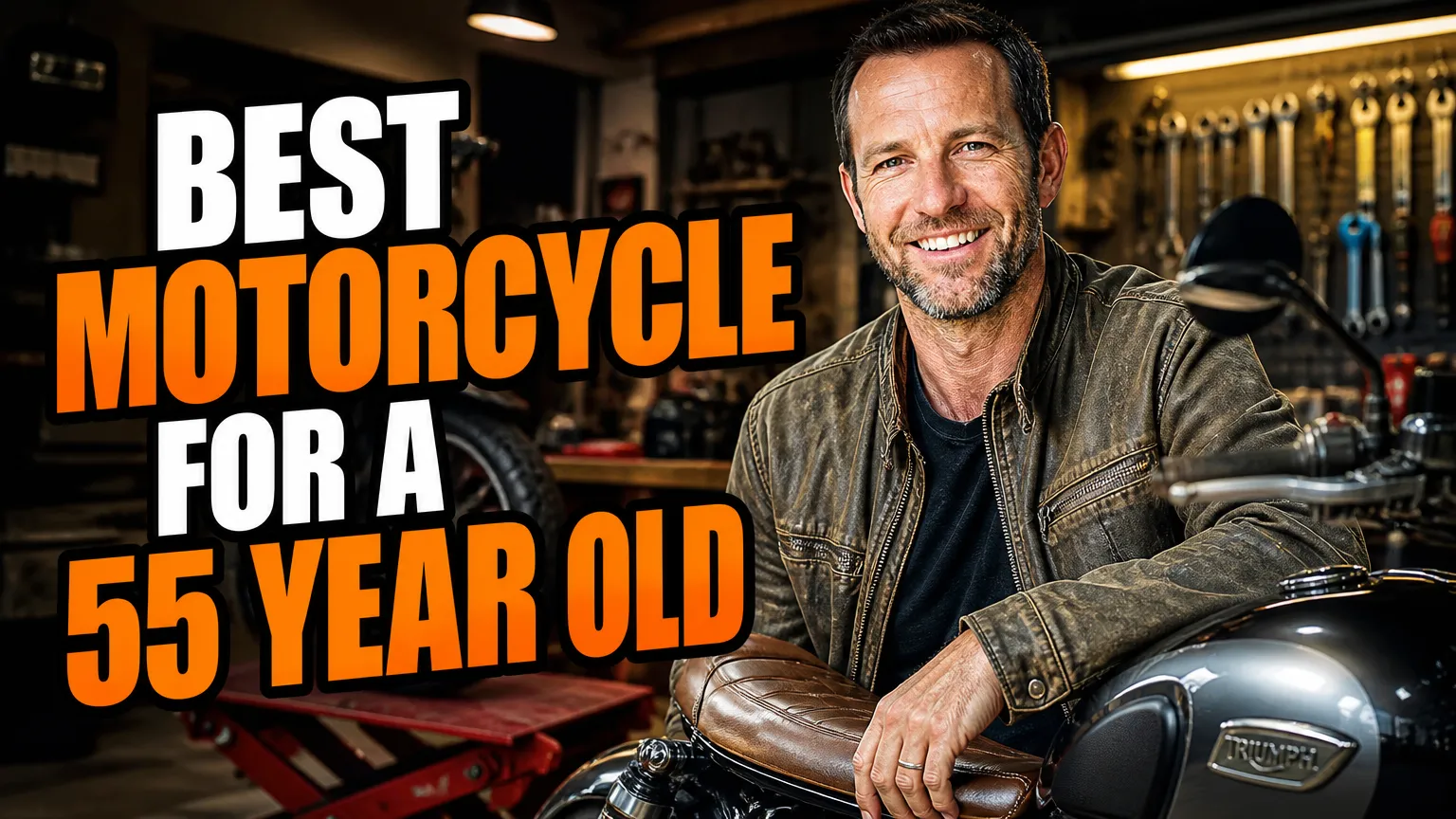
When I help someone choose a motorcycle at 55, I don’t start with age or engine size. I start with the riding they want to do, the weight they can comfortably manage, and whether the bike feels natural when stopped as well as underway.
The best motorcycle for a 55 year old is the one that fits the rider, not a birthday. I’ve put together seven real, currently sold models that cover easygoing cruising, commuting, weekend rides, and light adventure, with the practical details I’d check before buying.
- I’d choose the Honda Rebel 500 for a low seat and approachable cruiser feel.
- The Honda NC750X is my practical pick for commuting, touring, and optional DCT shifting.
- The Triumph Speed 400 and Royal Enfield Meteor 350 suit riders who want manageable, relaxed everyday bikes.
- I’d test for weight, reach, comfort, and confidence at a stop, not just engine size or horsepower.
1. Honda Rebel 500: My Pick for a Low, Approachable Cruiser
I’d put the Honda Rebel 500 near the top of my list for a rider who wants a relaxed cruiser without moving straight to a large, heavy machine. Its 471cc parallel-twin engine provides useful flexibility for local roads and many highway trips, while the low seat makes it easier for me to feel connected to the ground when stopping.
Why I’d consider it
The Rebel 500 has a seat height of about 27.2 inches and a curb weight of roughly 414 pounds in its standard configuration; ABS versions weigh a little more. That low seat can be reassuring, although I’d still check the fit in riding boots because seat width and leg position affect how easily I can put a foot down.
I like that the Rebel’s riding position is laid-back but not as stretched out as some large cruisers. The liquid-cooled twin, six-speed transmission, and available ABS make it a practical choice for everyday use, not just a bike for short neighborhood rides. Pricing varies by year and trim, but I’d expect it to sit roughly in the mid-$6,000 to low-$7,000 range before destination fees.
What I’d check before buying
The Rebel’s compact proportions are a plus in town, but I’d take a longer test ride before deciding it suits my back, wrists, and knees. I’d also compare wind protection and luggage options if I planned to cover long distances regularly. For a first motorcycle or a return to riding, I’d use this guide to the best motorcycle engine size for beginners to think through power and experience together.
2. Kawasaki Eliminator: My Choice for Light, Easygoing Cruising
When low weight matters as much as a low seat, I’d take a close look at the Kawasaki Eliminator. Its 451cc parallel-twin engine offers more punch than a small single-cylinder cruiser, while the bike keeps a narrow, accessible shape that can feel less intimidating when I’m maneuvering at low speed.
What stands out to me
Kawasaki lists the Eliminator’s seat at about 28.9 inches and its curb weight at approximately 388 pounds for the ABS version, with small differences by trim and market. Those figures make it one of the easier full-size options here to move around, though I’d still practice slow turns and parking-lot stops before heading into traffic.
The modern Eliminator includes fuel injection, a six-speed gearbox, and a parallel twin designed for flexible everyday riding. Depending on model year and equipment, I’d budget around the mid-$6,000 to low-$7,000 range. I’d choose it over a heavier cruiser if I wanted a simple, low-slung bike for commuting and relaxed weekend loops.
Where I’d be cautious
The smaller cruiser layout means less wind protection and less room for luggage than I’d get on an adventure-tourer. I’d consider a windscreen and soft bags if I planned longer days on the road, and I’d compare its seat comfort directly with the Rebel 500 rather than relying on spec sheets alone.
3. Royal Enfield Meteor 350: My Pick for Relaxed Local Rides
I’d recommend the Royal Enfield Meteor 350 to someone who values an unhurried pace and classic cruiser character over brisk acceleration. Its 349cc air-oil-cooled single-cylinder engine is tuned for approachable, everyday riding, and the bike’s easygoing personality suits scenic back roads and regular trips around town.
Comfort and practical details
The Meteor 350 has a seat height of about 30.1 inches and a curb weight near 421 pounds, depending on trim and market. It comes with a five-speed transmission and dual-channel ABS in many markets. I’d check the exact local specification because equipment and pricing can differ by country and model year.
Among its useful touches, I like the upright riding posture and the Tripper navigation system available on certain versions. The Meteor is usually priced below many mid-size motorcycles, with recent U.S. pricing generally in the mid-$4,000 range before fees. I’d consider it for commuting and relaxed day rides, especially if I wanted a bike with approachable power rather than a high-speed touring focus.
Who I think it suits
I wouldn’t pick the Meteor 350 as my first choice for frequent fast highway travel or carrying a passenger and luggage over long distances. Its modest power makes it a more natural fit for measured riding, and conditions such as hills, wind, and traffic can affect how comfortable a smaller engine feels. For more context on small-engine speed expectations, I’d read about how fast a 150cc motorcycle can go before assuming that any low-displacement bike will suit my route.
4. Triumph Speed 400: My Pick for a Light, Modern Standard
For riders who want a neutral riding position and a compact, contemporary motorcycle, I’d consider the Triumph Speed 400. Its 398cc liquid-cooled single-cylinder engine produces a claimed 40 horsepower, giving it more performance headroom than a small city-focused bike while keeping the package relatively manageable.
Features I appreciate
The Speed 400 has a seat height of about 31.1 inches and a wet weight around 375 pounds, figures that make it one of the lighter choices on this list. Its equipment includes switchable traction control, ABS, a slipper clutch, and an inverted front fork. I value those features, but I’d still treat electronic aids as backup rather than a substitute for smooth braking and throttle control.
Triumph has priced the Speed 400 around the mid-$5,000 range in recent U.S. model years, though current dealer pricing and destination charges can shift the total. The upright standard-bike layout works for a variety of short and medium rides, and I’d expect it to feel easier to place in traffic than a heavier touring motorcycle.
What I’d try in person
I’d pay attention to knee bend, handlebar reach, and how the suspension feels on the roads I actually use. A light bike can be confidence-inspiring, but the Speed 400’s seat may feel taller to some riders than a cruiser’s low seat. If I were comparing smaller standards, I’d also look at how fast a 300cc motorcycle can go and how fast a 500cc motorcycle can go to frame expectations around displacement, rather than treating those numbers as a promise of real-world speed.
5. Honda NC750X: My Pick for Practical Commuting and Touring
If I wanted one motorcycle to handle commuting, errands, and longer weekend rides, I’d give the Honda NC750X serious consideration. Its 745cc parallel-twin engine is tuned for useful low- and midrange response, and the upright seating position is more practical than a tucked-in sportbike posture for many riders.
Useful design details
The NC750X has a seat height of about 31.6 inches and a curb weight close to 493 pounds, with figures varying by transmission and model year. Its standout feature is the storage compartment where a conventional motorcycle’s fuel tank would usually sit; Honda describes it as large enough for a full-face helmet, although helmet shapes vary.
I’d also consider the optional Dual Clutch Transmission, or DCT. It shifts automatically, which can reduce clutch work in stop-and-go traffic, while offering manual shift control when I want it. The NC750X is a larger investment than the small-displacement models here, and recent U.S. pricing has generally been around the upper-$8,000 to low-$10,000 range depending on version and year.
My fit and use notes
The NC750X’s weight and seat height mean I’d want to sit on it, lift it off the side stand, and try a careful U-turn before buying. I’d choose it for road comfort and everyday practicality, not because a 750cc engine is automatically better for every rider. If I were interested in an adventure-style motorcycle but needed a more reachable fit, I’d also compare recommendations for the best adventure motorcycles for shorter riders.
6. Yamaha MT-07: My Pick for Versatile, Lively Riding
I’d look at the Yamaha MT-07 if I wanted a standard motorcycle with stronger acceleration and a playful feel for back roads. Its 689cc parallel-twin engine is known for broad, usable torque, but I’d be honest with myself about how much power I want before choosing it over a lighter, lower-output bike.
Why I’d put it on the shortlist
The MT-07’s seat height is about 31.7 inches, and its wet weight is roughly 400 pounds, with exact specifications changing by year and market. It has a relatively upright position compared with a supersport, and its manageable overall size can make it a good all-around road bike for riders who are comfortable with its performance.
Recent U.S. versions have generally been priced around the low-$8,000 range before fees, with equipment and pricing dependent on model year. I’d check the current trim carefully, since updates can change features. I’d especially test the seat and suspension on a ride long enough to reveal whether they suit my body and roads.
My caution on power
The MT-07 is not a beginner bike for everyone just because it is lighter than many touring motorcycles. Its lively engine rewards smooth inputs, and I’d make sure my skills and confidence match the performance. If I wanted relaxed cruising above all else, I’d likely choose the Rebel or Meteor; if I wanted one bike for a wider range of paved roads, the Yamaha would get my attention.
7. Kawasaki Versys-X 300: My Pick for Upright, Light Adventure Touring
For a rider who wants an upright posture, a small windscreen, and the ability to explore rougher paved roads, I’d consider the Kawasaki Versys-X 300. Its 296cc parallel-twin engine is paired with a six-speed transmission, and the bike’s adventure-inspired layout gives me more room to move around than a compact cruiser.
Where it works well
The Versys-X 300 has a seat height around 32.1 inches and a curb weight near 386 pounds, depending on ABS and model year. That seat height is noticeably taller than the Rebel’s, so I’d test it carefully if I prefer both feet flat at a stop. Its 19-inch front wheel and upright ergonomics suit broken pavement and light gravel better than a low-slung cruiser, although I wouldn’t mistake it for a heavy-duty off-road machine.
Pricing has generally landed around the mid-$5,000 to low-$6,000 range in recent U.S. model years. I’d keep expectations realistic for highway use: the 300cc twin can handle road travel, but it may need more revs and planning for passing than the larger bikes on this list, especially with luggage or a passenger.
My advice on fit
I’d focus on whether I can balance the bike comfortably and whether the taller posture helps or bothers my knees and hips. A light motorcycle can still feel awkward if the seat is too high for me, so I wouldn’t choose the Versys-X 300 from its weight alone. I’d take a test ride on mixed roads and check how much wind protection I’d need for my regular trips.
How I’d Choose Between These Motorcycles
I’d begin with the riding I expect to do most often. For local rides and an easygoing pace, I’d compare the Meteor 350, Rebel 500, and Eliminator; for a more versatile standard, I’d try the Speed 400 and MT-07; and for practical longer-distance use, I’d put the NC750X and Versys-X 300 on my test-ride list.
Next, I’d look beyond the seat-height number. I’d check how wide the seat is, where the bars fall, how much the bike leans on its side stand, and whether I can push it backward on level ground. I’d also sit on the motorcycle for several minutes, because a showroom fit can reveal pressure points that a quick leg-over misses.
My short test-ride checklist
- I check that I can reach the controls comfortably and operate the clutch and brake without strain.
- I try slow starts, stops, and turns in a safe area to judge balance and throttle response.
- I pay attention to wind, seat comfort, and vibration at the speeds I expect to ride.
- I confirm the total cost, including insurance, protective gear, accessories, and dealer fees.
I’d also leave room in my budget for a good helmet, gloves, jacket, riding pants, and boots. At 55, my preferences may have changed, but I don’t need to limit myself to one style of motorcycle or assume that more displacement is always the right answer. I’d choose the bike that feels comfortable, manageable, and enjoyable on the roads I plan to ride.
My Final Recommendation
If I wanted a low seat and relaxed cruiser character, I’d start with the Honda Rebel 500. If I valued easy handling and a modern cruiser feel, I’d test the Kawasaki Eliminator; for practical commuting and touring, I’d consider the Honda NC750X, especially if DCT appealed to me.
My best advice is to ride more than one motorcycle before deciding. Specs help me narrow the list, but comfort, confidence, and control on a real test ride are what tell me which bike is right.
Frequently Asked Questions
What type of motorcycle is easiest to handle at 55?
I’d start by comparing seat height, weight, steering feel, and riding position. A lightweight standard or cruiser can be easier to manage than a tall, heavy touring bike.
Is a 500cc motorcycle enough for highway riding?
Many 500cc motorcycles can handle highway speeds, but comfort and passing power vary by model, load, and conditions. I’d test ride on the roads I expect to use.
Should I choose a manual or automatic motorcycle?
I’d choose the transmission that lets me focus on the ride. A conventional manual offers direct control, while Honda’s DCT automatic option can simplify stop-and-go traffic.
How important is seat height when choosing a motorcycle?
It matters, but seat shape and suspension sag matter too. I’d sit on the bike in riding boots and check whether I can confidently put a foot down and move it around.

Related Articles

8 Best Motorcycles for Riders Over 50: Comfortable, Confidence-Inspiring Picks
Find a motorcycle that fits your comfort, confidence, and riding goals. I compare eight approachable bikes, with key specs and…
Jake Miller
11 min read

8 Best Starter Motorcycles for 17-Year-Old Riders in 2026
Compare eight beginner-friendly motorcycles for 17-year-olds, with real specs, strengths, licensing cautions, and practical advice for choosing a safe first…
Jake Miller
10 min read

7 Beginner-Friendly Motorcycles I’d Consider for a 16-Year-Old Rider
I compare seven beginner-friendly motorcycles for 16-year-old riders, covering size, power, legality, prices, safety gear, and how to choose the…
Jake Miller
12 min read