
8 Best Enduro Motorcycles for Women: Trail-Ready Bikes for Every Skill Level
 Jake Miller
12 min read
Jake Miller
12 min read
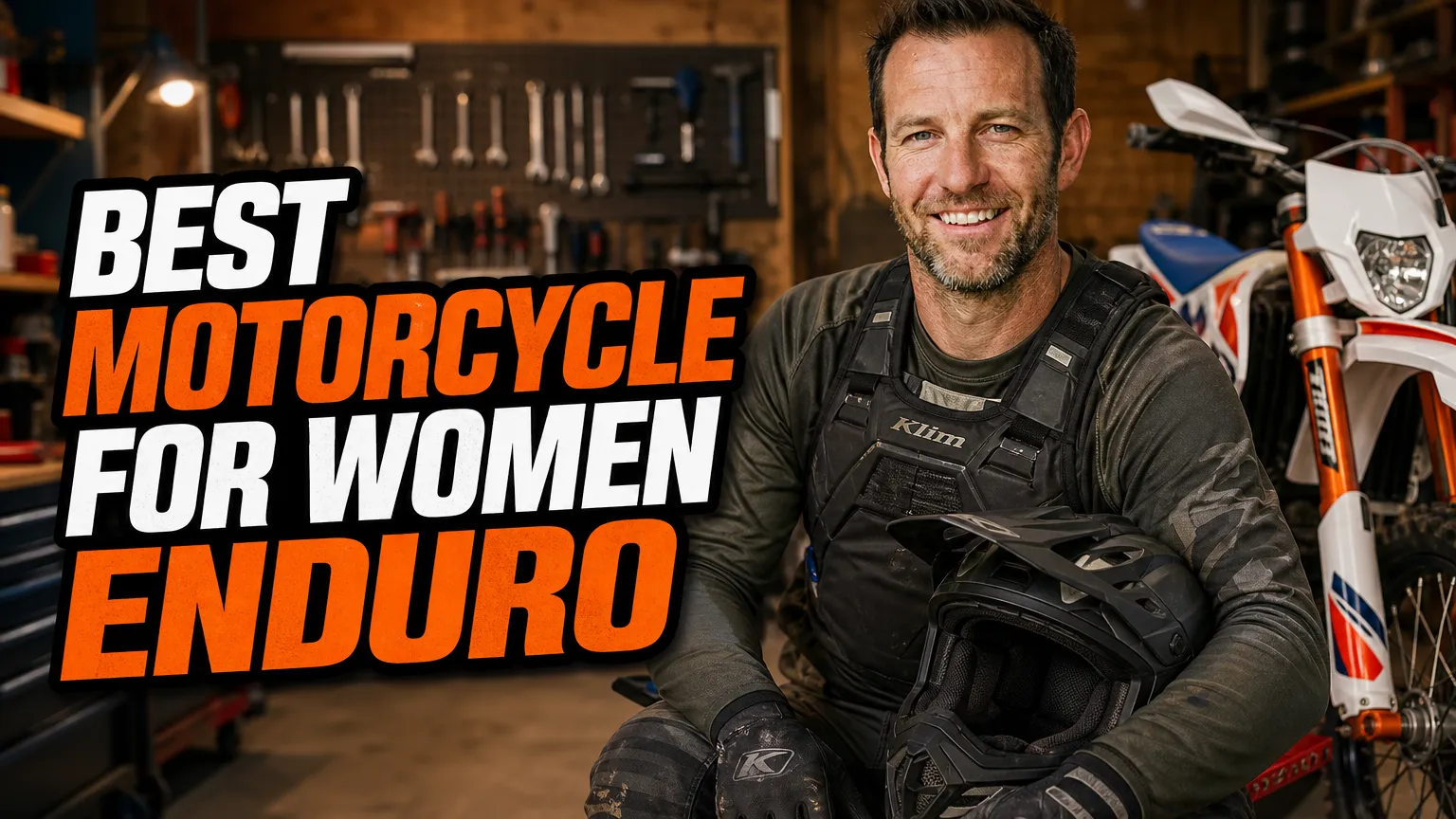
When I look for an enduro motorcycle, I don’t start with a stereotype about what women can ride. I start with the terrain, my experience, how the bike feels at walking speed, and whether I can pick it up or turn it around without making every ride a wrestling match. A good fit can make technical trails more enjoyable and help me build skills with confidence.
My shortlist includes dedicated enduro machines as well as capable trail and dual-sport bikes. They serve different purposes, so I’ve called out the trade-offs rather than pretending one motorcycle suits every rider. Prices are approximate U.S. ranges and can change by model year, dealer, and location.
- I’d consider the Beta Xtrainer 300 for a more approachable dedicated enduro setup.
- The Kawasaki KLX230R S is a lower-seat, trail-focused option for riders who value easy footing.
- I’d compare weight and low-speed balance as carefully as seat height.
- Trail bikes and dual-sports can be sensible choices, but they aren’t identical to competition enduro machines.
1. Beta Xtrainer 300 — My Pick for Approachable Technical Enduro
The Beta Xtrainer 300 stands out to me because it’s designed to make technical off-road riding more manageable than a full-size competition enduro bike. Its 293cc two-stroke engine, oil injection, and milder character suit riders who want serious trail ability without an instantly aggressive response. Beta lists a seat height of about 35.8 inches, which is noticeably lower than many full-size enduro models.
I’d look at the Xtrainer if I wanted a purpose-built off-road bike and had ambitions beyond casual fire roads. Its compact feel and enduro-oriented equipment make it a more specialized choice than a trail bike, while its lower seat can help when I’m stopping on awkward ground. The bike is still tall and powerful compared with many beginner motorcycles, so I wouldn’t treat its accessible design as a substitute for a careful fit check.
What I’d weigh before buying
Depending on model year and dealer, I’d budget roughly $8,500 to $9,500 before local fees and any accessories. I’d also check the exact year’s specifications, service requirements, and parts availability in my area. For me, the Xtrainer makes most sense when technical trail performance is a priority, rather than pavement comfort or long highway stretches.
2. Beta 200 RR — My Choice for a Lighter, Lively Enduro
The Beta 200 RR is a full-size enduro motorcycle with a smaller-displacement two-stroke engine. I like the idea of this size class for riders who want a responsive bike but don’t necessarily need the hard-hitting feel of a larger 300. It offers a six-speed transmission and enduro-focused equipment, and its seat height is around 36.6 inches, depending on model year.
I’d consider the 200 RR for wooded trails, single-track, and riders who enjoy using the gearbox to keep the engine in its useful range. A smaller engine doesn’t automatically make a bike easy, though: clutch control, traction, and suspension setup still matter. If I were moving up from a small trail bike, I’d want a test ride or a supervised demo before committing.
Who I think it suits
With pricing commonly in the neighborhood of $9,000 to $10,000, the 200 RR sits firmly in dedicated enduro territory. I’d choose it over a mild trail bike when I wanted a more specialized machine and was ready to maintain a competition-style two-stroke. For a first off-road motorcycle, I’d compare it with a more forgiving trail option before deciding.
3. KTM 150 XC-W — My Pick for a Nimble Two-Stroke
The KTM 150 XC-W is a lightweight, full-size enduro model built around a 150cc two-stroke engine and a wide-ratio transmission. I’d put it on my list for tight trails where a lighter-feeling motorcycle can be easier to redirect than a larger-capacity machine. Its seat height is roughly 37.8 inches, so I’d pay close attention to reach and suspension sag rather than assuming the low displacement means a short bike.
I appreciate the 150 class for its potential to feel agile, but I’d be honest about the learning curve. The engine rewards thoughtful shifting and throttle control, and the tall chassis can challenge a rider who wants to dab a foot frequently. KTM’s XC-W models are aimed at off-road enduro use, not road commuting, so I’d plan my transport and trail access accordingly.
Price and practical fit
I’d expect a new KTM 150 XC-W to cost around $9,500 to $10,500, depending on year and dealer pricing. Before buying, I’d check whether I can reach the controls comfortably while standing, and whether the bike feels balanced when I turn it in a tight space. If standing confidence matters more than competition-level suspension, a lower trail bike may be the smarter starting point.
4. Husqvarna TE 150 — My Alternative for Lightweight Enduro
The Husqvarna TE 150 shares the appeal of a small-displacement, full-size two-stroke enduro: a relatively light package, six-speed gearing, and components intended for off-road riding. I’d compare it directly with the KTM 150 XC-W because the right choice may come down to dealer support, setup, and the way each bike feels to me. The TE 150’s seat height is also around 37.8 inches, so it isn’t a low-seat option just because its engine is small.
I’d consider the TE 150 if I wanted a dedicated machine for technical trails and valued a responsive two-stroke character. Its high-performance design can be rewarding, but it expects the rider to manage momentum, gears, and traction. I’d also account for protective equipment and maintenance in the ownership budget rather than focusing only on the sticker price.
Depending on model year, I’d plan for roughly $10,000 to $11,000 at retail, with regional differences. For me, the Husqvarna is a better fit for a rider who actively wants a specialized enduro bike than for someone who needs a relaxed, low-maintenance runabout. I’d sit on it in riding boots and test its balance before deciding.
5. Yamaha WR250F — My Four-Stroke Pick for Serious Trail Riding
The Yamaha WR250F is a 250cc four-stroke off-road motorcycle with a six-speed transmission and trail-focused equipment. I’d consider it when I wanted a capable enduro-style bike with four-stroke power delivery rather than a two-stroke’s sharper, more gear-dependent feel. Its seat height is about 37.6 inches, and its full-size chassis makes it a tall choice for many riders.
I like that the WR250F is built for challenging off-road riding, but I wouldn’t mistake it for a lightweight beginner trail bike. Its suspension and performance make sense for riders who will use them, while its height and overall size call for confidence at low speeds. A suspension technician may be able to tailor spring rates and sag to my weight, which can improve handling and usable reach.
What I’d budget
I’d expect a new WR250F to fall roughly in the $9,000 to $10,500 range, depending on model year and dealer. I’d include regular maintenance in my decision, since a high-performance off-road four-stroke needs care appropriate to its use. If my rides include substantial road mileage, I’d compare it with a road-legal dual-sport instead.
6. Kawasaki KLX230R S — My Lower-Seat Trail Pick
The Kawasaki KLX230R S is a trail motorcycle, not a competition enduro bike, and that distinction is part of its appeal. The “S” version has a seat height around 32.7 inches, making it one of the more accessible choices on this list. Its air-cooled 233cc four-stroke engine is designed for approachable trail riding rather than maximum race performance.
I’d look at the KLX230R S if confidence at stops is a high priority and I mostly ride off-road trails. The lower seat can make it easier to put a foot down, but I’d still consider its weight, width, and how it feels when I have to push it around. Kawasaki has offered this model at roughly $5,000 to $6,000, depending on year and local pricing.
Why I’d choose it over a competition bike
I’d pick the KLX230R S for relaxed trail days, learning, and lower-speed exploration rather than racing or demanding enduro events. Its simpler, trail-oriented design may feel less intimidating than a full-size competition machine. I’d check event regulations before entering any organized ride, because equipment and motorcycle requirements vary.
7. Honda CRF250F — My Friendly Trail-Bike Option
The Honda CRF250F is another trail bike I’d consider for riders who want a straightforward off-road motorcycle. It has a 250cc air-cooled four-stroke engine, a five-speed transmission, and a seat height of about 34.8 inches. Its trail-focused character makes it less specialized than the KTM, Husqvarna, or Yamaha enduro models above.
I’d value the CRF250F for its approachable purpose and broad usefulness on recreational trails. Honda lists its curb weight at about 265 pounds, so I’d be realistic about maneuvering it on a slope or lifting it after a fall. The seat height is moderate, but the bike’s weight and suspension still need to suit my size and riding conditions.
Pricing is generally around $4,800 to $5,500, though model year and dealer fees can move the total. I’d choose the CRF250F if my priority were enjoyable trail riding rather than competition pace. If I needed a Honda with road registration for connecting routes, I’d look at the CRF300L instead.
8. Honda CRF300L — My Dual-Sport Pick for Trail and Road Use
The Honda CRF300L is a road-legal dual-sport, so I see it as a practical option for riders who want to connect paved roads with dirt routes. Its 286cc liquid-cooled single-cylinder engine, six-speed transmission, and seat height of about 34.7 inches give it a different role from a dedicated enduro motorcycle. Honda’s published curb weight is around 309 pounds, which I’d keep firmly in mind on soft or steep trails.
I’d choose the CRF300L for mixed riding, local travel, and easier access to public roads, not for the most demanding single-track. Its road equipment and broader-use design add versatility, but the extra weight can make repeated off-road drops more tiring than on a lighter enduro bike. Depending on year and trim, I’d expect pricing in the neighborhood of $5,500 to $7,000.
If my main interest were commuting or longer rides between trail systems, I’d also compare the best long distance motorcycle for women and the best sport touring motorcycle for women. Those categories prioritize road comfort differently from a trail-focused motorcycle.
How I’d Choose the Right Bike for My Riding
I’d begin by deciding where I actually ride. Tight, rocky single-track points me toward a lighter, enduro-focused bike, while relaxed local trails may be better served by a trail model such as the KLX230R S or CRF250F. If I need road registration and pavement ability, I’d consider a dual-sport like the CRF300L, while accepting its additional weight off-road.
I look beyond the seat-height number
Seat height is useful, but it doesn’t tell me everything about fit. A narrow seat can make a tall motorcycle easier to straddle, while suspension sag, boots, inseam, and ground shape affect how securely I can stop. I’d test a bike on uneven ground if possible, and I’d pay attention to whether I can hold it steady without stretching or leaning too far.
I also think about the bike’s weight and balance. A motorcycle that feels manageable while moving can feel very different when I’m backing it up, turning it around on a slope, or picking it up. If I’m comparing bikes for a shorter inseam, I’d use this best motorcycle for small women guide as another fit-focused reference.
I match the engine to my experience
A 150cc two-stroke, a 300cc two-stroke, and a 250cc four-stroke deliver power in different ways. I’d choose the one that feels controllable for my skill and terrain, not the one that sounds most impressive on paper. A competent instructor, a safe test ride, and a setup suited to my weight can make more difference than chasing the biggest engine or the newest components.
I’d also check what ownership looks like locally: service intervals, parts supply, dealer support, and the cost of protective equipment. If I’m shopping in a specific market, pricing and available models can differ substantially; I’d cross-check this best motorcycle for women philippines guide for regional context. For more Honda-specific comparisons, I’d look at the best honda motorcycle model for women riders resource too.
My Final Take
For dedicated technical riding, I’d start my shortlist with the Beta Xtrainer 300, Beta 200 RR, KTM 150 XC-W, Husqvarna TE 150, and Yamaha WR250F, then choose according to engine preference, fit, and skill. For lower-pressure trail riding, I’d give the Kawasaki KLX230R S and Honda CRF250F serious consideration. The Honda CRF300L is the more versatile road-and-trail option, but its weight is a meaningful trade-off.
The best choice is the motorcycle I can control confidently in the places I actually ride. I’d sit on several models, compare them in riding gear, and seek qualified suspension setup advice before assuming that a lower seat alone will solve a fit issue. With the right match, I can spend less energy managing the bike and more time enjoying the trail.
Frequently Asked Questions
What is a good enduro motorcycle for a shorter woman?
I’d start by sitting on lower-seat options such as the Kawasaki KLX230R S or Beta Xtrainer 300, then check whether I can comfortably manage the bike’s weight and suspension.
Is a 2-stroke or 4-stroke better for a woman learning enduro?
I’d choose based on the power delivery I prefer and the riding I plan to do. A mild 4-stroke can feel predictable, while a small 2-stroke can be light and lively; either can suit a newer rider with appropriate training.
Can I ride a trail bike in an enduro event?
Some trail bikes can work for beginner-friendly events, but I’d check the event rules and equipment requirements first. Trail-focused suspension, protection, and lighting may differ from a competition enduro bike.
How important is seat height when choosing an off-road motorcycle?
Seat height matters when stopping and maneuvering, but I also consider weight, seat width, suspension sag, and how confidently I can move the bike on uneven ground.

Related Articles

8 Best Dual-Sport Motorcycles for Women Who Want Confidence on Every Road
Compare eight dual-sport motorcycles for seat height, weight, power, and price, plus practical fit advice to help me choose a…
Jake Miller
13 min read

8 Best Sport Motorcycles for Women: Find Your Ideal Fit
Compare eight sport motorcycles for women, with seat heights, weight, power, comfort, and price guidance to help you choose a…
Jake Miller
11 min read

6 Best Sidecar Motorcycle Combos for Confident, Comfortable Riding
Compare six motorcycle and sidecar combinations for comfort, control, and passenger space, with practical buying advice to help me choose…
Jake Miller
10 min read