
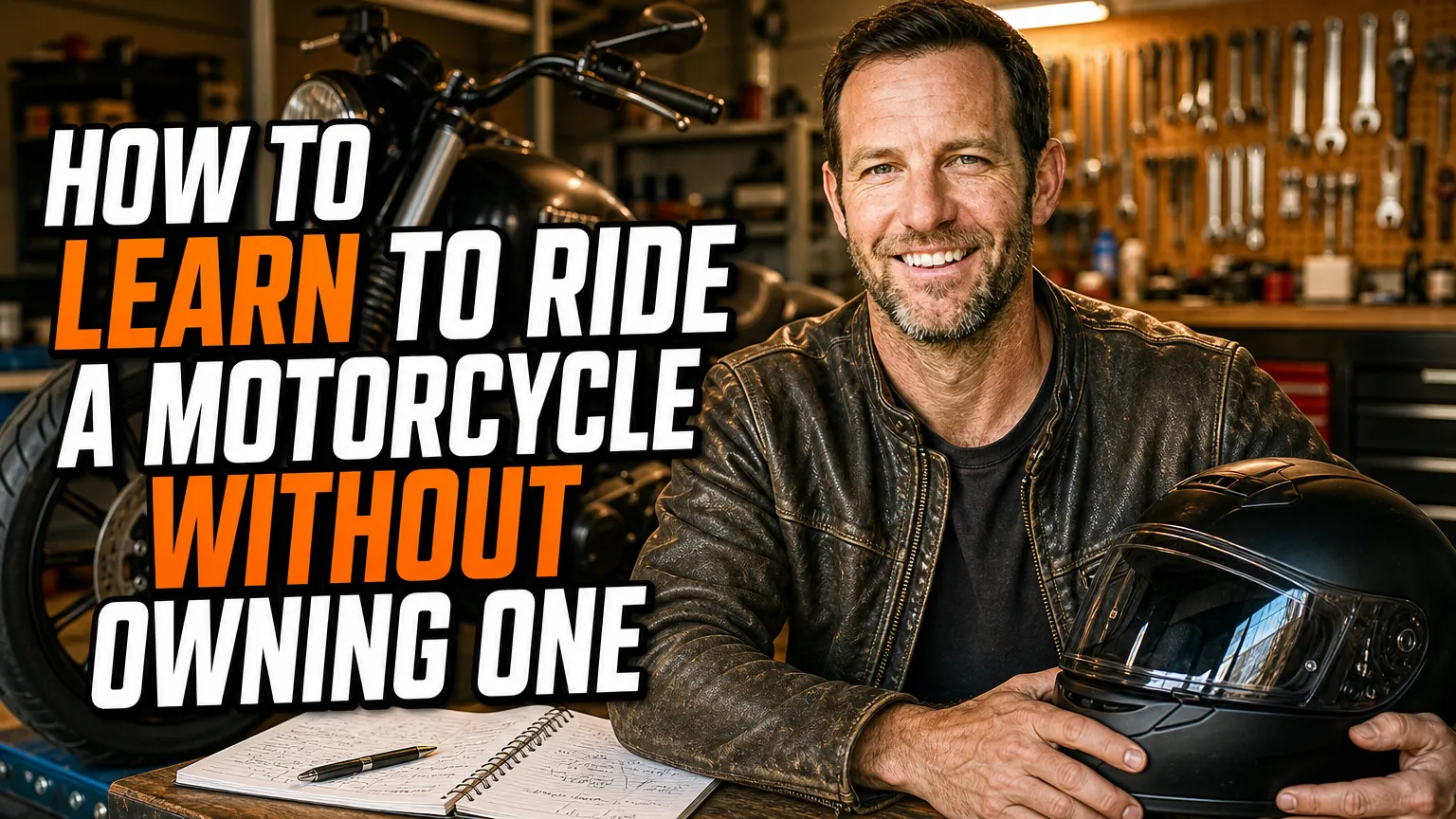
If I want to learn to ride, I don’t need to buy a motorcycle first. In my experience, a beginner course is often the smartest first step: I get instruction, a practice space, and a training bike without taking on the cost and responsibility of ownership.
If you’re wondering how to learn to ride a motorcycle without owning one, I’d also look at supervised practice and legal rentals. The eight motorcycles below are useful models to ask about because they illustrate different beginner-friendly qualities. They aren’t guaranteed to be available at every school or rental shop, so I always check the actual fleet before making plans.
- I can learn without owning a bike by starting with a course that provides a training motorcycle.
- I choose a practice bike for manageable weight, comfortable reach, and predictable controls—not looks alone.
- I confirm licensing, insurance, gear, and supervision rules before using a rental or borrowed motorcycle.
- I build skills gradually in a controlled setting before riding in traffic.
1. Honda Grom — A Small, Manageable Bike for Basic Skills
When I’m learning clutch control and slow-speed balance, a lightweight motorcycle can make practice feel less intimidating. The Honda Grom is a compact 125cc model with a low, approachable layout; recent versions have a five-speed transmission and a seat height around 30 inches. Its small size makes it a useful bike to ask about for introductory practice, if a local school or permitted rental provider has one.
The Grom’s modest engine encourages me to focus on smooth throttle and braking rather than managing a lot of power. It’s still a real motorcycle, though, and I wouldn’t assume that every training course uses one. I’d call ahead and ask whether the school has a Grom, a similar small bike, or a choice of training motorcycles.
For a rough U.S. new-bike reference, I’d expect a Grom to sit in the low-to-mid $3,000 range before taxes and fees, depending on model year and dealer. Since I’m learning without buying, I’d compare that only as context; my priority would be a course fee that includes the bike, instruction, and a suitable practice area.
2. Honda Rebel 300 — A Low Seat and Calm Beginner Pace
I’d consider the Honda Rebel 300 if I want to try a cruiser-style motorcycle and feel more secure reaching the ground. Its seat is about 27 inches high, and its 286cc single-cylinder engine offers a different experience from a small training scooter or mini bike. Depending on the model year and ABS configuration, its curb weight is in the mid- to upper-300-pound range.
That low seat can help me feel settled at a stop, but I don’t treat seat height as the only measure of fit. I also want to know whether I can comfortably reach the controls, turn the bars, and move the bike at walking pace. A Rebel 300 may be available through a dealer demo, training school, or rental company, but I’d verify both availability and permission to use it for a learner.
New U.S. examples have generally been in the upper-$4,000 range before fees, with prices varying by year and specification. If I’m comparing practice options, I put that figure beside the cost of a course and protective gear—not as a reason to skip supervised instruction.
3. Honda Rebel 500 — A Cruiser to Try After the Fundamentals
The Honda Rebel 500 gives me a chance to learn on a low-seat cruiser with more power than the 300. Its 471cc parallel-twin engine and seat height of roughly 27 inches make it a popular model to investigate, but its weight—around 410 pounds, depending on trim and year—means I’d want to be comfortable handling a motorcycle before choosing it for practice.
I wouldn’t pick the Rebel 500 simply because the seat feels easy to reach. For a first session, I’d ask an instructor to help me assess whether its weight and throttle response suit my experience. If I already have basic training, a supervised session or legal rental could help me understand whether this style feels right before I spend money on a bike.
Recent U.S. new-bike prices have generally been in the mid-$6,000 range before taxes and dealer charges. I’d check the exact year, ABS equipment, rental terms, and insurance restrictions because they can affect both the cost and whether I’m allowed to ride it.
4. Yamaha MT-03 — A Lightweight, Upright Standard
When I want an upright riding position rather than cruiser ergonomics, I’d ask about the Yamaha MT-03. It uses a 321cc parallel-twin engine, has ABS on recent U.S. versions, and sits at a seat height of about 30.7 inches. Its wet weight is around 373 pounds, so it feels more substantial than a Grom while remaining relatively approachable compared with many larger motorcycles.
I like the idea of using an MT-03 to compare a standard bike’s posture and controls with those of a cruiser. That comparison can teach me what feels comfortable without requiring me to own either style. I’d still get an instructor’s approval before practicing on it, and I’d ask whether the school’s beginner exercises are designed for that particular model.
New U.S. prices have typically landed around the low-$5,000 range before fees, depending on year and dealer. I’d treat the MT-03 as a model to look for in an approved training or rental fleet, not assume I can rent one without a full license or relevant riding experience.
5. Kawasaki Z500 — A Middleweight to Sample After Training
The Kawasaki Z500 is a step up in engine size, with a 451cc parallel twin, an upright naked-bike layout, and a seat height just under 31 inches. Its curb weight is in the high-300-pound range, depending on the version. I’d see it as a model to try once I’ve learned the basics, rather than my automatic choice for a first-ever clutch lesson.
What I find useful about sampling a Z500 is being able to judge whether I’m comfortable with a more powerful everyday motorcycle after structured instruction. I’d pay attention to how easily I can move it, how the throttle responds, and whether I can stop and start smoothly. If the rental shop requires a full endorsement, I’d respect that rule and choose a course or another legal practice option instead.
Recent new U.S. Z500 prices have generally been in the mid-$5,000 range before taxes and fees, with ABS and model-year differences affecting the final figure. I’d confirm the exact specification and rental insurance terms instead of relying on a listing photo or an old price quote.
6. Kawasaki Eliminator — A Low-Seat Cruiser with a Twin-Cylinder Engine
I’d look at the Kawasaki Eliminator if I want to try a cruiser that pairs a low seat with a modern parallel-twin engine. Its 451cc engine is shared in capacity with Kawasaki’s Z500, while its seat height is about 28.9 inches. Depending on equipment and year, its weight is around the high-300-pound mark.
The low seat may make stops feel less awkward for me, but it doesn’t make the Eliminator a lightweight beginner trainer. I’d ask about weight, balance, and the bike’s power before booking, then follow the advice of the instructor or rental provider. In a course setting, I’d choose the motorcycle the school says is suitable for my size and current ability.
New U.S. examples have generally been priced around the low-$6,000 range before fees, though prices vary by year and trim. I’d use a test session to learn whether the cruiser position suits me rather than treating a short ride as proof that I’m ready to ride unsupervised.
7. Royal Enfield Hunter 350 — A Standard-Style Bike for Unhurried Practice
The Royal Enfield Hunter 350 is a 349cc single-cylinder motorcycle with a relatively simple, standard-style riding position. Its seat height is roughly 31 inches, and its weight is around 400 pounds, depending on specification. I’d ask about it if I wanted to try a motorcycle with a relaxed power delivery and a different character from a lightweight Japanese twin.
I’d be realistic about the Hunter 350’s weight during low-speed exercises. A bike can feel calm once moving and still take effort to maneuver by hand, so I’d first practice with an instructor in a controlled space. If my local course doesn’t have one, I’d learn on the school’s bike and look for a legal, supervised opportunity to sample the Hunter later.
In the U.S., new Hunter 350s have generally been in the low-$4,000 range before taxes and fees, depending on model year and market. I’d check current local availability, since the exact models offered by rental businesses and schools vary a lot by region.
8. Yamaha TW200 — A Dual-Sport Option for Dirt-Surface Lessons
If I’m interested in learning on a dirt surface, I’d ask whether a school or off-road training provider has a Yamaha TW200. It has a 196cc single-cylinder engine, a five-speed transmission, and a seat height around 31 inches. Its wide tires and dual-sport design make it distinct from the street-focused bikes on this list, while its weight is roughly 280 pounds.
I wouldn’t assume that an off-road motorcycle is automatically easier or safer for a beginner. Dirt changes traction and balance, so I’d only practice in a designated area with permission, suitable protective equipment, and instruction. A beginner dirt-riding class may provide a TW200 or another training bike; I’d confirm the model and what the fee includes before I sign up.
New U.S. TW200 prices have generally been around the upper-$4,000 to low-$5,000 range before dealer fees. For learning, I’d focus less on the purchase price and more on finding a class that teaches braking, turning, and balance at a pace I can handle.
How I’d arrange practice without buying a motorcycle
I’d start by contacting a recognized beginner course and asking three direct questions: Does tuition include a motorcycle? What models or sizes are in the fleet? What protective gear do I need to bring? A course such as the MSF Basic RiderCourse may provide training motorcycles, but I’d check the current details with the provider in my area rather than assuming every class works the same way.
After training, I’d consider a rental only if I meet the company’s licensing, age, and experience requirements. Some rental providers require a full motorcycle endorsement, and insurance may not cover every use or every rider. I’d read the contract, check the motorcycle before riding, and never take a bike onto public roads if my license or permit doesn’t allow it.
I’d also budget for properly fitted protective gear even when the motorcycle is included. A course may lend some equipment, but I’d confirm what is available and whether it fits me. I’d wear a compliant helmet and appropriate riding clothing, gloves, and boots, and I’d ask the instructor what equipment is required for that specific class.
Most importantly, I’d keep practice gradual. I’d learn the controls in a controlled setting, repeat starts, stops, and turns until they become consistent, and only progress with an instructor’s guidance. I also review advice on how to avoid accidents on a motorcycle before I take on busier roads.
For me, understanding risk is part of learning, not a reason to panic or rush. I read about how are most motorcycle accidents caused and compare safety information from different places, including how many motorcycle accidents per year in the us, how many motorcycle accidents per year uk, and how many motorcycle accidents in thailand. I use that kind of reading to reinforce cautious habits, not to predict what will happen to me.
I don’t need to own a motorcycle to find out whether riding is for me. I can begin with a course-provided bike, learn the fundamentals with qualified instruction, and then explore suitable models through lawful rentals or supervised practice. My advice is simple: choose access and coaching first, and let confidence and experience—not pressure to buy—guide the next step.
Frequently Asked Questions
Can I learn to ride a motorcycle without owning one?
Yes. I recommend starting with a certified beginner course that provides a training motorcycle, then considering legal rentals or supervised practice if they are available to you.
Do motorcycle training courses provide bikes?
Many beginner courses provide motorcycles and some basic protective equipment, but I always confirm what is included, what sizes are available, and what gear I need to bring.
Can I rent a motorcycle with only a learner permit?
Rental rules vary by location and company. I check licensing, age, insurance, and experience requirements before booking, and I never ride where my permit does not allow.
Which motorcycle is easiest for a beginner to try?
I would start by asking a training school about its fleet. A light, manageable bike such as a Honda Grom or a low-seat Honda Rebel can be a good fit, depending on my size and the practice available.

Related Articles

I Dropped My Motorcycle: What I Check Before Riding Again
A motorcycle tip-over may cause only cosmetic damage, but hidden leaks, bent controls, or brake trouble can make riding unsafe.…
 Jake Miller
11 min read
Jake Miller
11 min read

Motorcycle vs. Bicycle: Which Is More Difficult to Ride?
I compare motorcycle and bicycle riding, from balance and controls to traffic, weight, and safety, so I can help you…
Jake Miller
10 min read

8 Smart Ways to Keep Your Motorcycle Steady When You Park on a Slope
Learn how I choose a safe spot, position my bike, use first gear and a sidestand pad, and secure it…
Jake Miller
12 min read