
8 Smart Ways to Keep Your Motorcycle Steady When You Park on a Slope
 Jake Miller
12 min read
Jake Miller
12 min read
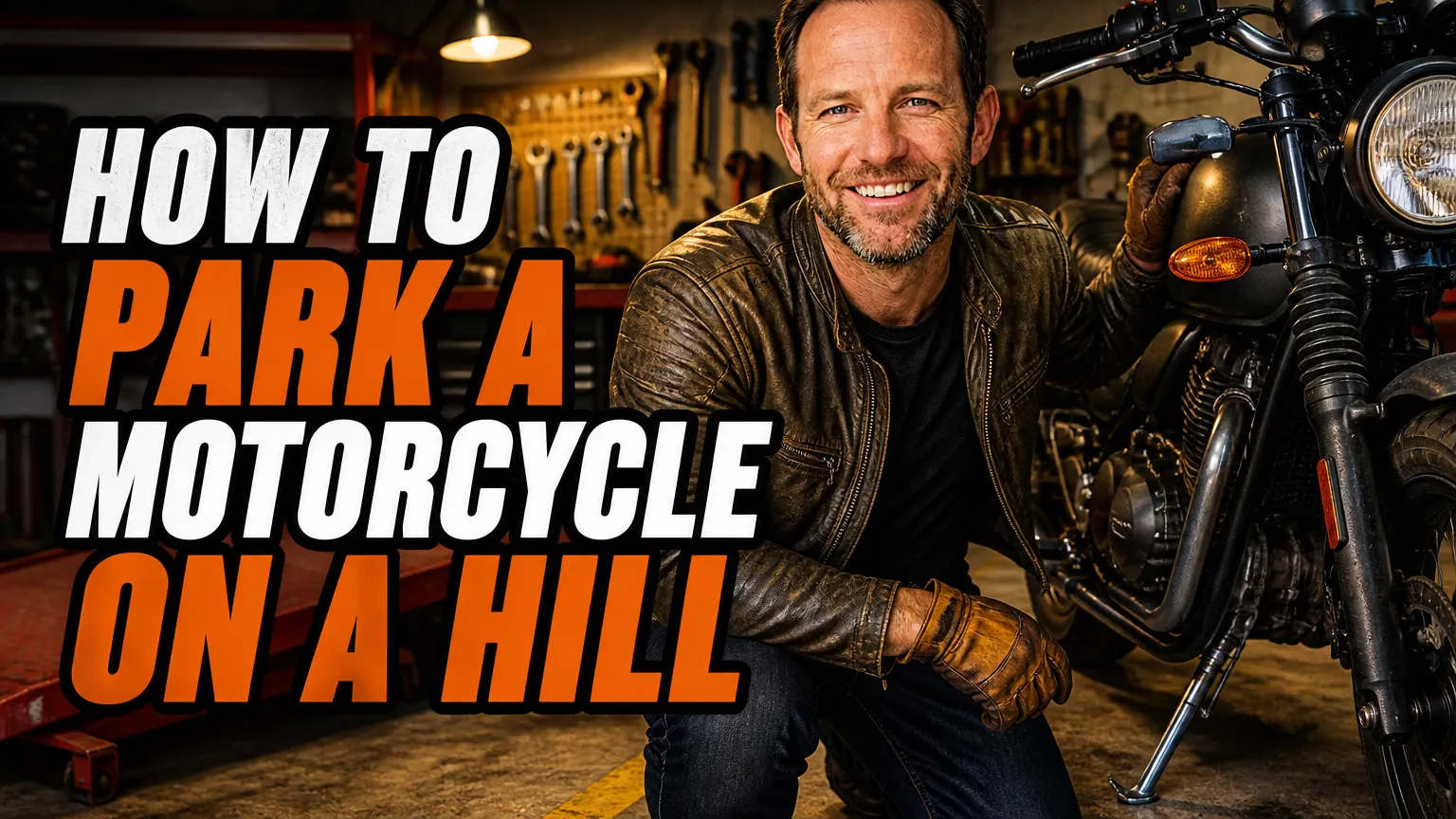
I’ve learned that parking on a hill is less about strength and more about choosing the right spot, controlling the bike carefully, and checking that it cannot roll. A sloping driveway, a cambered road, or loose ground can turn an ordinary stop into a stressful one, so I take a moment to assess the surface before I switch off.
- I look for the firmest, flattest parking spot and avoid steep cross-slopes.
- I stop with control, lower the sidestand fully, and leave the transmission in first gear.
- I check the bike’s lean and stability before I let go, and I never trust a pad or lock to fix a bad parking position.
- I use wheel chocks for appropriate garage or transport setups, not as a shortcut on a roadside hill.
1. Oxford Kickstand Pad: Give the Side Stand a Firm Base
My first priority is making sure the sidestand has solid ground under it. The Oxford Kickstand Pad is a compact support plate that gives the stand a broader footprint than its small metal foot, which can help on surfaces where the stand might otherwise press into soft ground.
I carry a pad when I expect to park on gravel, warm asphalt, or dirt. It does not make a steep or badly angled parking spot safe, and I always check that the pad itself sits flat rather than on a loose stone. Prices vary by seller and region, but it is generally an inexpensive addition compared with the cost of repairing a tip-over.
How I use it on a slope
I place the Oxford Kickstand Pad on the firmest patch I can find, then lower the stand onto its centre. After the bike is resting on the stand, I check that the pad has not shifted and that the motorcycle still has a confident, stable lean.
If the ground is too sloped for the stand to sit securely, I move the bike. A larger base can reduce sinking; it cannot correct a dangerous angle or prevent a bike from rolling downhill.
2. Puig Side Stand Extension: Increase the Sidestand’s Contact Area
When I want a fitted alternative to carrying a loose pad, I look at the Puig Side Stand Extension made for my motorcycle’s specific model. Puig offers fitment-specific side-stand extensions, commonly using a wider base attached to the original stand; the exact shape and construction depend on the application.
I treat the Puig Side Stand Extension as a way to improve ground contact, not as a device that locks the bike in place. Before buying, I check the manufacturer’s fitment information for my exact year and model, since extensions are not universal. Prices also vary with fitment and retailer.
What I check before relying on a fitted extension
I make sure the extension is installed correctly and that it does not interfere with folding or deploying the stand. I also test the bike on level ground first, because I want to know how the stand feels and how much lean the motorcycle has before I use it somewhere sloped.
If the extension gives the motorcycle too little lean, or makes the stand feel awkward to deploy, I do not assume it is an upgrade for my setup. A secure parking position starts with a well-maintained, properly functioning sidestand.
3. AltRider Side Stand Enlarger: Match the Foot to Your Bike
For compatible adventure motorcycles, I consider the AltRider Side Stand Enlarger. AltRider makes model-specific enlargers, including versions for BMW GS motorcycles, with a larger support surface designed to attach to the original sidestand. The exact fit and materials depend on the bike-specific product.
I like this kind of accessory when I routinely stop on mixed surfaces, because the wider footprint can help spread the bike’s weight over more ground. I confirm the application and installation instructions before ordering; an enlarger made for one motorcycle may not fit another. These purpose-built accessories typically cost more than a simple portable pad, and prices depend on the model.
Why I still choose the location carefully
A bigger sidestand foot is useful only if the ground beneath it is dependable. I avoid soft shoulders, loose gravel that can slide, and steep sideways slopes that leave the motorcycle leaning at an uncomfortable angle.
When I’m planning a longer ride, I also think about the decisions that keep a stop calm and controlled. I find this guide to how to avoid accidents on a motorcycle useful for keeping broader road-safety habits in mind, including taking time rather than rushing a manoeuvre.
4. Wunderlich Side Stand Enlarger: Choose a Model-Specific Fit
I also see the Wunderlich Side Stand Enlarger as a practical option for compatible BMW motorcycles. Wunderlich sells bike-specific side-stand enlargers designed to broaden the stand’s contact area; the precise fit, shape, and construction vary by model and product version.
I check the product listing against my motorcycle’s exact model year instead of assuming that an accessory for a similar-looking bike will fit. The price is usually higher than a basic loose pad, but I’m paying for a part designed around a particular sidestand and its mounting points.
My installation and parking check
After fitting a Wunderlich Side Stand Enlarger, I verify that all supplied fasteners are secure and that the stand still folds up and down freely. I then test the setup at home, on a level surface, before trusting it on a slope.
I still use first gear and assess the ground every time I park. An enlarger may help keep the stand from pressing into soft ground, but it cannot substitute for a firm surface, a sensible bike angle, or a careful stability check.
5. Baxley Sport Chock: Steady a Bike in a Suitable Garage Setup
In my garage, a Baxley Sport Chock can help hold a compatible motorcycle upright while I park or work around it. It is a purpose-built wheel chock, not a roadside parking aid, and I use it only on a stable, suitable surface according to Baxley’s instructions. Its design supports the front wheel, so I check tire and motorcycle compatibility before use.
A chock can be especially helpful when I need to keep a bike upright in a controlled home setup. But I do not assume that a wheel chock alone will secure a motorcycle on a steep driveway: the surface, chock placement, and the bike’s stability all matter. I follow the manufacturer’s directions and use any additional restraints required for my setup.
Where I draw the line
I do not put a Baxley Sport Chock on a public road or treat it as a replacement for the sidestand and first gear. For everyday hill parking, I use the bike’s normal parking method and focus on finding a safer position.
When I want to move a motorcycle into or around my garage, a suitable chock can make the task more controlled. I keep the distinction clear: garage equipment helps in the right environment, while roadside safety depends on the way I stop and park.
6. Condor PS-1500 Pit Stop: Use a Chock for Controlled Storage
The Condor PS-1500 Pit Stop is another wheel-chock option I consider for controlled garage or transport-related use. It is designed to hold a motorcycle’s front wheel in a stable position, and I check Condor’s current instructions and fitment guidance to make sure it is suitable for my bike and intended setup.
I see the Condor PS-1500 Pit Stop as useful equipment for a planned, stable parking area, not a magic solution for a sloped roadside stop. A chock’s effectiveness depends on the surface beneath it and how the motorcycle is secured. I never rely on a chock placed on loose or shifting ground.
My safe-use routine
I set the Condor PS-1500 Pit Stop on a firm, level surface and follow the manufacturer’s setup directions. If I’m using a chock for transport, I add the appropriate restraints and make sure the motorcycle is secured as directed rather than assuming the front wheel holder is enough.
For a normal hill stop, I return to the basics: choose a safer spot, control the motorcycle at walking pace, lower the sidestand completely, and leave the bike in gear. I would rather reposition the motorcycle than gamble on garage equipment in the wrong setting.
7. ABUS Granit Detecto XPlus 8077: Add Security After Parking
Once my motorcycle is safely parked, I may add an ABUS Granit Detecto XPlus 8077 disc lock as a theft deterrent. This is a named, alarm-equipped disc lock with a hardened locking bolt and motion-detection features; specifications and availability can vary by market, so I check ABUS’s current product information before buying.
I use the ABUS Granit Detecto XPlus 8077 for security, not to stop a motorcycle from rolling on a hill. A disc lock can also cause serious damage if I forget it is fitted and ride away, so I use a reminder cable and keep the lock key somewhere I will notice before starting the engine.
Security comes after stability
I first park the motorcycle securely, then fit the ABUS Granit Detecto XPlus 8077 according to its instructions. I never try to use a lock as a substitute for first gear, a fully deployed sidestand, or a safe parking surface.
To put motorcycle risk in perspective, I sometimes review safety information such as how many motorcycle accidents in thailand and how are most motorcycle accidents caused. I use that context to reinforce careful habits, not to make assumptions about any individual ride.
8. Oxford Boss Alarm 16mm Chain: Secure the Bike Without Confusing Security for Parking
For a longer stop where I have access to a suitable fixed anchor, I consider the Oxford Boss Alarm 16mm Chain. It is a heavy-duty chain and alarm-lock product from Oxford, intended to add a layer of theft protection. I check the current product listing for the chain’s specifications, alarm features, and the correct way to use it.
I loop a chain through an appropriate part of the motorcycle and around a secure anchor only when doing so is practical and safe. I keep it clear of moving parts and avoid leaving it stretched across a walking route. Price varies by retailer and market, and the weight makes this more suitable for planned security than a quick roadside stop.
Why I keep the jobs separate
The Oxford Boss Alarm 16mm Chain can discourage theft, but it does not make an unstable parking position safe. I secure the bike first with a sensible orientation, first gear, and a fully engaged sidestand, then add the chain if the setting allows.
I also avoid using a chain in a way that could pull the motorcycle over if it shifts. If I cannot find an appropriate anchor or a safe route for the chain, I skip it rather than creating a new hazard.
My Hill-Parking Routine, Step by Step
When I need to park on a slope, I slow down early and look for the firmest, least-steep spot available. I try to avoid a pronounced cross-slope because it can leave the bike leaning awkwardly, and I check for loose gravel, oil, leaves, and other slippery patches before committing.
- I choose the spot before I stop. I look for solid ground and enough room to leave safely. If the location feels too steep or unstable, I keep moving to a better one.
- I approach with control. I use a smooth, deliberate stop and keep the motorcycle balanced. I do not make a rushed turn or try to muscle the bike into a position I cannot manage.
- I lower the sidestand completely. I make sure its foot is on firm ground, using a suitable pad if needed. I confirm that the stand is fully down before I let the motorcycle rest on it.
- I leave the transmission in first gear. I do this whether the bike is facing uphill or downhill, because the drivetrain can help resist movement. I still treat this as a backup, not a guarantee against rolling.
- I check the result. I look at the bike’s lean, the stand’s contact, and the ground beneath both tires. If the motorcycle feels unstable, I remount carefully and find another spot.
These checks matter because a stationary motorcycle can still move if the ground is slick or the bike is poorly positioned. I also read about broader regional safety patterns, including how many motorcycle accidents per year in the us and how many motorcycle accidents per year uk. For me, the takeaway is simple: careful decisions and a few extra seconds are worth it.
What I Do When the Spot Still Feels Wrong
If the slope is severe, the surface is loose, or I cannot get a secure lean, I do not force the stop. I look for a flatter alternative, ask someone for help if needed, or move the motorcycle to a safer place while I still have control of it.
I never try to catch a motorcycle that is already falling or rolling. I step clear and protect myself first; a damaged bike can be repaired, but I do not want to turn a parking mistake into an injury.
My dependable routine is simple: choose the safest ground I can find, park deliberately, fully deploy the sidestand, select first gear, and check stability before walking away. Accessories such as the Oxford Kickstand Pad or a model-specific enlarger can help with ground contact, while locks and chocks have narrower jobs. None of them replaces a careful parking choice.
Frequently Asked Questions
Should I leave my motorcycle in gear when I park on a hill?
Yes. I leave it in first gear so the engine and transmission help resist rolling, but I never rely on that alone if the bike is unstable.
Which way should my motorcycle face on a slope?
I choose the safest, flattest spot available. When practical, I park facing uphill, lower the sidestand fully, and leave the bike in first gear.
Can a wheel chock keep my motorcycle safe on a steep hill?
I use wheel chocks for suitable, stable garage or transport setups, not as a substitute for a securely parked motorcycle on a roadside slope.
What should I do if my motorcycle starts rolling while I park?
I do not try to catch a falling or moving motorcycle. I step clear, protect myself, and ask for help once it is safe.

Related Articles

I Dropped My Motorcycle: What I Check Before Riding Again
A motorcycle tip-over may cause only cosmetic damage, but hidden leaks, bent controls, or brake trouble can make riding unsafe.…
Jake Miller
11 min read

Motorcycle vs. Bicycle: Which Is More Difficult to Ride?
I compare motorcycle and bicycle riding, from balance and controls to traffic, weight, and safety, so I can help you…
Jake Miller
10 min read

8 Beginner-Friendly Motorcycles to Try Before You Buy
Learn through rider training, school fleets, and legal rentals with these approachable motorcycles, plus practical safety tips for building skills…
Jake Miller
11 min read